 HIPAA Compliant
 ISO 27001 Certified
The 4 Types of Clinical Trial Monitoring Sponsors Should Know

Clinical trial monitoring is no longer a one-size-fits-all task. Modern sponsors must oversee complex, multi-site studies with diverse patient populations, hybrid designs, and rapid data flows. Choosing the right monitoring strategy has become essential to protect participants, maintain data quality, and streamline compliance with oversight expectations.
What is Clinical Trial Monitoring?
Clinical trial monitoring is the systematic oversight of a clinical study to ensure participant rights and safety, data accuracy, and adherence to the protocol, Good Clinical Practice, and applicable regulations. It involves verifying data, checking adverse events, and reviewing site conduct to ensure the trial is conducted ethically and with integrity. Monitors support the protection of participants, reliable data collection, and adherence to study requirements to maintain quality and compliance.
Below, we explain the 4 types of clinical trial monitoring sponsors should understand, why each matters, and how they work together to support smarter oversight.
On-Site Monitoring
On-site monitoring is the traditional backbone of clinical trial oversight. In this model, trained monitors physically visit research sites to assess trial conduct, review participant records, and verify that procedures follow the protocol.
On-site monitoring allows sponsors to observe operations in person, strengthen site relationships, and clarify documentation issues directly. It remains critical when verification of procedures or complex assessments requires human presence.
However, frequent travel and visits can be costly and time-intensive, particularly for global studies or decentralized designs where sites are spread across regions. For this reason, sponsors often reserve on-site monitoring for high-risk activities or validation of key data.
Remote Monitoring
Remote monitoring enables trial oversight without being physically present at the site. Monitors can securely access selected data and documents off-site to review progress, protocol compliance, and data entries. This approach became more prevalent during the COVID-19 pandemic and continues to be useful in hybrid and decentralized trials.
Remote monitoring can reduce travel costs, accelerate oversight cycles, and provide broader access across geographically dispersed sites. Sponsors can use secure portals, digital logs, and electronic communication to verify data and track site activities.
To get the best value from remote monitoring, sponsors should ensure sites use consistent data entry processes and that appropriate controls are in place to protect privacy and data accuracy.
Centralized Monitoring
Centralized monitoring focuses on the review and analysis of aggregated data from all study sites in one location. Rather than examining records on a site-by-site basis, sponsors analyze overall patterns, trends, outliers, and data consistency to detect emerging signals that could indicate risk to trial quality.
For example, centralized oversight can highlight data irregularities, enrollment discrepancies, or deviations from expected patterns across sites. By monitoring these trends, sponsors can prioritize follow-up actions, decide where on-site or remote reviews are needed, and ensure that quality issues are detected early.
Centralized monitoring is often integrated with technology and analytics tools that enable risk visualization and early detection of trial deviations. It supports efficient allocation of monitoring resources while enabling broader oversight across multiple sites.
Risk-Based Monitoring
Risk-based monitoring (RBM) is a structured approach that tailors oversight activities to the specific risks of a given clinical trial rather than applying uniform monitoring to all data and processes.
In this model, sponsors assess potential risks such as participant safety concerns, complex endpoints, or data integrity issues before the trial begins. Monitoring efforts are then prioritized accordingly. Sponsors may combine on-site, remote, and centralized monitoring based on where risks are highest and where they can be most effectively managed.
Key advantages of risk-based monitoring include improved efficiency, more targeted use of resources, and timely identification of problems that could affect data quality or participant safety.
Modern guidance encourages sponsors to develop a documented monitoring strategy based on risk assessments, with justification for the chosen approach. Evidence of ongoing risk evaluation and adaptive oversight is important for demonstrating effective quality management.
How Sponsors Should Think About These 4 Types
These four approaches are not mutually exclusive. Rather, they represent a toolkit sponsors can use to tailor oversight to the study’s complexity and risk profile.
- On-site monitoring remains valuable for direct observation and verification.
- Remote monitoring supports oversight across locations without physical travel.
- Centralized monitoring enables data-driven risk detection and trend analysis.
- Risk-based monitoring ties these methods together with an adaptive strategy focused on study priorities.
Many modern trials use a hybrid model that combines these types, guided by risk assessment and ongoing review of study performance.
How Better Prescreening Supports Smarter Monitoring
Early identification of qualified participants and well-structured trial data strengthens monitoring efforts from the start. Platforms that improve enrollment data quality and consistency can help sponsors reduce preventable risks later in the study.
By ensuring that participant intake and eligibility data are standardized, sponsors are better positioned to apply monitoring resources where they matter most. This alignment between early recruitment quality and downstream oversight supports more efficient and effective trial conduct.
Final Thoughts
Understanding the 4 types of clinical trial monitoring helps sponsors tailor oversight to the needs of each study. Thoughtful use of on-site, remote, centralized, and risk-based approaches enables more efficient resource use, higher data quality, and better protection of participant safety.
External References
- FDA guidance on Risk-Based Approach to Monitoring of Clinical Investigations outlines principles for prioritizing monitoring based on risk. U.S. Food and Drug Administration
- A 2023 risk-based monitoring guidance document provides updates on planning and communication for effective oversight. U.S. Food and Drug Administration
- Literature on risk-based monitoring in clinical trials highlights its role in enhancing safety and data integrity. PMC
- Centralized monitoring tools are widely discussed as part of data trend analysis and proactive risk detection. Cluepoints
Was this article helpful?

Similar Blogs

FDA Diversity Action Plan in 2026: Is a Diversity Action Plan Still Required for Clinical Trials?
The Diversity Action Plan requirement has been the most talked-about, least enforced piece...
 Deeksha Gitta
Patient tokenization in clinical trials: How sponsors link trial data to real-world outcomes
Real-world data has moved from a supporting cast in clinical development to a central char...
Paramraj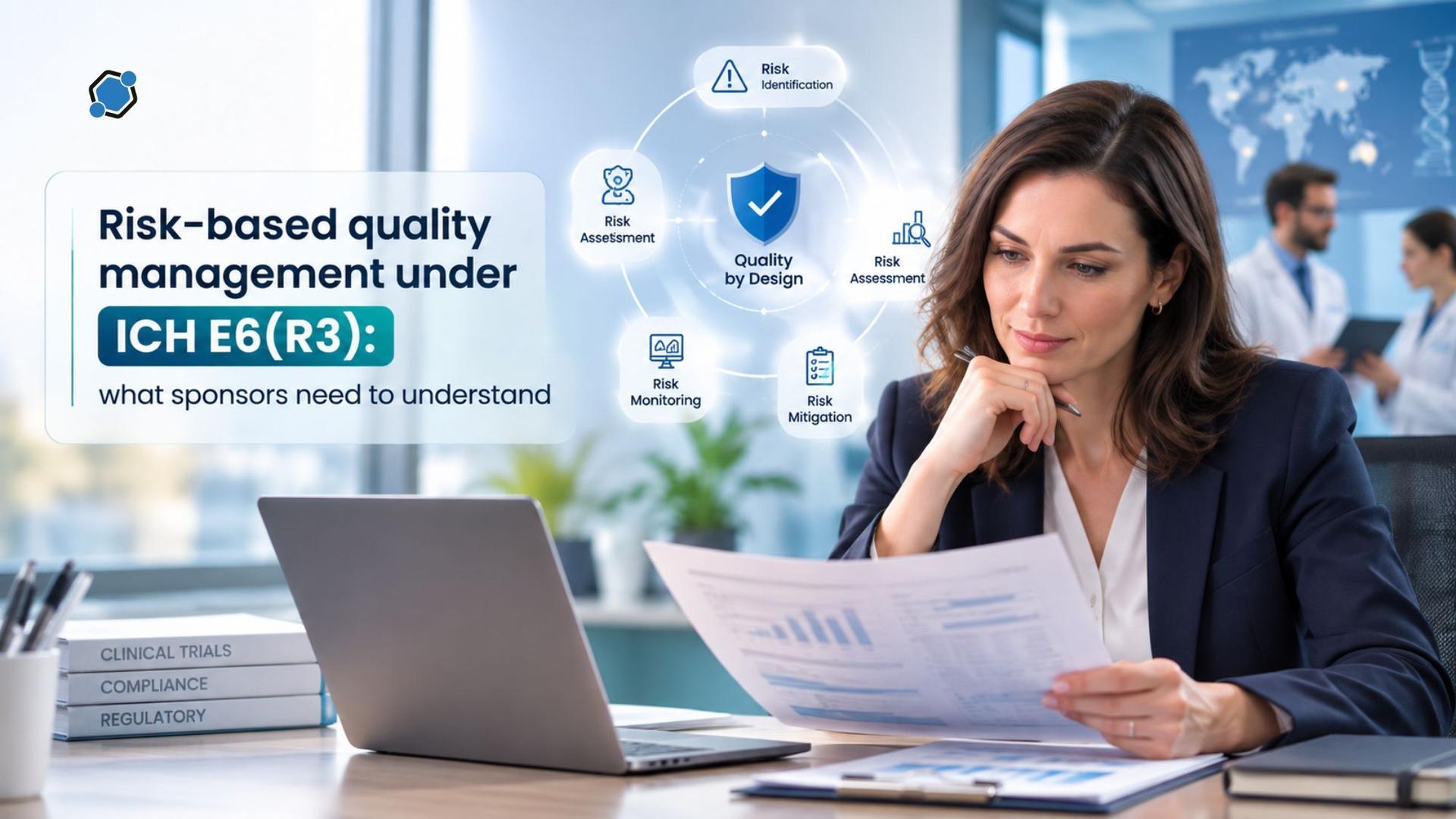
Risk-based quality management under ICH E6(R3): what sponsors need to understand
Clinical trial quality used to sit in a section. Under ICH E6(R3), it sits in the spine. T...
Deeksha GittaStay Informed. Stay Connected.
Get updates on verified clinical trials, emerging treatments, and research breakthroughs directly in your inbox. No spam, just science that matters.
