 HIPAA Compliant
 ISO 27001 Certified
Blood Pressure Numbers: What Do Systolic and Diastolic Actually Mean?
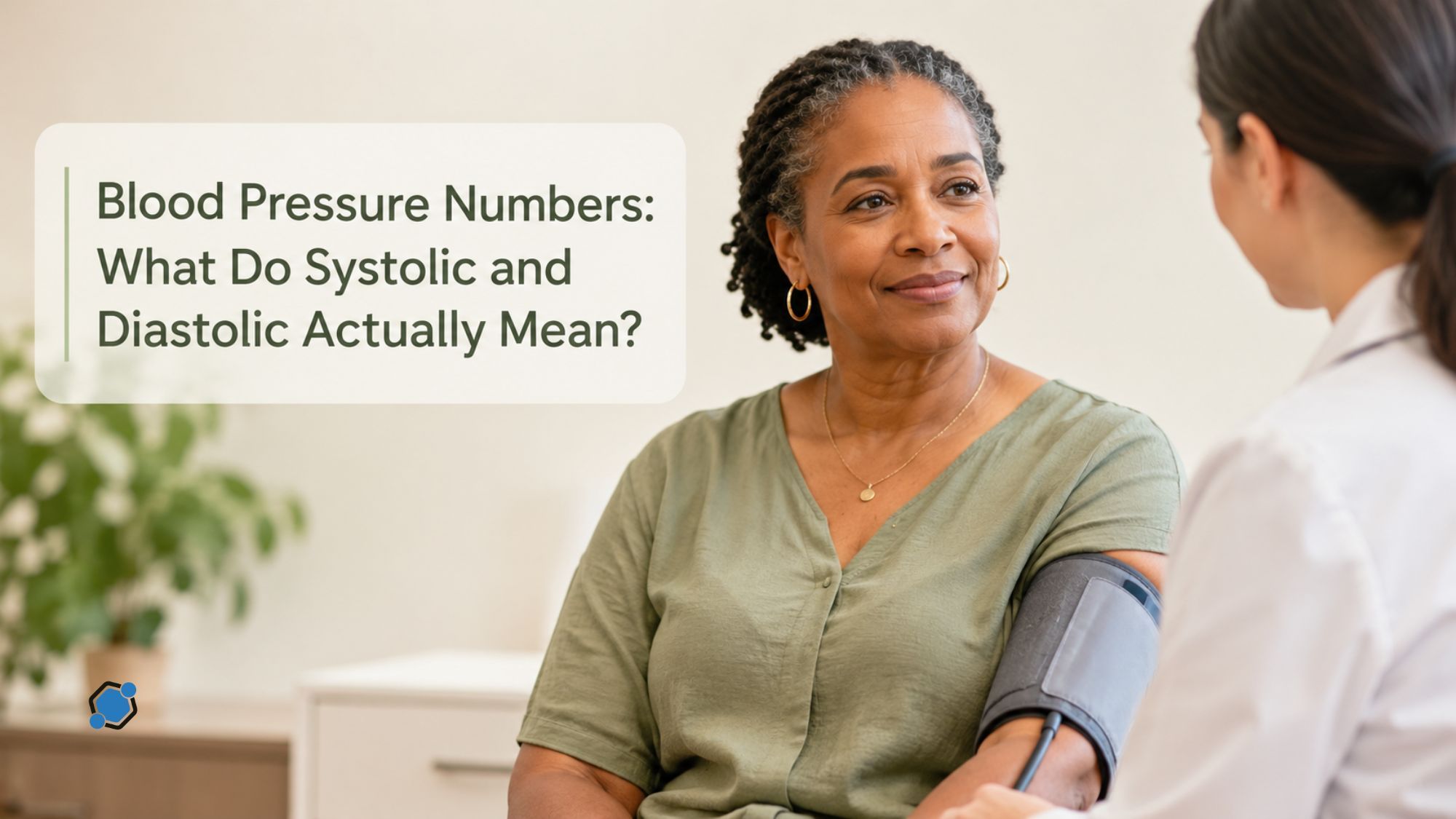
A blood pressure result contains two numbers, and most people are never told what either one measures. The result is written as one number over another, such as 120 over 80, followed by the unit mm Hg. Both numbers describe pressure inside the arteries. They simply measure it at two different moments in the heartbeat.
Knowing which moment each number captures makes a result easier to read. It also makes it clearer when a number is worth acting on and when it is not.
What the two blood pressure numbers measure
The top number is the systolic pressure. It records the pressure inside the arteries at the moment the heart squeezes and pushes blood out. That is the highest pressure in the cycle, so it sits on top.
The bottom number is the diastolic pressure. It records the pressure between beats, while the heart relaxes and refills. Blood is still moving through the arteries at that moment, so the pressure never drops to zero.
The unit mm Hg stands for millimeters of mercury. The first devices measured pressure by how far it pushed a column of mercury up a glass tube. Modern monitors hold no mercury at all, but the unit stayed.
The gap between the two numbers has a name as well. Subtract the diastolic number from the systolic number and the result is the pulse pressure. In a reading of 120 over 80, the pulse pressure is 40. That gap tends to widen with age. Large arteries slowly stiffen, so they absorb less of each beat. This is also why systolic rises with age while the diastolic number often levels off or falls after roughly age 50.
What counts as normal, elevated, and high blood pressure
Current United States guidance sorts adult readings into five categories:
- Normal: below 120 systolic and below 80 diastolic
- Elevated: 120 to 129 systolic and below 80 diastolic
- Stage 1 high blood pressure: 130 to 139 systolic, or 80 to 89 diastolic
- Stage 2 high blood pressure: 140 or higher systolic, or 90 or higher diastolic
- Hypertensive crisis: higher than 180 systolic, or higher than 120 diastolic, or both
One small word does a lot of work in that list. The normal and elevated categories require both numbers to sit in range. The two high blood pressure stages require only one number to reach the threshold.
When the two numbers land in different categories, the higher category applies. A reading of 128 over 82 counts as stage 1, because the bottom number qualifies even though the top number does not. A reading of 145 over 85 counts as stage 2, because the top number qualifies on its own.
None of these categories produces a reliable feeling. High blood pressure usually causes no symptoms whatsoever, which is why high readings often go unnoticed for years. The numbers are the only dependable signal.
One point deserves an honest note. These cutoffs were set in 2017 and were carried forward without change in the 2025 update, so anyone who learned them earlier is still working with current values. They are not universal, however. Several other national guidelines still define high blood pressure at 140 over 90, and some professional groups within the United States continue to follow that older threshold. The disagreement is about where to draw the line for a diagnosis, not about whether the numbers matter.
Why a single reading does not confirm high blood pressure
Blood pressure is not a fixed personal value. It shifts hour to hour, normally dipping during sleep and climbing with activity, stress, and pain. A diagnosis rests on average readings from at least two separate visits. Readings taken outside a medical office are usually needed to confirm it.
Plenty of ordinary things push a single reading upward: caffeine, tobacco, alcohol, a salty meal, a cold room, a full bladder, or talking while the cuff inflates. Some common medicines do the same, including over-the-counter pain relievers such as ibuprofen and naproxen, nasal decongestants, and corticosteroids.
Technique matters just as much as timing. Studies have found that resting the arm in the lap, or letting it hang at the side, gives readings several points higher than the same arm propped at heart level. A cuff too small for the upper arm can read much higher still, sometimes by enough to place a person in the wrong category.
A few habits remove most of that error:
- Empty the bladder first, and avoid caffeine, tobacco, and exercise for 30 minutes beforehand
- Sit quietly for three to five minutes before the first measurement
- Keep the back supported, feet flat on the floor, and legs uncrossed
- Rest the arm on a table so the cuff sits level with the heart
- Use a correctly sized upper-arm cuff, and stay silent during the reading
- Take at least two readings a minute apart and average them
A validated upper-arm cuff is the right tool for this. Smartwatches and rings are not validated for diagnosing blood pressure, whatever figure they show. Careful technique also brings two patterns to light that a single office visit hides. In the white coat pattern, readings run high in a clinical setting and normal everywhere else. In the masked pattern, the reverse happens. Readings look fine at the office but run high during daily life. Home readings tend to run a little lower than office readings, so home cutoffs are set lower too. That is one reason measuring blood pressure at home follows its own rules.
When blood pressure numbers need urgent attention
A reading above 180 systolic or above 120 diastolic is called a hypertensive crisis. The right response depends on whether symptoms are present.
With no symptoms, the first step is to rest quietly for a few minutes and measure again. If the repeat reading is still that high, contacting a clinician promptly is appropriate, because medication may need to be started or adjusted.
With symptoms, the situation is an emergency and waiting is the wrong choice. Chest pain, shortness of breath, sudden weakness or numbness, trouble speaking, a change in vision, or severe back pain with a reading that high all point to organ damage in progress. Calling 911 is the appropriate action, and knowing the warning signs at these levels in advance saves time when they appear.
Numbers can also run too low. Readings below roughly 90 over 60 are generally described as low blood pressure, though some healthy people sit in that range with no trouble. What matters is whether low numbers arrive with dizziness, fainting, blurred vision, or confusion, which suggest the brain is not receiving enough blood. A sharp drop within a few minutes of standing up is worth mentioning to a clinician as well.
How blood pressure numbers are used in clinical research
Blood pressure values appear in the entry criteria of many clinical studies. They work in two opposite directions. In studies of high blood pressure itself, a reading above a stated cutoff is often required to join. In studies of other conditions, high and uncontrolled blood pressure is often a reason to exclude someone, purely for safety.
Research protocols also avoid relying on one measurement, for the same reasons described above. A protocol usually calls for an average of several readings taken the same careful way at a screening visit. If those confirmed readings fall outside the range the protocol allows, the result is a screen failure. Some studies allow a person to be considered again later, once readings are steadier. This is one of the more common reasons why some volunteers do not qualify for a study that otherwise fits them well.
DecenTrialz is a clinical trial recruitment and pre-screening platform built around that early stage. A person shares basic health information, the platform matches that information against studies currently recruiting, and a registered nurse calls to walk through what the study procedures involve in plain language. That call can show early whether recorded blood pressure readings sit inside or outside a study's stated range, before anyone spends a day traveling to a site visit.
Final eligibility determination, informed consent, the full study walk-through, and enrollment are always handled by the research site team, never by DecenTrialz.
Common questions about blood pressure numbers
Which number matters more?
Both carry useful information. The systolic number predicts heart and blood vessel risk better from about age 50 onward. The diastolic number carries more weight in younger adults. Clinicians read them together rather than choosing one.
What is a normal reading for a particular age?
The healthy reference point does not rise with age. Average readings do climb over the decades, but below 120 over 80 stays the adult reference. Charts that list higher normal values for older age groups describe averages, not targets.
Does one high reading mean high blood pressure?
A single high reading is not a diagnosis. Confirming it takes repeated readings, averaged, on separate visits. Often a set of readings taken away from the clinic is needed too.
Why do the two arms give different numbers?
Small differences between arms are normal and reflect ordinary anatomy. A consistent difference of more than about 10 points in the systolic number is worth reporting, because it can point to a circulation problem. Standard practice is to check both arms once, then use the arm with the higher reading from then on.
Can a low bottom number be a problem?
It can, especially in older adults whose systolic number is high at the same time. The arteries that feed the heart muscle fill mainly between beats. A diastolic number that runs very low may cut blood flow to the heart itself. This is a question for a clinician rather than something to manage independently.
Reading the numbers in the right context
Two numbers, taken once, describe a single moment. Their value comes from repeating them correctly, and from a clinician who can read a pattern rather than a snapshot. Anyone already tracking readings at home is doing the more useful half of that work.
For readers whose numbers have brought clinical research into view, DecenTrialz can help find studies currently recruiting and set up a nurse-led pre-screening call about what a given study asks for. Every decision about eligibility and enrollment rests with the research site team from there.
Was this article helpful?

Similar Blogs

National HIV/AIDS and Aging Awareness Day 2026: What Aging With HIV Looks Like Today
The population of people living with HIV in the United States has aged in a way few would ...
 Mahesh Upadrista
Prediabetes symptoms: what the early signs are and how prediabetes is reversed
Prediabetes means blood sugar is higher than normal, but not yet high enough to be called ...
Deeksha Gitta
World Alzheimer's Month 2026: What Clinical Research Means for the Future of Alzheimer's Care
Every September, Alzheimer's Disease International leads World Alzheimer's Month, a global...
 Anish Teepireddy
Stay Informed. Stay Connected.
Get updates on verified clinical trials, emerging treatments, and research breakthroughs directly in your inbox. No spam, just science that matters.
