 HIPAA Compliant
 ISO 27001 Certified
Chronic Disease Awareness Day 2026: What It Means, Why 7/10, and How Research Helps
Chronic Disease Awareness Day is observed in the United States every year on July 10. The date carries a specific meaning. Written as 7/10, it reflects the fact that seven of the ten leading causes of death in the country are chronic diseases, according to the Centers for Disease Control and Prevention (CDC). The observance functions as an annual moment to look past the flu, the sprained ankle, and the acute illness, and see the long-lasting conditions that shape most of American healthcare.
The day is coordinated by the national nonprofit Good Days in partnership with more than two dozen patient advocacy organizations. What follows is a plain-language guide to three things: what a chronic disease actually is, why the July 10 date carries the weight it does, and how clinical research fits into the effort to make life with a chronic condition longer, easier, and less expensive.
What a chronic disease actually means
A chronic disease is a health condition that lasts at least one year, requires ongoing medical care, and often limits the activities a person can carry out in daily life. That definition, used by the Centers for Disease Control and Prevention, is what separates a chronic condition from an acute one. An acute illness has a beginning, a middle, and an end. A chronic disease has a beginning that often stretches into a lifetime.
The most common chronic diseases in the United States include heart disease, cancer, stroke, chronic lower respiratory diseases (a category that includes chronic obstructive pulmonary disease and asthma), Alzheimer's disease, diabetes, and chronic kidney disease. Autoimmune conditions such as lupus, rheumatoid arthritis, multiple sclerosis, and inflammatory bowel disease belong to the same broad category, as do many rare genetic conditions.
The prevalence is higher than most people realize. About six in ten American adults live with at least one chronic disease. Roughly four in ten live with two or more. That means chronic disease is not an edge case in American healthcare. It is closer to the norm. Understanding what chronic conditions are, and how the research pipeline around them works, is a useful starting point for anyone who has been recently diagnosed, cares for someone who has been, or wants to be a more informed reader of health news. For a primer on how clinical studies are structured, see Clinical Trials Explained: Simple Guide for Beginners.
Why the observance falls on 7/10
The date is a numerical echo of the CDC's mortality data. In the most recent years for which the agency has full statistics, seven of the ten leading causes of death in the United States were chronic conditions: heart disease, cancer, stroke, chronic lower respiratory diseases, Alzheimer's disease, diabetes, and chronic kidney disease. The remaining three positions on the list are typically filled by unintentional injuries, suicide, and either chronic liver disease or a respiratory infectious cause, depending on the year.
Chronic disease also accounts for the largest share of United States healthcare spending. Managing conditions that require regular medication, specialist visits, laboratory testing, hospitalizations, and long-term rehabilitation is expensive, and that expense compounds over decades of life with a diagnosis. The observance sets aside a single day each year to make the scale of that reality visible to a general audience that does not usually think about the healthcare system in aggregate.
The goals of the day, as articulated by Good Days and its partner organizations, are education, advocacy, and support. Education addresses the gap between how common chronic disease is and how well the public understands it. Advocacy pushes for policy changes that make care more accessible: insurance reform, medication affordability, workplace accommodations, and better protections for people who cannot always predict when a flare or an exacerbation will keep them out of a job or a classroom. Support builds community for the individuals and families who often report feeling isolated by a diagnosis that lasts a lifetime. The public-health dimension of that work is explored in How Clinical Trials Contribute to Public Health.
The parts of chronic disease that stay out of view
The clinical picture of a chronic disease is only part of the story. The lived reality includes symptoms that do not always show on the outside, financial pressures that build quietly over years, and emotional weight that is difficult to measure but easy to feel.
Fatigue is one of the most consistent complaints across chronic disease categories. It is not the tiredness of a long workday. It is a persistent exhaustion that does not respond fully to rest and that can shift from mild to disabling within a single afternoon. Chronic pain, cognitive difficulty (often described by patients as brain fog), and sleep disruption compound the problem. Many of these symptoms are invisible to coworkers, teachers, and even family members, which is one reason patient advocacy organizations spend so much of their energy on public education.
The financial burden is equally significant. Ongoing medication, specialist copays, laboratory monitoring, medical equipment, and lost wages during flares can push families into debt over the course of years. Insurance coverage varies, and even patients with strong plans can face high out-of-pocket costs for specialty medications or newer therapies.
Mental health outcomes track closely with chronic disease. Rates of depression and anxiety are meaningfully higher in populations living with heart disease, cancer, diabetes, autoimmune conditions, and pain syndromes than in the general public. Recognizing that link is part of what modern chronic disease care aims to correct. Patient-reported outcomes, which capture how a person feels and functions in daily life, are now built into clinical trial design and disease guidelines in ways that would have been unusual twenty years ago. The eligibility rules that shape who can join those studies are worth understanding in advance; a plain-language overview is in Eligibility Explained: Why Not Everyone Qualifies for a Trial.
How clinical research fits into chronic disease care
Nearly every category of medical research in the United States is, at some level, chronic disease research. Studies of heart failure, cancer, diabetes, autoimmune conditions, kidney disease, and rare inherited conditions make up the majority of active trials at any given time. Awareness Day organizers highlight research because it is the mechanism through which today's difficult disease becomes tomorrow's manageable one.
Clinical trials answer questions that cannot be answered any other way. Does a new study drug slow the progression of a disease? Does a new device reduce symptoms? Does a lifestyle change alter long-term outcomes? Can an existing therapy be used earlier, later, in a lower dose, or in combination with something else? Each of those questions requires a structured study, ethical oversight, and volunteers who choose to participate.
Trials are organized in phases, and every phase serves a specific purpose. Early-phase studies focus on safety and dose finding. Later-phase studies compare a study intervention against standard care or against a placebo, when appropriate. After a therapy is approved, additional studies continue to monitor long-term safety and gather information about how the therapy performs in wider populations. Every one of those phases depends on participants, and for many chronic diseases the pace of progress is bounded by how quickly volunteers can be identified, matched to the right studies, and enrolled at qualified research sites. The broader story of what that participation makes possible is captured in How Clinical Trials Advance Medicine and Change Lives.
What the day asks of the reader
Chronic Disease Awareness Day is not a fundraising event tied to a single condition. It is a broader prompt to think about what long-term illness looks like in the United States and what steps could make life with a diagnosis less difficult. The activities recommended by Good Days and its partners fall into three tiers: personal prevention, community awareness, and policy engagement.
Personal prevention means annual checkups, cholesterol and blood sugar monitoring, blood pressure tracking, and honest conversations with a primary care physician about family history and early symptoms. Many chronic diseases have earlier and more effective points of intervention than the general public tends to assume. A conversation about persistent fatigue or unexplained joint pain, held early, can shorten diagnostic timelines by years in autoimmune conditions in particular.
Community awareness means talking about chronic disease in a way that reduces stigma and misinformation. Workplaces that understand what a flare is are more likely to offer accommodations. Family members who understand what fatigue means in a chronic disease context are more likely to be supportive rather than dismissive. Policy engagement means paying attention to insurance coverage rules, medication affordability legislation, and patient protections. Awareness days are one of the few moments in the calendar when advocacy organizations can put policy questions in front of a general audience that would not otherwise engage with them.
For readers considering a role that supports research directly, learning about clinical trial participation is a durable option. DecenTrialz is a United States-based clinical trial matching platform that helps people with a diagnosis explore whether an active study might fit their condition and history. AI-assisted matching narrows the field to studies aligned with the person's diagnosis, and a registered nurse handles the initial pre-screening. Final eligibility assessment, informed consent, and enrollment are handled by the research site team, not by the platform. That division keeps the medical and ethical decisions with the study team who will be caring for the participant throughout the trial.
A step-by-step introduction to the volunteer experience is available in Clinical Trial Volunteers Guide: Your First Step Into Clinical Trials.
Marking July 10 with something practical
The most useful way to observe Chronic Disease Awareness Day depends on where a reader is starting from. For someone recently diagnosed, the day is a reason to take stock of the information sources that will be most useful for the year ahead. For a caregiver, it is a reason to look at the calendar of appointments, medications, and follow-up tests and see whether any part of that calendar can be simplified. For a reader who is not personally affected, it is a reason to notice how many people around them are, and to be a more thoughtful listener when a colleague or family member mentions a diagnosis.
For those who want to go a step further, exploring whether a clinical trial might be a fit is a concrete action. DecenTrialz offers a starting point that respects the medical seriousness of the question. AI-assisted matching narrows the field of active studies. A registered nurse conducts the initial pre-screening. Every step that follows, from the site visit through the review of study procedures and informed consent, is handled by the research team at the qualified site running the trial. July 10 is a good day to look. The decisions come later, on the reader's own timeline.
Was this article helpful?

Similar Blogs
World Arthritis Day 2026: Early Signs, Types, and Why Timing Matters
World Arthritis Day is observed on October 12 every year, and in 2026 it falls on a Monday...
 Mahesh Upadrista
OCD Awareness Week 2026: symptoms, myths, and the research gap
OCD Awareness Week 2026 runs October 11 through October 17 and marks the second full week ...
Mahesh Upadrista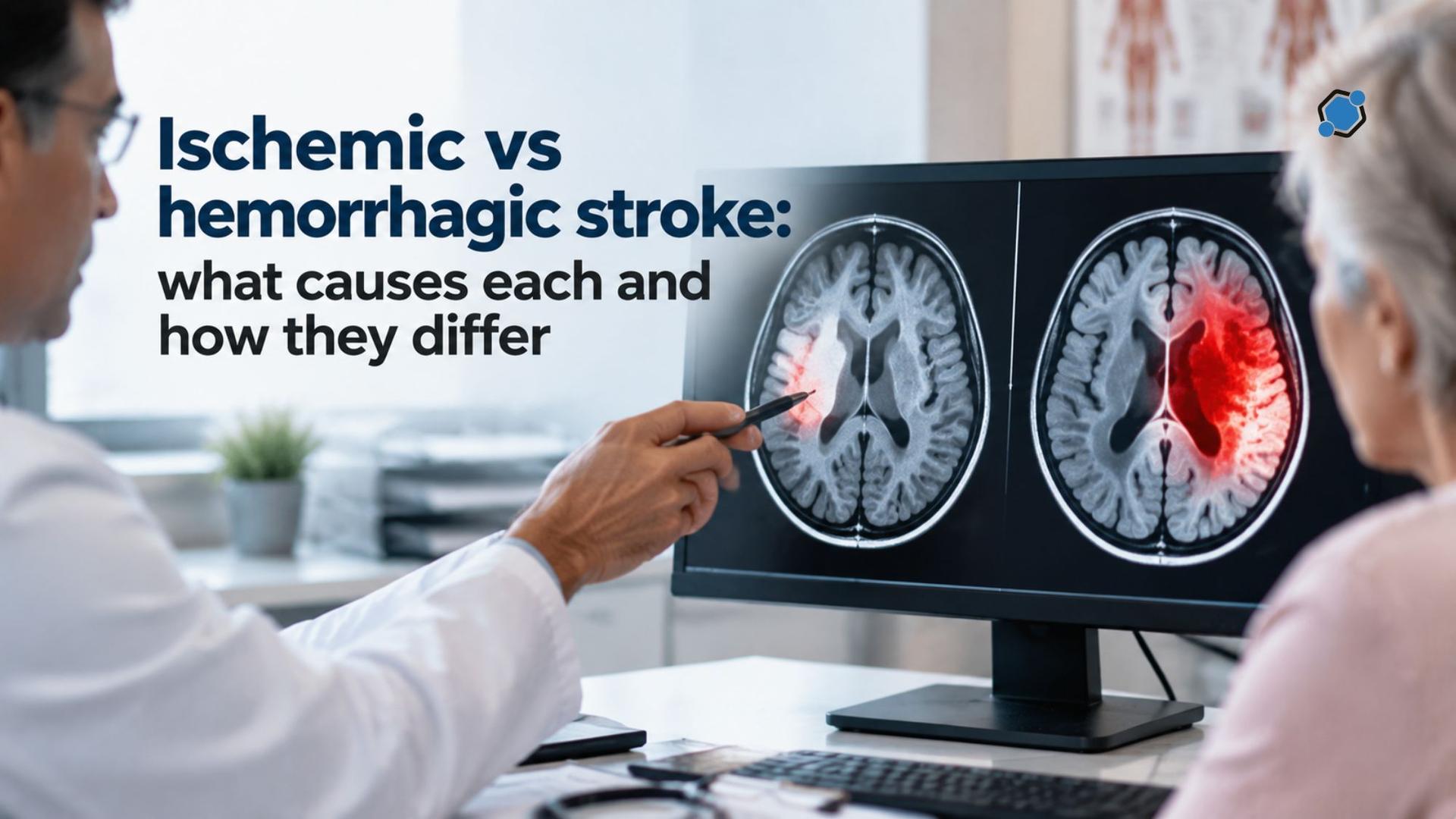
Ischemic vs hemorrhagic stroke: what causes each and how they differ
A stroke happens when blood flow to part of the brain is disrupted. There are two main kin...
Deeksha GittaStay Informed. Stay Connected.
Get updates on verified clinical trials, emerging treatments, and research breakthroughs directly in your inbox. No spam, just science that matters.
