 HIPAA Compliant
 ISO 27001 Certified
PTSD Awareness Month 2026: What It Is and Why Research Matters
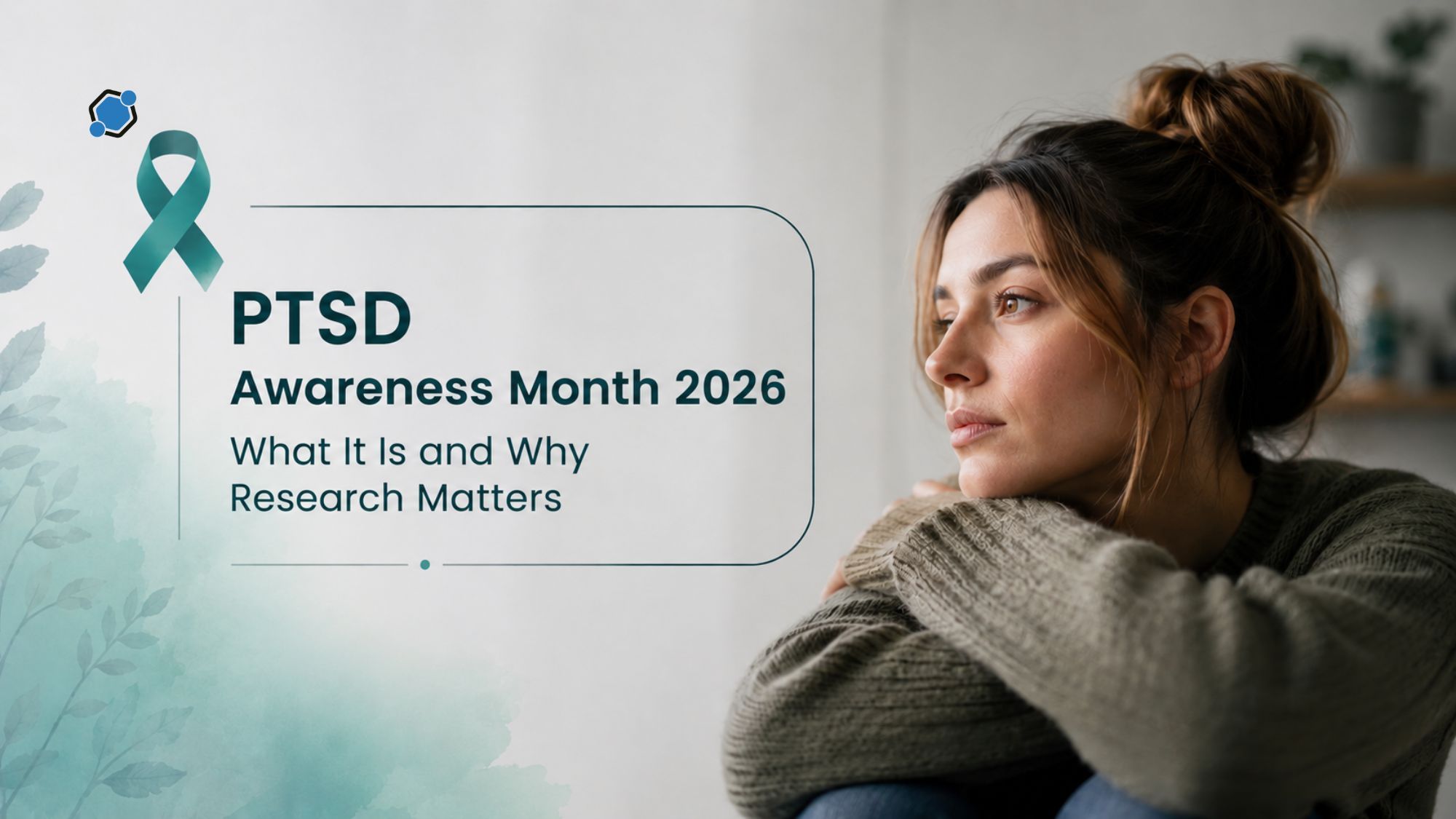
Post-traumatic stress disorder went by different names long before it had a settled medical definition: shell shock during the First World War, combat fatigue in the Second, and a string of less formal terms in the centuries before that. Recognition as a distinct medical condition came in 1980, when post-traumatic stress disorder was formally added to the diagnostic manual used by mental health professionals in the United States. Decades of clinical research since then have expanded both how the condition is understood and how it is treated, with current care pathways grounded in a substantial evidence base. National PTSD Awareness Month, observed every June and led by the National Center for PTSD at the Department of Veterans Affairs, is when that progress is recognized and the public conversation around the condition is renewed.
This year's observance lands at a moment when the science of PTSD continues to evolve. New approaches are being studied, standards of care are being refined, and people living with PTSD have more options today than they did a decade ago. That progress is the direct result of clinical research participation. This article explains what PTSD is, who it affects, how it is treated today, and why ongoing research continues to matter for everyone touched by the condition.
What post-traumatic stress disorder is
Post-traumatic stress disorder, usually called PTSD, is a mental health condition that can develop after a person experiences or witnesses an event involving actual or threatened harm. The triggering event can be combat, a serious accident, a natural disaster, physical or sexual assault, the sudden death of someone close, or any deeply distressing experience.
After a traumatic event, it is normal to feel shaken, anxious, or on edge for a period of time. Most people gradually return to their usual sense of safety within a few weeks. PTSD is the term used when those reactions persist, intensify, or begin to interfere with daily life over a longer stretch of time. Symptoms typically fall into four broad groups: reliving the event through intrusive memories, nightmares, or flashbacks; avoiding reminders of what happened; mood changes such as numbness, hopelessness, or persistent guilt; and a heightened state of alertness that makes sleep, concentration, and feeling safe difficult.
Importantly, PTSD is not a sign of personal weakness. It is a recognized medical condition with clear diagnostic criteria, well-established care pathways, and a substantial body of research behind it. Much of what is known about PTSD today comes from decades of clinical studies that have shaped how the condition is identified, described, and addressed. For readers new to how research informs medical care, Clinical Research Basics: What Every Trial Participant Should Understand Before Enrolling offers a useful starting point.
Who can develop PTSD
Anyone can develop PTSD. It is not limited to military veterans or to any single group, although certain populations carry a higher risk because of the kinds of events they are more likely to encounter.
According to the National Center for PTSD, around 7 to 8 percent of people in the United States will experience PTSD at some point in their lifetime. In any given year, roughly 3.5 percent of US adults are living with the condition, which works out to about 8 million people. Women are about twice as likely as men to develop PTSD, often connected to a higher exposure to certain types of trauma such as interpersonal violence. Among veterans, rates vary by service era and combat exposure but are consistently higher than in the general population. First responders, survivors of accidents, refugees, and people who have experienced abuse also carry elevated risk.
Children can develop PTSD as well, although the way symptoms appear in younger people often differs from how they appear in adults. Risk is influenced by many factors, including the severity of the event, the support a person has afterward, prior trauma history, and biological factors that remain an active area of study.
Because trauma reaches across every community, every age group, and every background, research into PTSD must reflect that same range. Broader and more inclusive participation in research has become a clear priority, and the topic is explored in more depth in Maximizing Diversity: Engaging Underrepresented Communities.
How PTSD is treated today
Modern PTSD care typically falls into two broad categories: trauma-focused talk therapies and medication, often used in combination.
The most studied talk therapies for PTSD are forms of structured, evidence-based treatment that help a person process the traumatic memory in a controlled, supportive setting. Two of the most commonly recommended approaches are cognitive processing therapy, which helps a person examine and reshape the unhelpful beliefs that often follow a traumatic event, and prolonged exposure therapy, which gradually and safely reintroduces the person to memories or situations they have been avoiding. Eye movement desensitization and reprocessing, often shortened to EMDR, is another approach that uses guided eye movements alongside trauma recall.
Medication treatment for PTSD usually involves antidepressants, most commonly selective serotonin reuptake inhibitors, often shortened to SSRIs. SSRIs are a class of medication that adjusts the activity of serotonin, a brain chemical involved in mood and stress regulation. Two SSRIs are approved by the US Food and Drug Administration specifically for PTSD, and other medications may be prescribed to address related issues such as sleep disturbance or persistent anxiety.
For many people, a combination of talk therapy and medication produces better results than either approach alone. Care is highly individual, however, and what works well for one person may not work for another. That variability is one of the central reasons why ongoing research remains important, and it is one of the reasons clinical trials remain essential to improving care. To understand how trial-tested approaches become the standard care a person receives today, Clinical Trial Myths Busted: Facts Every Participant Should Know provides clear context.
Why clinical research continues to matter for PTSD
Even with the options available today, PTSD remains a condition where care does not work equally well for every person. Some people see strong improvement with the first approach they try. Others go through several rounds of care before finding something that helps. A meaningful number of people continue to live with symptoms despite trying standard options. That gap is what active research aims to close.
Researchers are studying a wide range of directions. Some studies are testing new forms of talk therapy or refinements of existing therapies, including approaches that involve a spouse or family member in the process. Others are examining whether certain biological measures, such as patterns in brain activity or genetic markers, can help predict which person will respond best to which approach. New medications and new ways of delivering existing medications are also being studied, including approaches that combine a study drug with structured therapy sessions. The goal across all of this work is the same: to give people with PTSD more options that are matched to how their particular condition shows up.
None of this progress happens without people choosing to take part. Clinical research depends on willing participants whose involvement helps establish whether a new approach is safe and effective. For people considering whether participation might be right for them, How Clinical Trials Advance Medicine and Change Lives explains how individual involvement connects to broader improvements in care.
What PTSD Awareness Month means and how to take part
National PTSD Awareness Month dates back to a 2010 US Senate resolution that established June 27 as National PTSD Awareness Day, in memory of Army Staff Sergeant Joe Biel of the North Dakota National Guard. In 2014, the Senate expanded the observance to the entire month of June. The color teal is associated with the cause, and a teal ribbon worn during June is one common way people show support.
The point of the observance is practical, not symbolic. Stigma remains one of the largest barriers between a person with PTSD and the care that could help them. Many people delay reaching out for years, sometimes decades, because they fear being judged or because they have not seen PTSD described in language that matches what they are experiencing. The more openly the condition is discussed, the more accessible the path to care becomes. Awareness Month is also when community organizations, advocacy groups, and clinical research programs share information about resources, support, and study opportunities.
Anyone can take part. Sharing accurate information online, talking with a friend or family member about what PTSD actually is, supporting a veteran or first responder in your community, and learning what local mental health resources are available are all meaningful contributions. Patient and community organizations play an important role in connecting people to support and to research opportunities, and Patient Advocacy Groups: Finding Support and Trial Information looks more closely at how that connection works.
PTSD Awareness Month is, at its core, an invitation to look at a condition that touches millions of families and to recognize that the path from a traumatic event to recovery has been studied carefully and continues to be studied. Each person who takes part in a research study contributes a piece of information that may help shape better care for the next person.
For anyone who has wondered whether a research study might be a useful option, the first step is often the most difficult: finding studies that may be a fit and understanding what taking part would actually involve. DecenTrialz is a US platform built to make that first step easier. After a person shares basic information about their health and situation, the platform looks for studies that may be a match. If something looks like a possible fit, a registered nurse calls to ask a few additional questions and explain what comes next. The site research team then handles the full study walk-through, the eligibility checks, and any decision about taking part. Visiting decentrialz.com is one way to begin without committing to anything.
Was this article helpful?

Similar Blogs

Signs of Breast Cancer Other Than a Lump: What Adults Should Watch For
Most public awareness campaigns focus on finding a lump. That message has saved lives, but...
 Vamshi Kantoju
Health Unit Coordinator Day: the behind-the-scenes team that helps clinical trials run
Every August 23, the United States recognizes Health Unit Coordinator Day. The date honors...
Paramraj
Home nursing visits in clinical trials: what participants can expect
Clinical trial visits are starting to look different. In a growing number of studies today...
Vamshi KantojuStay Informed. Stay Connected.
Get updates on verified clinical trials, emerging treatments, and research breakthroughs directly in your inbox. No spam, just science that matters.
