 HIPAA Compliant
 ISO 27001 Certified
Reducing Clinical Trial Screen Failures: How Sites Can Improve Eligibility Matching
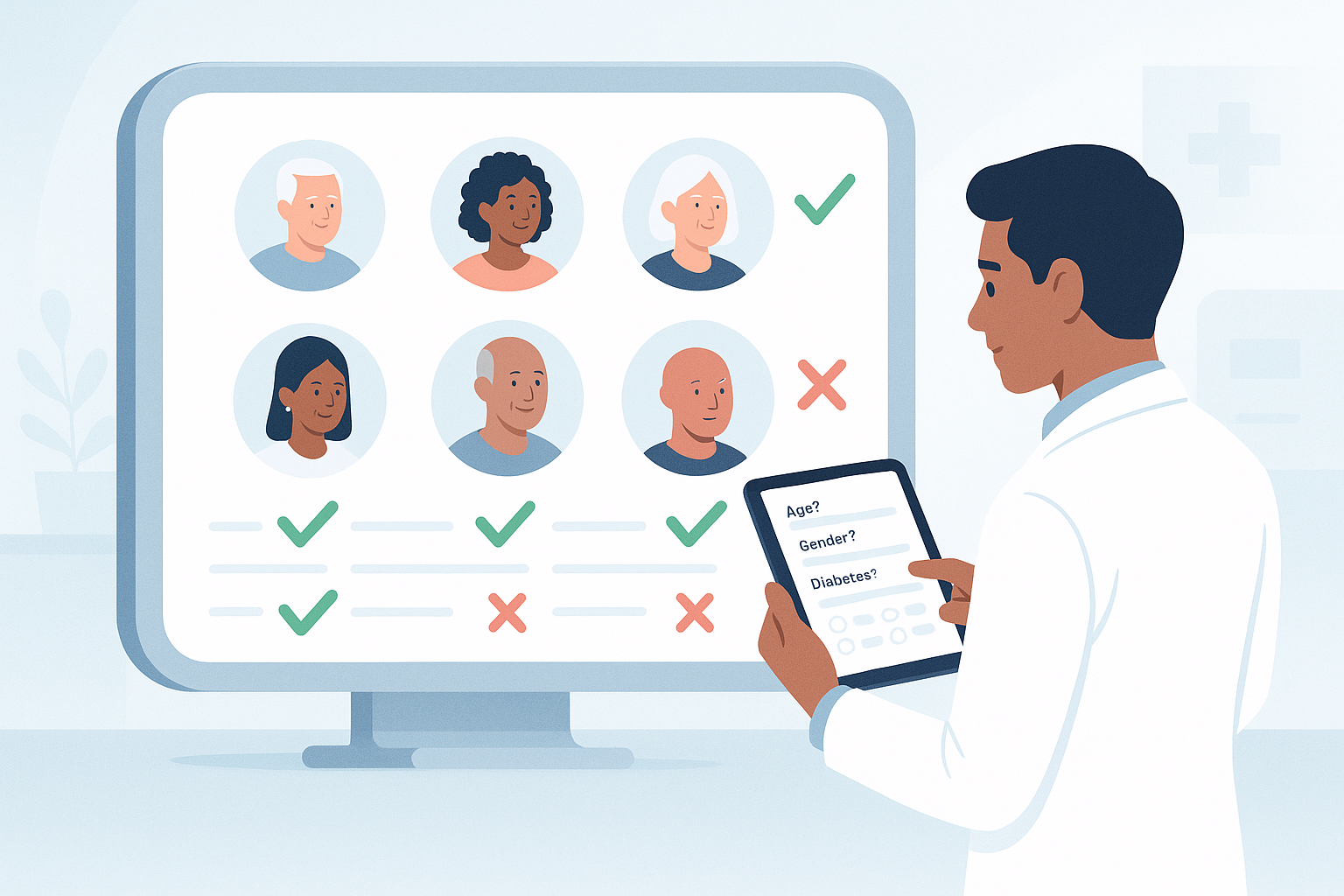
Clinical trial screen failures occurs when a potential participant begins the screening process but does not meet the eligibility requirements to continue in the trial. This might happen after signing consent or even after completing some assessments. Screen failures are common, and depending on the study, can range anywhere from 20 percent to more than 70 percent of those initially screened.
The impact of these failures is significant. For sponsors, every screen failure represents lost time and money. Delays in enrollment can cost hundreds of thousands of dollars per day, pushing back timelines for life-saving therapies. For sites, the burden falls on staff who invest time in patients who ultimately cannot enroll. For participants, the experience can be frustrating, traveling, sharing personal information, and investing hope only to be told they are not eligible. Over time, this erodes trust in research and makes people less likely to consider future trials.
High screen failure rates are not just an inconvenience. They are a real threat to trial efficiency, data quality, and participant goodwill.
Root Causes of Clinical Trial Screen Failures
Several common issues drive clinical trial screen failures across clinical sites:
- Weak pre-screening workflows: If interested patients are brought in for full visits without any filtering, many will be turned away at the clinic door.
- Incomplete communication of eligibility criteria: Recruitment awareness campaigns or outreach that are vague or oversimplified attract many ineligible patients.
- Limited digital pre-qualification tools: Without online or automated pre-screeners, obvious mismatches are often not identified until late in the process.
- Heavy reliance on manual checks: Busy coordinators can make errors or take chances on borderline cases, leading to unnecessary screenings.
These issues often combine to create high screen failure rates, even in otherwise well-run studies.
Practical Solutions for Better Matching
The good news is that sites can take actionable steps to reduce screen failures. By adopting smarter workflows and technology, they can ensure that more participants who reach the clinic are genuinely eligible.
- Use digital pre-screeners with adaptive logic. Online questionnaires that guide participants through tailored questions can quickly identify obvious exclusions. This saves time for both the site and the patient.
- Communicate criteria clearly. Ads and outreach materials should explain the most important eligibility requirements in plain language. Transparency allows participants to self-select and reduces frustration.
- Train site staff thoroughly. Coordinators and investigators should be confident in applying criteria and empowered to stop unsuitable candidates early. Clear SOPs, checklists, and regular training make a difference.
- Integrate EMR/EHR data securely. Sites with access to electronic health records can identify likely candidates before outreach. When done in compliance with HIPAA and IRB approvals, this reduces wasted screenings and improves targeting.
- Adopt decentralized tools and dashboards. eConsent platforms, telehealth pre-screens, and real-time analytics dashboards reduce burden on patients and help sites monitor where candidates are dropping out.
Together, these strategies shift screening from reactive to proactive, ensuring that only high-potential candidates move forward.
A Participant-First Approach
Eligibility matching should not only be efficient but also participant-centric. Sites can build trust and improve retention by making screening as respectful and transparent as possible.
- Minimize burden. Offer flexible scheduling, combine procedures into fewer visits, and use telehealth or home health visits when possible.
- Be transparent about criteria. Explain why certain requirements exist, whether for safety or scientific validity. Participants are more understanding when they know the reasons behind exclusions.
- Provide guidance. Share preparation materials before screening and keep communication open. If someone is not eligible, explain it gently and, if appropriate, let them know they may be contacted for future studies.
When participants feel informed and respected, even a screen failure can leave them with a positive impression of clinical research.
Industry Best Practices
Across the U.S., leading research sites have shown that high screen failure rates can be reduced with smart strategies:
- Layered pre-screening: Combining digital questionnaires, phone calls, and EHR checks before an on-site visit helps sites focus on the most qualified candidates.
- Data-driven insights: Tracking why participants fail allows sites to adjust outreach strategies and refine eligibility reviews over time.
- Technology platforms: Solutions like DecenTrialz help sites automate pre-screening, match participants to trials in real time, and provide unified dashboards for sites and sponsors. These HIPAA-compliant platforms reduce manual work, improve transparency, and make the entire process more participant-friendly.
Moving Forward
High screen failure rates do not need to be accepted as the cost of doing research. By improving eligibility matching in trials, sites can cut costs, accelerate timelines, and protect participant trust. Smarter workflows, clear communication, and participant-first practices all contribute to reducing screen failures and strengthening the overall clinical trial process.
If you are a clinical trial site or CRO, now is the time to rethink your approach. Invest in digital pre-screening tools, train your staff, and adopt HIPAA-compliant platforms that support both efficiency and participant care. Reducing screen failures is about more than saving money. It is about showing respect for volunteers and delivering on the promise of faster, better clinical research.
Was this article helpful?

Similar Blogs
Remote eConsent for research sites: what compliance requires beyond the electronic signature
Electronic informed consent, often shortened to eConsent, is now standard at many research...
 Swaroop ESD
Clinical Nurse Specialist Recognition Week 2026: What Is a CNS and Why Does the Role Matter?
September 1 is the birthday of Hildegard Peplau, an American nurse and theorist who argued...
Vamshi Kantoju
Source Data Verification in Clinical Trials: What Research Sites Still Verify Under Risk-Based Monitoring
If you have worked at a research site for more than a few years, you have watched a monito...
ParamrajStay Informed. Stay Connected.
Get updates on verified clinical trials, emerging treatments, and research breakthroughs directly in your inbox. No spam, just science that matters.
