 HIPAA Compliant
 ISO 27001 Certified
10 Early Warning Signs of Type 2 Diabetes
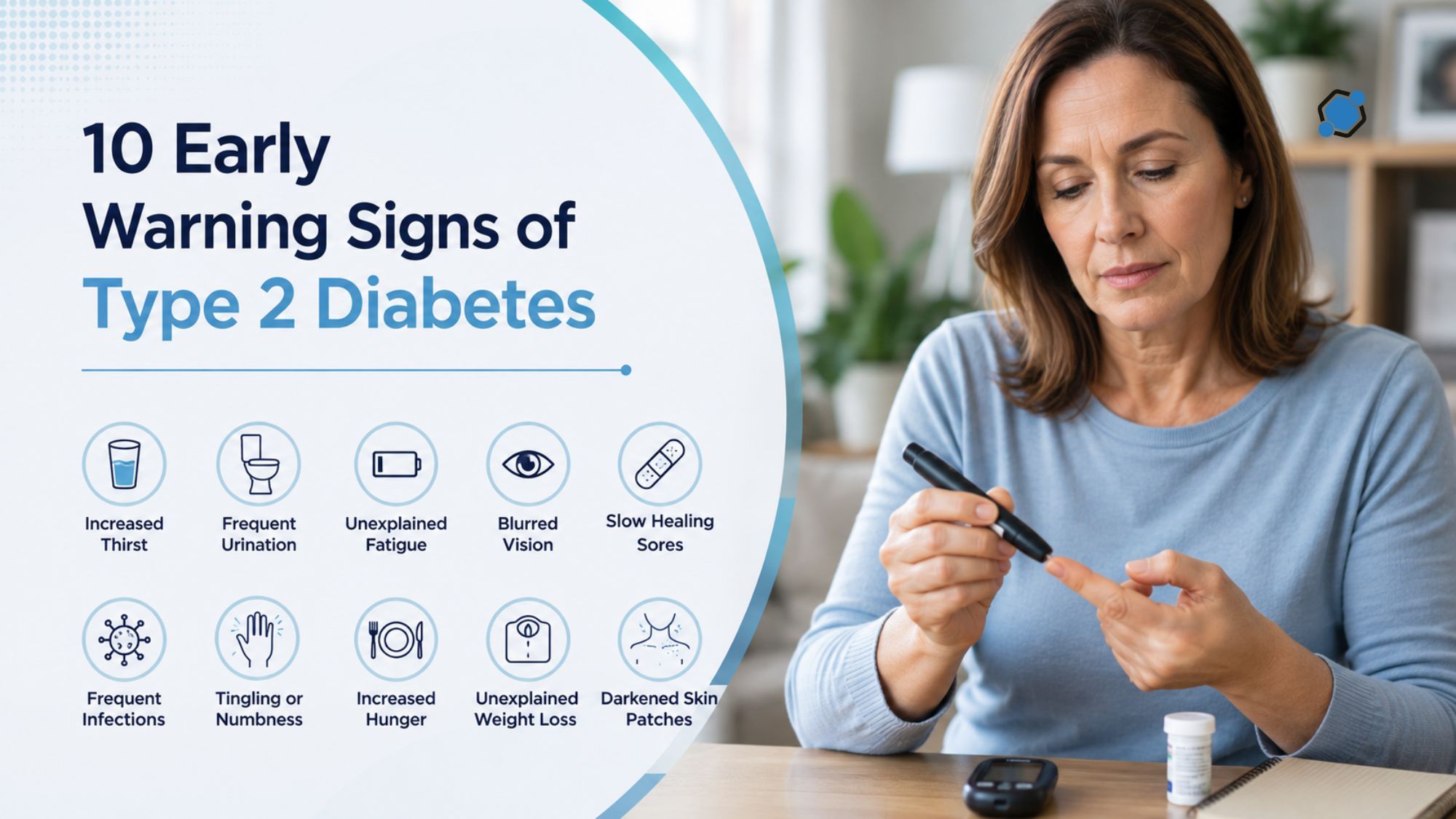
Type 2 diabetes rarely announces itself. The condition develops slowly, and the earliest warning signs are the kind of everyday complaints most people dismiss: a little more thirst than usual, a few extra trips to the bathroom, or tiredness that a good night of sleep should have cured. Many people live with rising blood sugar for years before a diagnosis catches up with them. Learning what to watch for is the first step, and the pattern is more consistent than most realize.
Why type 2 diabetes so often goes unnoticed
Type 2 diabetes develops when the body gradually loses its ability to use insulin efficiently. Insulin is a hormone made by the pancreas that helps sugar move from the bloodstream into cells for energy. When cells stop responding to insulin as they should, a state called insulin resistance, glucose (the medical term for blood sugar) begins to build up in the blood. Over time the pancreas also struggles to make enough insulin to keep up with demand, and both changes push blood sugar higher.
This process unfolds over years. Blood sugar rises in small increments, and the body compensates for a long time before any symptom becomes obvious. Many people have no clear symptoms at all in the early stages, and a diagnosis often comes only when routine bloodwork flags an abnormal result. Public health estimates suggest that a large share of American adults with diabetes remain undiagnosed, and an even greater share of those with prediabetes are unaware of their status.
The takeaway is straightforward. Waiting for dramatic symptoms is an unreliable strategy, and understanding the early clues matters far more.
The 10 early warning signs of type 2 diabetes to know
Several early signs appear repeatedly among people who are eventually diagnosed with type 2 diabetes. Any single one can have another cause, but a combination should prompt a conversation with a clinician. The 10 most common early warning signs of type 2 diabetes are the following.
1. Increased thirst. When blood sugar climbs, the kidneys work overtime to filter and remove the excess through urine. That process pulls fluid from the body, driving persistent thirst. The medical term is polydipsia.
2. Frequent urination, especially at night. The same kidney overwork that causes thirst also produces more urine. Frequent trips to the bathroom, particularly overnight, are a strong early signal. The medical term is polyuria.
3. Unusual fatigue that rest does not resolve. When cells cannot take in glucose properly, the body loses its main source of energy. The tiredness is often described as heavy and persistent, sometimes with mental fog and reduced stamina during the afternoon.
4. Blurred vision that comes and goes. Elevated blood sugar can pull fluid from the lenses of the eyes, temporarily changing the ability to focus. This symptom often improves once blood sugar comes under control, though sustained high blood sugar can also affect the retina over time, a complication known as diabetic retinopathy.
5. Slow-healing cuts and sores. High blood sugar affects circulation and the immune response. Small cuts and scrapes take longer to close than expected, and minor wounds may linger for weeks.
6. More frequent skin, gum, urinary, or yeast infections. Elevated glucose creates conditions that favor certain infections. Skin infections, gum irritation, urinary tract infections, and yeast infections may appear more often than before.
7. Increased hunger even after eating. Some people feel hungrier than usual because cells are not receiving the glucose they need for energy. The medical term is polyphagia.
8. Unexplained weight loss or weight gain. Some people lose weight without trying because the body begins to draw energy from fat and muscle stores. Others gain weight due to shifts in appetite and insulin patterns. Sudden weight loss with no clear cause is a particularly notable signal.
9. Tingling or numbness in the hands or feet. Long-standing high blood sugar can damage small nerves in the extremities. A prickling, burning, or numb sensation, particularly in the feet at night, deserves medical attention. The medical term is peripheral neuropathy.
10. Darkened, velvety patches of skin. Skin along the neck, in the armpits, or in skin folds can develop dark, thickened patches that reflect insulin resistance. Clinicians call this acanthosis nigricans. The patches often appear well before a formal diagnosis and can be seen in people of any body weight in higher-risk groups.
Who is at higher risk and when to consider testing
Certain factors raise the risk of developing type 2 diabetes. Anyone with the following should discuss screening with a clinician, even without symptoms:
- A biological parent or sibling with type 2 diabetes
- Overweight or obesity, particularly with abdominal fat
- A history of gestational diabetes (diabetes during pregnancy) or delivering a large baby
- Polycystic ovary syndrome, a hormonal condition often abbreviated as PCOS
- High blood pressure or abnormal cholesterol levels
- A largely sedentary lifestyle
- Membership in a racial or ethnic group with higher rates of diabetes, including Black, Hispanic or Latino, American Indian or Alaska Native, Asian American, and Pacific Islander populations
Current U.S. guidance supports beginning routine screening at age 35 for most adults, and earlier for those with additional risk factors. Widely followed recommendations extend the same guidance to adults aged 35 to 70 who have overweight or obesity.
Three blood tests are standard. The A1C test, also written as hemoglobin A1C, reflects average blood sugar over roughly three months. The fasting plasma glucose test measures blood sugar after an overnight fast. The oral glucose tolerance test measures the body’s response to a sugary drink. A clinician can advise which test fits best based on personal history and preference.
How early detection changes the picture
Detecting type 2 diabetes early, or catching prediabetes before it progresses, opens meaningful options. Structured changes in nutrition, physical activity, and body weight have been shown across national research programs to prevent, delay, or in some cases reverse progression from prediabetes. When medication becomes appropriate, earlier detection allows earlier planning with a clinical team.
Longer-term risks tied to unmanaged diabetes are also worth understanding. Elevated blood sugar over years can affect the heart and blood vessels, the kidneys, the nerves, the eyes, and the feet. The medical terms for these long-term complications of type 2 diabetes include cardiovascular disease, nephropathy (kidney disease), neuropathy (nerve damage), and retinopathy (damage to the retina, the light-sensing tissue at the back of the eye). Managing blood sugar earlier reduces these risks over the long horizon.
How clinical research advances type 2 diabetes care
Much of what is known today about preventing and managing type 2 diabetes comes from clinical research. Studies over the past several decades have shaped current recommendations on lifestyle change, glucose monitoring, and newer classes of study drugs, including GLP-1 receptor agonists and SGLT2 inhibitors, designed to support glucose control and protect the heart and kidneys.
Progress depends on broad participation. People from the populations most affected by type 2 diabetes have historically been underrepresented in research. The system has often placed friction between them and available studies, through rigid eligibility criteria, low awareness of active trials, distance from research sites, and study materials written in language that does not always reach the communities most affected. Efforts across the field are working to reduce that friction.
Understanding what happens between the earliest warning signs and progression is a large area of ongoing study, particularly research on prediabetes symptoms and reversal and the earliest stages of the condition.
DecenTrialz supports this shift as a United States clinical trial recruitment and pre-screening platform. Through AI-assisted matching and pre-screening led by registered nurses, DecenTrialz helps interested people explore whether an active study may be a fit and connects appropriate candidates to research sites. Eligibility, informed consent, and enrollment remain the responsibility of the authorized research site and study team. Those curious about active studies in this area can browse recruiting diabetes clinical trials to see what is currently open.
Was this article helpful?

Similar Blogs
Why is my blood pressure still high on medication? Resistant hypertension explained
Blood pressure that stays high after treatment has already started is more common than mos...
 Vamshi Kantoju
What is insulin resistance and how does it affect blood sugar?
Insulin resistance is a condition in which muscle, liver, and fat cells respond weakly to ...
Swaroop ESD
Mini-stroke symptoms: how to recognize a transient ischemic attack before a full stroke
A transient ischemic attack, often called a mini-stroke, is a short episode of stroke symp...
Deeksha GittaStay Informed. Stay Connected.
Get updates on verified clinical trials, emerging treatments, and research breakthroughs directly in your inbox. No spam, just science that matters.
