 HIPAA Compliant
 ISO 27001 Certified
How advocacy groups can partner with AI-assisted clinical trial matching platforms
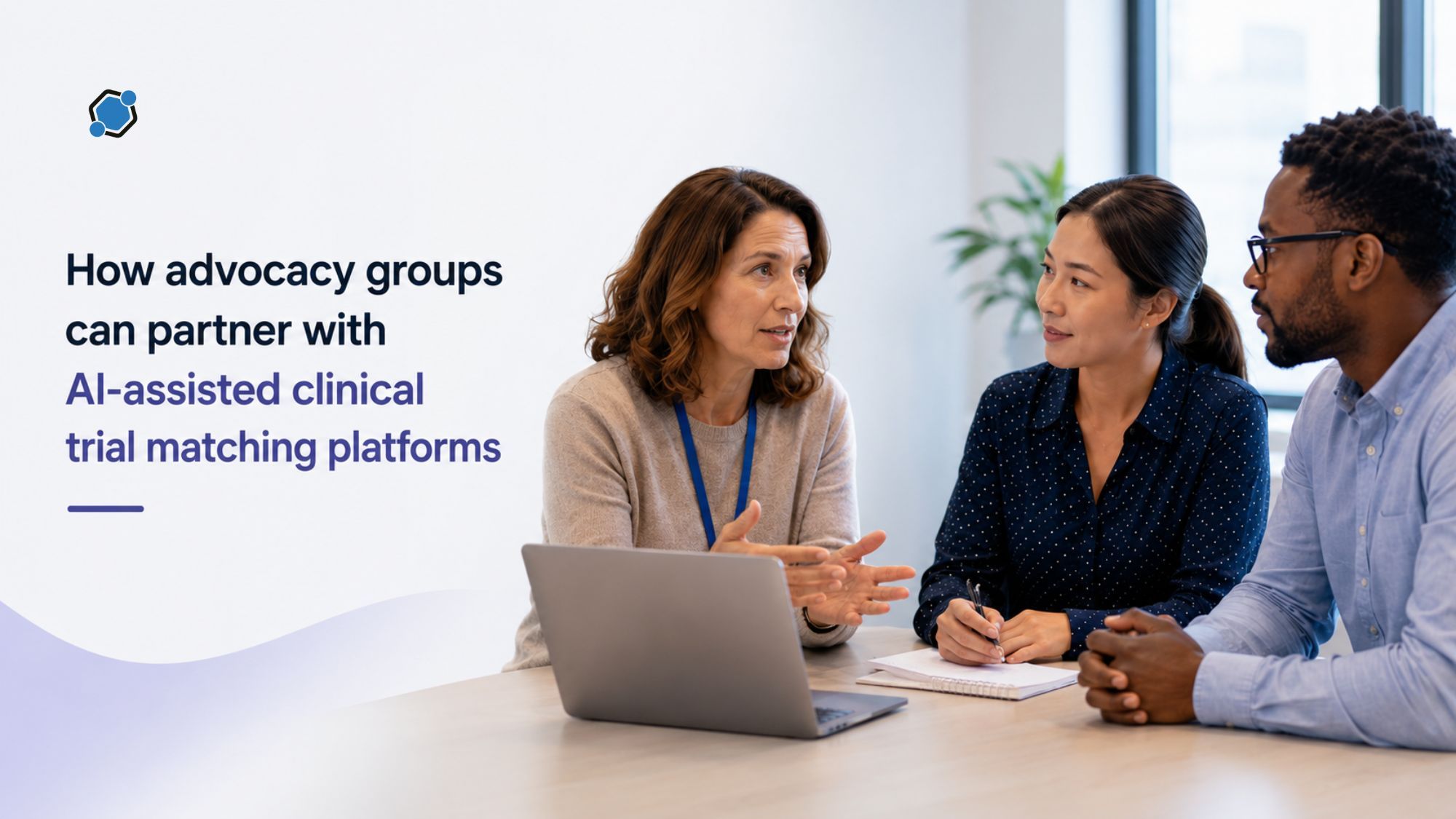
Patient advocacy groups expand what is possible for the communities they serve. One of the newer ways they do this is by connecting members to clinical trials that may bring access to investigational care, advance research that benefits the wider patient community, and surface options that standard practice does not yet offer. AI-assisted clinical trial matching has made that connection faster, more accurate, and more reachable for advocacy organizations that previously did not have the staff capacity to support trial navigation at scale.
For advocacy leadership, the question is no longer whether AI-assisted matching belongs in the toolkit. The question is what a thoughtful partnership with the right platform looks like, what members can expect from the pathway, and what the advocacy group is taking on (and not taking on) when it points members toward a matching service. This article walks through what AI-assisted clinical trial matching is, what advocacy groups and their members gain from it, and what an advocacy partnership with DecenTrialz looks like in practice.
What AI-assisted clinical trial matching is
AI-assisted clinical trial matching is a software process that compares an individual's health information against the eligibility criteria of active clinical studies and ranks the studies the person is most likely to qualify for. The matching engine reads structured data such as diagnosis codes, age, lab values, and prior care records. More advanced platforms also read unstructured text such as clinic notes through natural language processing (a branch of AI that interprets human-written language).
What changes for the member is the entry point. Finding a relevant trial used to mean searching public registries manually, contacting research sites one at a time, or relying on a clinician to suggest a study during a visit. AI-assisted matching reverses that flow. The matching engine identifies studies that may be a good fit for the person's profile and surfaces those options through the advocacy group or directly to the member, depending on how the platform is configured.
This is a narrowing step, not a decision step. AI-assisted matching does not determine eligibility, enroll anyone in a study, or replace the conversation with the study team. A match is a starting point. From there, a clinical pre-screener and then the research site decide whether the person is actually appropriate for the trial. Clearer expectations about what the technology can and cannot do are set out in the discussion of myths vs reality: the truth about AI in clinical trials.
The benefits for advocacy groups and their members
AI-assisted clinical trial matching changes the operational reality of supporting members through research. Five benefits show up most clearly in advocacy partnerships.
Faster access to relevant trials. Manual trial searching is time-consuming and rarely keeps pace with the volume of active studies in a disease area. AI-assisted matching surfaces relevant trials within minutes, which means members who reach out to the advocacy group can receive a curated set of options the same day rather than waiting weeks.
Broader reach to underrepresented members. Advocacy groups often serve communities that are underrepresented in clinical research. AI matching, when paired with thoughtful platform design, can bring trial visibility to members in rural areas, members who speak languages other than English, and members whose schedules and resources have historically kept them out of the research pipeline. Some of the considerations that shape this work are described in can AI improve diversity in clinical trials without compromising trust?
Reduced burden on advocacy staff. Small advocacy teams cannot dedicate full-time staff to trial navigation. A platform that handles the matching, the clinical pre-screening, and the referral logistics frees the advocacy group's staff to focus on the conversations and support work that only people can do. This is the operating model that platforms like DecenTrialz are built around, with matching and clinical pre-screening handled outside the advocacy group's office.
Better-prepared members. When a member arrives at a research site after a clinical pre-screening, the visit is more productive for everyone. Members come in with realistic expectations of what the study involves, the site team starts further along in the evaluation process, and screen failures (visits where the person is found not to be eligible after extensive testing) become less common.
Transparency the advocacy group can stand behind. A well-designed AI matching platform shows the advocacy group and the member why a particular study was suggested and which eligibility criteria were considered. That visibility is what makes the recommendation defensible when a member asks the advocacy group how the decision was reached.
How DecenTrialz approaches AI-assisted matching
DecenTrialz is a clinical trial recruitment and pre-screening platform built specifically for the workflow described above. The platform combines AI matching, a registered nurse pre-screening review, and structured referral to research sites into a single pathway that is designed to work for advocacy partnerships.
The matching engine compares the member's health information against the eligibility criteria of active studies on the platform and ranks the closest fits. Once a potential match is identified, a registered nurse completes an initial pre-screening review that goes beyond what the algorithm can do on its own. The nurse can ask clarifying questions, account for context that the data does not capture, and flag the member to the research site only if the pre-screening review supports a real possibility of eligibility.
From there, the research site takes over. The study team at the research site handles eligibility assessment, informed consent, and enrollment. This boundary matters because it keeps the regulated decisions where they belong: with the licensed research team that is accountable to the FDA, the IRB (institutional review board, the ethics committee that oversees the study), and the protocol.
For advocacy groups, this workflow has three practical effects. The members the advocacy group refers receive a clinical pre-screening before any site visit. The advocacy group does not have to hire or train clinical staff to make this happen. And the chain of accountability is clear: AI for matching, a registered nurse for pre-screening, and the research site for eligibility, consent, and enrollment. The wider context for advocacy involvement in this kind of partnership is set out in patient advocacy and AI: connecting communities to trials.
What a DecenTrialz partnership looks like for an advocacy group
An advocacy partnership with DecenTrialz is structured around the advocacy group's role as a trusted intermediary, not as a clinical operator. The partnership typically begins with a scoping conversation that establishes the disease area, the communities the advocacy group serves, the studies currently active in the space, and how members can be connected to the matching pathway through the advocacy group's existing channels.
From that point, the partnership runs through a small number of practical components. Members can be referred to the matching engine through the channels the advocacy group already uses, whether that is its website, its member communications, or its existing trial information. The flow of information back to the advocacy group, including what activity is shared and how, is part of what the scoping conversation defines, with member privacy held to clear written commitments on both sides.
Data handling follows the standards expected of any clinical research platform working with protected health information in the United States. Member privacy is a written commitment on both sides of the partnership, and the advocacy group has clear documentation of what is collected, how it is used, and what the member can opt out of. The advocacy group can defend the pathway to its membership because the answers to the difficult questions are already in writing. The wider case for advocacy-led research engagement is laid out in why patient advocacy groups matter in decentralized clinical research.
Starting the partnership conversation
Advocacy groups considering an AI-assisted clinical trial matching partnership should expect to ask questions before signing onto a platform. The most useful starting conversations cover four areas: how the matching engine works and what it shows about its decisions; who performs the clinical pre-screening and how members move from match to referral; how member data is handled and what the advocacy group can document for its members; and what the partnership looks like in day-to-day practice.
DecenTrialz works with advocacy groups across disease areas in the United States and is set up to answer these questions in a single conversation. Advocacy leaders who want to review the platform against their community's needs can request a walkthrough that covers matching, pre-screening, partnership structure, and data handling. From there, the decision belongs with the advocacy group.
Was this article helpful?

Similar Blogs
Clinical Trial Data Governance: What Advocacy Groups Should Verify Before Endorsing a Study
Patient information now travels further than most study participants expect. A study that ...
 Swaroop ESD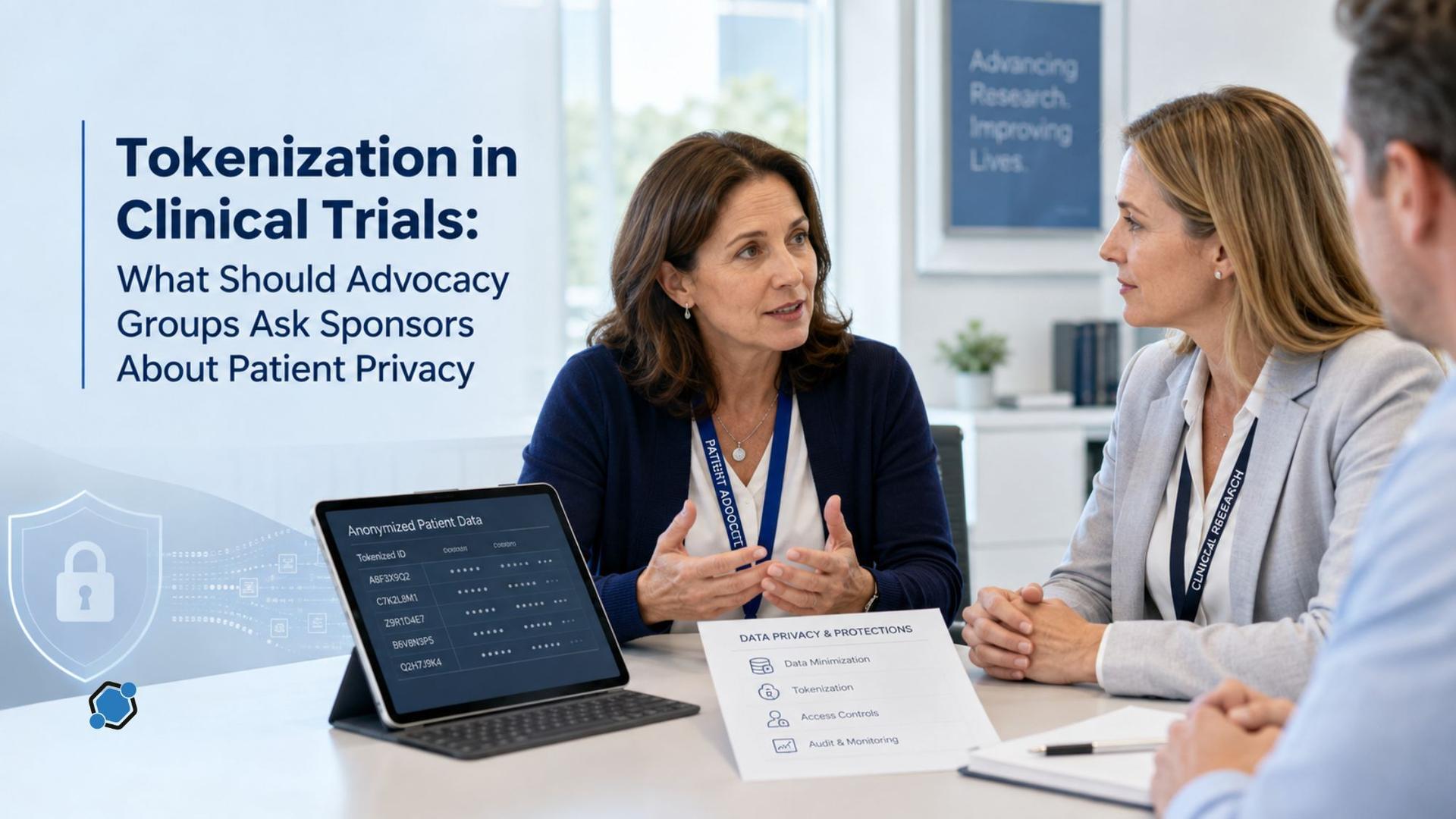
Tokenization in Clinical Trials: What Should Advocacy Groups Ask Sponsors About Patient Privacy
Tokenization has become one of the most widely adopted data techniques in modern clinical ...
Mahesh Upadrista
How advocacy groups turn patient registries into clinical trials
For most rare and chronic disease communities, the biggest obstacle to research is not sci...
Deeksha GittaStay Informed. Stay Connected.
Get updates on verified clinical trials, emerging treatments, and research breakthroughs directly in your inbox. No spam, just science that matters.
