 HIPAA Compliant
 ISO 27001 Certified
National Cancer Survivor Month 2026: Meaning, Research, and Clinical Trials
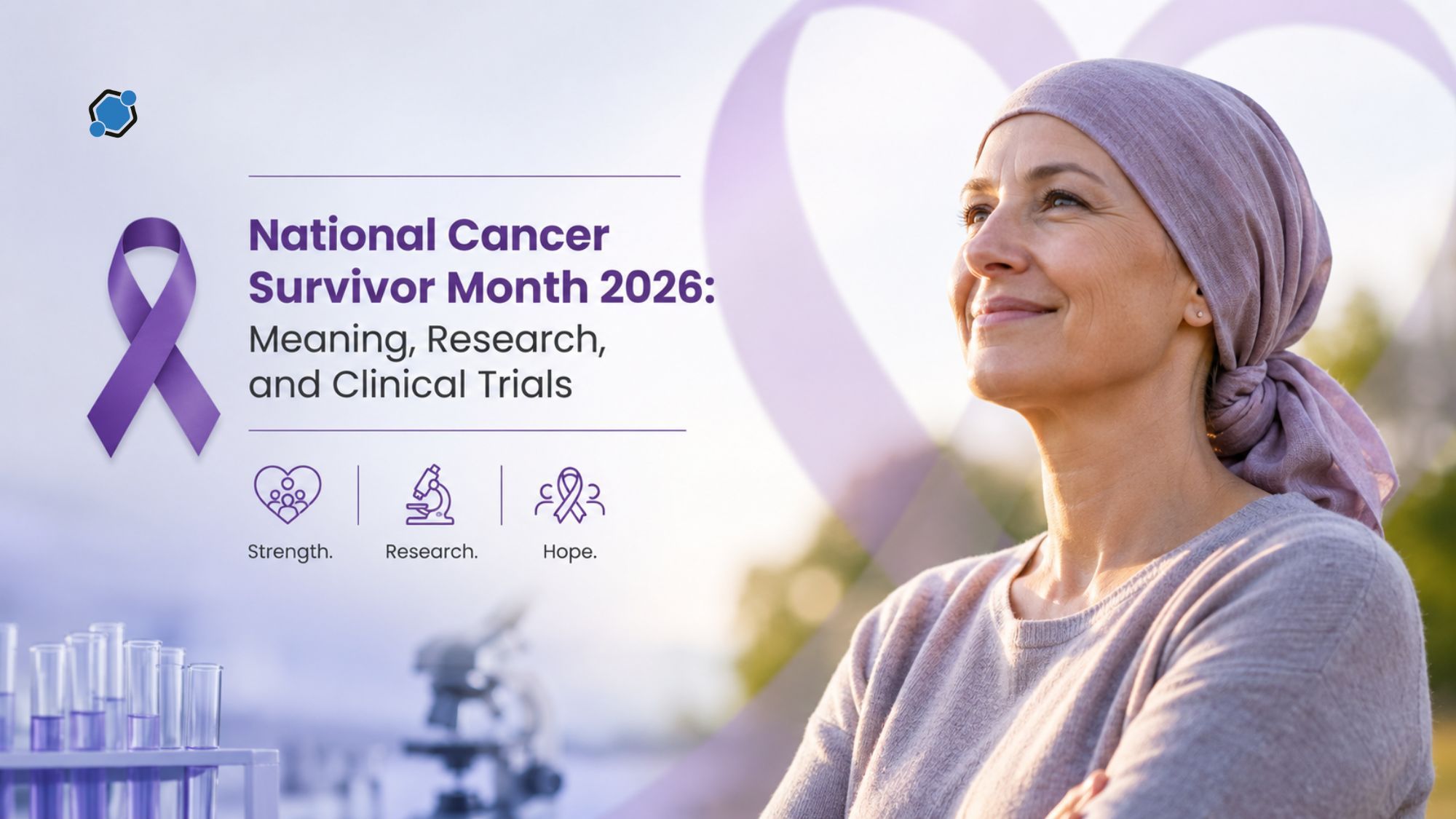
Every June, the United States observes National Cancer Survivor Month. The observance is anchored by the federal cancer survivorship research office and runs the full month, distinct from the single-day observance on the first Sunday of June. More than 18 million people in the United States are now living with a history of cancer, and the number could surpass 20 million within the next few years. Survivorship is no longer a small slice of cancer care. It drives a growing share of research priorities and a distinct stream of clinical trials.
What National Cancer Survivor Month Is and Why It Exists in June
National Cancer Survivor Month runs each June across the United States. The observance is led by the federal cancer survivorship research office, which sits within the country's primary cancer research agency. Its role is to fund and coordinate research that improves the quality and length of life for people diagnosed with cancer.
The month is sometimes confused with National Cancer Survivors Day, which falls on the first Sunday of June and is led by a separate nonprofit foundation. The Day is community-facing: parades, gatherings, survivor recognition events. The Month is research-facing. It centers the science of survivorship, the active trials, and the policy questions about long-term follow-up. For a wider view of why this research matters, see How Clinical Trials Advance Medicine and Change Lives.
Who Counts as a Cancer Survivor
The federal definition is broader than most people assume. A cancer survivor is anyone living with a history of cancer, from diagnosis through the rest of life. That includes people in active treatment, in remission, in long-term follow-up, with chronic or metastatic cancer, or with a second cancer (a new cancer that appears in someone with a prior cancer history).
The definition is deliberate. The needs of someone six weeks after diagnosis differ sharply from those of someone six years past treatment. Both are part of the same population.
The five-year survival rate across all US cancers is now around 70%, lifted by earlier detection and a wider range of approved therapies. Late effects (side effects that emerge or persist months or years after treatment ends) vary widely by cancer type. If clinical research is new ground, Clinical Trials Explained: Simple Guide for Beginners covers the basics.
What Survivorship Research Actually Studies
Survivorship research is its own field, not an afterthought to oncology. A widely cited report from a major US medical research institute set out four components of survivorship care:
- Prevention and detection of new cancers and recurrence (the cancer returning after a period of remission).
- Surveillance: ongoing monitoring for late effects, recurrence, and second cancers.
- Intervention for the physical, emotional, and practical consequences of cancer and its treatment.
- Coordination between cancer specialists and the primary care providers who manage survivors long term.
Within those components sit dozens of research areas: peripheral neuropathy (nerve damage often felt as numbness or tingling in the hands and feet after some chemotherapies), chemo brain (cognitive changes after treatment), financial toxicity (the long-term economic burden of cancer care), fertility preservation, cardiovascular risk, and mental health for survivors and caregivers.
How Clinical Trials Fit Into Cancer Survivorship
Survivorship trials are a smaller, distinct slice of cancer research. The federal trial registry currently lists about 378 cancer survivorship trials recruiting worldwide, 113 of them in the United States, with roughly 59 focused on quality of life. These figures shift as trials open, close, or move to follow-up phases.
For context, all cancer trials recruiting in the United States number nearly 7,000. Survivorship is a focused slice of a much larger effort, asking different questions than trials testing first-line therapies.
The interventions are not always drugs. Many trials test exercise programs, mental health support, telehealth symptom monitoring, dietary changes, cognitive rehabilitation, or care coordination models. Some are observational, tracking survivors over years without changing care. Others test whether a specific support program improves outcomes such as fatigue, cardiovascular health, or return-to-work rates.
Eligibility windows are wider than expected. Someone three, five, or even fifteen years past initial cancer treatment may still qualify for a relevant survivorship study. For a broader look at the cancer trial landscape, 5 Active Clinical Trials Advancing Cancer Care offers more context.
What This Month Means for Participants and for Research Sites
For survivors and families, the month is a reminder that survivorship care is its own ongoing process, not a final checkbox after the last infusion. After the Trial: Next Steps and Follow-Up Care walks through what that continuing care looks like. Federal resources cover symptoms to flag with a primary care provider.
For potential research participants, the month is also a practical opening. Many survivorship trials need people who finished cancer treatment months or years ago. Visits are often lighter than active treatment trials: surveys, exercise sessions, telehealth check-ins, periodic blood draws.
For research sites, the month surfaces an easily underweighted point. Long-term follow-up patients are an underused recruitment pool, and any site with an oncology follow-up clinic already has a ready group of candidates. Coordinator continuity matters because survivorship studies often run for several years.
DecenTrialz helps people in the United States find clinical trials that may fit their situation. After someone shares basic information about themselves and the conditions they are interested in, the platform may identify trial options that appear to match their profile. A registered nurse then completes an initial pre-screening review before the person is referred to the research site running the study. The research site and study team handle the walk-through of study details, the final eligibility check, the consent conversation, and enrollment, since they are the ones responsible for the participant's care during the trial. You can start a search at decentrialz.com.
How to Engage With Survivorship Research This June
For survivors and their families, this month is a chance to revisit long-term follow-up care, explore federal survivorship resources, and consider whether a survivorship study might be useful. These trials focus on living better with the long shadow of a diagnosis. The trade-offs differ from first-line therapy trials.
For research sites, study teams, and healthcare professionals, the month is a useful checkpoint. Long-term follow-up rosters are an often-overlooked recruitment lens, and the survivor population at most sites is larger than the active-treatment population. Survivorship research depends on sustained engagement, which puts more weight on coordinator workflows and follow-up reminders than a short-duration study would.
For the broader research community, the month is a reminder that the work continues past last patient out. The US cancer survivor population keeps growing, so research questions that start at end-of-treatment will only matter more.
People exploring whether a current survivorship study fits their situation can begin a search at decentrialz.com to see what is currently recruiting.
Was this article helpful?

Similar Blogs
Why is my blood pressure still high on medication? Resistant hypertension explained
Blood pressure that stays high after treatment has already started is more common than mos...
 Vamshi Kantoju
What is insulin resistance and how does it affect blood sugar?
Insulin resistance is a condition in which muscle, liver, and fat cells respond weakly to ...
Swaroop ESD
Mini-stroke symptoms: how to recognize a transient ischemic attack before a full stroke
A transient ischemic attack, often called a mini-stroke, is a short episode of stroke symp...
Deeksha GittaStay Informed. Stay Connected.
Get updates on verified clinical trials, emerging treatments, and research breakthroughs directly in your inbox. No spam, just science that matters.
