 HIPAA Compliant
 ISO 27001 Certified
Silent Symptoms of High Blood Pressure: Warning Signs Most People Miss
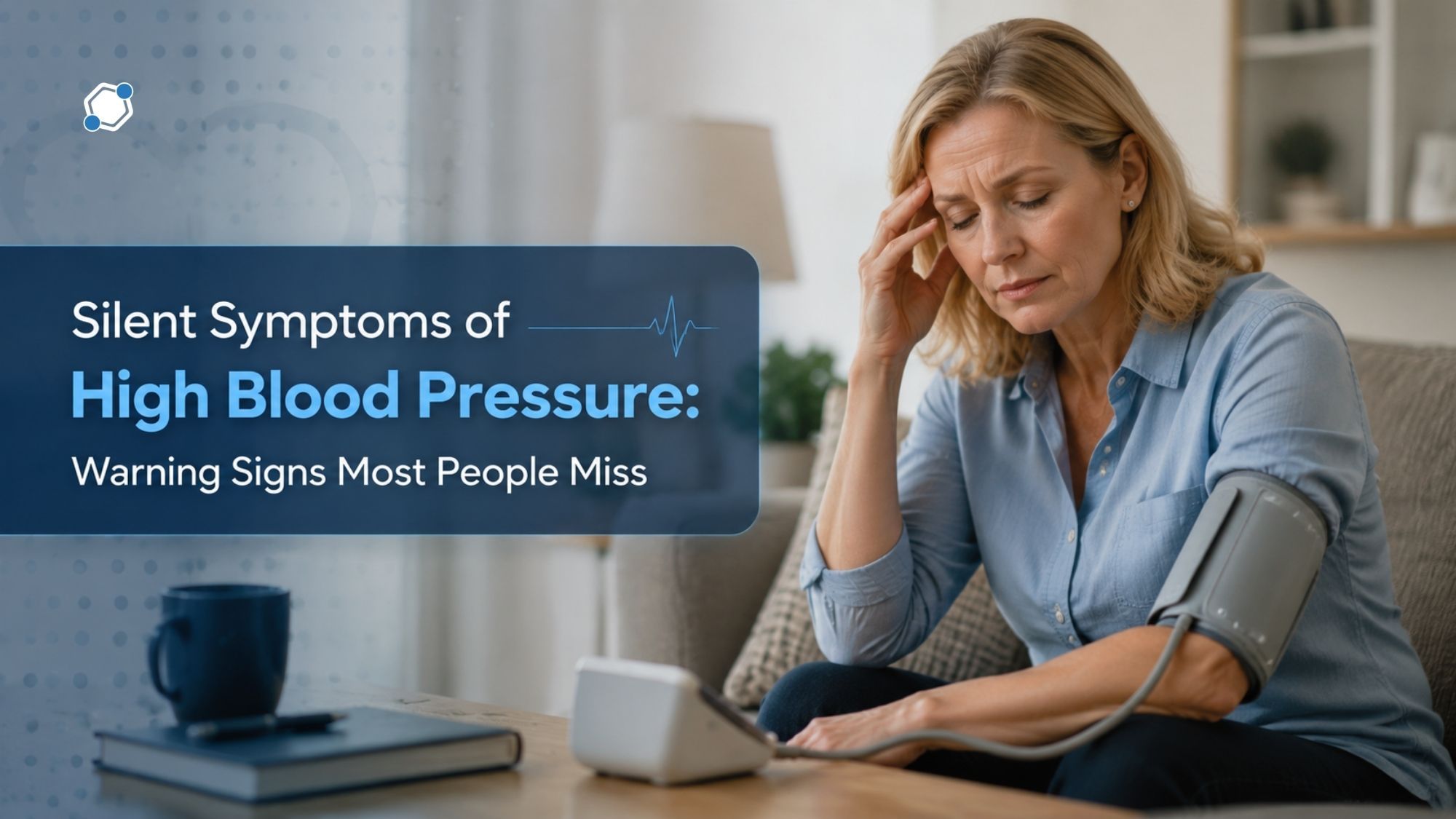
High blood pressure often produces no symptoms at all, which is why medical organizations describe it as a silent condition. Nearly half of adults in the United States have elevated blood pressure, and a large share do not know it. The absence of symptoms does not mean the absence of harm. Uncontrolled hypertension quietly strains the heart, brain, kidneys, eyes, and blood vessels for years before any warning appears.
This article explains what a silent condition actually looks like, which symptoms are worth paying attention to, which commonly cited signs are widely misunderstood, and when high blood pressure crosses into a medical emergency. The information is educational and does not replace personalized advice from a qualified clinician.
What Silent Means in High Blood Pressure
Blood pressure is the force blood exerts against the inner walls of the arteries as the heart pumps. When that force stays too high for too long, arteries stiffen, the heart works harder, and downstream organs receive damaged or reduced blood flow. Hypertension is the medical term for consistently elevated blood pressure.
The condition is called silent because it develops gradually over years. The body adapts to the higher pressure, and the person feels normal. Because there is no discomfort to prompt a doctor visit, hypertension is often discovered only after it has already contributed to a heart attack, stroke, kidney damage, or vision loss.
This is fundamentally different from many other health conditions where the body signals that something is wrong. A person may live for a decade with untreated high blood pressure and feel completely fine on the day their first serious complication occurs. Silent, in this context, is literal. Understanding the basics of how clinical research studies health conditions like hypertension helps put the importance of long-term monitoring into perspective.
Symptoms That May Appear and Common Myths to Set Aside
Because the condition is usually silent, most everyday sensations blamed on high blood pressure are unrelated to it. The American Heart Association and similar authorities have spent years correcting a set of persistent myths.
Signs that are widely misunderstood or unreliable include:
- Nosebleeds. Ordinary high blood pressure does not directly cause nosebleeds in most people. Frequent or heavy nosebleeds still deserve medical attention, but they should not be treated as a hypertension warning sign.
- Facial flushing. Flushing is caused by temporary dilation of small blood vessels in the face and is more often linked to heat, exercise, alcohol, spicy food, or unrelated skin conditions.
- General fatigue or feeling anxious. These sensations have many possible causes and are not specific to blood pressure.
- Mild everyday headaches. Routine headaches are not typical of hypertension unless blood pressure is extremely high.
Symptoms that may occur when blood pressure is significantly elevated include:
- Early morning headaches, especially if severe or persistent
- Blurred or changing vision
- Shortness of breath during ordinary activity
- Chest discomfort or a feeling of pressure
- Palpitations, meaning a noticeable pounding or irregular heartbeat
- Ringing in the ears, called tinnitus
- Nausea or a general sense that something is not right
These sensations are not proof of hypertension, and their absence is not proof of good blood pressure. They are prompts to have blood pressure measured properly. Anyone experiencing them repeatedly should schedule an evaluation with a healthcare provider rather than attempt to interpret the symptoms alone.
When High Blood Pressure Becomes a Medical Emergency
A blood pressure reading of 180 over 120 or higher is classified as a hypertensive crisis. This is far above the standard diagnostic threshold for hypertension, which is 130 over 80 under current United States guidelines. A crisis reading has two possible forms, and the difference matters.
In the first form, the reading is dangerously high but no organ damage symptoms are present. The recommended action is to wait at least one minute, then measure again, and if the reading remains that high, contact a healthcare provider promptly for guidance. This is urgent but not necessarily an emergency room visit.
In the second form, the reading is above 180 over 120 and is accompanied by symptoms that suggest organ damage is happening in real time. Those symptoms include severe headache, chest pain, difficulty breathing, back pain, numbness or weakness on one side of the body, sudden vision changes, difficulty speaking, or severe anxiety. In the United States, the recommended response is to call 911 immediately. These are potential signs of stroke, heart attack, or acute organ injury.
Because these emergency signs closely resemble the presentation of stroke, some readers may benefit from reviewing current recruiting studies related to heart disease and cardiovascular research, which often overlap with hypertension research and can help contextualize how these conditions are studied.
Why Regular Measurement Matters More Than How a Person Feels
Because symptoms are unreliable, the only dependable way to detect high blood pressure is to measure it. Public health guidance is straightforward: adults with normal blood pressure should have it checked at least once a year, and those with elevated or high readings should be monitored more often on a schedule set by their healthcare provider.
Two additional patterns are worth knowing about. White coat hypertension refers to readings that are high in a clinical setting but normal outside it, often driven by the stress of the appointment itself. Masked hypertension is the opposite pattern, where readings are normal in the office but elevated during daily life. Masked hypertension is particularly concerning because standard office visits will not detect it, yet it carries the same long-term risks as any other form of hypertension.
Home blood pressure monitoring is now a central part of diagnosis and long-term management. A validated upper-arm cuff, used consistently, provides the most reliable readings. Current guidance from major cardiology organizations advises against relying on wristbands, smartwatches, or other cuffless wearables for diagnostic decisions until their accuracy is more thoroughly established. The role of wearable devices and digital sensors in clinical trials continues to evolve, but for at-home blood pressure tracking today, a validated arm cuff remains the standard.
Who Is More Likely to Have Silent High Blood Pressure
Several factors raise the risk of developing hypertension. Some are modifiable, and some are not. Understanding personal risk supports the case for more frequent screening.
- Age. Blood pressure tends to rise across the lifespan, with the highest prevalence in adults over 60.
- Family history. A parent or sibling with hypertension increases the likelihood of developing it.
- Weight. Excess body weight raises the workload on the heart and circulatory system.
- Sedentary lifestyle. Limited physical activity contributes to higher resting blood pressure over time.
- Diet. Consistently high sodium intake and low potassium intake are associated with higher blood pressure.
- Alcohol intake. Heavier drinking is associated with elevated readings.
- Chronic stress and poor sleep. Both influence the systems that regulate blood pressure.
- Race and ethnicity. Non-Hispanic Black adults in the United States experience higher rates of hypertension, often develop it earlier, and often have more severe patterns of the condition.
- Obstructive sleep apnea. This is a common but under-recognized contributor, especially in cases where blood pressure is difficult to control.
- Chronic kidney disease. Kidney function and blood pressure are closely linked, and each can worsen the other.
Anyone with two or more of these risk factors has a stronger case for regular monitoring, even in the complete absence of symptoms. Some adults find that a routine screening is the moment they discover their blood pressure has been elevated for years. Reviewing what to expect from clinical trial eligibility criteria can be useful for those interested in participating in research studies focused on hypertension or related cardiovascular conditions.
Frequently Asked Questions About Silent Hypertension
Can a person have high blood pressure without any symptoms at all?
Yes. This is the most common presentation. Many people with hypertension feel completely normal until a routine check reveals it or a complication develops.
Is a headache always a sign of high blood pressure?
That is not correct. Ordinary headaches are not a typical sign of hypertension. Severe headaches accompanied by other symptoms and a reading above 180 over 120 are a different matter and require immediate care.
How often should blood pressure be checked?
Adults with normal readings should have blood pressure measured at least once a year. Those with elevated or high readings should follow the schedule set by their healthcare provider, which often includes home monitoring.
What blood pressure reading counts as high?
Under current United States guidelines, a consistent reading of 130 over 80 or higher is classified as hypertension. Readings of 180 over 120 or higher are considered a hypertensive crisis.
Are smartwatches reliable for measuring blood pressure?
Current guidance from major cardiology organizations recommends against relying on cuffless wearable devices for diagnostic or treatment decisions. A validated upper-arm cuff remains the standard for accurate readings.
Turning Awareness Into Action
The most important step for anyone concerned about high blood pressure is simple: get a reading. A reliable measurement, whether taken at a pharmacy, a primary care visit, or with a validated home monitor, provides more information than any symptom check ever could. Regular monitoring supports early detection, informed conversations with a healthcare provider, and better long-term outcomes.
For individuals with resistant or difficult-to-control blood pressure, clinical research offers an additional path. Hypertension is one of the most actively studied conditions worldwide, and trials are underway on new medication classes, device-based approaches, and lifestyle interventions. DecenTrialz is a United States-based clinical trial recruitment and pre-screening platform that uses AI-assisted matching and registered nurse-led pre-screening to help connect potential participants with research sites studying conditions like hypertension. Final eligibility, informed consent, and enrollment decisions are always handled by the research site and study team. Individuals who want to explore participation can review how to find and enroll in a clinical trial as a starting point.
Was this article helpful?

Similar Blogs
Why is my blood pressure still high on medication? Resistant hypertension explained
Blood pressure that stays high after treatment has already started is more common than mos...
 Vamshi Kantoju
What is insulin resistance and how does it affect blood sugar?
Insulin resistance is a condition in which muscle, liver, and fat cells respond weakly to ...
Swaroop ESD
Mini-stroke symptoms: how to recognize a transient ischemic attack before a full stroke
A transient ischemic attack, often called a mini-stroke, is a short episode of stroke symp...
Deeksha GittaStay Informed. Stay Connected.
Get updates on verified clinical trials, emerging treatments, and research breakthroughs directly in your inbox. No spam, just science that matters.
