 HIPAA Compliant
 ISO 27001 Certified
Why People Get Screened for Clinical Trials and Still Don't Get In
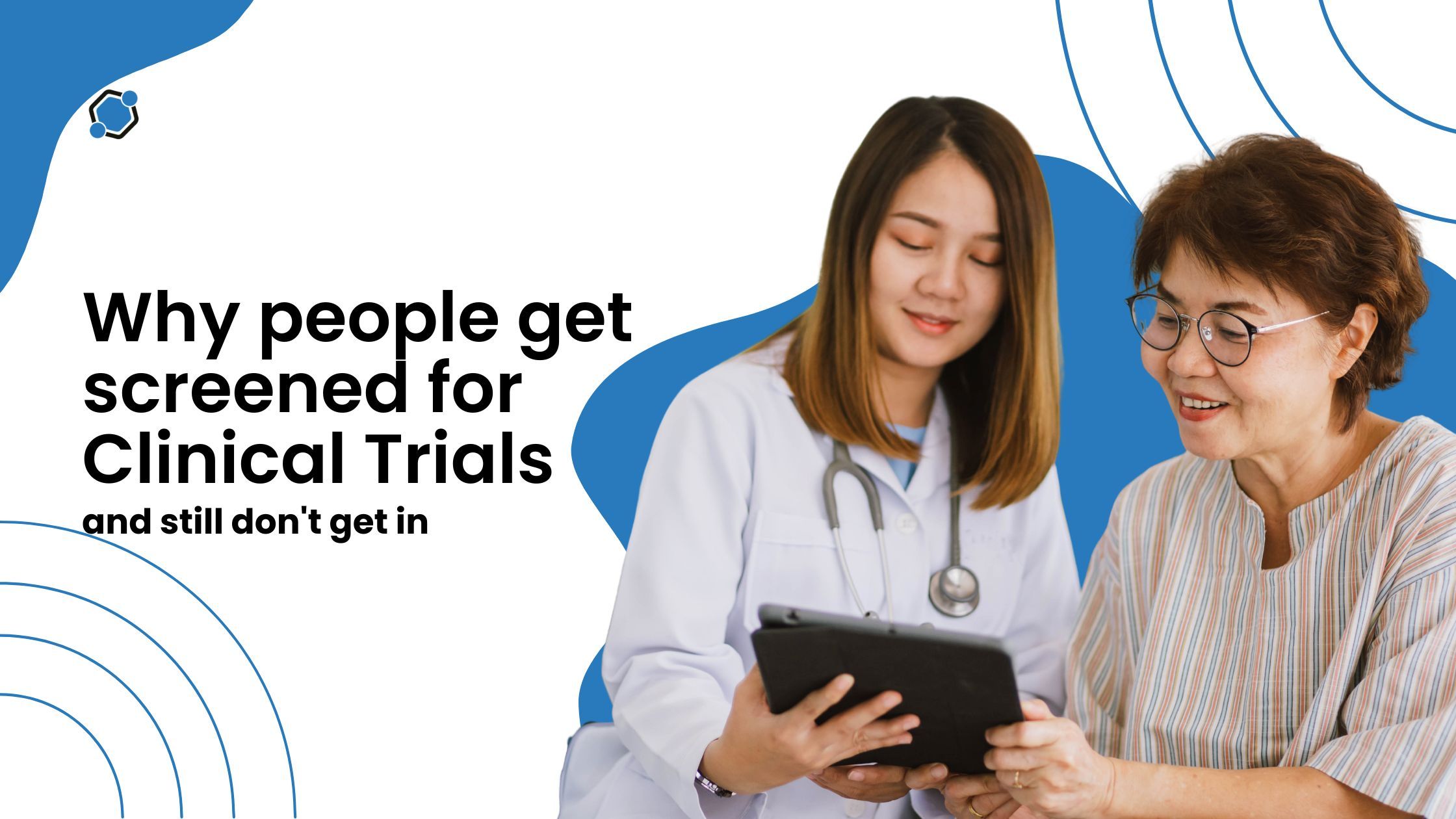
A woman in her fifties spends a Tuesday morning at a research clinic for what the coordinator calls a screening visit. She fills out medical history forms, has her blood pressure and weight recorded, gives blood and urine samples, and sits through a forty-minute interview about her symptoms and current medications. She leaves believing she is in the trial. Three weeks later, the coordinator calls to say her results came back and she will not be moving forward.
Nothing went wrong. She did not fail anything in the everyday sense of the word. What happened is a routine and expected part of clinical research: she was screened, but she was not enrolled. These are two different stages, and most people who go through clinical trial screening do not move on to enrollment. Understanding why is the difference between feeling rejected and understanding the process.
This blog walks through what screening is, what enrollment is, why the gap between them exists, and what to do if you have been through screening and want to keep exploring trials.
What Screening Actually Is
Screening is the evaluation phase. It happens after you express interest in a trial and before you become a study participant. The purpose is to check whether your specific health situation matches the protocol, which is the document that defines exactly which kinds of patients the study is designed to test.
A screening visit usually includes some combination of these:
- A detailed medical history (past conditions, surgeries, family history, current symptoms)
- A physical examination
- Blood tests and urine tests
- Sometimes imaging (an ECG for a heart trial, an MRI for a neurological trial, a skin assessment for a dermatology trial)
- Questionnaires about symptoms, mental health, or quality of life
- A review of every medication and supplement you are currently taking
Screening can be a single visit or spread across two or three appointments depending on the trial. Some studies need several days for lab results to come back before they can confirm whether you fit the protocol.
There is one point about consent that most people miss. Before screening, you sign a consent form, but that form is consent to be evaluated. It allows the research team to collect information about you and run the tests they need to decide whether you fit the study. It is not consent to participate in the study itself. That comes later, if and when you move to enrollment.
For a broader walkthrough of how trials work in the first place, see Clinical Trials Explained: Simple Guide for Beginners.
What Enrollment Actually Is
Enrollment is the moment you become an official study participant. It happens only after the research team has reviewed all of your screening results and confirmed that you fit the protocol. At enrollment, you are formally counted in the study, you start the actual interventions or observations the trial is testing, and you receive a participant identification number that follows you through the rest of the trial.
The contrast with screening is straightforward. Screening collects information. Enrollment commits you to the study and the study to you.
There is also a separate consent step here in many trials. Some studies use a single combined consent for screening and participation; others use a screening consent first and then a study-participation consent at enrollment. Either way, the meaningful commitment happens at enrollment, not at the screening visit.
If you want to understand what the team checks for before this commitment is finalized, Pre-Study Requirements: What You Need Before Enrolling covers it in more depth.
Why So Many People Are Screened but Don't Enroll
The gap between screening and enrollment is not a failure of the patient or the team. It is the protocol doing its job. Trial protocols are written to test a specific question in a specific population, and the eligibility criteria exist so the answer to that question is reliable.
The most common reasons people do not move from screening to enrollment fall into a small number of categories:
- A lab result falls outside the range the protocol requires
- A medication on the exclusion list cannot be safely paused or substituted
- The severity of your condition is too mild or too advanced for what the study is designed to test
- A second condition is identified during screening that the study cannot accept
- Logistical factors (visit frequency, travel distance, schedule) make safe participation difficult
Each of these has a real reason behind it. A cardiovascular trial testing a new blood pressure medication may require participants whose readings sit in a particular range, because participants outside that range either would not show a measurable effect or would be at higher risk. A dermatology trial for moderate plaque psoriasis may exclude people whose disease is mild because the study cannot detect improvement that small, and exclude people whose disease is severe. After all, the protocol's safety monitoring was not designed for that level. A trial for treatment-resistant depression may require participants to have tried and not responded to a defined number of prior medications, because that is the population the new treatment is being studied in.
In each case, the criteria are not personal. They come from the science of what the trial is asking and the safety constraints the regulators and the ethics review board have approved. Eligibility Explained: Why Not Everyone Qualifies for a Trial has a fuller breakdown of how these criteria are written and why.
What It Means When You Don't Move From Screening to Enrollment
Not enrolling after screening is sometimes called a "screen failure" in research language. The phrase is misleading because nothing has been failed. It simply means the protocol and your specific situation did not match for this particular trial.
A few things are worth knowing if this happens to you.
The information collected during screening belongs to you. You are entitled to ask the research team for copies of your test results and any findings the screening surfaced. Sometimes screening reveals a health detail you and your regular doctor were not aware of, which is one reason participating in research can be valuable even at this stage.
Not qualifying for one trial does not mean you cannot qualify for another. Eligibility criteria vary widely between studies, even for the same condition. A criterion that excludes you from one trial may not appear in another, and a different study may be looking for exactly the population you are in.
The decisions about who enrolls are made by the research site and the study team, working within the protocol approved by the sponsor and the ethics review board. They may be required to exclude a participant whose data would compromise the study's safety profile or scientific validity, even when both the participant and the team would prefer otherwise. Asking the coordinator why you did not move forward is reasonable, and most teams will explain in plain terms.
How to Find a Trial You Might Qualify For
The most direct way to keep exploring is to use a trial-matching service that does the eligibility check before you sit through another long screening visit. DecenTrialz is built around exactly that. You share some basic information about yourself and your health situation; the platform matches you with trials that may be a fit, and a nurse walks you through what each study involves before you decide whether to move ahead. If a trial looks like a match and you want to pursue it, the platform refers you to the research team running the study, which then handles the formal screening and enrollment steps. You can start a search at decentrialz.com.
Talking with your doctor is a useful parallel step, especially if you are currently being treated for a condition. Your doctor can flag whether a study you are interested in fits your overall care plan, and whether any current medications might cause an issue at screening.
For a step-by-step walkthrough of the full path from interest to enrollment, How to Find and Enroll in a Clinical Trial: A Step-by-Step Guide covers it end to end.
Next Steps
If you have just been through screening and did not move forward, ask the research team for your results and the specific reason you were not enrolled. Use that information to refine what you look for next; a single criterion is often the difference between two trials that seem similar on the surface.
If you have not started yet, start with a matching service rather than a single trial application, so you can see your options before committing time to a screening visit.
You can begin a search at decentrialz.com.
Was this article helpful?

Similar Blogs
Blood Pressure Numbers: What Do Systolic and Diastolic Actually Mean?
A blood pressure result contains two numbers, and most people are never told what either o...
 Paramraj
National HIV/AIDS and Aging Awareness Day 2026: What Aging With HIV Looks Like Today
The population of people living with HIV in the United States has aged in a way few would ...
Mahesh Upadrista
Prediabetes symptoms: what the early signs are and how prediabetes is reversed
Prediabetes means blood sugar is higher than normal, but not yet high enough to be called ...
Deeksha GittaStay Informed. Stay Connected.
Get updates on verified clinical trials, emerging treatments, and research breakthroughs directly in your inbox. No spam, just science that matters.
