 HIPAA Compliant
 ISO 27001 Certified
Your First Clinical Trial Screening Visit: What to Expect Step by Step
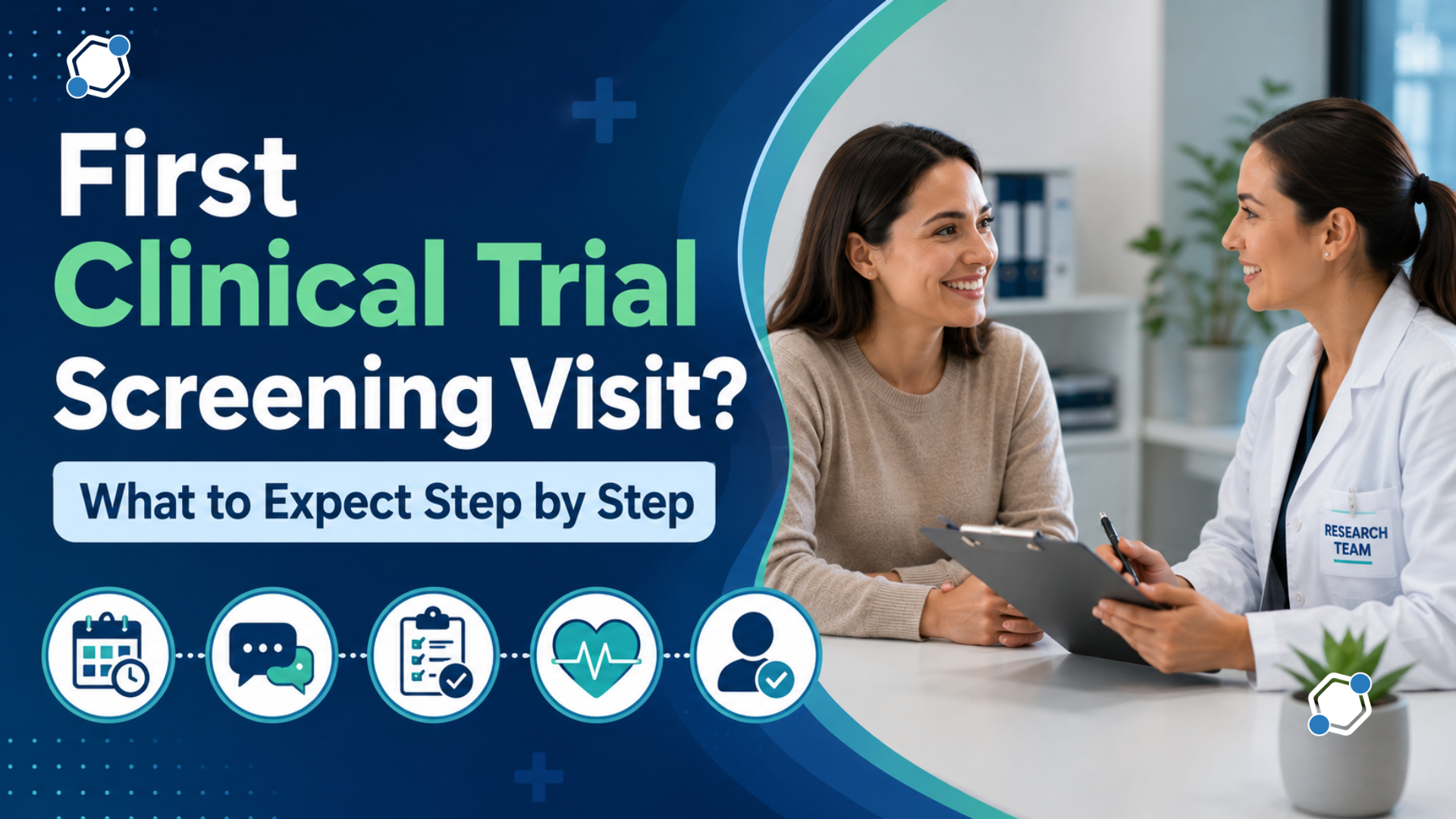
A clinical trial screening visit is the appointment where the research team checks whether a study could be a fit for you, and whether you could be a fit for the study. It usually happens after you have expressed interest in a trial and before any treatment or testing tied to the study itself. For most participants, this is the first in-person interaction with the study team, and it is the visit that determines whether you move forward to enrollment.
Knowing what happens during a screening visit makes the experience easier to walk into. The visit is structured, the steps are predictable, and you have the right to ask questions at every stage. This guide explains what a screening visit covers, how to prepare for it, what happens during the appointment itself, and what to expect afterward.
What a Screening Visit Is (and Isn’t)
A screening visit is an information-gathering appointment. The research team uses it to confirm whether you meet the study’s eligibility criteria, which are the medical, age, lifestyle, and treatment-history rules a participant must satisfy to join a specific trial. The visit also gives you the chance to learn about the trial in detail before making any commitment.
A screening visit is not the same as an enrollment visit, and it is not the same as the first study visit (the appointment after you formally enroll, when treatment or study procedures begin). At the screening stage, you are being evaluated for eligibility. You have not yet agreed to participate, and the research team has not yet confirmed you can join. Either side can decide the trial is not the right fit.
If you are brand new to clinical research, Clinical Trials Explained: Simple Guide for Beginners covers how trials are designed and why eligibility rules exist before getting into the visit-day specifics.
How to Prepare for Your Screening Visit
Most of the preparation for a screening visit happens before you walk through the door. The research team will usually send you instructions, but a few items apply to almost every screening appointment:
- A current list of medications you take, including over-the-counter drugs, vitamins, and supplements, with doses
- A summary of your medical history, including past surgeries, current diagnoses, and any conditions you have been treated for
- Names and contact details for your primary care doctor and any specialists you see
- Insurance information, even if the trial covers study-related costs, since insurance may still apply to routine medical care during the trial
- A photo ID
- Any test results, scans, or recent lab work the study team has asked for in advance
If the trial requires fasting before bloodwork, the team will tell you ahead of time. Confirm this when the visit is scheduled. Wear loose, comfortable clothing if a physical exam is part of the visit, and bring a snack and water for after any required fasting tests.
It also helps to write down your questions before you arrive. The screening visit is your chance to get clear answers about what the trial involves, what is expected of you, and what risks and benefits the team has identified. Pre-Study Requirements: What You Need Before Enrolling goes into more detail about what the research team typically asks for before any visit takes place.
What Happens During the Visit
A screening visit usually runs between one and three hours, though some are shorter and complex trials can take longer. The visit follows a predictable structure, even when the specific tests vary between studies.
The Informed Consent Conversation
The visit begins with the informed consent process. A member of the study team walks you through the consent document, which describes the purpose of the trial, what you would be asked to do, the known risks and possible benefits, your rights as a participant, and the procedures for protecting your privacy. The team is required to give you time to read the document, ask questions, and decide whether to sign.
You can take the document home and return another day if you want more time. Signing the consent document does not enroll you. It only confirms that you understand the trial and agree to be screened.
Medical History and Review of Records
After consent, the team will go through your medical history in detail. Expect questions about current and past illnesses, prior treatments, allergies, family medical history, lifestyle factors, and any medications or supplements you take. If you have brought records from your other doctors, the team will review them.
Be honest and complete. Withholding details can affect both your safety and the integrity of the study’s data.
Physical Exam and Study-Specific Tests
A nurse, study coordinator, or physician usually performs a basic physical exam, which can include vital signs (blood pressure, heart rate, temperature), height and weight, and a general check of relevant body systems. Depending on the trial, additional tests may happen during the same visit or be scheduled separately. Common screening tests include blood draws, urine samples, an electrocardiogram (a recording of your heart’s electrical activity), imaging scans, or condition-specific assessments.
The team is required to explain each test before it happens. You can ask why a test is being done and what the results would be used for. Top Questions to Ask Before Joining a Clinical Study is worth reviewing if you want a starting list, though the most useful questions are usually the specific ones that occur to you in the room.
A Wrap-Up Conversation
Before you leave, the team will explain the next steps: when you can expect to hear about your screening results, whether any additional tests or visits are needed, and how to reach the study team if questions come up between visits. Make sure you leave with contact information and a clear understanding of what is supposed to happen next.
What Happens After Your Screening Visit
After the visit, the research team reviews everything that was collected and compares it against the study’s eligibility criteria. The timeline for hearing back varies. Some studies provide an answer within a few days; others need a week or two, particularly when lab work or imaging requires interpretation by a specialist.
Three outcomes are possible. The first is that you meet the criteria and the team invites you to enroll. The next step in that case is usually a separate enrollment visit, after which study procedures begin. What to Expect at Your First Study Visit walks through what that next appointment typically involves.
The second outcome is a screen failure, which is the technical term for not meeting one or more eligibility requirements. Screen failure is common across clinical research and is not a reflection of your overall health. Eligibility rules are written to test a specific question in a specific population, and many factors that disqualify a participant from one trial have no bearing on health or on eligibility for other trials. If you want to understand why eligibility rules can feel unexpectedly strict, Eligibility Explained: Why Not Everyone Qualifies for a Trial covers the reasoning behind common criteria.
The third outcome is a partial result that requires additional information. The team may ask for a follow-up test, more medical records, or a second visit before reaching a final decision. This is normal and does not mean a screen failure is coming.
Next Steps and How to Find a Trial That Could Fit You
If you do not have a specific trial in mind yet, or if a screen failure has prompted you to look at other options, the search starts with finding studies that match your situation.
DecenTrialz is a platform that helps connect people to clinical trials they may be eligible for. You share some basic information about yourself, get matched with trials that could fit, and talk to a nurse who walks you through what each study involves before any referral to a research team. The research team running the study makes all final eligibility and enrollment decisions. You can start a search at decentrialz.com.
It is also worth talking to your doctor about whether a clinical trial could be relevant to your care. Doctors do not always volunteer trial information unless you raise it, but many will look into options once you ask. How to Find and Enroll in a Clinical Trial: A Step-by-Step Guide covers the broader search process, from initial research through the enrollment visit.
Walking into a screening visit prepared makes the conversation easier and the decisions clearer. You are gathering information about the trial at the same time the team is gathering information about you, and a screening visit is the right moment to ask everything you want to know before committing. You can begin a search at decentrialz.com when you are ready.
Was this article helpful?

Similar Blogs

Eczema Awareness Month 2026: Signs, triggers, and why research matters
October is Eczema Awareness Month in the United States, led by the National Eczema Associa...
 Paramraj
Liver Awareness Month 2026: Liver Disease, Liver Cancer, and the Research Changing Outcomes
Every October, two overlapping observances turn attention to an organ most people rarely t...
Vamshi Kantoju
Down Syndrome Awareness Month 2026: what it is and why research matters
Every October, the United States recognizes Down Syndrome Awareness Month. The month exist...
Mahesh UpadristaStay Informed. Stay Connected.
Get updates on verified clinical trials, emerging treatments, and research breakthroughs directly in your inbox. No spam, just science that matters.
