 HIPAA Compliant
 ISO 27001 Certified
IVIG for CIDP: What to Expect Before, During, and After Treatment
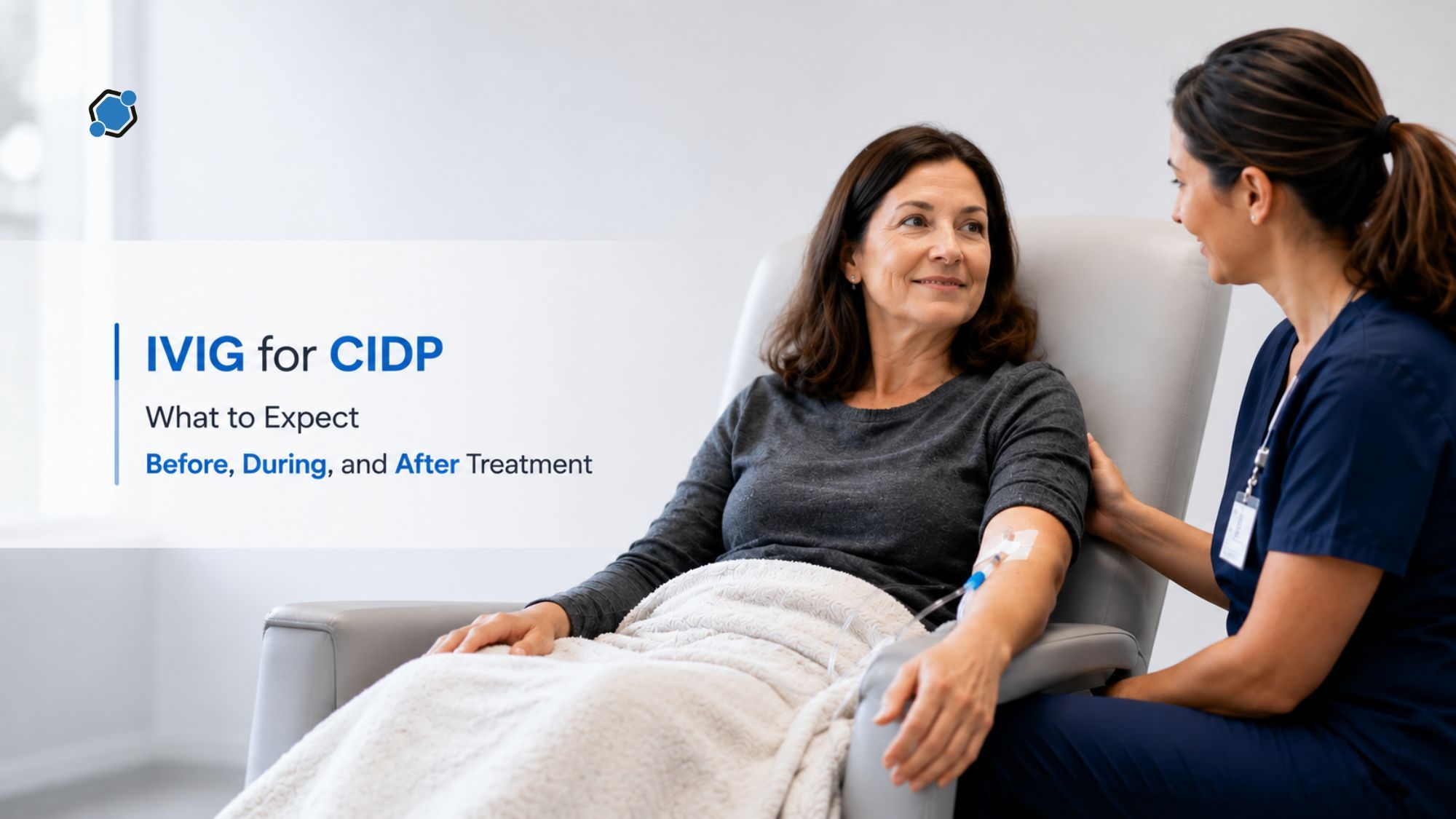
Receiving a CIDP diagnosis often brings relief and uncertainty at the same time. Many patients have spent months searching for answers before finally learning why weakness, numbness, or balance problems have been getting worse. Once the diagnosis is confirmed, one of the first treatment options neurologists commonly discuss is intravenous immunoglobulin, better known as IVIG.
IVIG has been used for many years to help control CIDP symptoms and reduce immune attacks on the nerves. Although the treatment itself is well established, many newly diagnosed patients are unsure what actually happens during an infusion, how quickly improvement occurs, and what daily life looks like afterward.
This guide explains what to expect before, during, and after IVIG treatment for CIDP.
IVIG is one of the most commonly used treatments for CIDP. It works by helping regulate the immune system and reducing inflammation around the nerves. Treatment is given through an intravenous infusion, and while some patients notice improvement within weeks, others may require several treatment cycles before symptoms begin to stabilize.
What IVIG Means in CIDP Treatment
Intravenous immunoglobulin, or IVIG, is a treatment made from purified antibodies pooled from thousands of healthy donors. These antibodies are delivered through a vein during an infusion session.
In CIDP, the immune system mistakenly attacks the protective covering around peripheral nerves. This damage slows communication between the brain and the muscles, leading to symptoms such as weakness, numbness, tingling, balance problems, and fatigue.
IVIG does not cure CIDP. Instead, its goal is to calm the abnormal immune response that is causing nerve damage. When inflammation decreases, the nerves have an opportunity to recover, allowing strength and sensation to improve over time.
Because CIDP affects each person differently, responses to IVIG can vary.Some patients notice early improvement after the first treatment cycle, while others require several cycles before changes become apparent.
Why Neurologists Use IVIG for CIDP
IVIG is often considered one of the first treatment options for CIDP because many patients respond well to it and because it is supported by strong clinical evidence. International treatment guidelines recommend IVIG (or corticosteroids) as an initial therapy for typical CIDP.
The treatment aims to improve muscle strength, reduce sensory symptoms, and slow further nerve damage.
Neurologists may recommend IVIG for newly diagnosed patients, individuals experiencing a relapse, or patients whose symptoms are interfering with everyday life.
Treatment plans are individualized. The dose, infusion schedule, and frequency depend on symptom severity, body weight, previous treatment responses, and overall health.
For some patients, IVIG becomes a long-term maintenance treatment. Others may eventually receive infusions less often or transition to different treatment approaches depending on how their disease behaves.
What Happens Before the First IVIG Infusion
Before treatment begins, the neurologist confirms that IVIG is an appropriate option based on the patient's diagnosis, symptoms, and overall health. Since there is no single treatment plan that works for everyone, the exact schedule may differ from person to person.
Several preparations usually happen before the first infusion:
Confirming the diagnosis
IVIG is typically recommended after CIDP has been diagnosed through a combination of symptoms, neurological examination, nerve conduction studies, and other tests used to rule out similar conditions.
Reviewing medical history
The care team reviews current medications, previous treatments, allergies, kidney function, and any other medical conditions that could influence treatment decisions. Kidney function and clotting risk are checked because they relate to the rare serious side effects discussed later in this guide.
Planning the infusion schedule
Most patients begin with a loading dose given over several days. After that, maintenance infusions are scheduled at regular intervals. Depending on the individual response, treatments may occur every few weeks.
Hydration and preparation
Patients are often encouraged to drink plenty of fluids before treatment. Good hydration may help reduce certain side effects, including headaches.
Many people feel nervous before their first infusion. Understanding what the process involves can make the experience feel much less intimidating.
What to Expect During an IVIG Infusion
Although every infusion center operates slightly differently, the overall process is generally similar. Most treatments are performed in an outpatient infusion clinic, hospital infusion center, or occasionally at home under medical supervision.
Step 1: Arrival and preparation
After arriving, a nurse checks vital signs such as blood pressure, pulse, and temperature. Questions about recent illnesses or new symptoms may also be reviewed.
Once everything is ready, an intravenous line is placed into a vein in the arm or hand.
Many patients bring books, headphones, blankets, tablets, or other items to help pass the time during treatment.
Step 2: Starting the infusion slowly
The IVIG medication is delivered through the intravenous line using an infusion pump.
The infusion usually starts at a slower rate. If the patient is tolerating treatment well, the speed may gradually increase.
Depending on the dose being given, an infusion can last several hours. Initial treatments are often longer because the staff monitors the body's response carefully.
Step 3: Monitoring throughout treatment
Nurses periodically check vital signs and ask about symptoms during the infusion.
Some patients experience mild side effects such as:
- Headache
- Fatigue
- Chills
- Mild nausea
- Flushing
These symptoms are often manageable and may improve by slowing the infusion rate or providing additional fluids.
Serious reactions are uncommon, but the medical team remains available throughout the session to address any concerns immediately.
Step 4: Going home after treatment
Once the infusion is complete, most patients can return home the same day.
Some people feel completely normal afterward, while others may feel tired and prefer to rest for the remainder of the day.
Because responses vary, many patients begin paying closer attention to changes in strength, balance, numbness, or fatigue during the days and weeks that follow.
For some individuals, improvement appears gradually. For others, recovery may require multiple treatment cycles before meaningful changes become noticeable.
How Long Does IVIG Take to Work for CIDP?
One of the most common questions after starting treatment is how quickly improvement will occur. Unfortunately, there is no single timeline that applies to everyone.
Some patients notice improvement within weeks. Others may require several weeks or multiple treatment cycles before symptoms begin to stabilize. Neurologists generally assess the response to IVIG over weeks to months rather than days.
The speed of recovery often depends on factors such as:
- How long symptoms were present before treatment began.
- The severity of nerve damage.
- Individual response to therapy.
- Whether the disease is still actively progressing.
Early improvements may include:
- Increased energy.
- Better balance.
- Less tingling or numbness.
- Improved walking.
- Greater muscle strength.
Recovery is rarely perfectly linear. Some days may feel better than others, and progress often happens gradually rather than all at once.
Because nerves heal slowly, many neurologists evaluate response over weeks or months rather than days. Patience is often an important part of the treatment process.
Common IVIG Side Effects
Most patients tolerate IVIG well, but side effects can occur. In many cases, these reactions are mild and temporary.
Common side effects include:
- Headache.
- Fatigue.
- Chills.
- Muscle aches.
- Mild nausea.
- Flu-like symptoms.
- Temporary tiredness after treatment.
Some people feel perfectly normal after an infusion, while others prefer to rest for the remainder of the day.
Headaches Are One of the Most Frequently Reported Side Effects
Headaches can occur during or after treatment and are among the most common reasons patients contact their care team after an infusion.
Doctors may recommend:
- Drinking extra fluids before and after treatment.
- Slowing the infusion rate.
- Taking medications before treatment if needed.
- Allowing additional rest after the infusion.
Mild Fatigue Is Common
Some patients experience increased tiredness for a day or two following treatment. This temporary fatigue usually improves without additional intervention.
Serious Reactions Are Uncommon
Although uncommon, more serious side effects can occur. These rare complications can include blood clots (thromboembolism), kidney problems, and aseptic meningitis, an inflammation of the lining around the brain that can cause a severe headache after an infusion. This is one reason the care team reviews kidney function and clotting risk before treatment and encourages good hydration.
Patients should contact their healthcare team immediately if they experience symptoms such as:
- Difficulty breathing.
- Severe headache unlike previous headaches.
- Chest pain.
- Significant swelling, or pain and swelling in a leg or arm.
- High fever.
- Sudden neurological changes.
The infusion team monitors patients closely because safety remains an important part of treatment.
Most side effects can be managed successfully, and many patients find that reactions become more predictable as they gain experience with IVIG.
A more detailed discussion of managing IVIG side effects is covered separately in the guide on Managing IVIG Side Effects.
Frequently Asked Questions
Is IVIG a cure for CIDP?
No. IVIG does not cure CIDP. It works by calming the immune attack on the nerves and reducing inflammation, which gives the nerves an opportunity to recover. Many patients use it as an ongoing treatment to control symptoms rather than as a one-time fix.
How long does an IVIG infusion take?
It varies by dose and how well you tolerate treatment, but a single infusion commonly lasts several hours. Initial infusions are often slower and longer because the care team monitors your response closely. The first round of treatment, called a loading dose, is usually spread across several days.
How often will I need IVIG?
After the initial loading dose, maintenance infusions are typically given at regular intervals, often around every few weeks. The exact schedule is individualized based on your symptoms, body weight, and how you respond, so your neurologist may adjust the dose or timing over time.
How quickly will I feel better?
There is no single timeline. Some people notice changes within the first couple of weeks, while others need several weeks or multiple treatment cycles. Because nerves heal slowly, neurologists usually evaluate how well IVIG is working over weeks to months rather than days.
Can I have IVIG at home?
Sometimes. While many patients receive IVIG in an outpatient clinic or hospital infusion center, some are able to have it at home under medical supervision. Whether home infusion is an option depends on your stability on treatment, your insurance, and your care team's recommendation.
What side effects should I expect?
The most common side effects are mild and temporary, including headache, fatigue, chills, muscle aches, mild nausea, and flu-like symptoms. Headache is one of the most frequently reported. Serious reactions are uncommon.
What happens if IVIG doesn't work for me?
CIDP responds to treatment differently in each person. If IVIG does not provide enough benefit, neurologists have other options, including corticosteroids, plasma exchange, and additional immune-modulating therapies. Not responding to one treatment does not mean others won't help.
Was this article helpful?

Similar Blogs

What is insulin resistance and how does it affect blood sugar?
Insulin resistance is a condition in which muscle, liver, and fat cells respond weakly to ...
 Swaroop ESD
Mini-stroke symptoms: how to recognize a transient ischemic attack before a full stroke
A transient ischemic attack, often called a mini-stroke, is a short episode of stroke symp...
Deeksha Gitta
Breast Biopsy Procedure, types, and what to expect
A breast biopsy is a diagnostic step, not a diagnosis. When a mammogram, ultrasound, MRI, ...
Vamshi KantojuStay Informed. Stay Connected.
Get updates on verified clinical trials, emerging treatments, and research breakthroughs directly in your inbox. No spam, just science that matters.
