 HIPAA Compliant
 ISO 27001 Certified
National PTSD Awareness Day 2026: Origin, Meaning, and Research
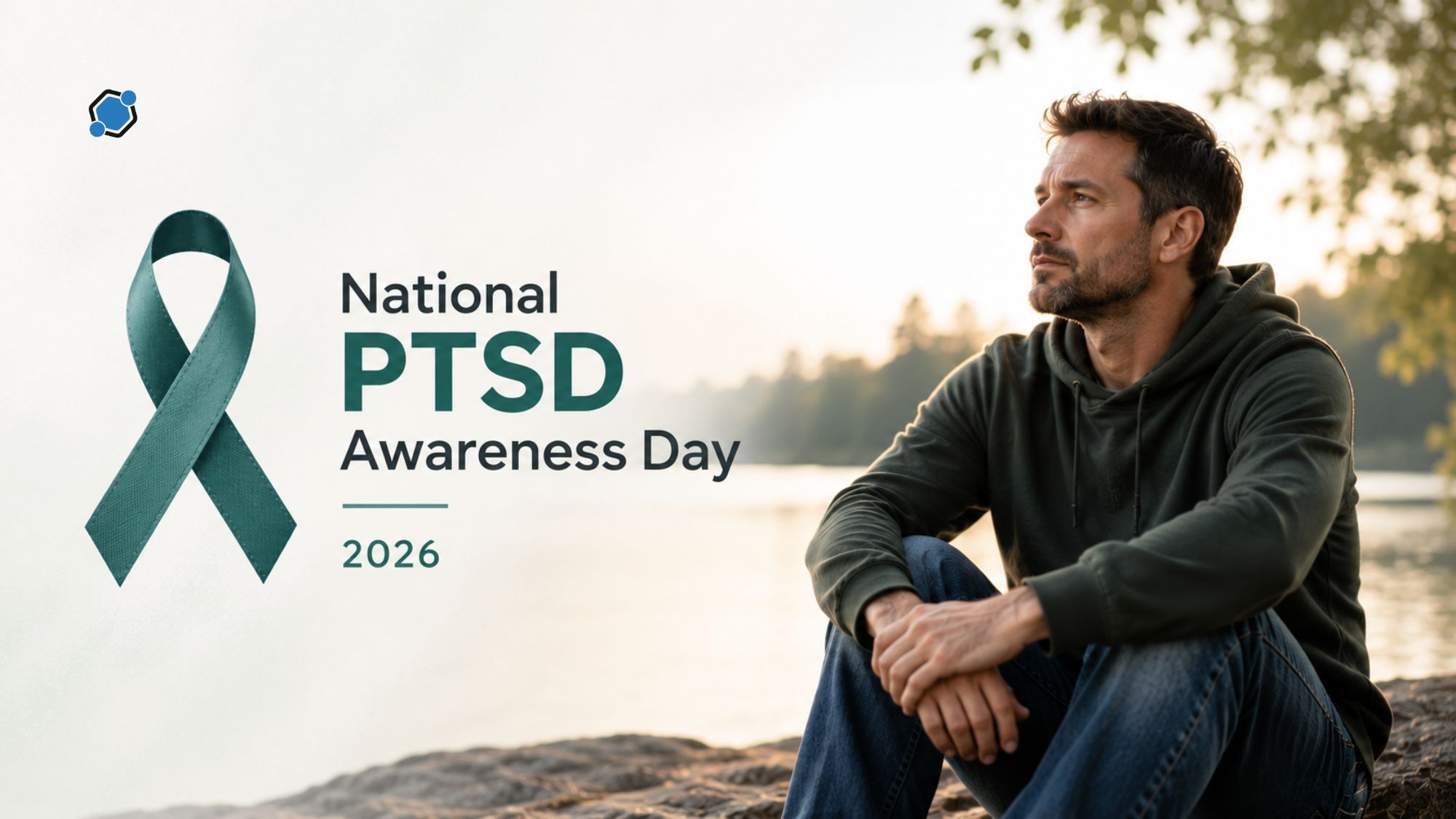
On a spring day in 2007, an Army Staff Sergeant named Joe Biel took his own life in North Dakota after returning from his second tour of duty in Iraq. He had been struggling with post-traumatic stress disorder, often shortened to PTSD. Three years later, in tribute to him, the United States Senate set aside June 27, his birthday, as National PTSD Awareness Day.
That story is the reason for the date on the calendar. The reason behind the observance is broader. PTSD affects millions of people in the United States, and many of them never receive the care that has been shown to help. The day exists to change that, one informed conversation at a time.
Origin of National PTSD Awareness Day
The day was first established in 2010 by United States Senate Resolution 541. The effort was led by Senator Kent Conrad of North Dakota, who introduced the resolution to honor Staff Sergeant Joe Biel of the North Dakota National Guard. June 27 was chosen because it was Biel’s birthday.
Biel had served two tours in Iraq. He returned home struggling with PTSD and died by suicide in April 2007. His family and members of his platoon began working to bring greater public attention to the condition. The Senate resolution that followed framed PTSD as an injury that the country had a responsibility to recognize and treat, alongside the physical wounds of service.
Four years later, in 2014, the Senate designated all of June as PTSD Awareness Month. The Day remained as the focal point on the 27th. The Department of Veterans Affairs, often referred to as the VA, also marks June 27 as PTSD Screening Day, encouraging people who may be carrying symptoms to complete a confidential screening.
Although the Day’s roots lie in a military story, PTSD is not a veterans-only condition. It can affect anyone who has lived through a traumatic event. For a fuller view of the condition and the research landscape behind it, see PTSD Awareness Month 2026: What It Is and Why Research Matters.
What PTSD is, in plain language
Post-traumatic stress disorder is a mental health condition that can develop after a person experiences or witnesses a traumatic event. The event could be combat, a serious accident, a natural disaster, physical or sexual assault, the sudden loss of someone close, or any other event that involved actual or threatened serious harm.
After such an event, it is common to have difficult days. Sleep can be hard. Memories can feel intrusive. Loud sounds or crowded places can feel overwhelming. For most people, those reactions ease over weeks or months. When the symptoms last longer than that, and when they interfere with daily life, a diagnosis of PTSD may apply.
PTSD became a formal diagnosis in 1980, when it was added to the third edition of the Diagnostic and Statistical Manual of Mental Disorders, often called the DSM. The diagnostic recognition gave clinicians a clear set of criteria and opened the door to dedicated research and structured care. Earlier descriptions of similar experiences included terms like “shell shock” and “combat fatigue” in the era of the World Wars.
The four broad symptom categories most clinicians use today are intrusive memories of the event, avoidance of reminders, negative changes in mood or thinking, and increased physical reactions such as a sense of being on edge. A person does not need to have all four to qualify for a diagnosis. A qualified professional makes that determination through interviews and validated screening tools. For an overview of what research participation looks like more generally, see Clinical Trials Explained: Simple Guide for Beginners.
Why public awareness still matters
Even with decades of research behind it, PTSD continues to be misunderstood. Stigma still keeps many people from talking openly about symptoms or asking for help. Some people worry that a diagnosis will affect their job, their relationships, or how others see them. Others assume that what they are experiencing is a personal weakness rather than a recognized medical condition.
PTSD also affects a far wider group than the military community. Survivors of physical or sexual assault, first responders, healthcare workers, people who have lived through natural disasters, refugees, and people who have had a serious medical event can all develop PTSD. Women are roughly twice as likely as men to develop PTSD over a lifetime, though the reasons for that difference involve a mix of social, biological, and exposure-related factors.
A central goal of National PTSD Awareness Day is to make these facts more widely known. When the condition is recognized as common and treatable, fewer people delay seeking help. Conversations with friends, family, and primary care doctors become easier. Communities become more willing to support survivors of trauma. Organizations that advocate for patient communities play a role in spreading those messages, and Patient Advocacy Groups: Finding Support and Trial Information is a useful next read for anyone looking into community-based support.
How PTSD is studied and how research continues
Several established forms of care for PTSD have years of clinical evidence behind them. Three psychotherapies in particular are widely recommended by clinical guidelines: cognitive processing therapy, often shortened to CPT, which helps a person examine how trauma has shaped certain beliefs; prolonged exposure therapy, often shortened to PE, which helps a person gradually face memories and situations they have been avoiding; and eye movement desensitization and reprocessing, often shortened to EMDR, which uses a structured approach to help the brain process traumatic memories. A class of medications called selective serotonin reuptake inhibitors, often shortened to SSRIs, also has approval from the U.S. Food and Drug Administration, the FDA, for treating PTSD.
Research has not stopped at those options. Clinical trials are studying new ways to deliver established therapies, including online and video-based formats; new ways to combine therapy and medication; and newer approaches that include digital tools, group programs, and biological research. Studies are also examining how to make care work better for groups that have historically been underserved, including women, people of color, rural communities, and people whose trauma did not happen in a combat setting.
Every one of those studies depends on participants. Research only moves forward when people who live with PTSD share their experience in carefully designed studies and help researchers learn what works for whom. For a plain-language primer on what taking part in a study actually involves, see Clinical Research Basics: What Every Trial Participant Should Understand Before Enrolling.
How to mark the Day
The simplest ways to mark June 27 do not require expertise or money. Sharing accurate information about PTSD on social media, wearing the color teal, lighting a public space in teal, or reaching out to a family member or friend who has experienced trauma all count. The hashtags #PTSDAwarenessDay and #NationalPTSDAwarenessDay are commonly used on the day.
For people living with PTSD, the Day can be an invitation to consider a next step. That could be reading more from an authoritative source, asking a primary care doctor about a screening, or looking into whether a clinical trial in the area is a fit. Taking part in a clinical trial is one way to access carefully monitored care while contributing to what researchers learn about the condition. It is not the right choice for everyone, but it is a real option that many people overlook.
DecenTrialz makes it easier to look into PTSD-related research in the United States without having to navigate complex registry websites. A short, plain-language matching process is the first step, and you can start at DecenTrialz. For a step-by-step view of what comes next, see How to Find and Enroll in a Clinical Trial: A Step-by-Step Guide.
National PTSD Awareness Day stands for a simple idea: trauma can leave wounds that are real, and those wounds are treatable. The story of Joe Biel and the Senate resolution that followed his death continue to ask each year for a wider conversation about a condition that touches millions of lives.
After a person shares basic information about their health and situation, DecenTrialz looks for studies that may be a possible match. If something looks like a fit, a registered nurse calls to ask a few additional questions. The research site team then handles the full study walk-through, the eligibility checks, and any decisions about taking part. You can start a search at DecenTrialz.
Was this article helpful?

Similar Blogs

Signs of Breast Cancer Other Than a Lump: What Adults Should Watch For
Most public awareness campaigns focus on finding a lump. That message has saved lives, but...
 Vamshi Kantoju
Health Unit Coordinator Day: the behind-the-scenes team that helps clinical trials run
Every August 23, the United States recognizes Health Unit Coordinator Day. The date honors...
Paramraj
Home nursing visits in clinical trials: what participants can expect
Clinical trial visits are starting to look different. In a growing number of studies today...
Vamshi KantojuStay Informed. Stay Connected.
Get updates on verified clinical trials, emerging treatments, and research breakthroughs directly in your inbox. No spam, just science that matters.
