 HIPAA Compliant
 ISO 27001 Certified
National Breastfeeding Month: what participation in clinical research means for nursing parents
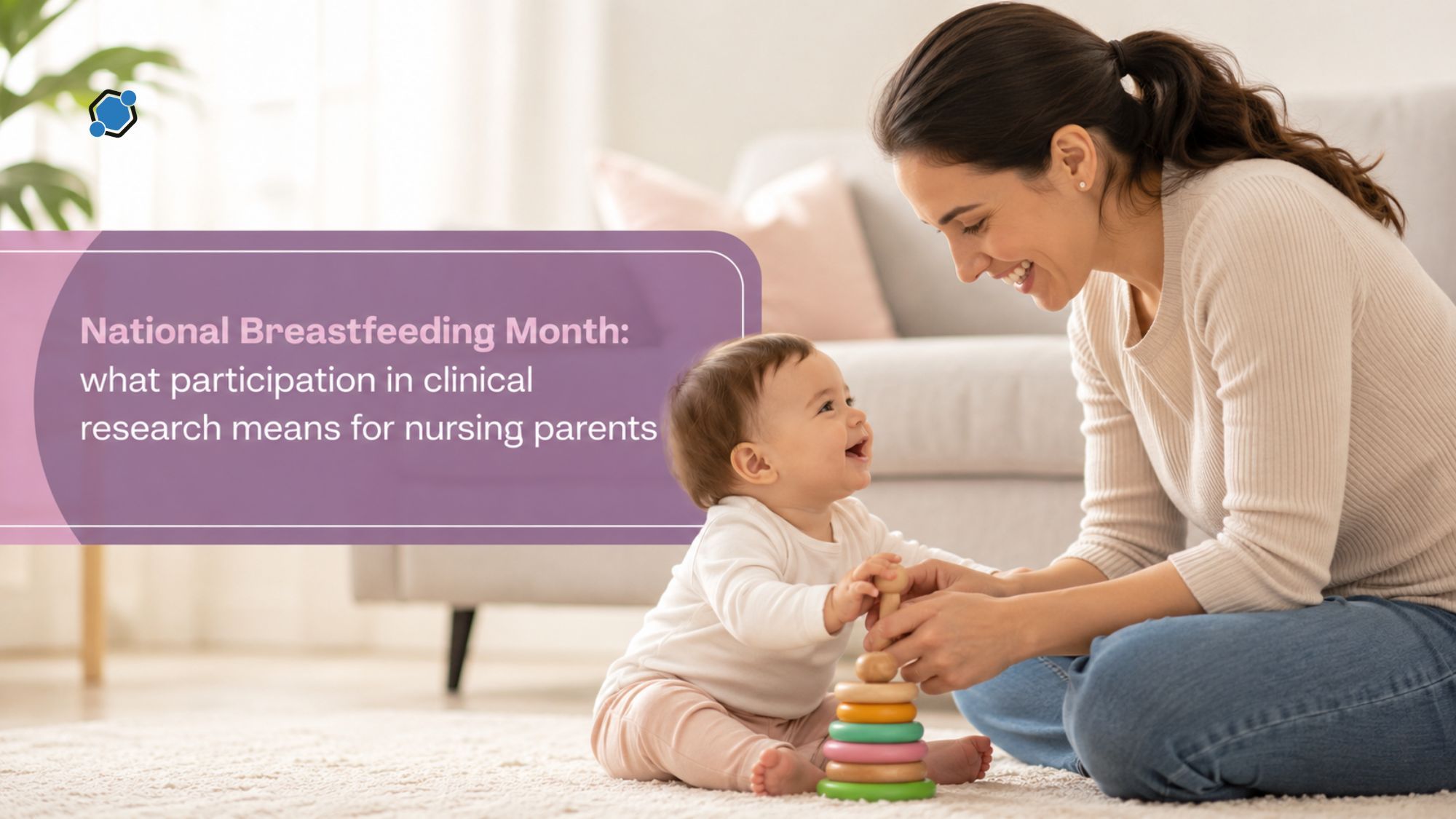
National Breastfeeding Month is observed across the United States every August, and the 2026 theme, RISE, stands for Resilience, Interdependence, Self-Determination, and Empowerment. Beyond community events and public education, the month has become a moment to examine a quieter issue in medicine: nursing parents have historically been left out of most clinical studies, which means that many medications and health interventions used during this stage of life lack research evidence specific to them. This article explains the observance, describes why that evidence gap exists, and outlines what participation in clinical research looks like for a nursing parent today.
What National Breastfeeding Month is and why it takes place in August
A national coalition of health organizations, public agencies, and community groups formally declared August as National Breastfeeding Month in 2011. August was chosen because it already contained an established weeklong global awareness observance held from August 1 through August 7 each year, first celebrated in 1992. Over time, additional community-specific weekly observances were added within the month: a week focused on Indigenous communities (August 8 through 14), one for Asian American, Native Hawaiian, and Pacific Islander communities (August 15 through 21), and one for Black families (August 25 through 31). A global military-focused observance also takes place within the month.
Each week highlights the experience of a specific community, and the month as a whole gives public health organizations, hospitals, and advocacy groups a shared window to raise awareness about infant nutrition, parental support, and, increasingly, the science that shapes clinical care during the postpartum period. Read more about how observances like this connect to broader public health work in How Clinical Trials Contribute to Public Health.
Why nursing parents have been left out of clinical research
For most of modern drug development, protocols excluded people who were pregnant or nursing. The reasoning was cautious: researchers wanted to avoid any possibility of exposing an infant to an investigational product through human milk. That caution, applied broadly and for decades, produced an unintended consequence. Nursing parents became what researchers now call a therapeutic orphan population, meaning a group for whom approved medications lack adequate safety, dosing, and effectiveness data specific to their situation.
The scale of the gap is significant. Most medications prescribed to a nursing parent are used off-label, which means they are used in a way not specifically described in the medication's approved product labeling. Clinicians are then left to make prescribing decisions with limited human data, and the parent is left to weigh benefits and risks without the kind of research evidence available for other populations. This is a system-level gap that developed over many years across many institutions, not a shortcoming of any individual clinician or site. Understanding how eligibility rules are written helps explain why entire groups can be excluded from research; more on that in Eligibility Explained: Why Not Everyone Qualifies for a Trial.
How federal policy is starting to change
Federal action has shifted decisively toward inclusion over the past decade. Three developments matter most.
The 21st Century Cures Act established a federal task force focused on research needs specific to pregnant and postpartum populations. In 2018, the task force submitted a set of recommendations to the Secretary of Health and Human Services. A central message, summarized by the Eunice Kennedy Shriver National Institute of Child Health and Human Development (a research institute within the National Institutes of Health, the federal agency that funds and conducts biomedical research), was the importance of protecting these populations through research rather than from research.
The Food and Drug Administration, the federal agency that regulates and approves medications and vaccines, issued draft guidance in 2019 describing how sponsors should design and conduct studies that include nursing participants. A further draft guidance released in 2025 addressed the inclusion of pregnant and postpartum participants in clinical trials more broadly.
A federal medication labeling rule, in effect since 2015, replaced the older letter-category system with narrative summaries that describe what is known and unknown about a medication during pregnancy and the postpartum period. The change gives clinicians and patients a clearer picture than a single letter grade could provide. For a broader primer on how clinical research is structured and regulated, see Clinical Research Basics: What Every Trial Participant Should Understand Before Enrolling.
What kinds of studies involve nursing participants
Several distinct categories of research are relevant here, and knowing the difference helps a prospective participant understand what a specific study is actually asking.
Milk transfer studies measure how much of a medication passes from the parent into human milk. Researchers estimate the amount an infant might receive relative to the parent's dose, and the result informs future prescribing guidance. Human milk composition studies look at the nutrients, immune components, and other biological factors in milk, sometimes tracked across the postpartum period. Infant feeding outcome studies examine how feeding practices relate to infant growth and development.
Other studies focus on the parent directly. Postpartum mental health research, for example, has begun to include nursing participants where earlier protocols would have excluded them. Vaccine research in nursing populations gained significant momentum during the COVID-19 pandemic, when observational studies (studies that follow groups of people without assigning an intervention) measured antibody presence in milk after vaccination. That work established methods that researchers now apply to other questions. Understanding the different study categories helps clarify what a participant is being asked to consider; Prevention vs Treatment Trials: What's the Difference? explains a related distinction.
What participation actually looks like day to day
The specific procedures depend on the study, but a nursing participant can generally expect a combination of milk sampling, questionnaires about health and feeding patterns, and, in some studies, blood draws or infant assessments. Milk samples are usually collected by pumping or hand expression at scheduled times. Some studies allow continued nursing throughout; others include a defined pump-and-discard window, meaning the participant pumps milk and discards it for a specific period so that an infant is not exposed to an investigational product. The protocol describes any such window in detail before enrollment.
Visits may take place at a research site, at home through a visiting nurse, or through telehealth, depending on how the study is designed. Decentralized and hybrid trial designs, which combine in-person visits with remote assessments, have expanded in recent years and can reduce the amount of travel required. This can be particularly relevant for a parent balancing feeding schedules and other responsibilities. A general overview of the first-visit experience is available in What to Expect at Your First Study Visit.
Common questions nursing participants ask before joining a study
Prospective participants often raise a similar set of questions during pre-screening and the informed consent conversation. Straightforward answers help clarify what participation involves and what protections are in place.
Will joining a study affect milk supply?
Some studies specifically ask participants to report changes in milk production and may compare production before, during, and after the study drug is taken. Any monitoring plan is written into the protocol and explained during informed consent, the process in which the research team describes the study's purpose, procedures, risks, and benefits before a participant agrees to take part.
Is it safe for the baby?
Infant safety is the most common concern among prospective participants, and study oversight is built around it. Some studies allow continued nursing because the investigational product is either not transferred into milk or is transferred at levels that safety reviewers consider acceptable. Other studies use a temporary pump-and-discard step so that the infant is not exposed. The specific approach for a given study is described before enrollment, and separate consent is required for any procedure involving the infant directly.
What happens if nursing needs to pause during the study?
When a protocol requires a pump-and-discard window, the length is defined based on how long the medication stays in the body. Participants are told the length before they agree to join. Some parents choose to store milk in advance or use other feeding options during the window, and the research team can describe available support.
Who oversees participant safety?
Every study is reviewed and monitored by an Institutional Review Board, an independent committee of scientists, clinicians, and community members that evaluates whether a study is ethical and whether participant rights and safety are adequately protected. Larger studies may add a data safety monitoring board, an independent group that reviews accumulating safety data during the study. Participation is voluntary at every stage, and a participant may withdraw at any time without affecting their regular medical care.
How DecenTrialz supports nursing participants exploring clinical research
DecenTrialz is a United States-based platform that uses artificial-intelligence-assisted matching and registered-nurse-led pre-screening to connect people who may be interested in clinical research with research teams running relevant studies. For a nursing parent considering participation, the platform can identify studies whose eligibility criteria fit the person's situation and complete an initial pre-screening conversation with a registered nurse who can answer general questions about what the study involves.
DecenTrialz pre-screens only; the research site team handles the walk-through, eligibility, informed consent, and enrollment. That boundary matters. All medical decisions, final eligibility determinations, and consent conversations take place with the qualified research team at the study site, not with the platform.
To begin exploring available studies, visit decentrialz.com and complete the pre-screening questionnaire.
Learning more about clinical research during National Breastfeeding Month
National Breastfeeding Month draws attention to a stage of life that has, until recently, been underrepresented in clinical research. Federal policy, study design, and platform infrastructure are all moving toward broader inclusion, and each observance year offers a new opportunity for prospective participants to learn what the research process looks like and how to consider participation on their own terms.
For information about active studies and pre-screening, visit decentrialz.com.
Was this article helpful?

Similar Blogs
National Immunization Awareness Month: what vaccines, clinical trials, and community immunity mean for you
What National Immunization Awareness Month is August marks a longstanding public health ob...
 Deeksha Gitta
Synthetic control arms explained: what they mean for placebo assignment in a clinical trial
A common concern for people considering a clinical trial is the possibility of being assig...
Swaroop ESD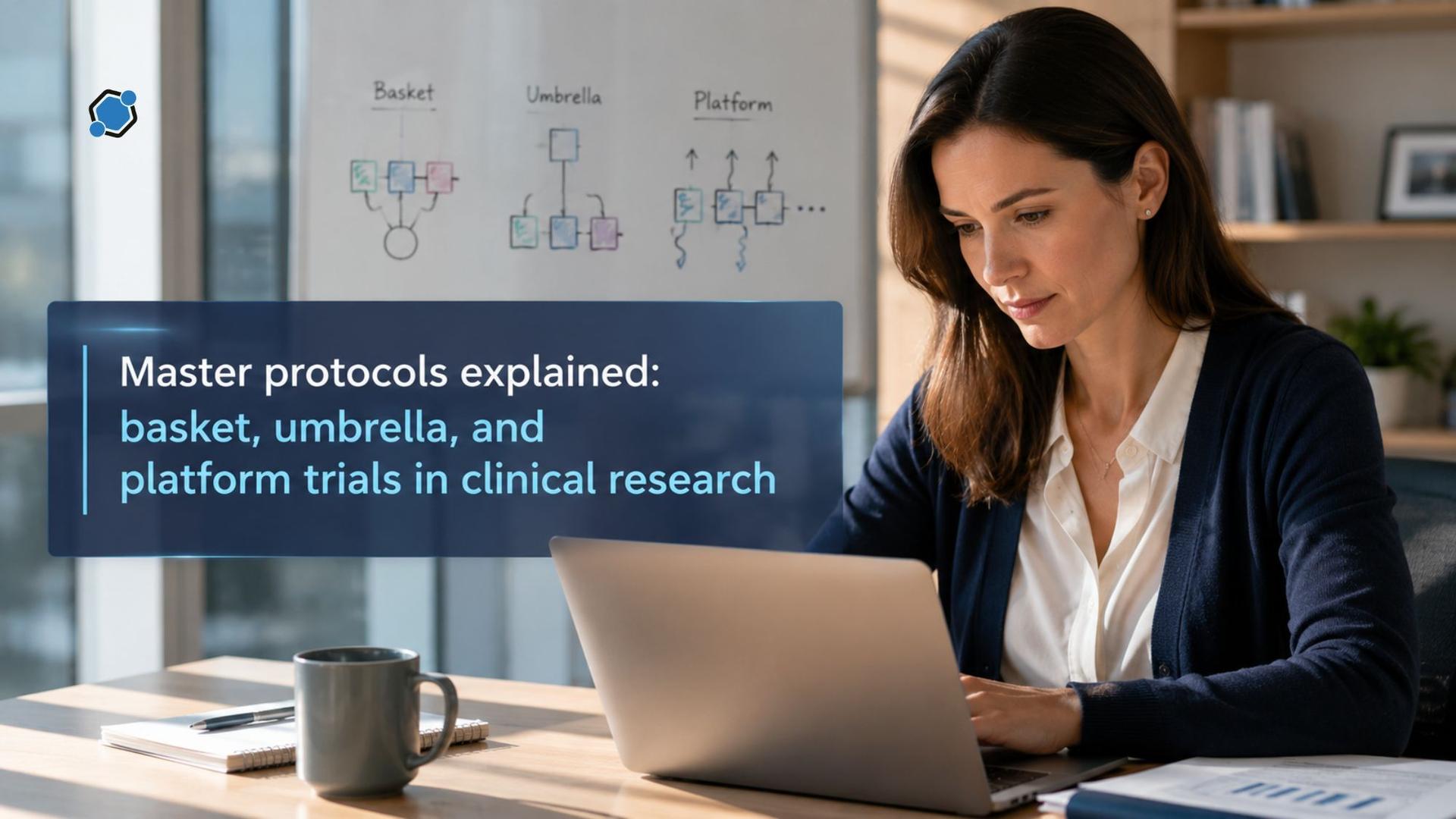
Master protocols explained: basket, umbrella, and platform trials in clinical research
Most clinical trials answer one question at a time. One study drug is tested against one c...
Mahesh UpadristaStay Informed. Stay Connected.
Get updates on verified clinical trials, emerging treatments, and research breakthroughs directly in your inbox. No spam, just science that matters.
