 HIPAA Compliant
 ISO 27001 Certified

Obesity and fatty liver: how does extra weight damage the liver?
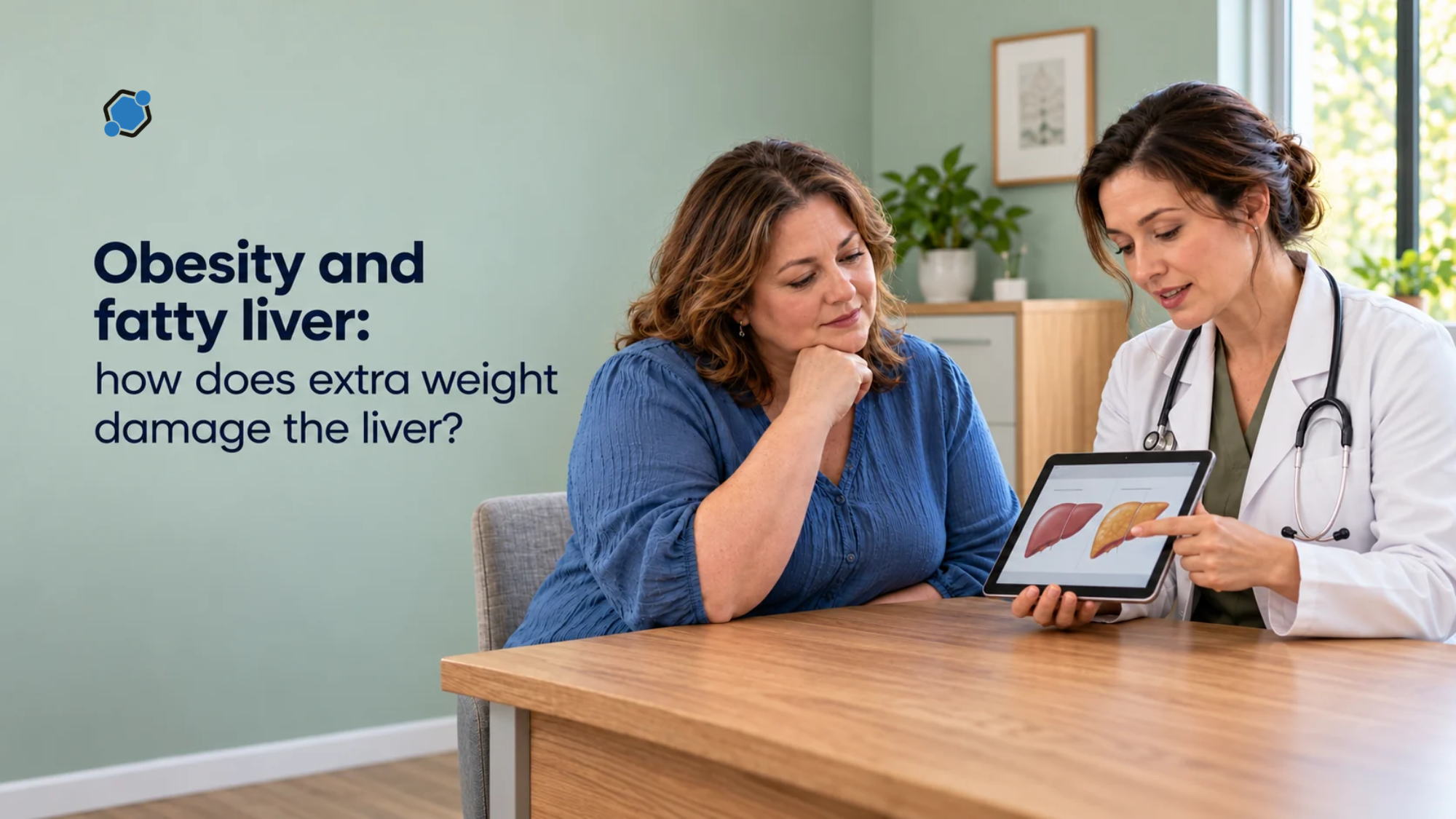
Obesity is the strongest known driver of fatty liver disease, a condition in which excess fat builds up inside liver cells. Roughly one in three adults in the United States is estimated to have some degree of it, and most of them do not know. The condition usually causes no symptoms for years, even as it slowly progresses. Understanding the link between obesity and fatty liver helps explain who is at risk, how the condition is found, and why early changes can make a real difference.
What is fatty liver disease?
The liver sits under the right ribs and handles hundreds of jobs. It filters the blood, processes nutrients, stores energy, and breaks down medicines. A healthy liver holds only a small amount of fat. When fat makes up more than about 5 percent of the liver, doctors call it steatosis, which simply means fat buildup.
Fatty liver disease linked to weight and metabolism is now called metabolic dysfunction-associated steatotic liver disease, or MASLD (formerly called nonalcoholic fatty liver disease, or NAFLD). Liver specialists adopted the new name in 2023. It names the real cause: a problem with how the body handles sugar and fat. The more serious form, once called NASH, is now called metabolic dysfunction-associated steatohepatitis, or MASH.
How fatty liver disease progresses
Fatty liver disease moves along a spectrum. Many people stay at the earliest stage, while others move forward over years or decades.
- Steatosis: Fat builds up in liver cells, with little or no inflammation.
- MASH: Fat is joined by inflammation and damage to liver cells.
- Fibrosis: Ongoing injury leads to scar tissue as the liver tries to repair itself.
- Cirrhosis: Scarring becomes widespread and permanent, and the liver can begin to fail.
Cirrhosis raises the risk of liver failure and liver cancer. Fatty liver disease is now one of the leading reasons for liver transplants in the United States. A broader look at liver disease, liver cancer, and current research shows how these conditions connect.
How does obesity cause fat to build up in the liver?
The main link between obesity and fatty liver is insulin resistance. Insulin is a hormone that moves sugar from the blood into cells. It also tells fat tissue to hold on to its stored fat. Insulin resistance is closely tied to excess body fat. When it develops, this control weakens.
Three things then happen at once. Fat tissue releases more fatty acids into the blood, and many of them travel straight to the liver. The liver also starts making new fat from sugar, a process called de novo lipogenesis. The liver cannot burn or export fat fast enough to keep up, so the extra fat is stored in its cells. Most of this fat comes from the body’s own fat stores rather than straight from food.
Why belly fat matters most
Where fat is stored matters as much as how much there is. Visceral fat is the fat packed deep around the abdominal organs. It drains into the liver through a large blood vessel called the portal vein. That puts the liver first in line for the fatty acids it releases. A closer look at why visceral fat behaves differently explains why waist size often says more about health risk than weight alone.
When fat-filled liver cells become stressed, they can set off inflammation. Over time, that inflammation activates cells that lay down scar tissue. This is how simple fat buildup can progress to MASH and fibrosis.
Who is at risk for fatty liver disease?
A diagnosis of MASLD requires two things: fat in the liver and at least one sign of metabolic strain, with no other cause found. Doctors look for five cardiometabolic risk factors:
- A body mass index (BMI) of 25 or higher, or 23 or higher for people of Asian ancestry, or a large waist measurement
- A fasting blood sugar of 100 mg/dL or higher, an HbA1c of 5.7 percent or higher, or a diagnosis of type 2 diabetes
- Blood pressure of 130/85 mm Hg or higher, or treatment for high blood pressure
- Triglycerides of 150 mg/dL or higher, or treatment to lower them
- HDL (“good”) cholesterol of 40 mg/dL or lower in men or 50 mg/dL or lower in women, or treatment for it
These factors overlap closely with the five numbers behind metabolic syndrome, which is why the two conditions so often appear together. Fatty liver disease is very common in people with obesity, and it affects most adults with type 2 diabetes.
Fatty liver disease without obesity
Fatty liver is not limited to people with obesity. A meaningful minority of people with MASLD have a weight in the normal range, a pattern sometimes called lean MASLD. Many of them still carry extra visceral fat or have insulin resistance that body weight alone does not reveal.
Genes also play a role. A common variant in a gene called PNPLA3 makes it harder for the liver to break down stored fat. This variant is more frequent in some populations, which partly explains why fatty liver disease is most common among Hispanic adults in the United States. Differences in diet, income, and access to screening shape these patterns as well.
Why fatty liver disease is called silent, and how it is found
Most people with fatty liver disease have no symptoms. Some notice tiredness or a dull ache under the right ribs, but these signs are easy to miss. Clear symptoms usually appear only once scarring is advanced. They include yellow skin or eyes, swelling in the belly or legs, easy bruising, and confusion. Anyone with these signs should seek prompt medical care.
Early disease is usually found by chance or through screening. Body weight alone cannot show what is happening inside the liver, a reminder of what BMI can and cannot measure. Doctors use a step-by-step approach instead.
- Liver blood tests: Enzymes called ALT and AST may be raised, but they are often normal even when real disease is present.
- Ultrasound: A standard scan can show moderate or greater liver fat, though it cannot measure scarring.
- FIB-4 score: A simple calculation based on age, two liver enzymes, and platelet count estimates the chance of serious scarring.
- Elastography: A painless, ultrasound-based scan measures how stiff the liver is. A stiffer liver suggests more scarring.
- Liver biopsy: A thin needle removes a tiny sample of liver tissue for study under a microscope. It gives the most detail but is used selectively because it is invasive.
Current U.S. guidance recommends checking for liver scarring in adults with type 2 diabetes or prediabetes. This applies especially to those with obesity or other metabolic risk factors, even when liver enzymes are normal. Routine screening of the general population is not advised.
Can fatty liver disease improve with weight loss?
In its earlier stages, fatty liver disease often improves when the strain behind it eases. Weight loss is the most studied approach. Current guidance links set amounts of lasting weight loss to specific liver benefits:
- Losing about 5 percent of body weight may reduce liver fat.
- Losing about 7 to 10 percent may calm inflammation.
- Losing about 10 percent or more may improve scarring in some people.
For a person who weighs 220 pounds, 5 percent is 11 pounds and 10 percent is 22 pounds. Results vary between individuals, and the benefit depends on keeping the weight off. Cirrhosis that is already established is much harder to undo.
Diet quality matters too. A Mediterranean-style pattern built on vegetables, beans, whole grains, fish, olive oil, and nuts has the strongest support. Regular exercise can lower liver fat even when the scale barely moves.
Medicines and surgery
The first U.S. medicines approved for MASH arrived in 2024 and 2025. They are for adults with MASH and moderate to advanced scarring but no cirrhosis. One is a daily pill that acts on a thyroid hormone receptor in the liver. The other belongs to the GLP-1 receptor agonist class of weight-management medicines. Both received accelerated approval, so further studies are still confirming long-term benefit. They are used alongside diet and exercise, not in place of them.
Weight loss surgery can lead to large, lasting weight loss and may improve MASH in eligible people with obesity. Decisions about any medicine or procedure belong with a treating clinician, since responses vary.
Frequently asked questions about obesity and fatty liver
Can fatty liver disease be reversed?
In many people, the early stages can improve. Lasting weight loss, a healthier eating pattern, and regular activity may reduce liver fat and inflammation, and some people see scarring improve as well. Results differ from person to person and depend on keeping the changes going. Advanced cirrhosis is generally considered permanent.
Is fatty liver disease the same as alcohol-related liver disease?
The two are different conditions that can overlap. MASLD is driven by metabolic factors such as excess weight and high blood sugar. Alcohol-related liver disease is driven by heavy drinking. When a person has metabolic risk factors and also drinks moderate to heavy amounts of alcohol, doctors use a separate label called MetALD.
Does fatty liver disease affect the heart?
Heart disease is the most common cause of death in people with MASLD, ahead of liver disease itself. The two conditions share the same roots, including insulin resistance, high blood pressure, and unhealthy cholesterol levels. Managing those factors may help protect both the heart and the liver.
Can children develop fatty liver disease?
Children can develop it too, and it is now the most common chronic liver disease in children. The risk is highest in children with obesity. Pediatric care teams often check liver health as part of routine care for children with excess weight.
Do certain drinks affect liver fat?
Sugary drinks and alcohol are both linked to more liver fat, so limiting them is commonly advised. Coffee has been linked to milder liver disease in observational studies, which track habits rather than test a change. That shows a link, not proof that coffee treats the condition.
Where fatty liver research is heading
Fatty liver disease is one of the most active areas of clinical research. Several more medicines are in late-stage trials. Researchers are also testing whether scans can replace biopsies for diagnosis and for tracking results.
Finding participants for these studies is hard. Many trials require a liver biopsy. A large share of people screened do not qualify, often because their scarring falls outside the stage a study is testing. This helps explain why screening does not always lead to enrollment, even for people who are interested.
DecenTrialz is a clinical trial recruitment and pre-screening platform that helps people find studies that may fit their health profile. A person shares some health information, AI matching suggests relevant studies, and a registered nurse reviews the information before a referral goes to the research site team. The research site team makes the final eligibility determination, handles informed consent, walks each person through the study, and manages enrollment. DecenTrialz does not provide medical care, diagnose conditions, or conduct the studies.
People living with obesity, fatty liver disease, or related conditions can use DecenTrialz to explore studies and discuss them with their doctor. A match is a starting point, not a guarantee of eligibility or enrollment. For anyone with obesity or type 2 diabetes, asking a clinician about liver health is a practical first step.
Was this article helpful?

Similar Blogs
Hypertension and kidney damage: can high blood pressure cause kidney disease?
Hypertension kidney damage develops slowly, often over many years. It usually causes no sy...
 Vamshi Kantoju
Diabetic nephropathy: what causes it and how is it caught early?
Diabetic nephropathy is kidney damage caused by diabetes, and it is one of the most common...
Swaroop ESD
World Psoriasis Day 2026: What is psoriasis, and how is research changing care?
World Psoriasis Day takes place on Thursday, October 29, 2026, and this year’s theme is “L...
 Anish Teepireddy
Stay Informed. Stay Connected.
Get updates on verified clinical trials, emerging treatments, and research breakthroughs directly in your inbox. No spam, just science that matters.
