 HIPAA Compliant
 ISO 27001 Certified
What is Pharmacovigilance and why it matters
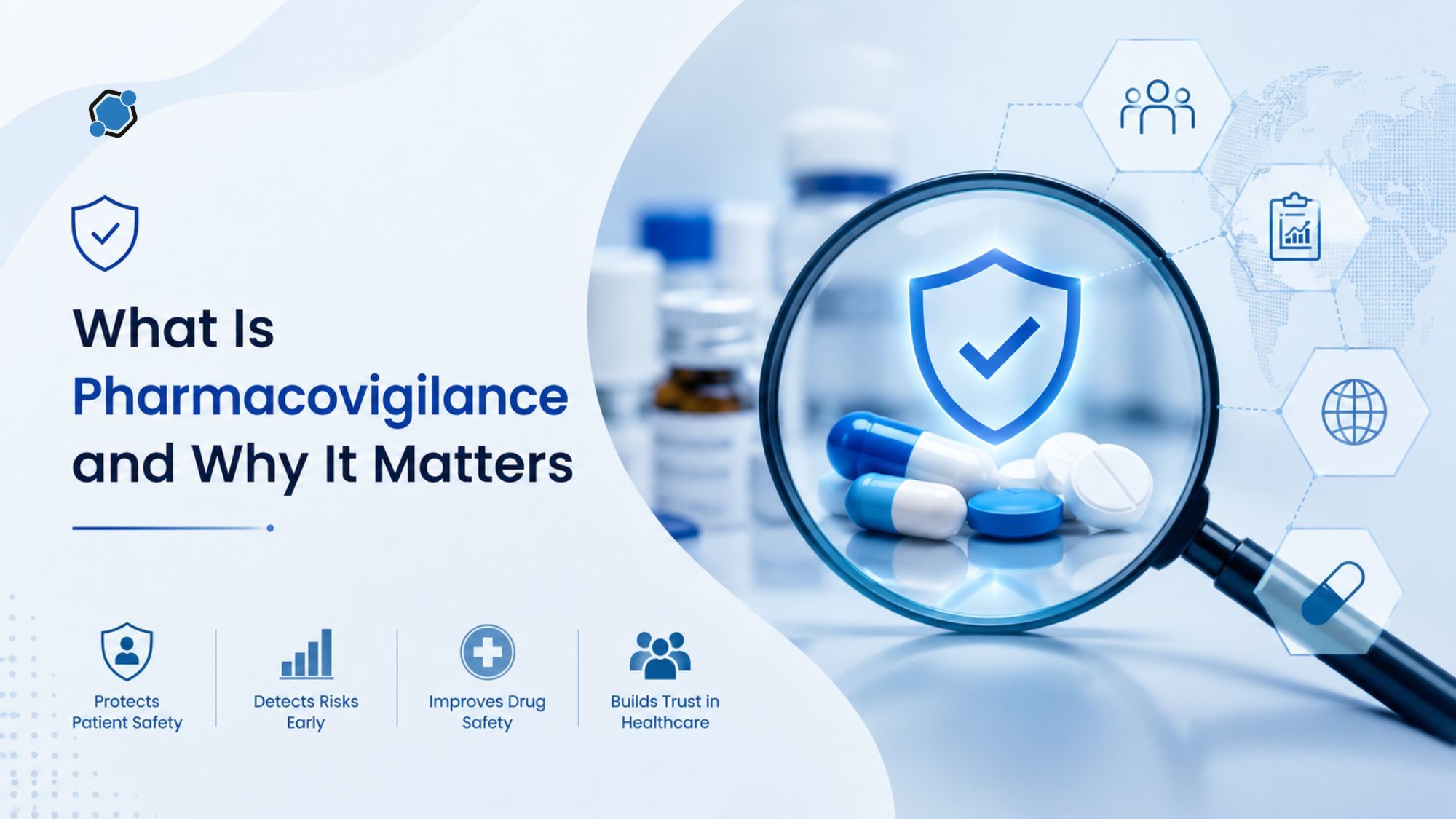
A medicine that passes a clinical trial has been studied in hundreds or thousands of carefully selected people. Once it reaches the market, it is taken by millions of people across many ages, conditions, and combinations of other drugs. Some safety signals only appear at that scale. Pharmacovigilance is the system that watches for those signals and acts on them.
The term combines the Greek word for drug (pharmakon) with the Latin word for watchfulness (vigilantia). The World Health Organization (WHO) defines pharmacovigilance as the science and activities related to detecting, assessing, understanding, and preventing adverse effects or any other drug-related problem. In simpler terms, it is how regulators, researchers, and healthcare professionals keep track of what a medicine actually does in the real world, long after the laboratory and the clinical trial.
For people considering or already in a clinical trial, and for the sites that run those trials, pharmacovigilance is not a back-office function. It directly shapes what gets reported, what gets paused, and what gets changed about a study.
What Pharmacovigilance Actually Means
Pharmacovigilance covers every activity that helps identify when a medication is causing harm. That includes collecting reports of side effects, analyzing those reports for patterns, investigating whether a pattern is real or coincidence, and deciding what to do about it. The decisions can range from adding a warning to a drug label, to restricting the patient groups who can receive the medication, to withdrawing the drug from the market entirely.
A key term to understand is adverse drug reaction (ADR). An adverse drug reaction is an unintended, harmful response to a medicine taken at a normal dose. This is different from an adverse event (AE), which simply means anything bad that happens to a patient who is taking a medication, regardless of whether the medication caused it. Sorting out the difference between the two is one of the core jobs of pharmacovigilance professionals.
Clinical trials produce extensive safety data, but trials are limited by design. They typically include a few hundred to a few thousand participants, often exclude people with other health conditions, and last for months or a few years. Rare side effects, long-term effects, and interactions with other drugs may only become visible once a much larger and more varied population is using the medicine. To understand how a treatment fits into the broader process of testing and approval, see Clinical Trials Explained: Simple Guide for Beginners.
Why Pharmacovigilance Exists
The modern pharmacovigilance system was built in response to a specific tragedy. In the late 1950s and early 1960s, a sedative called thalidomide was prescribed widely in several countries to pregnant women experiencing morning sickness. By 1961, the drug was linked to severe birth defects in thousands of infants. The scale of the harm made it clear that the world needed a coordinated way to track drug safety after approval, not only before.
In response, the WHO launched the Programme for International Drug Monitoring in 1968. Today, more than 170 countries participate, sharing reports of suspected adverse drug reactions through a central database managed by the Uppsala Monitoring Centre in Sweden. In the United States, the Food and Drug Administration (FDA) runs the MedWatch program, which collects reports from healthcare professionals, manufacturers, and the general public.
Why does any of this matter? Because a treatment that looked safe in a 2,000-person trial may, once prescribed to 200,000 people, reveal a rare but serious problem. Pharmacovigilance is what detects that problem early, before more people are harmed. When safety concerns during an active study are serious enough, a regulator can pause the trial while the issue is investigated. For more on that, see What Happens When the FDA Places a Clinical Trial on Hold?.
How Pharmacovigilance Works in Practice
The backbone of pharmacovigilance is something called spontaneous reporting. A healthcare professional, a manufacturer, or a patient notices that someone may have had a bad reaction to a medicine, and they file a report. These reports flow into national safety databases, such as the FDA Adverse Event Reporting System (FAERS) in the United States, and from there into the global WHO database called VigiBase.
Once reports accumulate, pharmacovigilance professionals look for what is called a signal. A signal is a pattern in the data that suggests a previously unknown or poorly understood link between a drug and an adverse effect. If a signal looks real after careful analysis, it can trigger several actions. A regulator may update the medicine label with a new warning. The manufacturer may be required to run an additional safety study. Restrictions may be placed on who can prescribe the drug or which patients can receive it. In the most serious cases, the drug is pulled from the market.
These actions also affect ongoing clinical trials. If new safety information emerges during a study, participants who are already enrolled must be told about it and given the chance to decide whether to continue. This process is known as re-consent. For a deeper look at why and when this happens, see What is Re-Consent in Clinical Trials?.
What Pharmacovigilance Means for Clinical Trial Participants
If you are considering joining a clinical trial, or you are already in one, pharmacovigilance touches the experience in several practical ways.
Every clinical trial collects safety data at every visit. The study team asks how you are feeling, whether you have noticed any new symptoms, and whether you have started any new medicines since the last check-in. This is not casual conversation. It is structured data collection that feeds directly into the safety record for the medication being tested. Each report you make is reviewed by the study team, by the medical monitor working with the sponsor, and in many cases by an independent safety committee. To understand how to read the document that lays all of this out in advance, see How to Read Your Informed Consent Form Before Joining a Clinical Trial.
If the safety picture of the medication changes during the trial, you have the right to be told. New side effects discovered elsewhere in the study, or in another country, must be communicated to you. From there, you have the right to continue, to withdraw, or to ask questions before deciding.
You also have the right to report side effects yourself, both during the trial and after a medication is approved. In the United States, the FDA MedWatch system accepts reports directly from the general public. Patient reports have, in some cases, been the first signal of an important safety issue.
If you are exploring clinical trial options and want a clear sense of what a study involves before committing, DecenTrialz can help. You share some basic information about your health, get matched with trials that may fit, and speak with a nurse who walks you through what each study involves, including the safety check-ins you can expect.
What Pharmacovigilance Means for Research Sites
For a clinical trial site, pharmacovigilance is built into daily operations. Sites are required to recognize, document, and report adverse events on strict timelines set by international research standards, specifically the International Council for Harmonisation Good Clinical Practice guidelines (ICH-GCP), and by individual regulators such as the FDA.
Several responsibilities sit at the center of site-level pharmacovigilance work. Investigators and study staff must be trained to recognize adverse events, including those a participant may not initially connect to the study medication. Serious adverse events, defined as events that are life-threatening, result in hospitalization, cause significant disability, or lead to death, generally must be reported to the sponsor within 24 hours. Sites must also notify their Institutional Review Board (IRB) according to local rules, and they must keep complete, contemporaneous records that can withstand a regulatory inspection.
The quality of safety data depends heavily on the site. Underreporting, late reporting, or vague descriptions of events can delay or distort the signal that pharmacovigilance teams are trying to detect. For research sites, pharmacovigilance is therefore both a compliance obligation and a clinical responsibility to the broader research community. For a fuller view of what compliance looks like at the site level, see Clinical Trial Compliance: Essential Practices Every Site Must Follow.
Pharmacovigilance is the reason medications continue to be evaluated long after approval, and the reason participants in active studies are given new safety information as it becomes available. It is the system that turns isolated reports into population-level evidence, and population-level evidence into action.
For participants, this means a clinical trial is not a closed environment. Symptoms and side effects matter, and reporting them is part of how research is made safer for everyone who comes after. For research sites, it means safety reporting is one of the most consequential responsibilities of the trial team, with implications that reach far beyond a single study.
If you are thinking about joining a clinical trial and want a clear picture of what to expect, including how safety check-ins work in practice, DecenTrialz can help you explore the options. After sharing some basic information about your health, you get matched with trials that may be a fit, and a nurse helps you understand what each study involves before any decision is made.
Was this article helpful?

Similar Blogs
Health Unit Coordinator Day: the behind-the-scenes team that helps clinical trials run
Every August 23, the United States recognizes Health Unit Coordinator Day. The date honors...
 Paramraj
Home nursing visits in clinical trials: what participants can expect
Clinical trial visits are starting to look different. In a growing number of studies today...
Vamshi Kantoju
World Mosquito Day 2026: How clinical trials are advancing mosquito-borne disease prevention
Mosquitoes are often described as the deadliest animal on the planet, and the reason is no...
Mahesh UpadristaStay Informed. Stay Connected.
Get updates on verified clinical trials, emerging treatments, and research breakthroughs directly in your inbox. No spam, just science that matters.
