 HIPAA Compliant
 ISO 27001 Certified
Women’s Equality Day: what does August 26 commemorate, and why does it still matter?
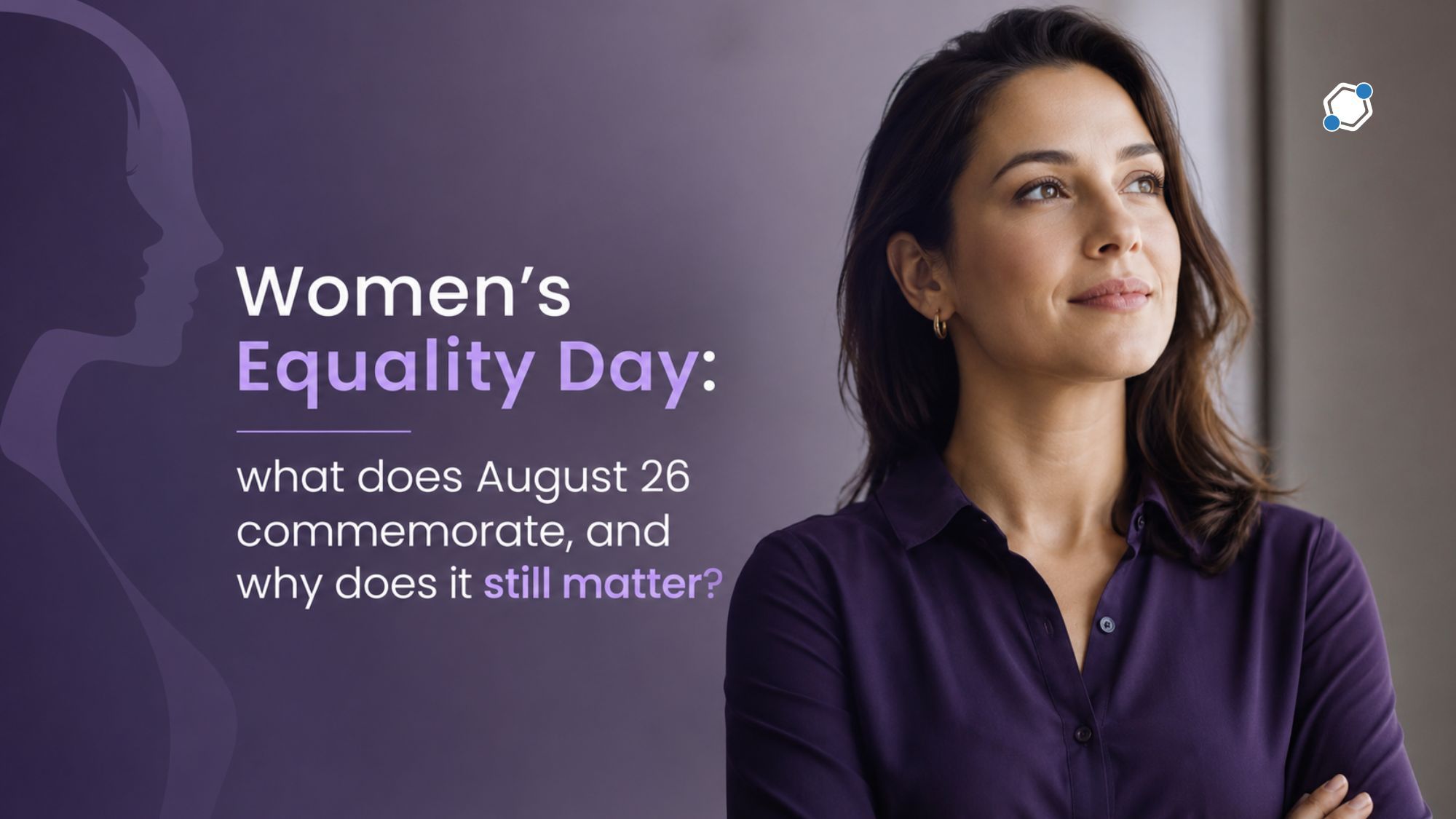
Every August 26, the United States marks Women’s Equality Day. The observance honors a single date in 1920 when a nearly seventy-year campaign for women’s suffrage crossed the finish line, and it looks forward to the work of equality that has continued in the decades since. The day is anchored in one specific legal moment, and it carries a broader meaning that reaches into voting, work, education, health, and civic life.
What Women’s Equality Day commemorates
Women’s Equality Day marks the certification of the Nineteenth Amendment to the United States Constitution, which took effect on August 26, 1920. The amendment states that the right of citizens of the United States to vote shall not be denied or abridged by the United States or by any State on account of sex. With those words, the federal government could no longer bar a person from voting because of their sex, and millions of women became eligible to cast a ballot for the first time in a national election.
The date on the calendar carries a technical distinction. The final state ratification vote happened on August 18, 1920, when Tennessee became the thirty-sixth state to approve the amendment, meeting the three-fourths threshold required by the Constitution. Eight days later, on August 26, the United States Secretary of State signed the proclamation that formally added the amendment to the Constitution. That proclamation is the moment Women’s Equality Day commemorates each year.
The long road to the ballot
The push for women’s suffrage in the United States is often traced to the Seneca Falls Convention of 1848, when a group of reformers gathered in upstate New York and issued the Declaration of Sentiments. The document listed the ways women were denied equal standing under the law, and it included a formal call for the right to vote. Elizabeth Cady Stanton, Susan B. Anthony, Lucretia Mott, Sojourner Truth, and many others led the decades of organizing that followed.
Progress arrived slowly and unevenly. Wyoming Territory extended the vote to women in 1869, and a handful of other Western states followed in the late nineteenth and early twentieth centuries. A federal suffrage amendment was first introduced in Congress in 1878 and reintroduced session after session for the next four decades. National organizations formed, splintered, merged, and expanded. Parades, petitions, hunger strikes, and arrests marked the final years of the campaign. In 1919, Congress finally passed the amendment and sent it to the states for ratification.
The victory in 1920 did not extend the vote to every woman equally. Black women in many Southern states faced poll taxes, literacy tests, and intimidation that kept them from the polls for another four decades. Native American women were not recognized as United States citizens until the Indian Citizenship Act of 1924, and even after that, several states restricted their voting for years. Asian American women faced their own set of citizenship and immigration barriers. The Voting Rights Act of 1965 finally created federal enforcement powers to protect the ballot for people who had long been denied it in practice.
How Women’s Equality Day became an official observance
The formal designation came fifty-one years after ratification. In 1971, United States Representative Bella Abzug of New York introduced a resolution to recognize August 26 as a national observance. Congress passed a joint resolution in 1973 designating the date as Women’s Equality Day, and it directed the president to issue an annual proclamation to mark the occasion. Every sitting president since has done so.
The 1973 language explains the choice of the word equality rather than the more limited suffrage. The resolution acknowledged that the Nineteenth Amendment was a starting point and that women continued to seek equal treatment under the law and in public life. That framing has shaped how the observance has evolved. Community organizations, civic groups, and advocacy networks have used the day to draw attention to a wide range of ongoing issues, and the role of advocacy in carrying equality forward is also seen in fields such as health, where Patient Advocacy Groups: Finding Support and Trial Information have taken on a similar role.
How Women’s Equality Day is observed today
Presidential proclamations remain the anchor of each year’s observance. Museums, libraries, universities, and civic organizations host lectures, exhibits, and voter registration drives. National groups such as the League of Women Voters, the National Organization for Women, and dozens of state and local coalitions build programming around the day. Themes shift from year to year, with recent observances highlighting voting access, pay equity, women’s health, and representation in leadership.
Educators often use August 26 as an on-ramp to teach the longer history of the suffrage movement and the civil rights work that followed. Community events pair archival exhibits with panels on current policy questions, and social media campaigns amplify voices that have historically been underrepresented in mainstream commemorations. The result is an observance that honors a legal milestone while treating equality as an active project, one that overlaps with broader access work described in Ensuring Equity: Strategies for Inclusive Global Clinical Trials.
The work still ahead
The Nineteenth Amendment removed a specific legal barrier. It did not, on its own, deliver full equality across every arena where women live and work. In the century since, laws, court decisions, and civic action have extended protections in areas such as employment, credit, education, and reproductive care, and gaps still remain in areas that touch the daily lives of women and their families.
Health and medical research is one of those areas. For much of the twentieth century, women were largely absent from clinical trials, meaning research studies that test whether a new study intervention is safe and effective. Federal law and regulator action later addressed the exclusion, and representation in research has improved, though gaps in certain fields persist. For readers who want to understand how modern research is designed and how participation works, Clinical Trials Explained: Simple Guide for Beginners offers a plain-language starting point.
Newer study designs are also working to reach communities that have long been left out. How Decentralized Trials May Improve Research Access explains how allowing some study procedures to happen at home, through telehealth visits, or at a local clinic can reduce the travel and scheduling load that keeps many women, especially those with caregiving responsibilities, out of participation.
DecenTrialz is a United States based clinical trial recruitment and pre-screening platform that helps people explore whether research studies might fit their situation. The platform combines AI-assisted matching, which compares a person’s health background against studies that are actively enrolling, with pre-screening conversations led by Registered Nurses who answer questions in plain language and without pressure. Research site teams, never DecenTrialz, own the final eligibility determination, informed consent, study walk-through, and enrollment. Anyone curious about what options exist can start exploring at their own pace.
Frequently asked questions
When is Women’s Equality Day celebrated?
Women’s Equality Day is observed every year on August 26 in the United States.
What does Women’s Equality Day commemorate?
It commemorates the certification of the Nineteenth Amendment to the United States Constitution on August 26, 1920, which guaranteed that the right to vote could not be denied on the basis of sex.
Who created Women’s Equality Day?
Congress designated the observance in 1973, following a resolution introduced by Representative Bella Abzug of New York in 1971. Every president since 1973 has issued an annual proclamation.
Did the Nineteenth Amendment give every woman the right to vote?
In practice, it did not. Legal barriers such as poll taxes and literacy tests, along with restrictive citizenship laws, kept many Black women, Native American women, and Asian American women from the ballot for decades after 1920. The Voting Rights Act of 1965 provided the federal enforcement powers that made broader participation possible.
How is Women’s Equality Day observed?
Common observances include the annual presidential proclamation, community events hosted by civic organizations, voter registration drives, educational programs at schools and libraries, and public campaigns that highlight ongoing gender equality issues.
Why is Women’s Equality Day still relevant today?
The day marks a milestone and a starting line. It commemorates a legal right that took generations to secure, and it serves as an annual moment to consider the areas where full equality remains a work in progress, including pay, health care, representation in research, and civic participation.
Is Women’s Equality Day a federal holiday?
It is an official federal observance, marked by an annual presidential proclamation. It is not a public holiday, so government offices, schools, and businesses remain open.
Honoring a milestone by continuing the work
Women’s Equality Day is both a look backward and a look forward. It honors the persistence of the women who spent decades securing the right to vote, and it acknowledges the many people who continued that work after 1920 so that the promise of the Nineteenth Amendment could reach further. Each August 26 is an invitation to remember what changed, to notice what has not, and to keep building toward the fuller equality the day is named for.
Was this article helpful?

Similar Blogs

Direct-to-patient shipping in clinical trials: how study medication arrives safely at home
Home delivery of prescription medications has become a familiar part of everyday healthcar...
 Swaroop ESD
Signs of Breast Cancer Other Than a Lump: What Adults Should Watch For
Most public awareness campaigns focus on finding a lump. That message has saved lives, but...
Vamshi Kantoju
Health Unit Coordinator Day: the behind-the-scenes team that helps clinical trials run
Every August 23, the United States recognizes Health Unit Coordinator Day. The date honors...
ParamrajStay Informed. Stay Connected.
Get updates on verified clinical trials, emerging treatments, and research breakthroughs directly in your inbox. No spam, just science that matters.
