 HIPAA Compliant
 ISO 27001 Certified
Direct-to-patient shipping in clinical trials: how study medication arrives safely at home
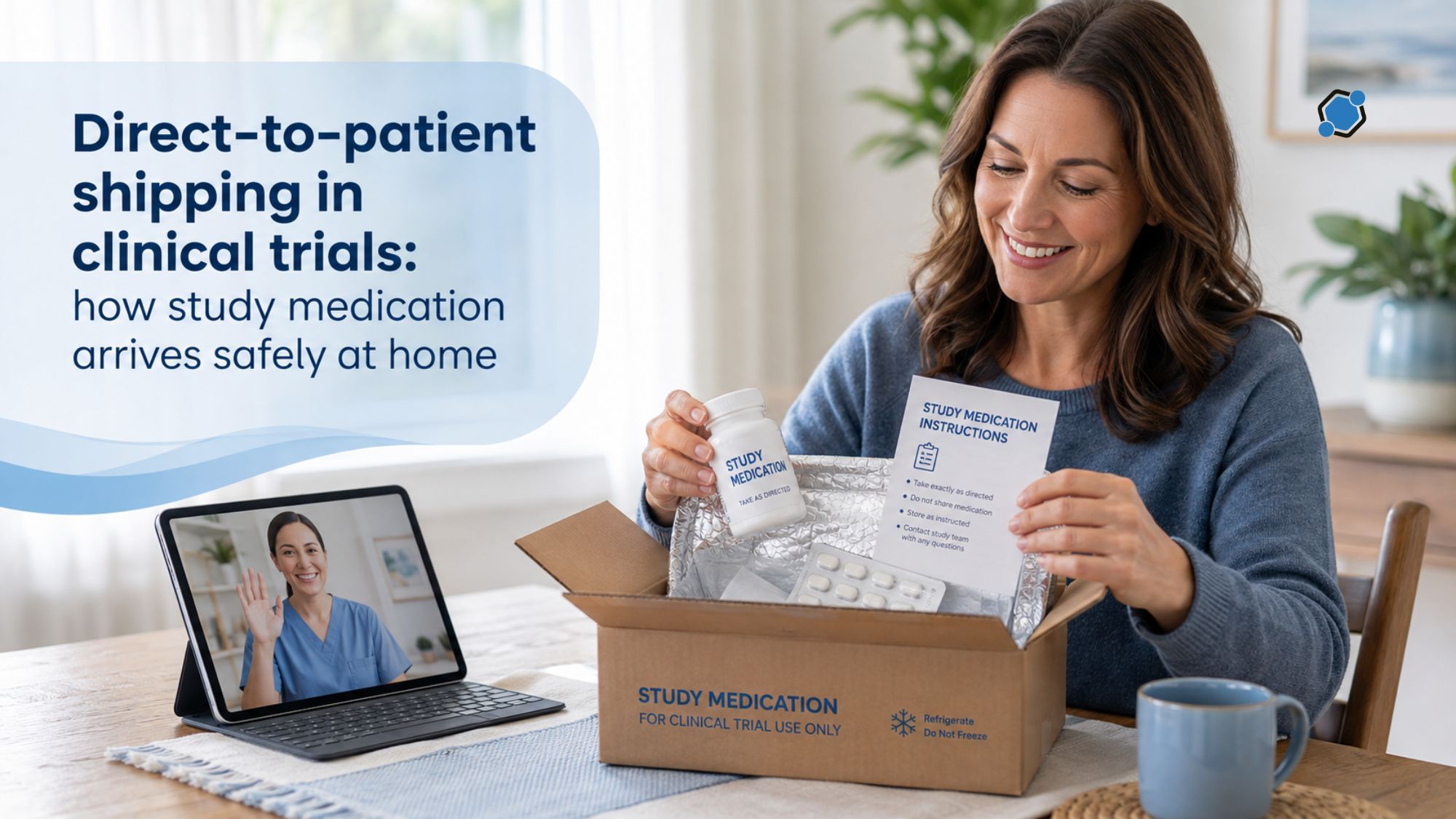
Home delivery of prescription medications has become a familiar part of everyday healthcare. In clinical trials, a similar but more tightly controlled version of home delivery is now available for many studies. It is called direct-to-patient shipping, and it allows participants in some clinical trials to receive their study medication at home instead of picking it up during an in-person visit at a research site.
Direct-to-patient shipping is one feature of what the U.S. Food and Drug Administration (FDA) calls decentralized clinical trials, meaning trials in which certain activities happen at locations other than a traditional research center. Home delivery of study medication is one of the most visible parts of that shift. For participants, it can turn a full-day trip into a scheduled arrival at the front door. The process itself, however, involves specialized packaging, tracked logistics, and layered oversight that most people never see.
What direct-to-patient shipping means in a clinical trial
Direct-to-patient shipping refers to the delivery of an investigational product, meaning the drug, biologic, or device being tested in a clinical study, from a central depot or study pharmacy to a participant’s home address. The delivery is coordinated by the research site under the supervision of the principal investigator, who is the physician or scientist legally responsible for how the study is conducted at that location.
This model is one component of a broader movement toward decentralized and hybrid trials, in which some visits, assessments, and dispensing steps take place remotely rather than at a research center. Home delivery of study medication does not replace the research site. The site still owns eligibility decisions, informed consent, safety monitoring, and enrollment. What changes is where the participant receives the study drug, along with some of the visits that go with it.
For readers new to this topic, an overview of how decentralized trials may improve research access offers useful background on why sponsors and study teams are adopting these models.
How a shipment travels from the depot to the front door
The path a single package takes is straightforward in outline and highly regulated in detail. A typical direct-to-patient shipment moves through several coordinated steps.
The research site or study system triggers a shipment first. This is often done through Interactive Response Technology, sometimes called IRT, which is the software that tracks study medication inventory and prompts a new shipment when a participant is due for supply.
A central depot or investigational pharmacy then prepares the labeled kit. The kit contains the study drug, any required instructions, and materials for return or disposal if the protocol calls for them.
Once prepared, the package is placed in validated shipping containers. For medications that must stay refrigerated or within a specific temperature range, the container is qualified to hold that range for a defined number of hours or days, and a temperature monitoring device travels inside the box.
A specialty courier, meaning a logistics provider trained in the handling of pharmaceutical and clinical trial shipments, then transports the package under a documented chain of custody, meaning a written record of who handled the package at every point along the way.
The participant receives the shipment at home, confirms delivery, and follows the site’s instructions for storage. Some studies also arrange a home health nurse visit for medications that require professional administration. For an example of how remote clinical touchpoints work alongside home delivery, see the overview of telemedicine visits in trials.
Finally, the study system schedules the next shipment automatically, based on the participant’s dosing timeline, so that study medication does not run out before the following delivery.
The safeguards that protect the medication and the participant
Several layers of oversight sit behind every direct-to-patient shipment, even though the participant sees only the box on the porch.
Regulatory oversight comes first. In September 2024, the FDA issued final guidance titled Conducting Clinical Trials With Decentralized Elements, which formally addressed direct distribution of investigational products to participants. The guidance places responsibility on the investigator to authorize the release of the study drug, confirm that the participant received it, and document the return or disposal of any unused product. In January 2025, an international standard known as ICH E6(R3) Good Clinical Practice was finalized, and it also recognizes home shipment of study medication while reinforcing that the investigator retains responsibility for how the product is handled.
Cold chain integrity is a second safeguard. Cold chain is the industry term for the uninterrupted temperature-controlled path a medication travels from manufacturing through delivery. If a temperature reading falls outside the approved range during transit, an event known as a temperature excursion, the shipment is typically quarantined and replaced rather than used. Participants are usually told not to open temperature-controlled shippers until instructed, because the packaging is designed to protect the contents for a specific window.
Chain of custody and drug accountability form a third layer. Every unit of study medication is tracked from the manufacturer to the depot to the participant, and back to the site or a disposal partner if it is not used. Participants are asked to return unused medication and empty containers so that the study team can reconcile inventory. Careful patient privacy practices also apply, and shipments generally use plain, unmarked packaging so that a neighbor or delivery driver cannot identify the contents as clinical trial medication.
Home delivery does not lower the standard of care that applies to a trial. It changes where the medication arrives while keeping the same investigator responsibilities in place.
When home delivery is possible and when it is not
Home delivery works well for study drugs that are stable, self-administered or nurse-administered, and safe to store in a household setting. Oral tablets, capsules, and many self-injectable medications generally fit this description. Some studies also arrange for a trained home health nurse to visit and administer the study drug, especially when the medication requires monitoring during and after dosing.
Home delivery is limited or unavailable for other categories of study drugs. Controlled substances, meaning medications regulated under federal drug schedules because of their potential for misuse, face strict shipping restrictions from the U.S. Drug Enforcement Administration and are often dispensed only in person. Intravenous infusions typically require a clinical setting because of the equipment and monitoring involved. Certain biologics, meaning medicines made from living cells, and medications with very short stability windows may also require in-clinic administration. The system, not the participant, drives these limits. Rules about which products can be shipped, to which states, and under what conditions are shaped by federal regulators, state pharmacy licensure, and the specific study protocol.
For participants weighing whether a study that offers home delivery is right for them, a broader introduction to virtual clinical trials can help clarify how remote elements are combined with in-person visits.
Frequently asked questions about home delivery of study medication
Is direct-to-patient shipping safe?
Direct-to-patient shipping follows the same federal regulations that apply to any clinical trial, and the investigator remains responsible for supervising how the study drug is supplied. Validated packaging, temperature monitors, tracked couriers, and documented chain of custody are all part of the process.
Who pays for the shipping?
Shipping and courier services in a direct-to-patient trial are arranged and funded by the study, not by the participant. Participants should not receive an invoice for the delivery of study medication.
Will a neighbor be able to tell that the package contains clinical trial medication?
Shipments generally arrive in plain, unmarked packaging without the name of the sponsor, drug, or study on the outside. Participant identity is also typically shielded from the sponsor.
What happens if a delivery is missed or delayed?
Participants are usually given a scheduled delivery window and a contact at the research site. A missed or delayed delivery should be reported to the site so that a new shipment can be arranged. Study medication that has sat outside for an unknown period of time should not be used until the site confirms it is safe.
What if the medication arrived warm or the temperature monitor shows an alert?
A shipment that shows a temperature excursion should not be used. The participant should contact the research site, which will typically arrange a replacement shipment and document the incident as part of drug accountability.
Can a family member sign for the delivery?
This depends on the study protocol. Some studies allow a designated household member to receive the shipment, while others require the participant to sign personally. The research site can confirm what is permitted before the first delivery.
Can a participant decline home delivery and pick up the study drug in person?
Participation in a clinical trial is voluntary at every step. A participant who prefers in-person dispensing can raise this with the research site, which can explain what options are available for the specific study.
How DecenTrialz supports decentralized participation
DecenTrialz is a United States clinical trial recruitment and pre-screening platform. It uses AI-assisted matching and RN-led pre-screening to help people explore whether they may be a fit for active clinical studies, and it then connects qualified individuals to the research sites running those trials. Eligibility, informed consent, and enrollment decisions remain with the research site and study team, and DecenTrialz does not administer study drugs, ship medication, or provide medical care.
For studies that include home delivery of study medication, DecenTrialz makes it easier for participants to find and reach the research teams offering that option. A step-by-step guide on how to find and enroll in a clinical trial explains what the initial process looks like from a participant’s perspective. Individuals who are curious about clinical trial participation, including studies with decentralized elements such as home delivery, can begin by exploring the DecenTrialz platform and completing a short pre-screening.
Was this article helpful?

Similar Blogs
Mobile phlebotomy in clinical trials: how home blood draws work
Blood tests are one of the most common procedures in a clinical trial. They tell the study...
 Anish Teepireddy
Men's Breast Cancer Awareness Week 2026: signs, risks, and the research gap
Every person is born with a small amount of breast tissue, and men are no exception. That ...
 Swaroop ESD
Obesity and Sleep Apnea: How Weight Affects Breathing During Sleep
Excess body weight is the strongest modifiable risk factor for obstructive sleep apnea, a ...
ParamrajStay Informed. Stay Connected.
Get updates on verified clinical trials, emerging treatments, and research breakthroughs directly in your inbox. No spam, just science that matters.
