 HIPAA Compliant
 ISO 27001 Certified
Mental Health Awareness Month: What Are Mental Health Clinical Trials and How Are They Advancing Care?
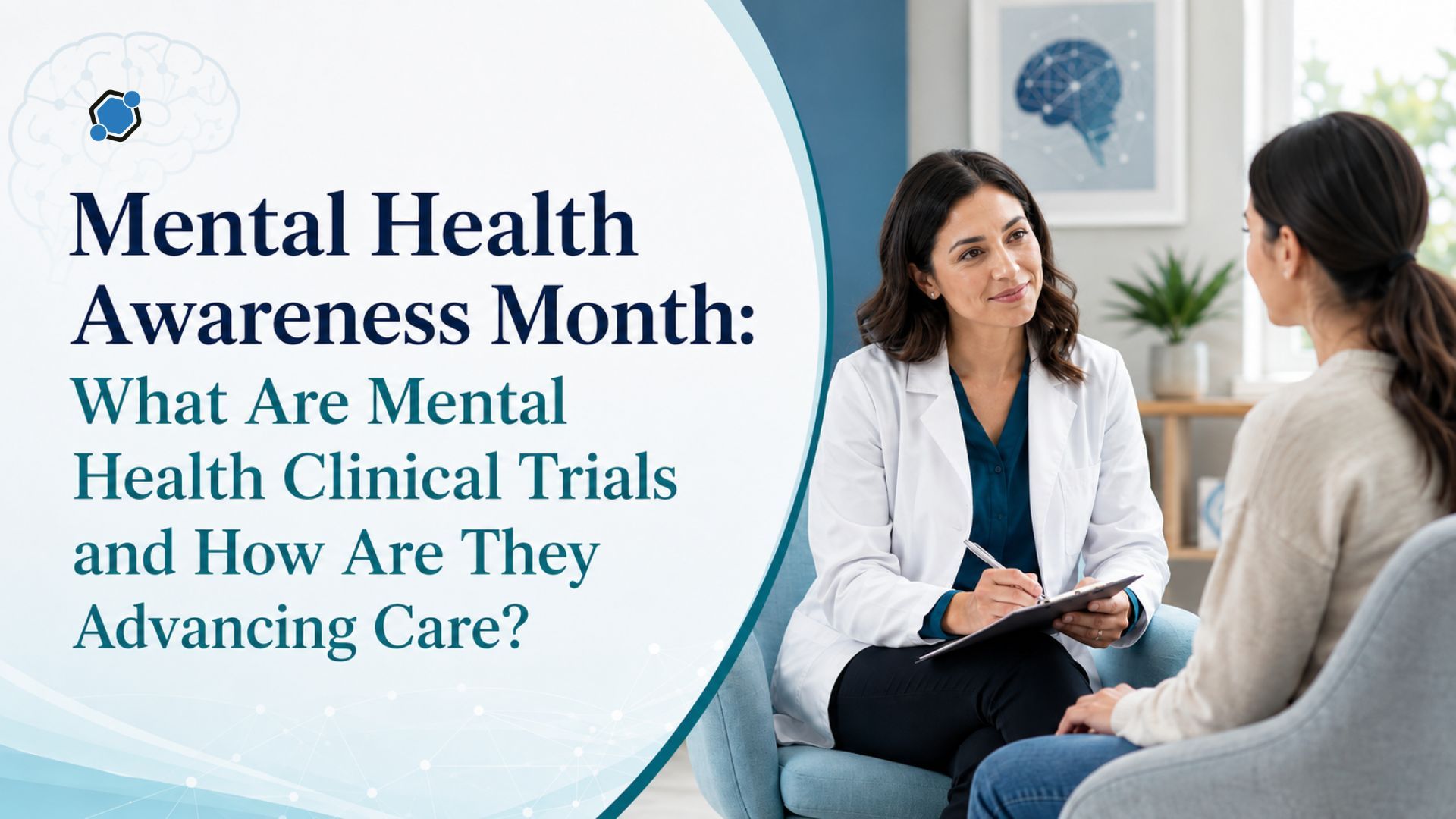
Every May, conversations about mental health get louder. Mental Health Awareness Month, observed each May since 1949, is when individuals, advocacy organizations, healthcare systems, and policymakers pause to focus attention on mental well-being. The 2026 themes from the leading awareness organizations focus on community support and breaking the silence around mental health stigma.
The conversation often turns to what people can do. Most of the suggestions are familiar: check on a friend, learn the warning signs, support funding, share your story. One option gets less attention than it should, and it is one of the few that directly shape what mental health care will look like in the years ahead. That option is research. Mental health clinical trials are studies that test new medications, therapies, devices, and digital tools to see whether they work and whether they are safe enough to become part of standard care. They depend entirely on people willing to take part.
This guide explains what mental health clinical trials are, what is being studied right now, who can join, and how to find one.
Mental Health Awareness Month 2026: What This May Is About
Mental Health Awareness Month was founded in 1949 by Mental Health America. It has grown into a national observance involving federal proclamations, employer wellness programs, school events, faith-community outreach, and grassroots organizing. The 2026 theme from Mental Health America, More Good Days, Together, asks people to reflect on what a good day looks like for themselves and their communities, and to use that insight to shape advocacy and care. The National Alliance on Mental Illness focuses its 2026 campaign on speaking up against mental health stigma so that no one feels they are facing a mental health condition alone.
Awareness has come a long way. About 1 in 5 American adults experiences a mental illness in any given year, and most people now say they would feel comfortable discussing mental health with a friend or family member. Stigma still exists, but the surface-level conversation is healthier than it was a generation ago.
What awareness has not solved is the gap between what care exists and what care actually works for everyone who needs it. That gap is where research lives, and it is where Mental Health Awareness Month can point past the conversation toward what is actually being done about the problem. Reading on the broader public-health value of clinical research helps put this gap into context, and How Clinical Trials Contribute to Public Health explores how studies done today shape the care available a decade from now.
What Are Mental Health Clinical Trials?
A clinical trial is a research study that tests whether a new medical product, procedure, or approach is safe and effective in people. Mental health clinical trials apply that same process to conditions like depression, anxiety, post-traumatic stress disorder (PTSD), bipolar disorder, schizophrenia, obsessive-compulsive disorder (OCD), eating disorders, substance use disorders, and many others.
Clinical trials follow a phase sequence. Phase 1 trials are small studies, often with healthy volunteers, that focus on safety and how the body handles the product being tested. Phase 2 trials enroll people who actually have the condition and look for early signs that the product works. Phase 3 trials are large studies, sometimes with thousands of participants, designed to confirm whether the product works well enough and safely enough to be approved by the U.S. Food and Drug Administration (FDA), the agency that regulates medications and medical devices in the United States. Phase 4 trials happen after a product is approved, and they track long-term safety and how the product performs in everyday care.
Mental health research is not limited to medications. Today's studies test talk therapies, group therapies, peer-support programs, brain stimulation devices, digital apps, virtual reality programs, and combination approaches that pair a medication with a therapy. They also study new ways of delivering existing care, such as testing whether a Spanish-language digital cognitive-behavioral therapy program improves access in primary care settings. For a step back to the basics, Clinical Trials Explained: Simple Guide for Beginners walks through how trials are structured and why each phase matters.
Why Mental Health Research Matters Right Now
The stakes for mental health research in 2026 are unusually high. About 35 percent of people with depression do not respond adequately to two standard antidepressant medications, a pattern called treatment-resistant depression. For these millions of Americans, the next medication or therapy to be approved is not an academic question. It is the difference between continuing to look for relief and finding it.
Anxiety care has stalled for over a decade. There have not been major new mechanisms approved for generalized anxiety disorder since the early 2000s, and the field has relied heavily on selective serotonin reuptake inhibitors (SSRIs) and benzodiazepines (a class of fast-acting anti-anxiety medications). That is starting to change. Investigational products with entirely new mechanisms are now in late-stage clinical trials, and several are expected to reach key trial milestones or potential FDA review in 2026. If the results are positive, the next several years could see the most meaningful expansion of anxiety care in a generation.
The pipeline is broad. Thousands of mental health clinical trials are actively recruiting participants right now in the United States and around the world, spanning depression, anxiety, PTSD, bipolar disorder, psychotic disorders, OCD, eating disorders, addiction, child and adolescent mental health, and more. Some are testing brand-new compounds. Some are testing digital tools designed to extend care into communities that face shortages of mental health professionals. Some are testing whether a known therapy works better when delivered in a new setting or to a new population. All of them depend on participants. The story of how research has reshaped care across other conditions is told in How Clinical Trials Advance Medicine and Change Lives, and mental health is now positioned to follow that same arc.
Who Can Join a Mental Health Clinical Trial?
Eligibility for a mental health clinical trial depends on the specific study. Some studies look for adults with a particular diagnosis. Some look for adolescents. Some look for people whose condition has not responded to standard care. Some look for people who have never started care at all. A few look for healthy volunteers as a comparison group. Each study has its own list of inclusion and exclusion criteria, which the research team uses to identify the participants whose data will give the cleanest answer to the question the study is asking.
Several misconceptions about mental health research are worth setting aside up front. Joining a trial does not mean giving up the care a person already has, in most cases. The research team and the participant's regular doctor coordinate to make sure ongoing care is not disrupted. Joining a trial does not mean being treated like a test subject. Participants in clinical trials have legal protections, including the right to receive a clear explanation of what the study involves before agreeing to take part (a process called informed consent), the right to ask questions at any time, and the right to leave the study at any point without giving a reason.
Joining a trial also does not require certainty about what is being received. In many studies, some participants receive the investigational product, which is the experimental product the study is testing, and others receive a placebo, which is an inactive substance that looks the same as the product being tested but contains no active ingredient. The placebo group lets researchers tell whether the product is actually doing something, or whether changes would have happened anyway. Participants are told before they enroll that they may receive a placebo, and the randomization is done in a way that keeps the data clean.
How to Find a Mental Health Clinical Trial
Finding a mental health clinical trial that fits a person's situation has historically been one of the hardest parts of participating. Studies are scattered across academic medical centers, community research sites, and online platforms, each with its own eligibility requirements and enrollment process. The match has often depended on whether a person happened to be referred by a clinician who knew about a particular study, or whether they were comfortable searching through long lists of trials on their own.
DecenTrialz exists to make that match easier. You share some basic information about yourself and the conditions you are interested in, get matched with mental health clinical trials that may fit your situation, and a nurse pre-screens you to walk through what each study involves before you decide whether to take the next step. The research team running each study makes all final eligibility and enrollment decisions, since they are the ones responsible for the participant's care during the trial. You can start a search at decentrialz.com.
A primary care doctor or a mental health clinician can also be a useful starting point, especially for someone already in active care for a condition. Many clinicians keep an informal track of research happening in their region and can point patients toward specific studies or research sites. Both paths are valid, and many people use both. For a fuller walk-through of what enrollment looks like once a study has been identified, How to Find and Enroll in a Clinical Trial: A Step-by-Step Guide covers each step in order.
Next Steps
Mental Health Awareness Month puts a spotlight on a conversation that, in 2026, has more to look forward to than at any point in recent memory. The investigational pipeline is the deepest it has been in years. New mechanisms, new delivery methods, and new ways of reaching people who have been left out of mental health care are all being tested in clinical trials right now. The progress depends on participants.
If you or someone you care about has been living with a mental health condition and is curious whether a clinical trial might be a fit, the first step is to see what is recruiting. You can begin a search at decentrialz.com.
Was this article helpful?

Similar Blogs
World Arthritis Day 2026: Early Signs, Types, and Why Timing Matters
World Arthritis Day is observed on October 12 every year, and in 2026 it falls on a Monday...
 Mahesh Upadrista
OCD Awareness Week 2026: symptoms, myths, and the research gap
OCD Awareness Week 2026 runs October 11 through October 17 and marks the second full week ...
Mahesh Upadrista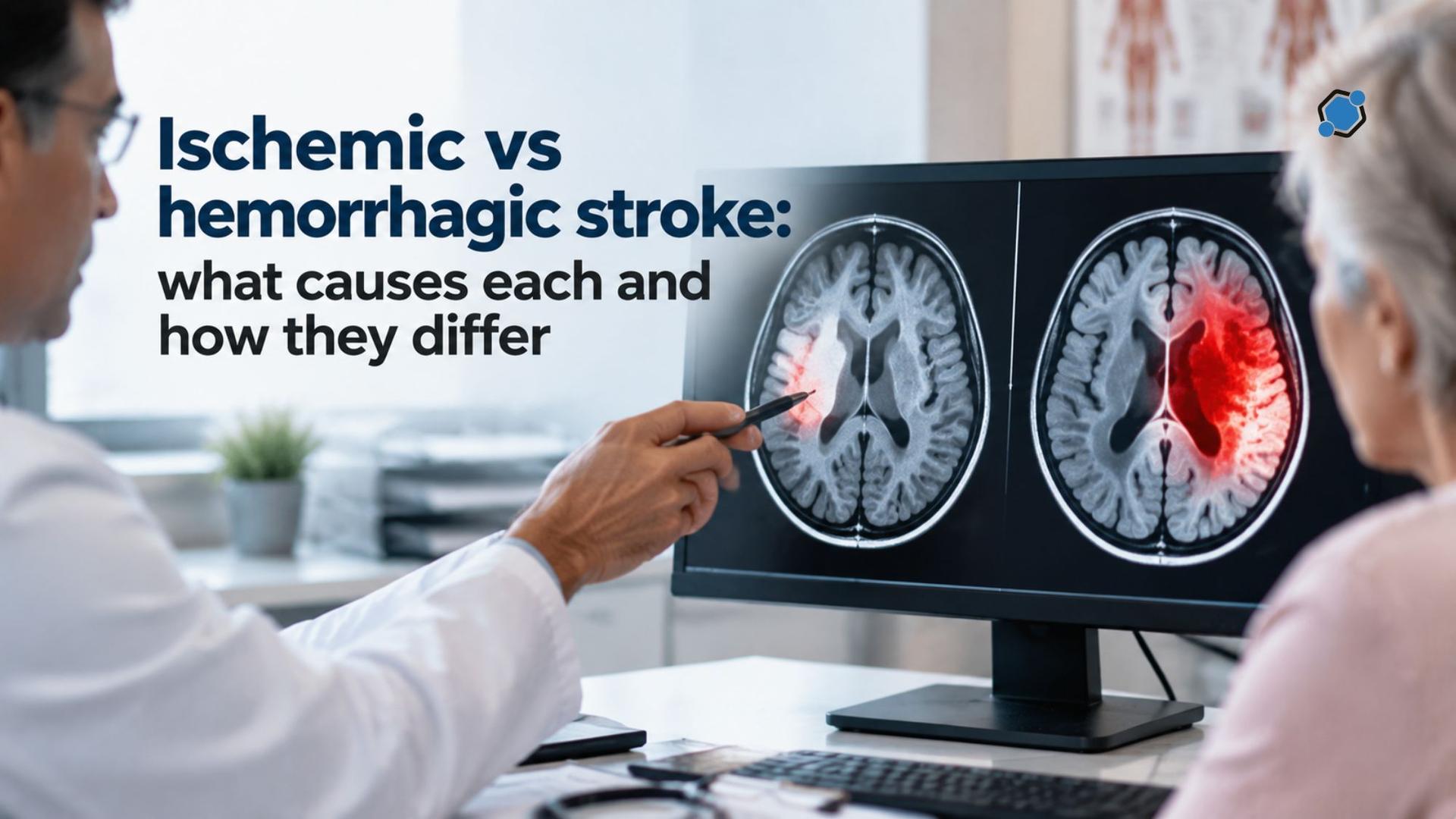
Ischemic vs hemorrhagic stroke: what causes each and how they differ
A stroke happens when blood flow to part of the brain is disrupted. There are two main kin...
Deeksha GittaStay Informed. Stay Connected.
Get updates on verified clinical trials, emerging treatments, and research breakthroughs directly in your inbox. No spam, just science that matters.
