 HIPAA Compliant
 ISO 27001 Certified

Normal blood sugar levels: what is normal when fasting and after eating?
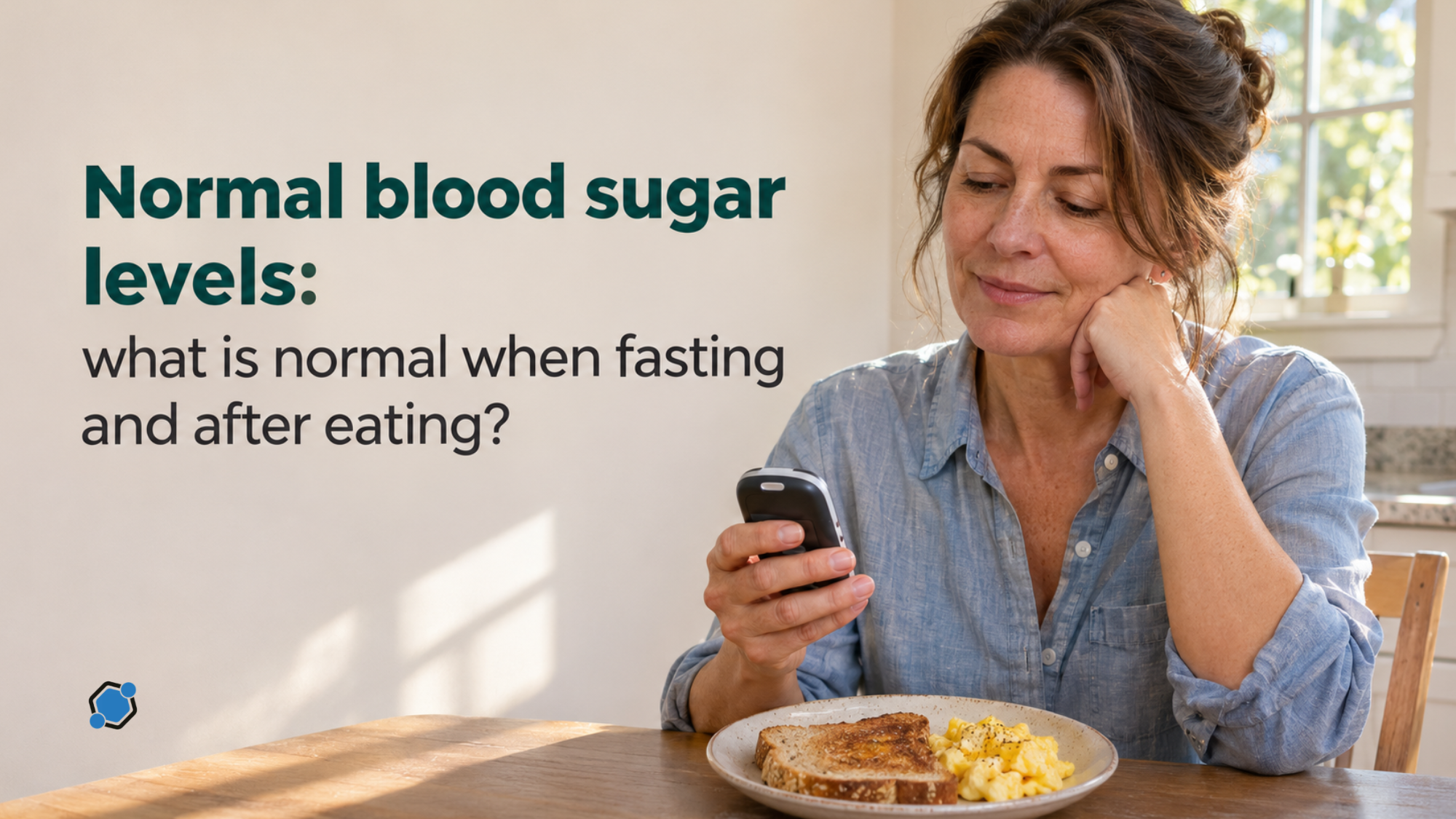
Most people think about blood sugar only when a lab report flags a number in bold. For adults without diabetes, normal blood sugar levels are a fasting reading below 100 mg/dL and readings that generally stay below 140 mg/dL after eating. On formal lab tests, normal also means a result below 140 mg/dL two hours after a standard glucose drink and an A1C below 5.7%. Each of these tests measures something slightly different, which is why one result can look normal while another does not. Knowing what each number means makes it easier to read a lab report, follow up on a borderline result, and have a clearer conversation with a clinician.
What are normal blood sugar levels?
Blood sugar, also called blood glucose, is the main sugar carried in the blood. It comes mostly from food and is the body's main source of energy. A hormone called insulin, made by the pancreas, helps move glucose out of the blood and into cells. In people without diabetes, this system keeps blood sugar within a fairly narrow range.
Current U.S. diabetes care standards describe normal results for adults who are not pregnant as follows:
- Fasting plasma glucose below 100 mg/dL (5.6 mmol/L). This test is taken after at least 8 hours without food or drinks that contain calories.
- A two-hour oral glucose tolerance test (OGTT) result below 140 mg/dL (7.8 mmol/L). This test measures blood sugar two hours after drinking a liquid that contains 75 grams of glucose.
- An A1C below 5.7%. This test reflects average blood sugar over roughly the past three months and does not require fasting.
The A1C works differently from a single glucose reading. It measures how much sugar has attached to hemoglobin, the oxygen-carrying protein inside red blood cells. Because red blood cells live for about three months, the result acts like a long-term average.
Some conditions change red blood cells and can make an A1C less reliable. Examples include anemia, recent blood loss, and some inherited hemoglobin differences. In those cases, clinicians usually rely on blood glucose tests instead. A separate explainer covers what an A1C result really measures in more depth.
What do mg/dL and mmol/L mean?
Labs in the United States report glucose in milligrams per deciliter (mg/dL). Many other countries use millimoles per liter (mmol/L). To convert, divide the mg/dL value by 18. A reading of 100 mg/dL equals about 5.6 mmol/L, and 126 mg/dL equals 7.0 mmol/L.
Which blood sugar levels point to prediabetes or diabetes?
Prediabetes means blood sugar is higher than normal but not yet high enough to count as diabetes. It usually causes no symptoms, and public health estimates suggest that about 8 in 10 adults with prediabetes do not know they have it. The same tests that define normal also define these higher ranges:
- Prediabetes: fasting glucose of 100 to 125 mg/dL, a two-hour OGTT result of 140 to 199 mg/dL, or an A1C of 5.7% to 6.4%.
- Diabetes: fasting glucose of 126 mg/dL or higher, a two-hour OGTT result of 200 mg/dL or higher, or an A1C of 6.5% or higher.
- Diabetes is also diagnosed when a random blood sugar test, taken at any time of day, reads 200 mg/dL or higher in a person with classic symptoms such as heavy thirst and frequent urination.
A single abnormal result is usually not enough for a diagnosis. Unless symptoms are clear, clinicians confirm the finding with a second test, either a repeat of the same test or a different one. Lab variation, a recent illness, and other short-term factors can all affect one reading.
Thresholds also differ slightly between guidelines. U.S. standards place the start of prediabetes at a fasting level of 100 mg/dL, while international health guidance starts its impaired fasting glucose range at 110 mg/dL. So a fasting reading between 100 and 109 mg/dL may be labeled differently from one standard to the next.
Current U.S. guidance supports blood sugar screening for adults starting at age 35, and earlier for adults with overweight or obesity plus another risk factor, such as a family history of diabetes. When results are normal, screening is typically repeated at least every three years. For results in the middle range, it helps to understand the early signs of prediabetes and the lifestyle steps that may help prevent, delay, or in some cases reverse it.
How does blood sugar change throughout the day?
Blood sugar is never perfectly flat, even in healthy people. It rises after meals, especially meals rich in carbohydrates, and insulin usually brings it back toward its starting point within a few hours. In people without diabetes, readings after eating generally stay below 140 mg/dL, the same cutoff used for a normal two-hour OGTT.
Research using continuous glucose monitors (CGMs) shows this pattern in detail. A CGM is a small sensor worn on the skin that estimates glucose every few minutes. In healthy adults, CGM readings stay between 70 and 140 mg/dL for most of the day. Short rises above 140 mg/dL after a meal are common and are not a diagnosis on their own.
Several everyday factors also move the numbers:
- Sleep and morning hormones: hormones released in the early morning signal the liver to release glucose. This rise mainly causes high morning readings in people with diabetes, whose bodies cannot fully offset it.
- Physical activity: working muscles use glucose, which usually lowers blood sugar. Very intense exercise can raise it briefly.
- Stress and illness: hormones released during infection, injury, pain, or emotional strain can push blood sugar higher.
- Medicines: steroids and some other medications can raise blood sugar.
When the body responds poorly to insulin, the pancreas has to make more of it to keep blood sugar in range. Over time, this strain can push fasting and after-eating numbers upward, often years before diabetes develops. This process is explained in more detail in an overview of how insulin resistance affects blood sugar.
When is blood sugar too low or too high?
Low blood sugar
Low blood sugar, called hypoglycemia, is generally defined as a reading below 70 mg/dL. It mainly affects people who take insulin or certain other diabetes medicines. Current diabetes care standards describe three levels:
- Level 1: below 70 mg/dL but at or above 54 mg/dL.
- Level 2: below 54 mg/dL, which is considered clinically significant.
- Level 3: a severe episode in which the person is confused or unable to function and needs help from someone else, whatever the number.
Common symptoms include shakiness, sweating, hunger, dizziness, irritability, a fast heartbeat, and trouble thinking clearly. A common first step for people with diabetes is to take 15 to 20 grams of fast-acting carbohydrate, such as half a cup of regular fruit juice, and then recheck after 15 minutes.
High blood sugar
High blood sugar, called hyperglycemia, can cause thirst, frequent urination, tiredness, blurred vision, and headaches. When the body has too little insulin, it starts breaking down fat for fuel and produces acids called ketones. A dangerous buildup of ketones, called diabetic ketoacidosis, is a medical emergency. It is most common in type 1 diabetes but can also occur in type 2, and the differences in how type 1 and type 2 diabetes affect insulin help explain why.
Emergency care is needed right away for any of these signs:
- Blood sugar that stays at 300 mg/dL or above
- Fruity-smelling breath
- Vomiting and being unable to keep food or drinks down
- Trouble breathing
- Low blood sugar with confusion, a seizure, or loss of consciousness
Targets for people who have diabetes
Targets for people who already have diabetes are not the same as normal ranges. They are treatment goals. They aim to lower the risk of long-term complications while avoiding dangerous lows. For many adults with diabetes who are not pregnant, current standards suggest an A1C below 7%, blood sugar of 80 to 130 mg/dL before meals, and a peak below 180 mg/dL after meals. For people who use a CGM, a common goal is spending more than 70% of the day between 70 and 180 mg/dL.
These goals are adjusted for each person. Older adults with several health conditions may have a less strict A1C goal, such as below 8%, to lower the risk of low blood sugar. Goals during pregnancy are tighter, including fasting blood sugar below 95 mg/dL. A personal target should always be set with a clinician.
Why do blood sugar numbers matter for clinical trial eligibility?
Blood sugar and A1C results are among the most common measurements in diabetes research. Many type 2 diabetes studies set an A1C range as an entry requirement, such as roughly 7% to 10.5% at screening. Prevention studies may instead look for people whose results fall in the prediabetes range. The change in A1C over the course of a study is also a frequent primary endpoint, meaning the main result researchers measure.
Because these thresholds are specific, a recent lab result can give an early sense of whether a study might be worth exploring. The research site still runs its own tests, since study rules usually require fresh, standardized measurements taken the same way for every participant. Knowing what happens at a first screening visit can help people prepare for that step.
Frequently asked questions about normal blood sugar levels
Is a fasting blood sugar of 110 mg/dL normal?
Under U.S. standards, a fasting result of 110 mg/dL falls in the prediabetes range, which starts at 100 mg/dL. One reading is not a diagnosis, but it is a good reason to ask a clinician about repeat testing.
Does blood sugar rise after eating in healthy people?
Yes. Blood sugar rises after most meals, even in people without diabetes. In healthy adults, it usually stays below 140 mg/dL and returns toward its starting level within a few hours.
What is a normal A1C level?
An A1C below 5.7% is considered normal. A result from 5.7% to 6.4% points to prediabetes, and 6.5% or higher is in the diabetes range once confirmed.
Are normal blood sugar levels different by age?
The diagnostic cutoffs are the same for all adults who are not pregnant. Average glucose tends to run slightly higher in older adults, and treatment targets for older adults with diabetes are often less strict to reduce the risk of low blood sugar.
Can a home glucose meter diagnose diabetes?
No. Home meters and over-the-counter CGMs are useful for tracking patterns, but diabetes is diagnosed with laboratory blood tests. A home reading outside the normal range is a reason to arrange proper testing with a clinician.
Turning blood sugar numbers into next steps
Normal blood sugar levels offer a useful reference point, but a single number rarely tells the full story. Fasting glucose, readings after eating, and A1C each capture a different view, and results near a cutoff deserve a repeat test and a conversation with a clinician. The ranges in this article reflect current national guidance and serve as general reference points, not a diagnostic tool.
For people living with prediabetes, type 2 diabetes, or a related metabolic condition, these numbers can also be a starting point for exploring research. DecenTrialz is a clinical trial recruitment and pre-screening platform that uses AI-powered matching to connect people with relevant studies. A registered nurse reviews each person's information before a referral is sent to a research site.
DecenTrialz does not diagnose, treat, or enroll participants. The research site team makes all final eligibility decisions and handles informed consent and enrollment. People interested in diabetes or metabolic studies can explore current options at decentrialz.com.
Was this article helpful?

Similar Blogs
Patient-reported outcomes in clinical trials: how are your answers used?
Patient-reported outcomes in clinical trials are measurements that come directly from part...
 Anish Teepireddy
Stroke recovery timeline: what happens in the weeks, months, and years after a stroke?
Many families hear that most stroke recovery happens in the first six months, and some tak...
 Vamshi Kantoju
Lumpectomy vs mastectomy: how is the right breast cancer surgery chosen?
Lumpectomy vs mastectomy is one of the first big decisions after an early-stage breast can...
Mahesh UpadristaStay Informed. Stay Connected.
Get updates on verified clinical trials, emerging treatments, and research breakthroughs directly in your inbox. No spam, just science that matters.
