 HIPAA Compliant
 ISO 27001 Certified
Type 1 diabetes vs type 2 diabetes: how do the causes, symptoms, and treatments compare?
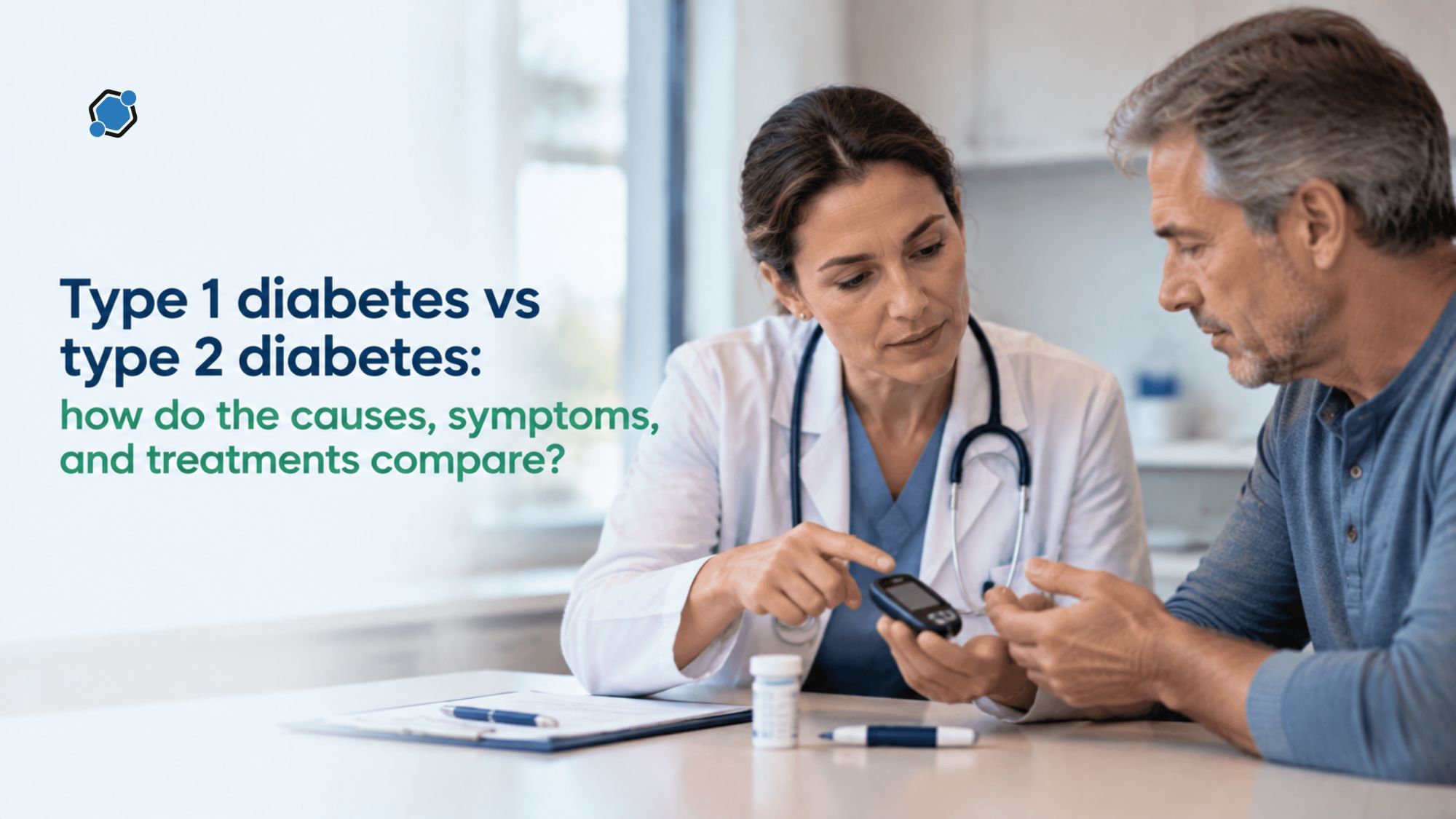
Diabetes is often described as a single disease with two flavors, but type 1 and type 2 are fundamentally different conditions that happen to share one feature: high blood sugar. The mechanisms that produce that shared symptom are almost opposites. Type 1 diabetes is an autoimmune disease in which the body destroys its own insulin-producing cells. Type 2 diabetes is a metabolic condition in which the body stops responding to insulin the way it should. Understanding that difference explains why the two types are diagnosed differently, treated differently, and researched along very different paths.
This guide walks through what each type is, how doctors tell them apart, how daily care differs, and how clinical research continues to change what is possible for people living with either condition.
What makes type 1 diabetes an autoimmune condition
Type 1 diabetes develops when the immune system mistakenly attacks the beta cells of the pancreas, which are the only cells in the body that produce insulin. Insulin is the hormone that allows glucose from food to enter the body's cells and be used for energy. Once beta cells are destroyed, insulin production drops toward zero, and blood glucose climbs rapidly. Insulin therapy becomes essential for survival from the moment of diagnosis.
The autoimmune process usually begins silently, sometimes years before symptoms appear. During that quiet stage, the immune system produces markers called islet autoantibodies that can be detected in the blood. These proteins act as biomarkers of an underlying condition and can reveal the disease is developing long before blood sugar rises high enough to cause symptoms. When symptoms finally emerge, they tend to appear over days or weeks: intense thirst, frequent urination, fatigue, unexplained weight loss, and sometimes a serious complication called diabetic ketoacidosis.
Type 1 diabetes was once called juvenile diabetes, but that label is outdated. The condition can begin at any age. Research now shows that more than half of newly diagnosed type 1 diabetes cases in the United States occur in adults, and adult-onset forms are frequently mistaken for type 2 diabetes at first.
What makes type 2 diabetes a metabolic condition
Type 2 diabetes develops when the body's cells stop responding effectively to insulin, a state called insulin resistance. The pancreas responds by producing more insulin to compensate, but over time it cannot keep up. Blood glucose rises gradually, often over many years, and the condition can be present long before it is diagnosed.
Because the changes are slow, type 2 diabetes frequently produces no obvious symptoms in its early stages. Many people learn they have it during a routine blood test, or after a related complication surfaces. When symptoms do appear, they overlap with type 1: increased thirst, frequent urination, fatigue, blurred vision, and slow-healing wounds. Reviewing the early warning signs of type 2 diabetes can help people recognize the condition earlier and seek testing.
Risk factors for type 2 diabetes include family history, older age, physical inactivity, excess body weight, a history of gestational diabetes, and certain ethnic backgrounds. It is by far the more common form, accounting for the large majority of diabetes cases in the United States and worldwide. Type 2 diabetes is increasingly diagnosed in adolescents and young adults, which reflects broader shifts in health patterns rather than any single cause.
Contrary to a persistent myth, type 2 diabetes is not caused simply by eating too much sugar. It arises from a mix of genetic and environmental factors, many of which are outside individual control.
How the two types are diagnosed and distinguished
The blood tests used to diagnose diabetes are the same regardless of type. A diagnosis is made when one of the following is found: an HbA1c of 6.5 percent or higher, a fasting plasma glucose of 126 mg/dL or higher, a two-hour glucose of 200 mg/dL or higher during an oral glucose tolerance test, or a random glucose of 200 mg/dL or higher accompanied by classic symptoms. Prediabetes is defined by an HbA1c between 5.7 and 6.4 percent or a fasting glucose between 100 and 125 mg/dL.
Determining which type of diabetes a person has requires additional information. Clinicians look at age, speed of onset, body weight, presence of ketones, and family history. Two blood tests provide the clearest answers. Islet autoantibody testing detects the immune markers of type 1 diabetes, and one or more positive results supports an autoimmune diagnosis. C-peptide testing measures how much insulin the pancreas is still making, so low or absent C-peptide points toward type 1 diabetes, while preserved C-peptide is more typical of type 2. Body weight is often part of the initial clinical picture, although BMI has meaningful limitations as a standalone indicator, and it should not be used to rule type 1 diabetes in or out on its own.
Misdiagnosis of adult-onset type 1 diabetes as type 2 diabetes is common enough that recent clinical guidance recommends autoantibody testing whenever the clinical picture suggests an autoimmune origin, regardless of the patient's age.
How daily care and prevention differ between the two types
Type 1 diabetes requires insulin therapy for life, delivered through multiple daily injections or an insulin pump. Daily management involves matching insulin doses to food, activity, and blood glucose readings. Continuous glucose monitors and automated insulin delivery systems, sometimes called artificial pancreas systems, are now recommended by leading professional guidelines as the preferred approach for people with type 1 diabetes. Prevention of type 1 diabetes is not possible today, but one approved immunotherapy can delay the onset of clinical disease in certain individuals identified through early autoantibody screening.
Type 2 diabetes management begins with nutrition, physical activity, and weight management. When lifestyle change alone is not sufficient, several classes of medications are available, including oral drugs that improve insulin sensitivity, drugs that reduce glucose reabsorption in the kidneys, and injectable therapies that mimic gut hormones involved in blood sugar control. Insulin is added when needed. In carefully selected patients, metabolic surgery can produce lasting improvements. Substantial weight loss can also lead to type 2 diabetes remission, defined by expert consensus as an HbA1c below 6.5 percent for at least three months without glucose-lowering medication. Prevention is possible: large studies have shown that structured lifestyle change can substantially reduce the risk of developing type 2 diabetes, and understanding prediabetes and how it can be reversed is often the most useful starting point for anyone at elevated risk.
Despite their different origins, both types share the same long-term complications, including eye, kidney, nerve, foot, and cardiovascular disease. Regular monitoring of blood glucose, blood pressure, cholesterol, kidneys, eyes, and feet is essential in both.
How clinical research is advancing care for both types
Every current standard of care in diabetes exists because of clinical research. In type 1 diabetes, active research includes disease-modifying immunotherapies, next-generation automated insulin delivery, and cell-based therapies designed to replace lost beta-cell function. In type 2 diabetes, active research areas include newer classes of glucose-lowering and weight-lowering medicines, precision medicine approaches that tailor treatment to individual disease subtypes, structured remission programs, and long-term prevention trials in people with prediabetes.
Clinical research offers people living with either type of diabetes, and people at elevated risk of developing type 2 diabetes, an opportunity to access investigational study interventions and to contribute to advancing care for others. Participation is always voluntary, and study teams are required to explain what a trial involves before anyone enrolls.
DecenTrialz is a clinical trial recruitment platform based in the United States that helps people explore whether current studies might be a fit. A person shares some basic information, the platform uses AI-assisted matching to identify studies that may align, a registered nurse completes an initial pre-screening review, and eligible individuals are referred to the research site team. Final eligibility determination, informed consent, the study walk-through, and enrollment remain with the authorized research site and study team. Anyone considering participation can learn more about how clinical trial matching services work before deciding whether to take the next step.
Frequently asked questions about type 1 and type 2 diabetes
What is the main difference between type 1 and type 2 diabetes?
Type 1 diabetes is an autoimmune condition in which the immune system destroys the cells that make insulin, so the body produces little or none. Type 2 diabetes develops when the body stops using insulin effectively and the pancreas gradually cannot keep up with demand.
Can type 2 diabetes turn into type 1?
Type 2 diabetes does not become type 1 diabetes, because the underlying causes are different. Some adults initially labeled as having type 2 diabetes are later found to have an autoimmune form, which reflects a corrected diagnosis rather than a change in disease. People with long-standing type 2 diabetes may eventually need insulin, and that is not the same as developing type 1 diabetes.
Which type of diabetes is more serious?
Both types are serious, and both share the same long-term complications. Type 1 diabetes carries a higher immediate risk of diabetic ketoacidosis. Type 2 diabetes often goes undetected for years, which allows damage to develop quietly before diagnosis.
Can type 1 diabetes be prevented?
Type 1 diabetes cannot be prevented today. Screening can identify the early autoimmune stages years before symptoms appear, and one approved therapy can delay the onset of clinical disease in certain people identified during that window.
Can type 2 diabetes be reversed?
Experts prefer the term remission over reversal. Remission means blood sugar stays below the diabetes range for at least three months without diabetes medication, most often after substantial weight loss or metabolic surgery, and it requires ongoing monitoring.
Do all people with type 2 diabetes need insulin?
Many people manage type 2 diabetes with lifestyle changes and non-insulin medications. Some eventually need insulin as the condition progresses, and that reflects biology rather than personal failure.
Understanding the two types supports better conversations with the care team
Type 1 and type 2 diabetes share a name and a few symptoms, but they are distinct conditions with different causes, different diagnostic pathways, and different management strategies. Knowing which type is present shapes every decision that follows, from medication choices to monitoring frequency to eligibility for specific research studies. For anyone recently diagnosed, considering testing, or exploring participation in clinical research, an informed conversation with a qualified clinical team is the essential next step.
Was this article helpful?

Similar Blogs
World Arthritis Day 2026: Early Signs, Types, and Why Timing Matters
World Arthritis Day is observed on October 12 every year, and in 2026 it falls on a Monday...
 Mahesh Upadrista
OCD Awareness Week 2026: symptoms, myths, and the research gap
OCD Awareness Week 2026 runs October 11 through October 17 and marks the second full week ...
Mahesh Upadrista
Ischemic vs hemorrhagic stroke: what causes each and how they differ
A stroke happens when blood flow to part of the brain is disrupted. There are two main kin...
Deeksha GittaStay Informed. Stay Connected.
Get updates on verified clinical trials, emerging treatments, and research breakthroughs directly in your inbox. No spam, just science that matters.
