 HIPAA Compliant
 ISO 27001 Certified
World Heart Day 2026: What Causes Heart Disease, and How Do Clinical Trials Help Protect the Heart?
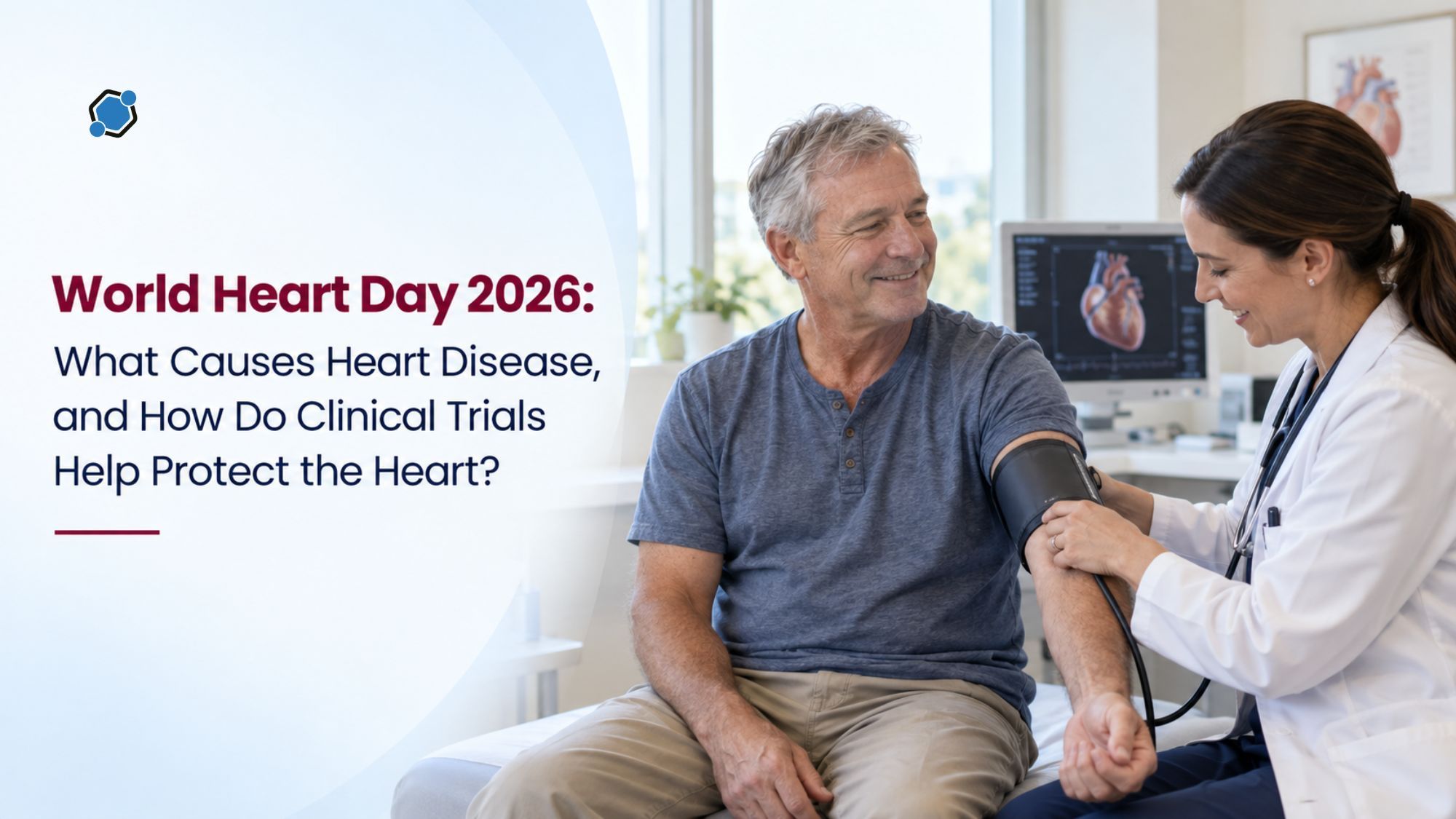
Cardiovascular disease, the group of conditions affecting the heart and blood vessels, remains a leading cause of death worldwide, and yet much of it may be prevented or managed. World Heart Day, observed each year on September 29, exists to close the gap between what medicine already knows about the heart and what reaches everyday people. This year the observance falls on Tuesday, September 29, 2026, and it arrives with a global campaign focused on the warning signs that too often go unnoticed.
This article explains what World Heart Day is, what drives heart disease, why heart disease is so often missed in women, and how cardiovascular research turns questions into the prevention tools people rely on today.
World Heart Day 2026: Origins and This Year's Focus
World Heart Day was created by the World Heart Federation, a Geneva-based nonprofit that unites cardiovascular organizations around the globe. The idea came from Antoni Bayes de Luna, a Spanish cardiologist who served as the federation's president, and the first observance took place in the year 2000. For its first decade the day moved with the calendar, and it has been anchored to September 29 for uniformity since 2011.
The observance has grown into one of the most widely recognized health awareness days in the world, marked across many countries by schools, hospitals, employers, and community groups. Its purpose has stayed consistent: to translate the science of cardiology into public understanding and practical action.
For 2026, the World Heart Federation continues its Don't Miss a Beat campaign, now in its second year. The campaign is built around three ideas that translate awareness into action: see the signs, protect the heart, and demand action. Readers who want a plain-language starting point may find value in an overview of how clinical trials advance medicine alongside the campaign resources.
The Risk Factors Behind Most Heart Disease
Much of the burden of heart disease traces back to a familiar set of risk factors, meaning traits or conditions that raise the chance of developing a disease. Some cannot be changed, such as age, biological sex, and family history. Many others may be measured and managed.
The most influential modifiable risk factors include high blood pressure (hypertension, meaning persistently elevated force of blood against the artery walls), high cholesterol (an excess of certain fatty substances in the blood), diabetes (a condition of elevated blood sugar), excess weight, tobacco use, physical inactivity, and diets heavy in salt, sugar, and unhealthy fats. These factors often cluster together and reinforce one another.
Many of these risks build silently over years through atherosclerosis, which is a gradual buildup of fatty deposits called plaque inside the arteries. As plaque narrows and stiffens the arteries, blood flow to the heart and brain may be reduced, setting the stage for serious events. A large share of premature heart disease is considered preventable when risk factors are identified and addressed early. Readers exploring the broader connection between research and everyday health may appreciate an overview of the role of clinical trials in public health.
Common Heart Conditions Worth Recognizing
Several conditions account for much of the day-to-day impact of cardiovascular disease. Coronary artery disease, the most common form, occurs when plaque narrows the arteries that supply the heart muscle, and it can lead to chest pain or a heart attack. Heart failure describes a heart that cannot pump enough blood to meet the body's needs, which may cause breathlessness and fatigue.
Atrial fibrillation is an irregular, often rapid heart rhythm that may allow blood to pool and clot, raising the risk of stroke. Stroke itself, while affecting the brain, is closely tied to cardiovascular health, because it frequently results from a blocked or burst blood vessel. Recognizing that these conditions share risk factors helps explain why heart-healthy habits protect against several of them at once. For anyone new to the language of medical research, a plain-English explanation of how clinical trials work can make the rest of this topic easier to follow.
Why Heart Disease Is Often Missed in Women and Across Communities
Heart disease is frequently thought of as a condition affecting men, yet it is a leading cause of death among women as well. Part of the problem is that the medical understanding of heart attacks was built largely around how symptoms appear in men, which centers on crushing chest pain.
Women may experience those classic symptoms, but they are also more likely to have signals that seem unrelated to the heart, such as nausea, shortness of breath, unusual fatigue, or pain in the jaw, neck, upper back, or stomach. Because these signs do not match the expected pattern, they are sometimes attributed to stress, anxiety, or indigestion, and the result may be a delay in care.
The gap extends beyond individual symptoms. The weight of cardiovascular disease is not shared evenly across the globe. A large share of cardiovascular deaths occurs in low- and middle-income countries, where health systems may lack the diagnostic tools, medications, and specialists that are routine elsewhere. Similar gaps persist along lines of income, education, geography, and access to care. These are structural barriers, meaning obstacles created by the way systems are organized, and the responsibility to address them sits with the systems themselves.
Research participation is part of the correction. Women and members of many communities have historically been underrepresented in cardiovascular studies, which has limited how much is known about how the disease behaves across different groups. Readers can learn more about the ongoing conversation on diversity in clinical trials and why representation shapes what modern medicine can offer.
How Clinical Trials Advance Heart Health
Nearly every tool used to protect the heart today began as a question tested in a clinical trial, which is a carefully designed research study that evaluates whether a medical approach is safe and effective in people. The very idea of cardiovascular risk factors came from the Framingham Heart Study, a long-running project begun in 1948 that followed large groups of people over decades, and that work revealed how blood pressure, cholesterol, and smoking shape heart disease.
That research foundation made prevention possible. Clinical trials established that lowering blood pressure and reducing cholesterol may help reduce the chance of heart attacks and strokes, and they demonstrated the value of devices such as pacemakers and clot-dissolving study interventions now considered standard. Cardiovascular studies take several forms, including prevention studies that test ways to stop disease before it starts, drug studies, device studies that evaluate tools such as stents and monitors, and lifestyle studies that examine diet, activity, and other daily habits.
Participation is what makes these findings trustworthy. When trials include people of different ages, sexes, and backgrounds, the results are more likely to apply to the full range of people who will eventually rely on them. Clinical trials study investigational products and study procedures, which may or may not prove beneficial, and outcomes cannot be guaranteed. Anyone curious about how research teams decide who may take part can read an accessible explanation of why some people do not qualify for a given study.
How DecenTrialz Supports People Exploring Heart Research
DecenTrialz is a platform that helps people in the United States take a first step toward cardiovascular research without navigating the maze alone. The experience begins when a person shares some basic information. From there, AI-assisted matching identifies studies that may be a potential fit, and a registered nurse conducts a pre-screening conversation to review that information in plain language.
When the fit looks appropriate, DecenTrialz provides a referral to the research site team. The research site team handles study walk-through, eligibility determination, informed consent, and enrollment. That boundary is firm, because final decisions about participation always belong to the qualified professionals conducting the study, never to the platform.
For anyone whose curiosity was sparked by World Heart Day, this kind of structured first step can make the idea of research feel far more approachable.
Frequently Asked Questions
When is World Heart Day 2026?
World Heart Day 2026 is observed on Tuesday, September 29, 2026. The date is fixed each year, and the observance is coordinated globally by the World Heart Federation.
What is the World Heart Day 2026 theme?
The World Heart Federation continues its Don't Miss a Beat campaign for 2026, which encourages people to see the signs of heart disease, protect their hearts, and demand stronger action from leaders and health systems.
Can heart disease be prevented?
A large share of premature heart disease is considered preventable. Managing blood pressure, cholesterol, and blood sugar, staying physically active, eating a balanced diet, and avoiding tobacco may help reduce risk, though no single step can eliminate it entirely.
Why are women's heart symptoms different?
Women may experience the classic chest pain of a heart attack, but they are also more likely to have symptoms such as nausea, fatigue, shortness of breath, or pain in the jaw, neck, or back. These signs are more easily overlooked, which may delay diagnosis.
Do clinical trial participants receive standard care?
Clinical trials study investigational products and study procedures rather than established therapy. The research site team explains during the informed consent process what participation involves, what is being studied, and what alternatives exist.
Take the Next Step This World Heart Day
World Heart Day 2026 is a reminder that heart health depends on both personal awareness and collective progress. Understanding risk factors, recognizing symptoms, and supporting research are all part of the same effort to reduce a preventable global burden.
For those ready to explore whether cardiovascular research could be a fit, DecenTrialz offers a straightforward first step: share some information, connect with a registered nurse for a pre-screening conversation, and receive a referral to a research site team when appropriate. The heart of the process is simple, and it begins with a single question.
Was this article helpful?

Similar Blogs
What is a hypertensive crisis? Blood pressure warning signs and when to call 911
A hypertensive crisis is a sudden, severe rise in blood pressure to 180/120 millimeters of...
 Deeksha Gitta
How to Find Clinical Trials Across 35+ Conditions with DecenTrialz
Anyone who has looked for a clinical trial online quickly discovers that trial finders com...
 Anish Teepireddy
National Women's Health and Fitness Day 2026: Fitness, Research, and Women's Health
The last Wednesday of September is set aside each year for National Women's Health and Fit...
Swaroop ESDStay Informed. Stay Connected.
Get updates on verified clinical trials, emerging treatments, and research breakthroughs directly in your inbox. No spam, just science that matters.
