 HIPAA Compliant
 ISO 27001 Certified
What is a hypertensive crisis? Blood pressure warning signs and when to call 911
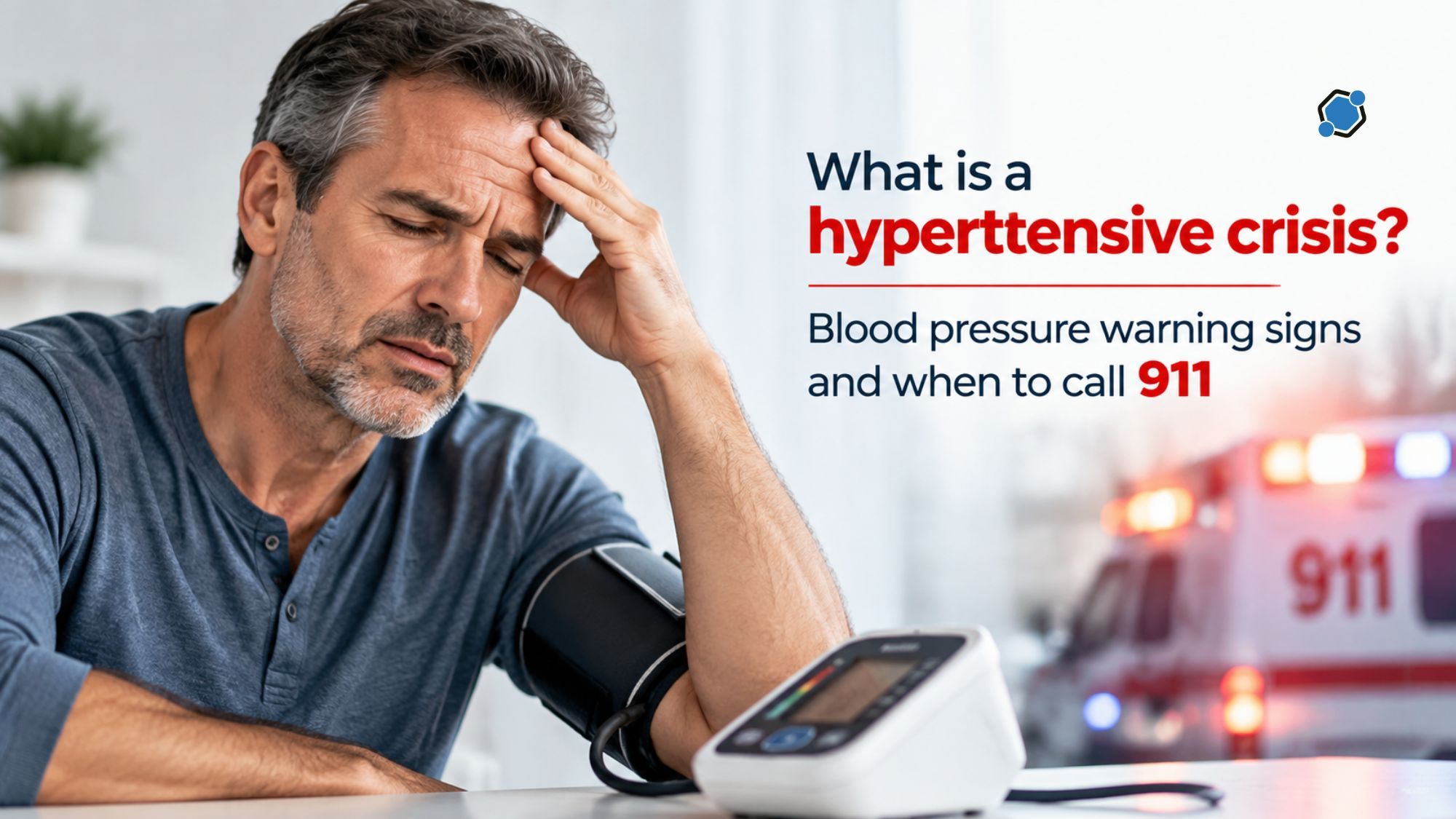
A hypertensive crisis is a sudden, severe rise in blood pressure to 180/120 millimeters of mercury or higher. At that level, the brain, heart, kidneys, eyes, and the large blood vessel called the aorta can be injured within minutes. Recognizing what is happening, and knowing exactly what to do next, is the difference between a doctor's visit later that week and an emergency room admission.
This article explains what qualifies as a hypertensive crisis, the warning signs that mean an emergency is unfolding, the steps to take when a reading crosses that threshold, and how research is improving prevention and care.
What counts as a hypertensive crisis
Blood pressure is written as two numbers separated by a slash. The top number, systolic pressure, is the force in the arteries when the heart beats. The bottom number, diastolic pressure, is the force between beats, when the heart is refilling. The 2025 American Heart Association and American College of Cardiology guideline classifies adult readings into four categories: normal, elevated, stage 1 hypertension, and stage 2 hypertension.
A hypertensive crisis sits above all four of those categories. It is defined as a reading of 180/120 or higher, taken correctly on a validated device. The threshold is the same for men and women, though pregnancy uses a lower cutoff of 160/110. For a fuller walkthrough of what each side of the reading actually measures and why both numbers matter, see this guide to systolic and diastolic blood pressure.
A hypertensive crisis has two forms. The first is severe hypertension without acute organ damage. Blood pressure is very high, but there are no signs that the brain, heart, kidneys, eyes, or aorta are being hurt right now. This form is treated urgently but does not usually require hospital admission. The second is a hypertensive emergency. Blood pressure is at the same threshold, but there are new symptoms showing that an organ is under strain. A hypertensive emergency is a life-threatening event that requires immediate care in a hospital setting.
Older patient materials often used the term hypertensive urgency for the first form. The 2025 guideline retired that phrase to discourage unnecessary emergency room visits and rushed treatment when no organ damage is present. Readers who encounter the older term should treat it as meaning the same thing as severe hypertension without organ damage.
Warning signs that signal an emergency
The most dangerous feature of high blood pressure is that it usually causes no symptoms at all. A person can have stage 2 hypertension for years without a single headache. The same is often true of severe hypertension when no organ damage is happening yet. That is why measuring blood pressure at home, on a schedule, remains the only reliable way to know.
The routine absence of symptoms is one reason chronic high blood pressure is called the silent killer. A separate article covers the quieter warning signs of long-standing hypertension that many people learn to ignore for years.
What changes during a hypertensive emergency is that symptoms of organ strain appear on top of the very high reading. These symptoms are the reason a hypertensive emergency requires immediate care rather than a routine call to the doctor's office. Signs that warrant calling 911 include:
- Chest pain or pressure
- Shortness of breath
- Sudden severe headache, especially one that feels different from any headache before
- Vision changes, blurred vision, or vision loss
- Weakness or numbness on one side of the body
- Difficulty speaking or slurred speech
- Facial drooping
- Confusion or altered mental state
- Severe back pain, especially pain that feels tearing or ripping
- Seizure
- Reduced urination
In pregnancy, additional warning signs include upper abdominal pain, swelling in the face and hands, and a sudden severe headache. Preeclampsia and eclampsia can occur even in women who had normal blood pressure earlier in the pregnancy, and they require immediate evaluation.
What to do when a reading reaches 180/120
The correct next step depends entirely on whether warning symptoms are present. The American Heart Association recommends the following approach for a home reading at or above 180/120:
- Sit down, keep the arm supported at heart level, wait one to five minutes, and re-measure. A single elevated reading can be caused by movement, talking, a full bladder, or an ill-fitting cuff.
- If the second reading is still 180/120 or higher and any of the warning symptoms above are present, call 911. Do not drive yourself to the hospital. Emergency responders can begin monitoring and treatment on the way.
- If the second reading is still 180/120 or higher but there are no warning symptoms, contact a primary care provider promptly for guidance the same day. This is severe hypertension, which usually calls for a medication adjustment, not an emergency room visit.
Because stroke is one of the most common and time-sensitive complications of a hypertensive emergency, everyone in a household affected by high blood pressure should recognize the FAST and BE FAST stroke warning signs and know the steps that follow.
What not to do is just as important. Do not take an extra dose of a blood pressure medication in hopes of bringing the number down quickly. Do not use over-the-counter remedies, herbal products, or a family member's prescription. Lowering blood pressure too fast can starve the brain, heart, and kidneys of blood, causing the very stroke or heart attack the person is trying to avoid. In hospitals, doctors follow careful protocols and use intravenous medications so that the reduction is controlled and monitored. That level of control is not possible at home.
While waiting for emergency help to arrive, the person should rest, avoid physical exertion, avoid caffeine and nicotine, and continue only medications that a clinician has already prescribed on a regular schedule.
Complications of an untreated hypertensive crisis
The reason emergency departments treat a hypertensive emergency as a true emergency is that damage from very high blood pressure can begin and progress quickly. The organs at greatest risk include the brain, heart, kidneys, eyes, and the aorta.
In the brain, uncontrolled pressure can cause an ischemic stroke, in which blood flow to part of the brain is blocked, or a hemorrhagic stroke, in which a blood vessel bursts. Both can leave lasting disability. A related condition called hypertensive encephalopathy can produce confusion, severe headache, and seizures that improve when blood pressure is carefully lowered.
Stroke symptoms can present differently across groups, and some patterns are more common in women. A related article covers how stroke symptoms often appear in women and why they are frequently missed or misattributed to other causes.
In the heart, extreme pressure can trigger a heart attack, worsen heart failure, or cause fluid to back up into the lungs, a condition called pulmonary edema. In the kidneys, sudden reductions in blood flow can cause acute kidney injury. In the eyes, small vessels in the retina can leak or bleed, leading to blurred vision or vision loss.
The most immediately life-threatening complication is an aortic dissection, a tear in the inner wall of the body's largest artery. It classically causes a sudden, severe pain in the chest or upper back that feels tearing or ripping. Without prompt surgery, aortic dissection is often fatal. This is one of the specific reasons why sudden severe back or chest pain during a very high blood pressure reading is a 911 call, not a wait-and-see situation.
Prevention, long-term management, and the role of research
Most hypertensive crises do not appear out of nowhere. The most common trigger is missed or stopped blood pressure medication. Other triggers include kidney disease, certain hormonal conditions, use of stimulant drugs, some over-the-counter decongestants containing pseudoephedrine, severe pain, and preeclampsia in pregnancy. Prevention centers on the same steps that keep everyday hypertension in check.
- Take blood pressure medication exactly as prescribed, every day, without stopping when readings improve.
- Measure blood pressure at home with a validated upper-arm cuff. The 2025 guideline advises against relying on cuffless smartwatch estimates for medical decisions.
- Follow an eating pattern rich in vegetables, fruits, whole grains, and low-fat dairy, and low in sodium and added sugar.
- Move the body regularly, limit alcohol, avoid tobacco, and manage stress.
- Keep scheduled visits with a primary care provider, and report any medication side effects rather than stopping the medication.
Public awareness efforts also play a role in reducing preventable hypertensive crises. For a broader look at how the field is trying to close the control gap globally, see this overview of the themes and research behind World Hypertension Day 2026.
Hypertension research remains one of the most active areas of cardiovascular medicine. Only about one in four adults with high blood pressure has it under control in the United States, which is why regulators recently approved new drug classes and catheter-based renal denervation procedures for resistant hypertension. Ongoing clinical trials continue to test long-acting injectable therapies, digital monitoring interventions, and personalized approaches for people whose blood pressure remains uncontrolled on standard treatment.
For people living with hypertension that is difficult to control, participation in a clinical trial can offer access to newer approaches under close medical supervision. DecenTrialz is a United States clinical trial recruitment platform that uses AI-assisted matching and nurse-led pre-screening to connect potential participants with research sites studying hypertension and other cardiovascular conditions. DecenTrialz performs pre-screening only. The research site team owns eligibility determination, informed consent, study walk-through, and enrollment.
Frequently asked questions
Is a blood pressure of 180/120 always an emergency?
No. A reading of 180/120 is a hypertensive crisis, but whether it is an emergency depends on symptoms. If any warning signs of organ damage are present, it is a hypertensive emergency and calls for 911. If the reading is repeated after a few minutes of rest, is still that high, and no warning symptoms are present, it is severe hypertension, which needs same-day medical attention but usually not an emergency room visit.
Can stress alone cause a hypertensive crisis?
Emotional stress and severe pain can push blood pressure into crisis range temporarily, especially in people who already have hypertension. Panic attacks are a known trigger for readings above 180/120. The reading itself still needs to be taken seriously, verified with a second measurement, and evaluated by a clinician if it stays elevated.
What medications are used to treat a hypertensive emergency in the hospital?
In an intensive care setting, clinicians use intravenous medications that allow the blood pressure to be lowered in a slow, controlled way, generally reducing it no more than 25 percent in the first hour. The specific drug chosen depends on which organ is at risk and on the patient's other medical conditions. This is why self-treatment at home with extra oral doses is discouraged. It cannot replicate the precision of a controlled infusion.
How often should someone with hypertension check blood pressure at home?
For most people newly diagnosed or adjusting medications, twice-daily measurement, morning and evening, for a week at a time is a common recommendation. A clinician can tailor the schedule based on the individual case. Readings should always be taken after a few minutes of quiet sitting, with the back supported, feet flat on the floor, and the arm at heart level.
Turning awareness into action
A hypertensive crisis is one of the few situations in which a person, sitting at home, can read a number on a screen and know that a call to 911 may be the correct next step. That is a rare and important form of health literacy. Knowing the 180/120 threshold, recognizing the warning symptoms of organ damage, and understanding what not to do while help is on the way can prevent a stroke, protect a heart, and save a life.
For people living with hypertension who want to keep improving their long-term control, DecenTrialz can help identify clinical trials in cardiovascular disease that may be a fit. Sharing information and completing a nurse-led pre-screening call is the first step in a longer process led by the research site team.
Was this article helpful?

Similar Blogs
How to Find Clinical Trials Across 35+ Conditions with DecenTrialz
Anyone who has looked for a clinical trial online quickly discovers that trial finders com...
 Anish Teepireddy
National Women's Health and Fitness Day 2026: Fitness, Research, and Women's Health
The last Wednesday of September is set aside each year for National Women's Health and Fit...
 Swaroop ESD
World Heart Day 2026: What Causes Heart Disease, and How Do Clinical Trials Help Protect the Heart?
Cardiovascular disease, the group of conditions affecting the heart and blood vessels, rem...
ParamrajStay Informed. Stay Connected.
Get updates on verified clinical trials, emerging treatments, and research breakthroughs directly in your inbox. No spam, just science that matters.
