 HIPAA Compliant
 ISO 27001 Certified
National Women's Health and Fitness Day 2026: Fitness, Research, and Women's Health
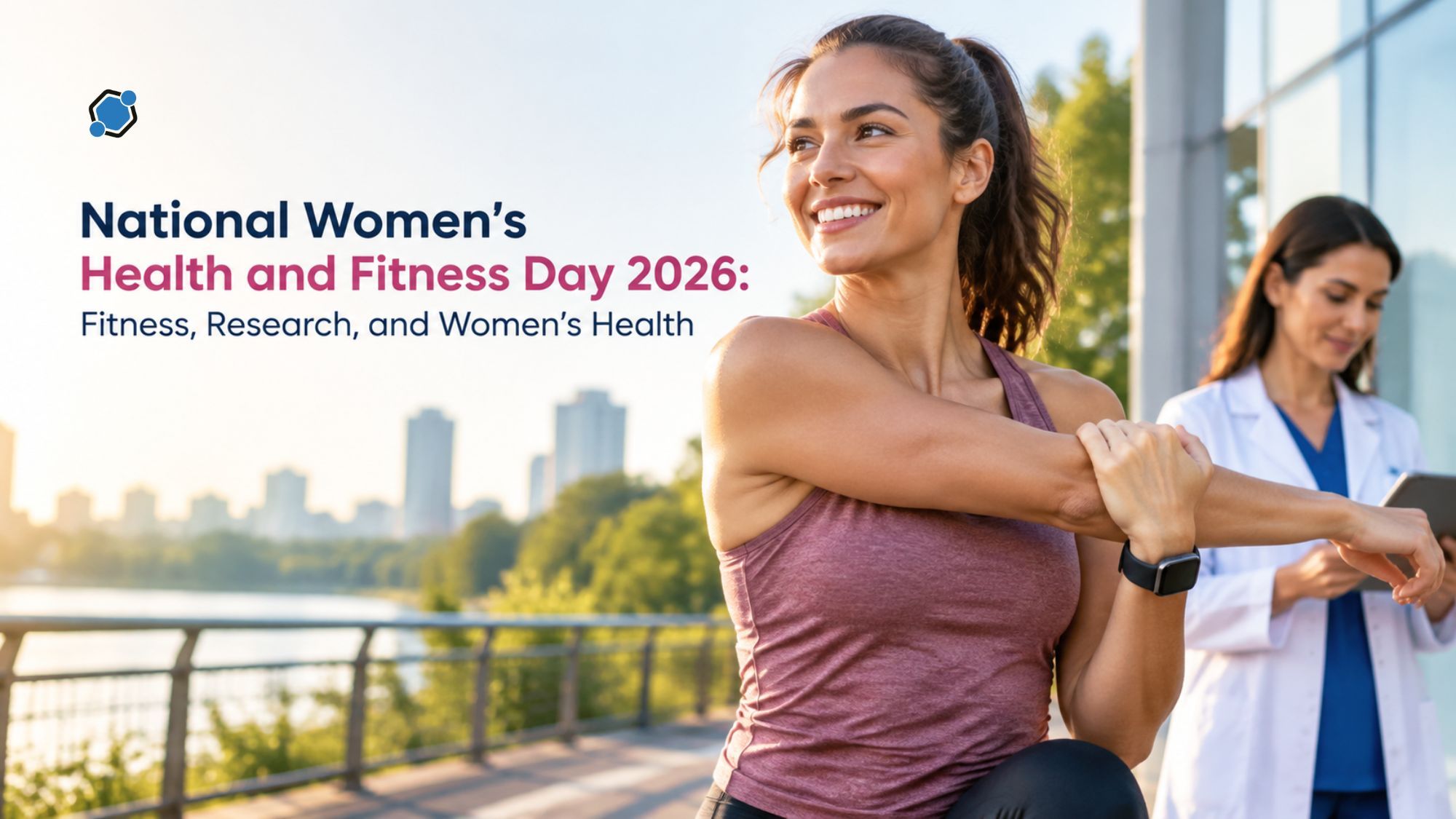
The last Wednesday of September is set aside each year for National Women's Health and Fitness Day. In 2026, that date falls on Wednesday, September 30. The observance is a public reminder that women's health is shaped by two forces working together: the daily habits that protect the body over decades, and the medical research that decides how well care fits women's actual biology. Both matter, and both have gaps worth closing.
When is National Women's Health and Fitness Day 2026, and what does it mark?
National Women's Health and Fitness Day is observed on the last Wednesday of September. In 2026, that date is September 30. A national health information nonprofit organized the first observance in 2002 to encourage women of every age to make their health a priority through routine physical activity, preventive screenings, and access to accurate health information.
Community organizations, parks and recreation departments, hospitals, senior centers, and places of worship have historically hosted walks, gentle fitness demonstrations, health fairs, and educational sessions tied to the day. Because the observance falls close to October, it also serves as a bridge into the broader awareness weeks that follow.
It is a separate observance from National Women's Health Week in May and from International Women's Day in March. Different dates, different founders, similar aim: keeping women's health visible on the national calendar. For a related look at another September observance for a general audience, see healthy aging in September.
Women's health looks different at every stage of life
Women's health is not one topic. It changes at every stage, and the risks that dominate at age 25 are not the same as those that dominate at 65. In adolescence and young adulthood, bone density is still building, mental health support gains importance, and reproductive care and cervical cancer prevention take center stage. In the reproductive years, pregnancy and postpartum health become part of the picture, and outcomes are known to vary meaningfully by race and geography.
In midlife, the menopause transition shifts hormonal, sleep, mood, and bone patterns, and cardiovascular risk begins to rise. After menopause, bone loss accelerates, heart disease becomes the leading cause of death for women, and cognitive health draws more attention because most people living with Alzheimer's disease in the United States are women. Some conditions, including autoimmune diseases such as lupus, rheumatoid arthritis, and multiple sclerosis, affect women in far greater numbers than men.
Symptoms can also present differently in women. Breast cancer, for example, does not always begin with a lump, which is why awareness of less obvious breast cancer signs matters at every age.
Understanding that women's health is a lifespan story is the first step toward giving each stage the attention it deserves.
What regular movement adds to women's health at every age
Physical activity supports women's health in ways that add up over decades. Federal guidance for adults recommends a mix of moderate-intensity aerobic activity spread through the week and muscle-strengthening work on at least two days. For women, that combination can support heart health, blood pressure, blood sugar, mood, and sleep. It can help build bone density during the peak building years in adolescence and young adulthood, and it may help slow the bone and muscle loss that speeds up around menopause.
Balance and strength work in later life is linked to a lower risk of falls and greater independence. Movement also plays a role in mental health, brain health, and healthy weight, which in turn influence long-term risk for heart disease, diabetes, and cognitive decline. None of this requires a gym membership. Group walks, gardening, dance, swimming, cycling, everyday household activity, and gentle resistance work all count. Even short bouts of activity have measurable benefits.
Anyone with an existing medical condition, a recent surgery, or a pregnancy should talk with a clinician before starting a new exercise routine. Movement should meet the body where it is. For a related view of why cardiovascular awareness deserves the same attention as fitness, see stroke symptoms in women.
The clinical research gap that still shapes women's care
For most of the twentieth century, women, particularly women of childbearing age, were kept out of many clinical studies. The reasons ranged from safety concerns after the thalidomide tragedy to worries about hormonal variation in research data. The result was decades of medical knowledge built largely on how diseases and medicines behave in men's bodies.
Federal law began to change that in 1993, when the National Institutes of Health Revitalization Act required women and racial and ethnic minority populations to be included in federally funded clinical research. The National Institutes of Health had already established the Office of Research on Women's Health in 1990, and the Food and Drug Administration created its Office of Women's Health in 1994. More recent policies require researchers to consider sex as a biological variable in study design and analysis.
Progress is real, but gaps remain. Women can respond differently to some medicines because of differences in body composition, hormones, and metabolism. Symptoms of common conditions, including heart attack and stroke, can present differently in women. Older women, pregnant and breastfeeding women, and women of color are still underrepresented in some studies. For a deeper look at why clinical trials need more women, see the related discussion.
How women can explore clinical trial participation today
Interest in clinical research participation among women is high. The gap tends to be practical: not being asked, not knowing where to look, or not having the time and support to take part. Common barriers include caregiving responsibilities, transportation, travel distance to a research site, work schedules, and general awareness of what a study actually involves.
Research designs are beginning to adapt. Some studies now offer remote visits, telehealth check-ins, at-home lab work, and local sample collection. These changes may reduce travel and time burdens for many participants, though not every study can be run this way, and some visits still require in-person care.
DecenTrialz is a clinical trial recruitment platform that helps potential participants find studies that may be a fit. The platform uses AI-assisted matching to surface relevant studies based on the information a person shares, and offers registered nurse-led pre-screening so questions about a study can be answered by a clinical professional before any handoff. Final eligibility, informed consent, study walk-through, and enrollment are handled by the authorized research site team. That division of roles is deliberate: the platform makes access easier, and the medical team makes every clinical decision. Anyone curious about the process can search and apply for clinical trials on DecenTrialz.
Frequently asked questions
When is National Women's Health and Fitness Day 2026?
Wednesday, September 30, 2026. The observance is always held on the last Wednesday of September.
Who created National Women's Health and Fitness Day?
A national health information nonprofit created the observance in 2002 to encourage women of every age to prioritize physical activity, preventive care, and accurate health information.
Is this the same as National Women's Health Week?
No. National Women's Health Week is a federal observance held in May, beginning on Mother's Day. National Women's Health and Fitness Day is a separate, community-led observance held in late September.
How much exercise do women need?
Federal guidance recommends a mix of moderate-intensity aerobic activity through the week and muscle-strengthening activity on at least two days. Any activity is better than none, and short bouts count.
Why does women's participation in clinical trials matter?
Because women can experience diseases and respond to medicines differently than men, research that includes women helps ensure medical care fits women's actual biology. Broader participation also helps close gaps for groups historically underrepresented in research.
Can someone leave a clinical trial after joining?
Yes. Participation is voluntary, and a participant may withdraw at any time. The research site team explains this process during informed consent.
Marking the day with movement and awareness
National Women's Health and Fitness Day 2026 is a reminder that the health choices women make every day, and the research that shapes their care, are connected. A morning walk, a strength session, or an overdue preventive appointment adds up over time. So does asking about a clinical study, learning what participation involves, or sharing that information with a friend or family member. Both actions push women's health forward, one habit and one decision at a time.
Was this article helpful?

Similar Blogs
What is a hypertensive crisis? Blood pressure warning signs and when to call 911
A hypertensive crisis is a sudden, severe rise in blood pressure to 180/120 millimeters of...
 Deeksha Gitta
How to Find Clinical Trials Across 35+ Conditions with DecenTrialz
Anyone who has looked for a clinical trial online quickly discovers that trial finders com...
 Anish Teepireddy
World Heart Day 2026: What Causes Heart Disease, and How Do Clinical Trials Help Protect the Heart?
Cardiovascular disease, the group of conditions affecting the heart and blood vessels, rem...
ParamrajStay Informed. Stay Connected.
Get updates on verified clinical trials, emerging treatments, and research breakthroughs directly in your inbox. No spam, just science that matters.
