 HIPAA Compliant
 ISO 27001 Certified
AI trial matching for HCPs: what modern patient recruitment platforms do
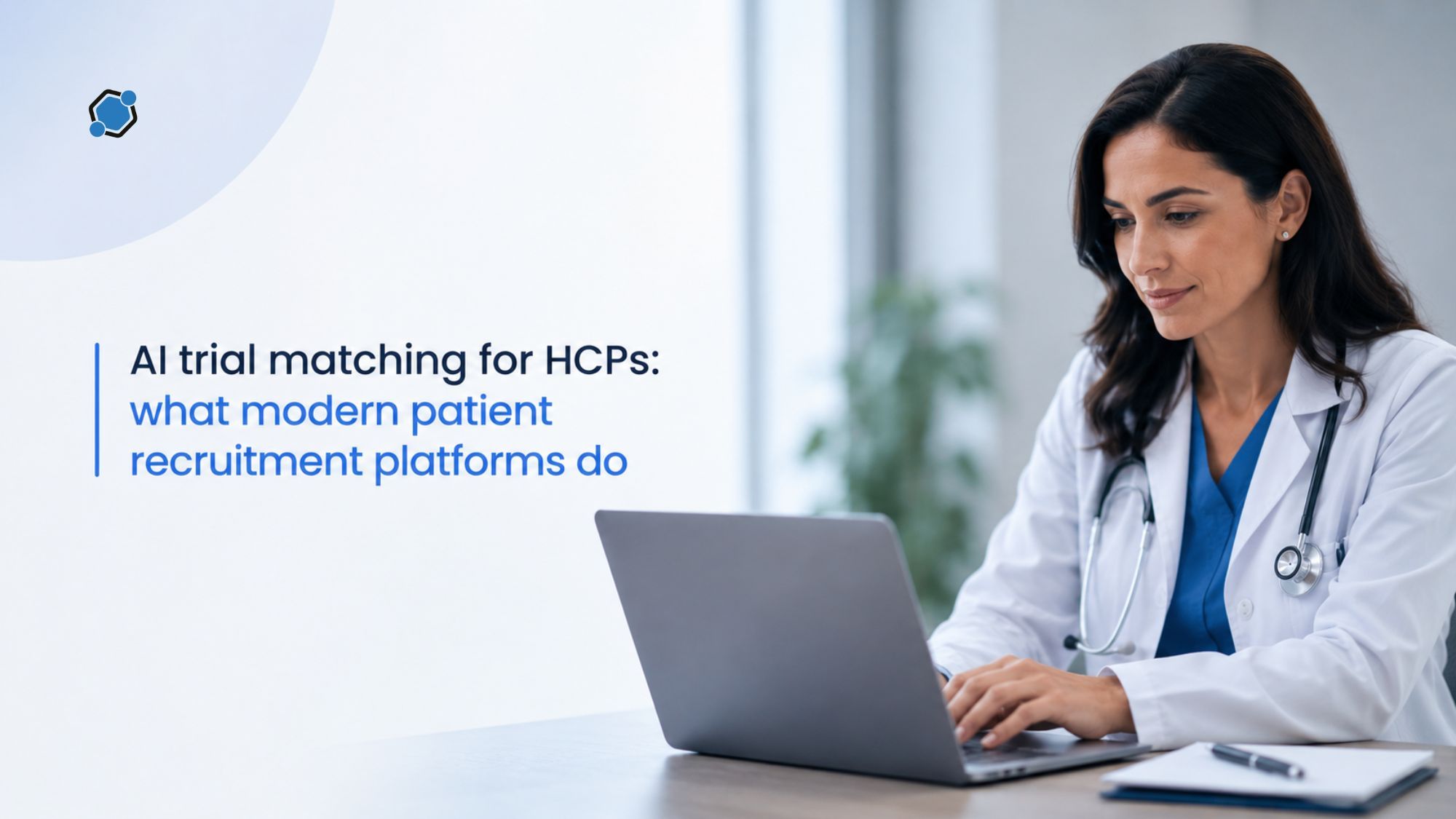
Referring physicians are encountering clinical trial matching technology more often than they used to. Hospital-system integrations now surface trial options inside the electronic health record. Patients arrive at appointments having already searched online directories. Recruitment platforms reach out asking whether a given patient might be a fit for a study. The friction that used to keep most physicians out of clinical research, finding a relevant trial in the first place, is beginning to ease. For healthcare professionals (HCPs), the question is no longer whether to engage with artificial intelligence-driven matching tools, but how to read what they offer and where physician judgment is still required.
The recruitment gap that brought AI matching into physician workflows
The traditional path from a clinical question to a candidate trial is slow. ClinicalTrials.gov, the federal registry of registered studies, hosts a vast and growing catalog, but its filters are built for researchers, not clinicians at the point of care. Sorting through the eligibility criteria of even ten registered studies can take longer than a typical visit allows.
Most physicians want to be able to discuss clinical trial participation with appropriate patients. Surveys across primary care and specialty practice have repeatedly identified the same barriers: limited time, an opaque trial landscape, and uncertainty about how to make a referral cleanly without taking on the eligibility work themselves. The result is a research-aware physician population that rarely makes referrals.
This is the gap that AI-assisted matching tools were built to close. The premise is simple. Software reads structured data from a patient’s chart, parses the eligibility criteria of registered trials, and surfaces a ranked list of candidate studies in seconds rather than hours. Early deployments were heaviest in oncology. The category has since expanded to neurology, rare disease, cardiology, and other areas where trial volume is high. For more on how the referring clinician’s position has been shifting, see The clinician’s role in expanding trial access for patients.
What AI-assisted trial matching actually does
AI matching is not a single technology. The term covers a few related capabilities that often appear in the same product. Natural language processing (NLP) reads the unstructured parts of a medical record, the narrative sections that contain a clinician’s notes, imaging reports, and pathology summaries. Machine learning models look for patterns across structured fields such as laboratory values, diagnostic codes, and medication history. Together, those components compare a single patient’s profile against the inclusion criteria (the rules describing who can join a study) and the exclusion criteria (the rules describing who cannot) of active trials.
The output is usually a list of candidate studies with some indication of how confidently the algorithm believes the patient may qualify. Good systems make their reasoning visible: which criteria appeared to match, which were uncertain, and which data points were missing from the chart entirely.
What AI matching does not produce is an eligibility decision. The algorithm surfaces hypotheses. Whether a patient is actually eligible to enroll is still determined by the study team conducting the trial, applying the protocol in full and reviewing source documents. Industry reviews of these tools have consistently emphasized this distinction. Patient privacy laws, including the Health Insurance Portability and Accountability Act (HIPAA), also shape how these systems can access and use patient information. For a broader look at the technology, see AI in clinical trials: how it is changing study design and patient recruitment.
Where pre-screening fits, and what counts as a real match
Between the algorithm’s output and the study site lies pre-screening. This is the step where a person, usually a clinically trained reviewer, looks at the candidate list, talks with the patient or representative, and clarifies the points that software alone cannot.
A few examples illustrate why this step exists. The chart may indicate a patient is taking a medication that disqualifies them, when in fact that medication was stopped six months ago and never updated in the record. A laboratory value that looked qualifying may have come from a procedure the trial protocol excludes. A patient’s stated willingness to travel may not match what the chart implies about their location. Pre-screening surfaces these mismatches early, before the patient’s time, the site’s time, and the sponsor’s budget are spent on a screening visit that was never going to qualify.
At DecenTrialz, a registered nurse completes the initial pre-screening review. The matched candidate is then handed off to the study team at the research site, which holds responsibility for final eligibility determination, informed consent, and enrollment. The reason for that boundary is regulatory and ethical: only the investigator running the trial, under the trial protocol and institutional review board oversight, can decide who enrolls. For a deeper look at how candidates move through this funnel, see Pre-screening funnel metrics: from clinical trial participant to enrollment.
What stays with the referring physician
A matching algorithm can read a chart. It cannot read the patient. The decisions that depend on knowing the person, not the record, remain with the referring clinician.
Several judgments live here. Whether trial participation is appropriate for this patient at this point in their care. Whether comorbidities, life circumstances, caregiver availability, or upcoming surgeries make a study impractical regardless of what the eligibility criteria say. Whether the patient understands what the conversation is even about, and what kind of follow-up they will want from the physician they trust. Whether the timing fits the patient’s broader goals.
None of those judgments are technical. They are clinical, and the algorithm has no access to them. A modern AI matching platform that respects the physician’s role makes the trial easier to surface and the referral easier to send, while leaving the question of whether to refer this patient firmly with the clinician. The platform’s value is in the work it removes from the physician’s plate, not in the work it tries to take over. For a longer discussion of what this kind of partnership looks like in practice, see When doctors partner with research: benefits for practice and patients.
How a modern matching platform should fit into a physician’s workflow
The platforms that physicians find usable share a small number of characteristics. They are lightweight at the point of contact. A referral should not require a separate login, a new chart, or a phone call. The reasoning behind any surfaced match should be transparent: which criteria were assessed, which were uncertain, what additional information would be needed to confirm.
Closed-loop reporting matters. A platform that takes a referral and then disappears is not a tool the physician will use a second time. Status updates on whether the patient enrolled, declined, was screen-failed, or completed the study contribute to the physician’s clinical record and inform future referral decisions.
Finally, the platform should be honest about what it does not know. A confidence score is more useful than a binary match. A flagged missing data point is more useful than a silent assumption. The physicians most willing to refer are the ones who trust that the platform will not waste their patients’ time. For more on the workflow side, see How easier referral pathways help HCPs connect patients to clinical trials.
Where DecenTrialz fits
DecenTrialz is a clinical trial recruitment and pre-screening platform built around the same boundary this article has been describing: technology does the discovery work, clinicians make the clinical decisions, and the study team at the research site holds final responsibility for eligibility and enrollment. For referring physicians, the platform is designed to slot into existing referral habits without adding chart-review burden to the practice.
The matching layer reads a patient’s profile against the inclusion and exclusion criteria of active trials and surfaces a ranked list of candidates. The reasoning behind each match is visible. Which criteria appeared to fit, which were ambiguous, and which data points were not available are all part of the output, so physicians who want to understand why a particular trial surfaced for a particular patient can see the answer.
The pre-screening layer is led by a registered nurse. The nurse reviews each candidate against the protocol’s stated requirements and surfaces the gaps that software alone cannot catch, such as outdated medication entries, ambiguous laboratory values, or logistical mismatches between the patient and the research site. The nurse completes an initial pre-screening review only. Final eligibility determination, informed consent, and enrollment are handled by the study team at the research site responsible for the trial. That boundary is regulatory, ethical, and intentional: only the investigator running the trial, under the trial protocol and institutional review board oversight, can decide who enrolls.
For referring physicians, the closed-loop reporting matters most. When a referred patient moves through pre-screening, the referring physician sees what happened next. Whether the patient declined, was screen-failed against the protocol, was advanced to the research site for full eligibility review, or completed the study, the status returns to the physician’s view. The trial does not disappear into a black box once the referral leaves the office, which is the single most common reason HCPs disengage from a recruitment platform after one or two referrals.
The practical effect for HCPs: trial discovery and initial pre-screening happen outside the visit, the chart-review burden does not fall on the practice, and the clinical judgment about whether to discuss a trial with a specific patient stays where it belongs. To learn more about how the platform supports referring physicians, or to register a practice’s interest, visit DecenTrialz.
Was this article helpful?

Similar Blogs
How to identify clinical trial candidates during a routine patient visit
The ability to identify clinical trial candidates during a routine patient visit is one of...
 Mahesh Upadrista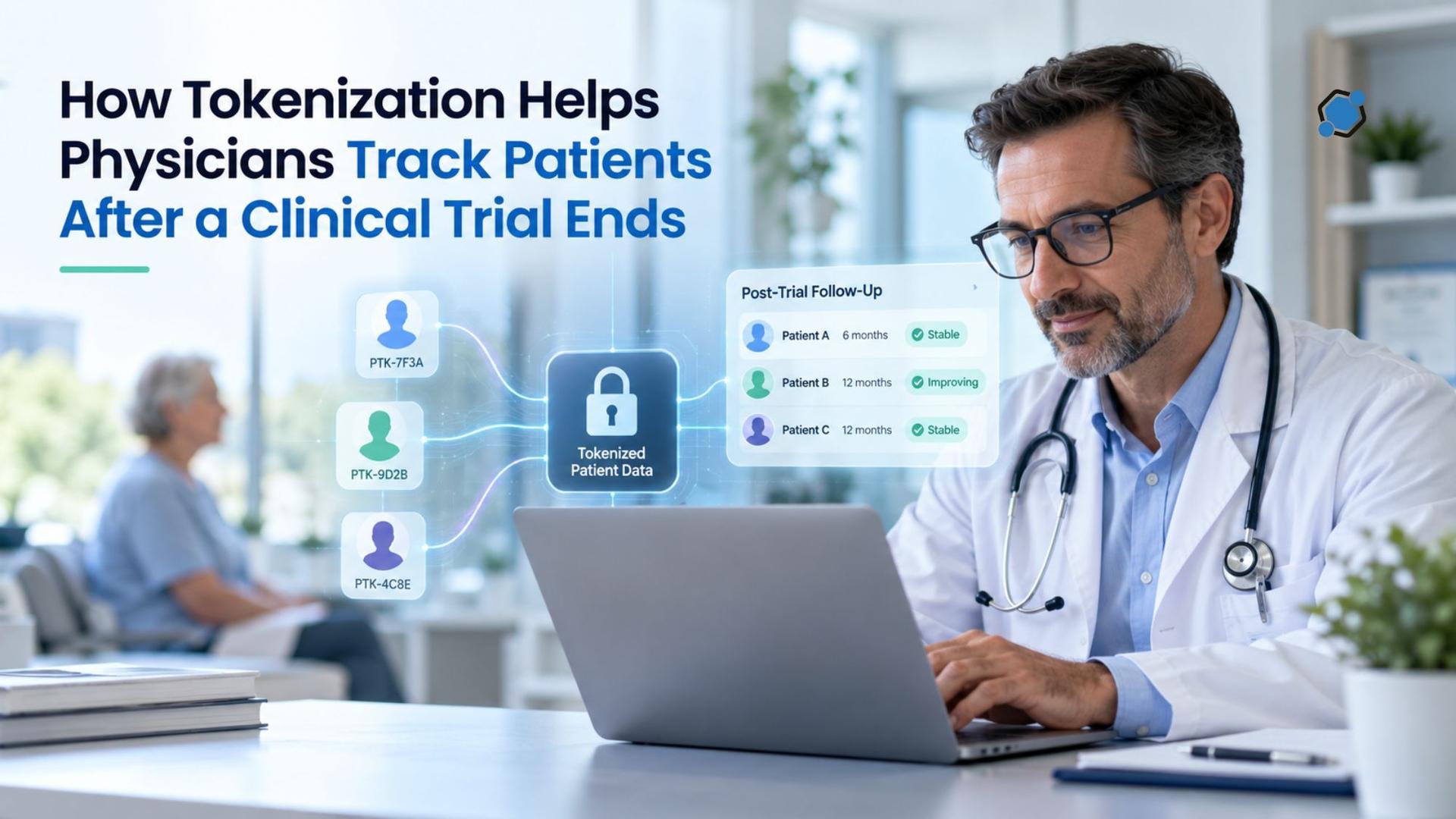
How Tokenization Helps Physicians Track Patients After a Clinical Trial Ends
Tokenization is changing how sponsors keep track of clinical trial participants long after...
Swaroop ESD
Digital Endpoints in Clinical Trials: What Wearable Data Measures and What It Does Not
Digital endpoints in clinical trials have changed both what a study measures and where the...
Mahesh UpadristaStay Informed. Stay Connected.
Get updates on verified clinical trials, emerging treatments, and research breakthroughs directly in your inbox. No spam, just science that matters.
