 HIPAA Compliant
 ISO 27001 Certified

Cancer Biomarker Awareness Day 2026: what is cancer biomarker testing, and why does it matter?
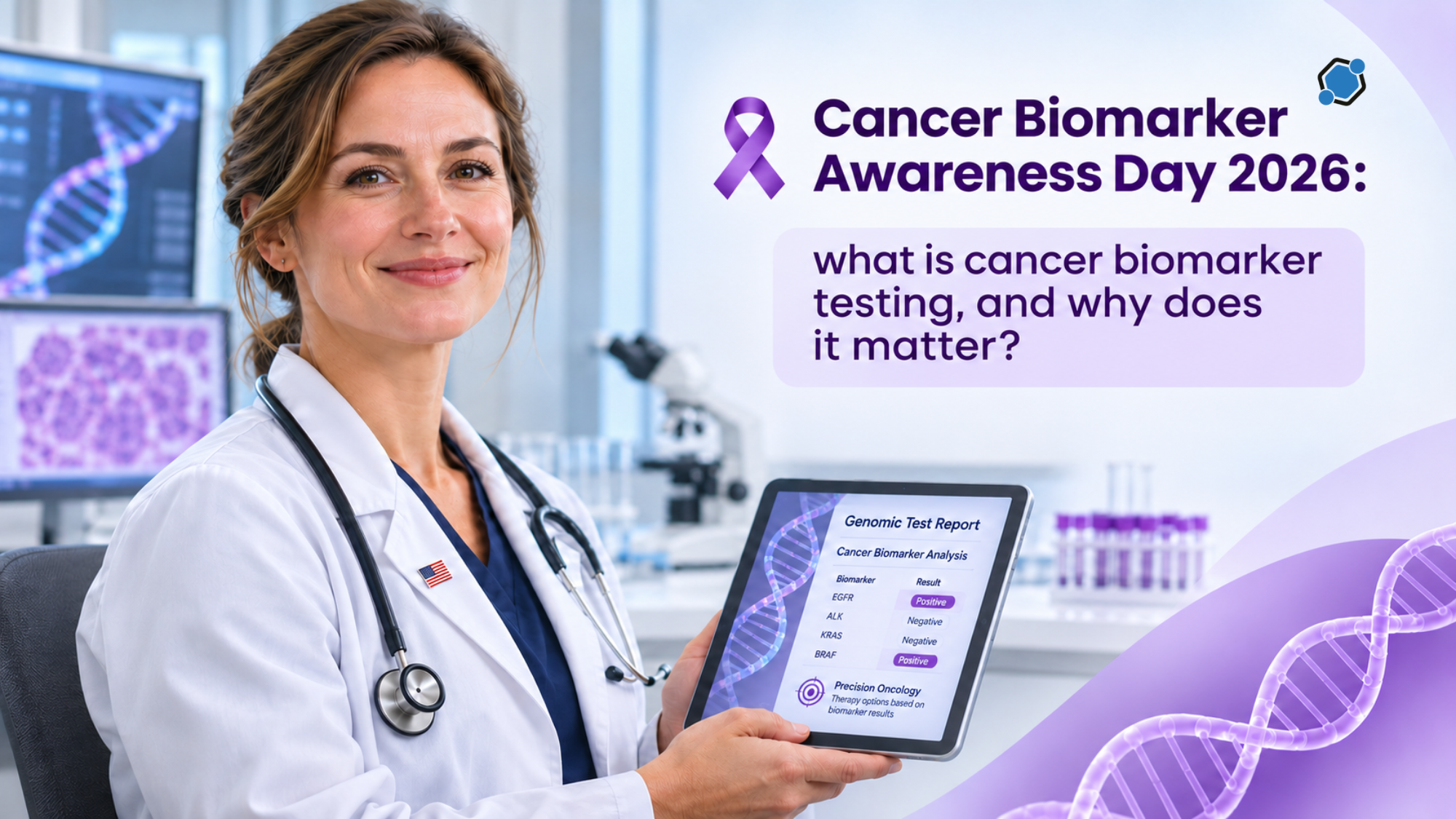
Cancer Biomarker Awareness Day falls on Thursday, November 12, 2026. The observance centers on one step in cancer care that is easy to overlook: cancer biomarker testing, which looks for specific changes in a person's cancer that can help guide treatment and point toward clinical trials. Many people with cancer have never heard the term, and many who could benefit from testing do not receive complete testing at the right time.
This article explains what cancer biomarkers are, how testing works, and how results can shape clinical trial options.
What is Cancer Biomarker Awareness Day?
Cancer Biomarker Awareness Day was first observed on November 13, 2025. It was started by a national lung cancer nonprofit working with a coalition of cancer advocacy organizations, and groups representing colorectal, ovarian, skin, and other cancers now take part. It is an advocacy-led observance rather than a government designation, and its date can shift from year to year.
The day recognizes the role biomarker testing plays in access to precision medicine, which means choosing treatment based on the features of a person's specific cancer rather than only on where in the body the cancer started. The message applies across cancer types: patients and families are encouraged to ask whether testing has been done and what the results mean.
The observance falls during Lung Cancer Awareness Month, which also focuses on lung cancer risks and screening. The overlap is fitting. In non-small cell lung cancer, the most common type, guidelines recommend testing for a broad set of biomarkers at diagnosis because several of them have matching treatments.
The day also exists because testing gaps remain. In one recent study of U.S. community oncology practices, roughly four in ten people with advanced non-small cell lung cancer did not receive the full set of guideline-recommended biomarker tests. Other studies show differences in testing by race, insurance type, and region. These gaps largely reflect system factors such as limited tissue, turnaround times, coverage, and where care is delivered.
What are cancer biomarkers?
A biomarker is a measurable sign of what is happening in the body. Federal health agencies define it as a characteristic measured as an indicator of normal biological processes, disease processes, or responses to a treatment. In cancer, biomarkers are genes, proteins, and other substances found in tumor cells or blood that give information about the cancer. Each person's cancer has its own pattern of biomarkers.
A cancer biomarker works like a label describing what is driving the cancer's growth. Two people may both have lung cancer, yet their tumors can carry different labels, and those labels may call for different treatments. Biomarkers are also used well beyond cancer, and it helps to understand how biomarkers work across medicine before focusing on tumors.
Cancer biomarkers are grouped by what they help doctors decide:
- Diagnostic biomarkers help confirm a cancer or identify its subtype.
- Prognostic biomarkers give clues about how a cancer is likely to behave over time.
- Predictive biomarkers suggest whether a specific treatment is likely to help.
- Monitoring biomarkers are measured repeatedly to track response to treatment or check whether cancer has returned.
- Risk biomarkers, such as certain inherited gene changes, signal a higher chance of developing cancer.
A single biomarker can play more than one role. Biomarker testing may also be called tumor testing, genomic testing, or molecular profiling.
Which cancer biomarkers are most common?
Dozens of biomarkers are now part of routine cancer care. Gene and protein names look technical, but each describes a specific feature of the cancer. Commonly tested examples include:
- HER2: a growth-signal protein that some breast, stomach, and other tumors produce in excess. HER2 status helps determine whether HER2-targeted treatment may be an option, a topic covered in more depth in this explainer on HER2 testing in breast cancer.
- Estrogen and progesterone receptors (ER and PR): hormone receptors on breast cancer cells that indicate whether hormone therapy may help.
- EGFR, ALK, and ROS1: gene changes that drive some non-small cell lung cancers. Each has targeted medicines designed to block its effects.
- KRAS: one of the most frequently changed genes in cancer. Certain KRAS changes now have targeted medicines in lung and colorectal cancer.
- BRAF V600E: a specific gene change found in melanoma and some other cancers.
- PD-L1: a protein that can help tumors hide from the immune system. Its level helps indicate whether immunotherapy may be an option.
- MSI-H or dMMR: signs that a tumor's DNA repair system is not working properly, which may make immunotherapy more likely to help.
- NTRK gene fusions: rare changes in which two genes are abnormally joined, found across many cancer types.
Some of these biomarkers matter regardless of where the cancer started. A small and growing group of therapies (nine as of October 2026) is approved by the FDA based on a tumor's biomarker rather than its location in the body. This is called a tissue-agnostic approval.
Why PSA and CA-125 are different
Blood tests such as PSA (prostate-specific antigen) and CA-125 are often called tumor markers, but they work differently from the biomarkers above. Non-cancer conditions such as an enlarged prostate or endometriosis can raise them, so neither can diagnose cancer on its own. CA-125 is mainly used to monitor ovarian cancer treatment and check for its return, and a large randomized study found that screening the general population with it did not reduce ovarian cancer deaths. PSA screening is a shared decision between a person and their doctor.
How does cancer biomarker testing work?
Biomarker testing is usually ordered by the oncologist, and some hospitals start it automatically at diagnosis. Testing is commonly recommended for advanced cancer and at diagnosis for certain cancers, including non-small cell lung, breast, and colorectal cancer.
Testing uses one of two main sample types. A tissue sample comes from a biopsy or surgery. A liquid biopsy is a blood test that looks for circulating tumor DNA, the small fragments of DNA that tumors shed into the bloodstream. It can help when a tumor is hard to reach, but a negative result may need tissue confirmation because blood sometimes holds too little tumor DNA.
Labs use several methods, often in combination:
- Immunohistochemistry (IHC) stains a thin slice of tissue to show whether a protein, such as HER2 or PD-L1, is present.
- Fluorescence in situ hybridization (FISH) uses glowing probes to show extra gene copies or rearranged genes.
- Polymerase chain reaction (PCR) quickly checks for one or a few known gene changes.
- Next-generation sequencing (NGS), also called comprehensive genomic profiling, reads hundreds of genes at once.
Some tests are reviewed by the FDA together with a specific medicine. This is called a companion diagnostic: the medicine is approved for patients whose test shows a certain biomarker, and the test is approved to find it.
Tumor testing versus inherited genetic testing
Biomarker testing on a tumor looks for somatic changes, which develop during a person's lifetime, cause most cancers, and cannot be passed on to children. Inherited genetic testing looks for germline changes, which are present from birth in every cell and can be shared by relatives. Tumor testing sometimes reveals a possible inherited change, such as inherited BRCA1 and BRCA2 changes. In that case, a separate confirmatory test and a conversation with a genetic counselor are usually recommended.
The Genetic Information Nondiscrimination Act protects people from genetic discrimination in health insurance and employment. It does not cover life, disability, or long-term care insurance, so it is worth understanding these limits before inherited testing.
What results can and cannot tell you
A biomarker report lists the changes found and any treatments or trials that may match them. A matching biomarker does not guarantee that a treatment will work, because not every cell in a tumor carries the same changes. Cancers can also change over time, so repeat testing may be recommended if a cancer grows or returns. Some reports list variants of uncertain significance, changes whose effect is not yet known and which are not used to choose treatment.
How do biomarkers shape clinical trial options?
Many cancer clinical trials use biomarker results to decide who can join. Some trials require a specific change, such as a particular gene fusion, while others enroll only people whose cancer does not carry a targetable change. As a result, biomarker results can open some trial options and narrow others.
Biomarkers have also changed how trials are designed. A basket trial tests one treatment across several cancer types that share the same biomarker. An umbrella trial studies one cancer type and assigns participants to different treatments based on their biomarkers. A platform trial adds or drops treatment arms over time. These designs are explained in more detail in this overview of basket, umbrella, and platform trials.
Biomarker-defined groups can be very small. In one large federal precision medicine study, more people had a potentially actionable change than could actually be assigned to a matching treatment arm, and fewer than one in five of those screened were assigned. Rare biomarkers make it harder to find enough eligible participants, so these trials can take longer to fill.
For people exploring trials, keeping a copy of the biomarker report may help a study team review eligibility faster and may reduce the need for a repeat biopsy. Some trials require recent testing, and some cover the cost of biomarker testing as part of the study.
Frequently asked questions about cancer biomarker testing
Does insurance cover cancer biomarker testing?
Coverage depends on the plan and the situation. Medicare covers next-generation sequencing for many people with advanced cancer when certain criteria are met. About half of U.S. states have passed laws requiring broader biomarker testing coverage by some health plans, though the details vary and self-funded employer plans are generally not affected. Checking with the insurer before testing is the most reliable approach.
Can a biomarker test tell me whether I have cancer?
Generally, no. Treatment-guiding biomarker tests are used after a cancer diagnosis. Multi-cancer early detection blood tests, which aim to find signs of several cancers in people without symptoms, are still being evaluated, and none had FDA approval as of November 2026.
What happens if my test finds no actionable biomarker?
This is a common result. It means no change with a matching approved treatment was found at the time of testing. Standard treatments remain available, and some trials enroll people without a targetable change.
What questions should I ask my care team?
- Has my cancer been tested for biomarkers, and which ones?
- Was the testing a broad panel or a few single-gene tests?
- Should I wait for the results before starting treatment?
- Did the results suggest an inherited change that needs follow-up?
- Are there treatments or clinical trials that match my results?
Making biomarker results part of the treatment conversation
Cancer Biomarker Awareness Day is a reminder that the details of a person's cancer can matter as much as its name. Asking about complete biomarker testing, keeping a copy of the report, and discussing results with the care team are practical steps that may open more options.
For people who want to explore clinical research, DecenTrialz is a clinical trial recruitment and pre-screening platform that helps connect people with relevant studies. Participants share some information about their health, are matched to trials that may fit, and a registered nurse reviews their information before a referral is sent to the research site.
DecenTrialz does not order or interpret biomarker tests or recommend treatment. The research site team makes all final eligibility decisions and handles informed consent and enrollment. To explore clinical trials that may match your situation, visit decentrialz.com.
Was this article helpful?

Similar Blogs

World Pneumonia Day 2026: what is pneumonia, and how can it be prevented?
World Pneumonia Day is observed every year on November 12, and in 2026 it falls on a Thurs...
 Vamshi Kantoju

National Epilepsy Awareness Month 2026: what is epilepsy, and what should you do during a seizure?
National Epilepsy Awareness Month takes place every November in the United States and focu...
Swaroop ESD
Veterans Day 2026: how veterans have advanced medical research
Veterans Day falls on Wednesday, November 11, 2026. The holiday honors everyone who has se...
ParamrajStay Informed. Stay Connected.
Get updates on verified clinical trials, emerging treatments, and research breakthroughs directly in your inbox. No spam, just science that matters.
