 HIPAA Compliant
 ISO 27001 Certified

Veterans Day 2026: how veterans have advanced medical research
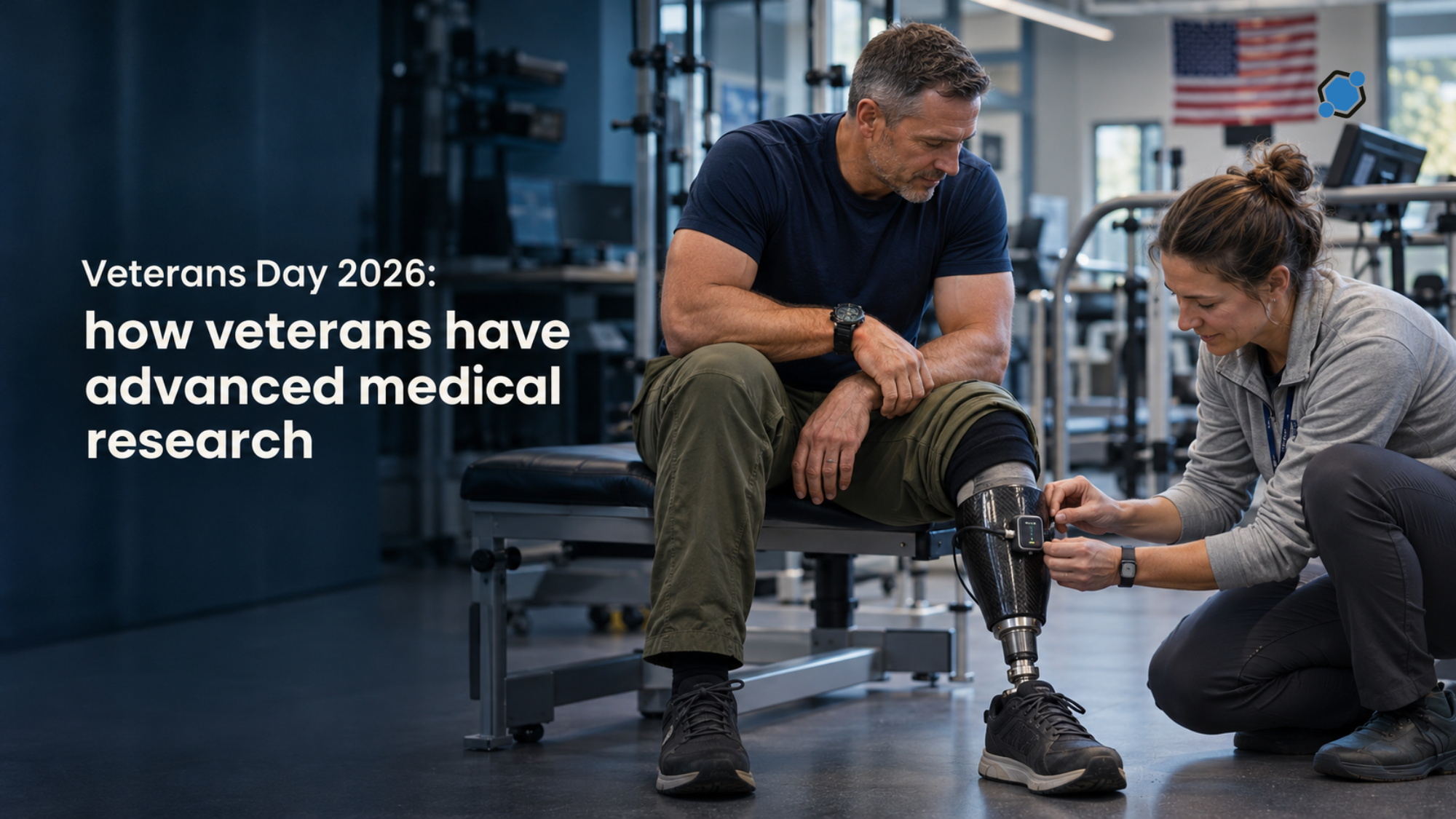
Veterans Day falls on Wednesday, November 11, 2026. The holiday honors everyone who has served in the U.S. armed forces, in wartime or in peace, living or deceased. It also offers a moment to recognize a contribution that receives far less attention: for generations, veterans have volunteered for medical research, and the results now benefit patients well beyond the military community.
This Veterans Day 2026 overview covers the history of the holiday, the health challenges that can follow military service, the medical advances made possible by veteran research volunteers, and how participation in clinical research works today.
Why is Veterans Day on November 11?
Fighting in World War I stopped at the 11th hour of the 11th day of the 11th month in 1918, when an armistice (an agreement to end hostilities) took effect. The first Armistice Day was observed on November 11, 1919, and in 1938 Congress made the date a legal holiday dedicated to the cause of world peace.
In 1954, Congress replaced the word "Armistice" with "Veterans," and President Dwight D. Eisenhower signed the change so the day would honor veterans of all wars. A 1968 law moved the holiday to a Monday in October starting in 1971, which caused widespread confusion. A 1975 law returned it to November 11 beginning in 1978, where it remains regardless of the day of the week.
Veterans Day is often confused with Memorial Day. Memorial Day, held on the last Monday in May, honors service members who died in military service. Veterans Day thanks all who served, with particular focus on living veterans. The official spelling has no apostrophe, because the day honors veterans rather than belonging to them. The 2026 national Veterans Day poster also recognizes the 250th anniversary of the United States.
What health challenges do veterans face after service?
About 15.7 million Americans are veterans, roughly 1 in 17 adults, according to the most recent U.S. Census Bureau figures. Veterans who served after September 11, 2001, now form the largest service era, while nearly a third of all veterans are 75 or older. Most veterans lead healthy lives, but military service carries specific health risks that can persist long after discharge.
- Hearing loss and tinnitus. Tinnitus, a ringing or buzzing in the ears, is the most common service-connected disability among veterans. Gunfire, engines, and aircraft noise are frequent causes.
- Traumatic brain injury (TBI). A TBI is damage to the brain from a blow, jolt, or blast. Hundreds of thousands of service members have been diagnosed with a TBI since 2000, and most cases were mild injuries commonly called concussions.
- Post-traumatic stress disorder (PTSD). PTSD can develop after a frightening or life-threatening event, causing memories, nightmares, and a sense of being on edge that interfere with daily life. About 7 in every 100 veterans will have PTSD at some point, and rates are higher among women veterans.
- Toxic exposures. These include smoke from open-air burn pits in Iraq, Afghanistan, and other locations; Agent Orange, an herbicide used during the Vietnam War; contaminated drinking water at Camp Lejeune, North Carolina, between the 1950s and 1980s; and Gulf War Illness, a cluster of unexplained, long-lasting symptoms such as fatigue, pain, and memory problems.
- Amyotrophic lateral sclerosis (ALS). ALS is a progressive disease that affects the nerves controlling muscle movement. Since 2008, the Department of Veterans Affairs (VA) has treated ALS as service-connected for veterans with at least 90 days of continuous active service. Why veterans face a higher risk is still not known.
Research into these conditions continues to shape care. For example, PTSD research is changing how the condition is treated, and much of that work began in veteran populations.
The PACT Act, signed in August 2022, expanded VA health care and benefits for veterans exposed to burn pits and other toxic substances. It added more than 20 presumptive conditions, meaning conditions the VA assumes were caused by service, so a veteran does not have to prove the link. The law also requires a toxic exposure screening for veterans enrolled in VA health care at least once every five years, and millions of these screenings have been completed.
How have veterans helped advance medical research?
VA research began in 1925 and marked its 100th anniversary in 2025. Many VA researchers also treat patients, which keeps studies close to the health problems veterans actually face. Advances that grew out of VA research and its veteran volunteers include:
- The development of an implantable cardiac pacemaker.
- The first successful liver transplant, performed at the Denver VA in 1967.
- The first large clinical trials of hearing aids.
- The nicotine patch, co-developed by a VA researcher.
- A study of more than 38,000 adults aged 60 and older, published in 2005, which found that a shingles vaccine cut shingles cases by about half and supported its approval by the U.S. Food and Drug Administration (FDA).
- Evidence for two talk therapies, prolonged exposure and cognitive processing therapy, which are now widely recommended treatments for PTSD.
The Million Veteran Program, launched by the VA in 2011, is one of the largest genetic research programs in the world. More than a million veterans have volunteered blood samples and health information, helping researchers study heart disease, PTSD, prostate cancer, and other conditions. Large genetic resources like this also support pharmacogenomics, the study of how genes affect medicine response.
Research continues today. The VA is testing psychedelic-assisted therapies for depression that has not responded to standard treatment, and for PTSD that occurs alongside alcohol use disorder. These approaches are investigational and are not FDA-approved for these conditions. Separately, the Department of Defense funds more than a billion dollars of medical research in fiscal 2026 through a program directed by Congress, covering areas such as brain injury, toxic exposures, ALS, and cancer.
Why do trust and safeguards matter in veteran research?
Not every chapter of military research history reflects these advances. During World War II, more than 60,000 U.S. servicemen were used as human subjects in secret chemical defense tests involving mustard agents. Many were not given a genuine choice to decline, the tests were left out of their official military records, and it took decades before the government formally reviewed the long-term health effects.
That history helps explain why many veterans ask careful questions before joining a study. Research on veteran attitudes shows that views toward clinical trials are generally favorable, especially when a study may help fellow veterans, and that trust, transparent communication, and respect are essential to the decision.
Modern clinical research operates under protections that did not exist in the 1940s:
- An Institutional Review Board (IRB), an independent ethics committee, must review and approve a study before it begins and continues to oversee it to protect participants' rights and welfare.
- Informed consent is the process of learning a study's purpose, procedures, risks, possible benefits, and alternatives before deciding whether to take part.
- Participation is voluntary, and a participant can leave a study at any time.
The consent form is the clearest record of these protections, so it is worth reading slowly and with questions in mind. A practical walkthrough of how to read an informed consent form explains what each section means.
Can veterans take part in clinical trials?
Yes. Veterans can join studies run by the VA, by academic medical centers, and by companies developing new treatments. According to the VA, deciding whether to join a VA research study does not affect a veteran's VA health care or benefits, and a volunteer can leave a study at any time without losing those benefits.
Access remains uneven. A national association of VA-affiliated research nonprofits reports that only a small share of industry-sponsored trials are offered at VA medical centers, and many trials do not record whether a participant is a veteran at all. About a quarter of veterans live in rural areas, and they are less likely to take part in VA research, partly because studies are often not available near home.
Distance brings practical concerns about travel time and expenses. Understanding who pays for clinical trial costs, from study visits to travel, helps clarify what participation would involve. Useful questions to ask a study team include:
- How will this study affect current medical care?
- How many visits are required, and can any take place closer to home?
- Will participation cost anything, and are travel expenses reimbursed?
- What happens if a health condition worsens during the study?
- Who will see the research records, and how is that information protected?
Speaking with a primary care provider or the research office at a local VA medical center is a reliable first step, since these teams know which studies are active in the area.
Veterans Day and veteran research: common questions
What is a VA toxic exposure screening?
It is a short set of questions about potential exposures during service, such as burn pits, Agent Orange, or radiation. Veterans enrolled in VA health care are offered the screening at least once every five years, and answers can lead to follow-up care or information about benefits.
Does joining a clinical trial guarantee better treatment?
No. A clinical trial tests whether a treatment is safe and effective, so the outcome cannot be predicted in advance. A participant may or may not benefit personally, although the information gained may help other patients in the future.
How can veterans find a clinical trial?
Options include asking a VA care team, contacting the research office at a local VA medical center, searching the VA's online listing of VA-sponsored studies, and using trial matching services that compare health information with study requirements.
Honoring service through research
Veteran research volunteers have helped create treatments that millions of people now rely on, from heart devices to vaccines. Recognizing that contribution on Veterans Day also means making research easier for veterans to find, understand, and join on their own terms.
DecenTrialz is a clinical trial recruitment and pre-screening platform that helps people learn about studies that may fit their health needs. A person shares some health information, artificial intelligence (AI) matching identifies relevant studies, and a registered nurse reviews that information by phone before a referral is sent to the research site. Clinical trial matching services like this can help reduce the distance between people and studies, which matters for veterans who live far from major research centers.
The research site team makes the final eligibility decision, handles informed consent, and manages enrollment. DecenTrialz does not provide medical care and cannot guarantee a place in any study.
Veterans and families interested in research can explore current studies on DecenTrialz and discuss any opportunity with their care team before deciding.
Was this article helpful?

Similar Blogs
Cancer Biomarker Awareness Day 2026: what is cancer biomarker testing, and why does it matter?
Cancer Biomarker Awareness Day falls on Thursday, November 12, 2026. The observance center...
 Mahesh Upadrista
World Pneumonia Day 2026: what is pneumonia, and how can it be prevented?
World Pneumonia Day is observed every year on November 12, and in 2026 it falls on a Thurs...
Vamshi Kantoju
National Epilepsy Awareness Month 2026: what is epilepsy, and what should you do during a seizure?
National Epilepsy Awareness Month takes place every November in the United States and focu...
Swaroop ESDStay Informed. Stay Connected.
Get updates on verified clinical trials, emerging treatments, and research breakthroughs directly in your inbox. No spam, just science that matters.
