 HIPAA Compliant
 ISO 27001 Certified
Home nursing visits in clinical trials: what participants can expect
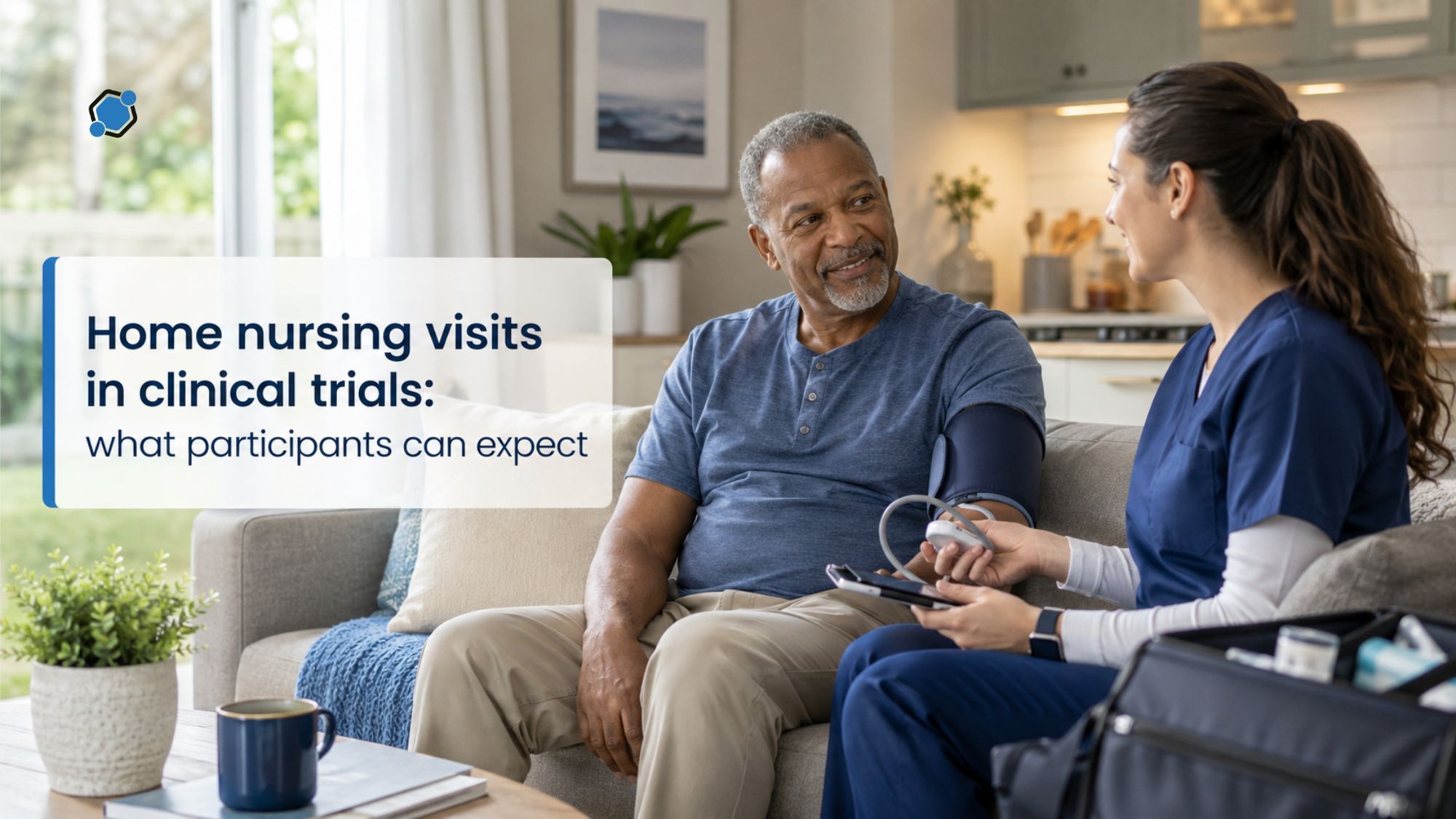
Clinical trial visits are starting to look different. In a growing number of studies today, a trained research nurse packs the equipment, drives to the participant's home, handles the routine tasks of the appointment, and heads back out. No commute, no waiting room, no half a day off work.
This kind of appointment is called a home nursing visit, and the U.S. Food and Drug Administration formally recognized it as part of modern trial design in its September 2024 guidance on decentralized clinical trials. Here is what these visits actually look like, who runs them, and what to expect if a trial invites you to try one.
What a home nursing visit in a clinical trial actually is
The idea behind a home nursing visit is simple. Instead of asking a participant to travel to a research center every few weeks, the trial sends someone qualified to the participant. Researchers call this a decentralized clinical trial when much of the study happens away from a traditional site, and a hybrid trial when only some visits move out of the clinic.
Even studies that use this model rarely move every appointment into the home. A hybrid design might keep the first visit, the imaging appointment, and the final safety review at the research center, and shift the routine check-ins, sample draws, and questionnaires into the home. The study protocol, which is the written plan that describes exactly how the trial will run, spells out which appointments happen where.
Home visits have quietly become common in rare disease research, cancer care, gene therapy, cardiovascular studies, and any trial that follows participants for a long stretch of time. The COVID-19 pandemic accelerated the shift, and the trend never reversed. For a wider look at how trials have moved beyond the clinic walls, Virtual Clinical Trials: What Patients Need to Know is a helpful primer.
Who the nurse is and who they answer to
The person who shows up at the door is almost always a registered nurse with a current license. On top of standard nursing training, this nurse has completed Good Clinical Practice training, often called GCP, which is the international standard for how clinical trials are meant to be run ethically and reliably. The nurse has also been trained on the specific study protocol before making any visits at all.
In most trials the nurse works for a specialized mobile research nursing agency rather than the sponsor directly. That agency is contracted to cover a geographic region, which is how a single trial can offer home visits across many states without setting up its own nursing team from scratch.
One important point often gets missed. Medical responsibility for the trial does not travel home with the nurse. The principal investigator, the doctor legally responsible for running the study at the research site, still owns every clinical decision. The home nurse operates under that investigator's oversight, and every visit is documented and reviewed by the site team. For a broader look at how the different players in a trial fit together, Clinical Research Basics: What Every Trial Participant Should Understand Before Enrolling lays it out clearly.
What usually happens during the visit
A home visit is usually shorter than most people expect. Around thirty to forty-five minutes covers most appointments, sometimes less. The nurse brings everything needed for the day and leaves with any samples that have to reach a laboratory.
Common tasks at a home visit include:
- Vital signs such as blood pressure, pulse, temperature, and respiratory rate
- Blood draws, also called phlebotomy, which means collecting a small blood sample from a vein
- Administering or delivering the study drug, sometimes called the investigational product
- Collecting urine, saliva, or other samples
- A portable electrocardiogram, or ECG, which is a recording of the heart's electrical activity
- Study questionnaires and patient-reported outcomes, meaning health questions the participant answers directly
- Setting up or downloading data from wearable devices such as activity monitors
- Safety check-ins and questions about how things have been going
Some tasks still belong at the research site. MRI or CT scans, hands-on specialist examinations, and the first dose of some higher-risk study drugs are the usual examples. The protocol makes this clear from the start, so there are no surprises about which appointments require a trip. For a fuller sense of how a first appointment tends to unfold, What to Expect at Your First Study Visit walks through the basics.
How to prepare and what the visit feels like
Preparing for a home visit is straightforward. A study coordinator or the nursing agency will call ahead to lock in a date and time, and to flag anything that has to be done in advance, such as fasting before a blood draw.
A quiet corner of the home with a table and a chair is usually all the space that is needed. Loose or short-sleeved clothing makes vital signs and blood draws easier. The nurse brings gloves, sanitizing supplies, and everything else the visit calls for. Pets do not need to be locked away. Family members and caregivers are welcome to sit in.
Privacy still matters at home. Participants who share a residence can complete parts of the visit in a private room or schedule when other household members are out. If English is not a primary language, many trials arrange interpreters and translated materials.
Life happens. If someone feels unwell the morning of a visit, or an unexpected conflict comes up, the appointment can usually be rescheduled inside the time window the protocol allows. The site team's contact details are provided at enrollment and worth keeping close throughout the study. Practical guidance on what to line up before joining a trial in the first place is covered in Pre-Study Requirements: What You Need Before Enrolling.
Safety, privacy, and your rights as a participant
Home visits play by the same rules that protect participants inside a research center. FDA guidance on decentralized clinical trials is explicit about this. Regulatory requirements do not loosen because the visit happens at a kitchen table.
Personal health information collected at a home visit is protected under the Health Insurance Portability and Accountability Act, known as HIPAA. Data is stored securely, and access is limited to authorized members of the research team.
Every trial has to be reviewed and approved by an Institutional Review Board, or IRB. An IRB is an independent group of medical, scientific, and community members whose job is to protect participant rights and welfare. Home visit procedures go through the same review as anything else in the trial.
The informed consent document, which is the written explanation of the study a participant signs before joining, describes home visits in detail. It lists which appointments happen at home, what the nurse will and will not do, any costs the participant may face, and the voluntary right to withdraw from the study at any time.
If a safety concern comes up during a home visit, the nurse contacts the site team immediately. Emergency procedures are set in advance and get followed the same way they would inside the clinic. For a closer look at how personal information stays protected across modern research, Patient Privacy in the Digital Age: Safeguarding Data in Research is a useful next read.
How DecenTrialz fits in
DecenTrialz is a clinical trial participant recruitment and pre-screening platform based in the United States. It combines AI-assisted matching with a registered nurse who reviews each match through a structured pre-screening conversation. The goal is simple: help people find studies that fit their situation without wading through search engines and jargon on their own.
The DecenTrialz registered nurse pre-screens only. Final eligibility, informed consent, study walk-through, and enrollment always belong to the research site team.
For anyone curious about trials that include home nursing visits, DecenTrialz can surface options and answer the early questions before an appointment is ever booked. Explore active studies on decentrialz.com, or connect with the DecenTrialz team for a pre-screening conversation at no cost.
Deciding whether a trial with home visits is right for you
Home visits suit some studies and some participants better than others. Some people like the routine of visiting a research site and the chance to talk to the team face to face. Others find that visits at home make participation possible when a demanding job or a long drive would otherwise close the door on it.
The best way to decide is to read the informed consent form carefully and ask the site team the specific questions that matter. Which visits happen at home. Which happen at the site. Who covers travel and time. What each appointment will actually involve. A clear picture of these details makes the choice much easier.
Anyone considering a trial can start by exploring current studies through decentrialz.com and talking to a registered nurse who can walk through those early questions before any commitment.
Was this article helpful?

Similar Blogs
Mobile phlebotomy in clinical trials: how home blood draws work
Blood tests are one of the most common procedures in a clinical trial. They tell the study...
 Anish Teepireddy
Men's Breast Cancer Awareness Week 2026: signs, risks, and the research gap
Every person is born with a small amount of breast tissue, and men are no exception. That ...
 Swaroop ESD
Obesity and Sleep Apnea: How Weight Affects Breathing During Sleep
Excess body weight is the strongest modifiable risk factor for obstructive sleep apnea, a ...
ParamrajStay Informed. Stay Connected.
Get updates on verified clinical trials, emerging treatments, and research breakthroughs directly in your inbox. No spam, just science that matters.
