 HIPAA Compliant
 ISO 27001 Certified
How pre-screening platforms support HCPs in connecting patients to research
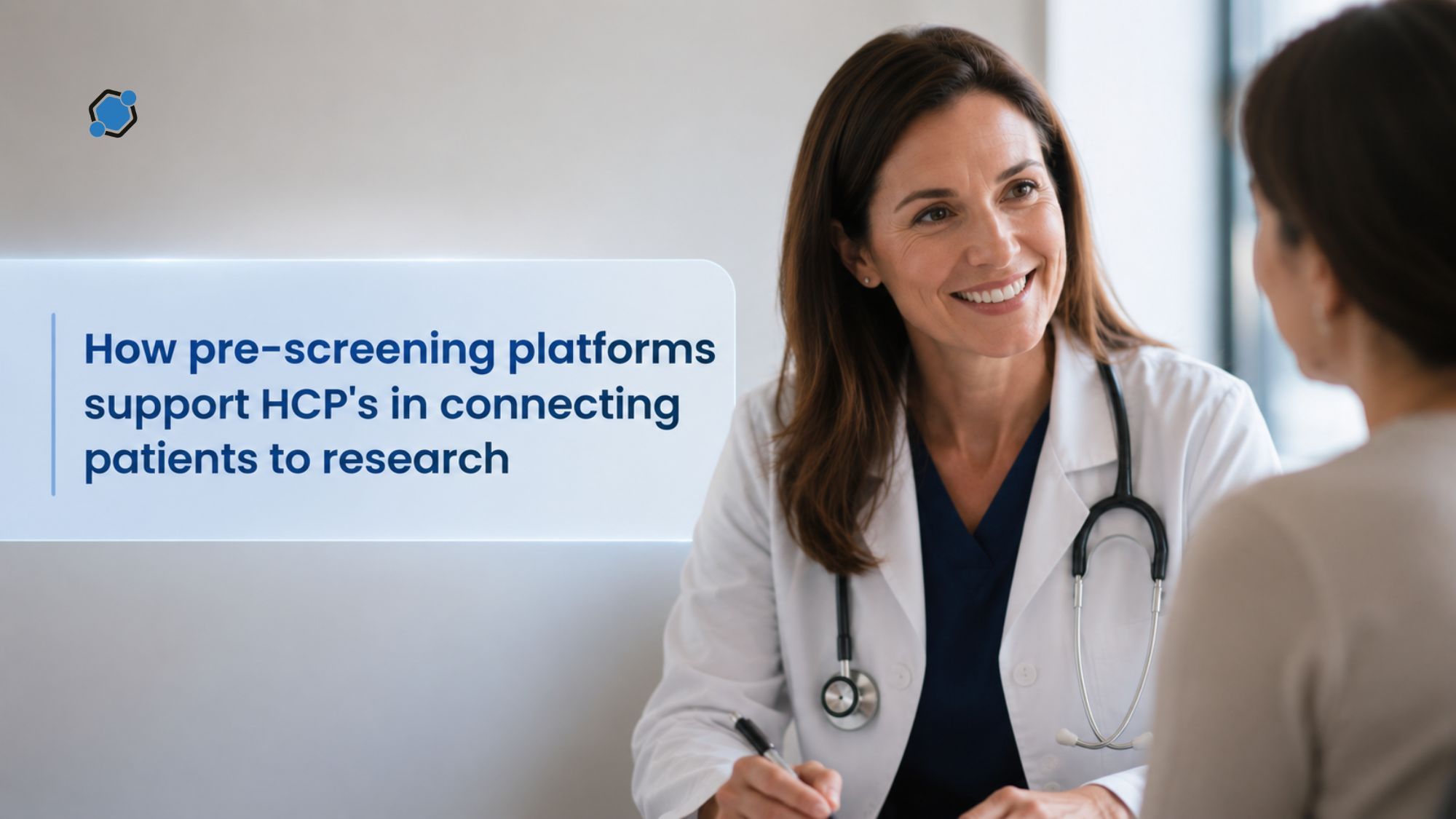
Most physicians don't refer patients to clinical trials, not because they don't want to, but because the referral pathway has historically demanded work that doesn't fit inside a clinic visit. Locating a relevant study, checking eligibility criteria line by line, coordinating with a research site, and following up on the patient's status can consume hours no HCP has to spare.
Pre-screening platforms exist to close that gap. They sit between the patient in front of you and the studies that might be a fit, and they take on the parts of the referral process that don't belong in a primary care or specialty visit. This blog explains what these platforms actually do for you, where the value shows up in a physician's day, and what the platform still needs you to bring to the exchange.
What pre-screening platforms are, in plain terms
A pre-screening platform is a purpose-built tool for identifying which of your patients might qualify for open clinical trials, then handling the pre-referral steps that determine whether a patient is worth sending to a research site for full screening.
It isn't a diagnostic tool. It isn't an EHR module. And it doesn't make eligibility determinations, since those are the responsibility of the research site's investigator and study team. What it does is match a patient's clinical picture against the criteria of active studies, run an initial layer of pre-qualification (usually through a structured questionnaire followed by a nurse-led conversation), and route qualified referrals to the appropriate site.
The distinction between pre-screening and screening matters. Screening is a formal, protocol-defined process conducted by the research site after the patient has been referred and consented. Pre-screening happens earlier, is lighter-touch, and exists to spare both the patient and the site the burden of proceeding when there's no reasonable path to enrollment. A well-designed platform makes that filter faster, more accurate, and less dependent on individual physician effort.
For more on how modern platforms structure this matching layer, see AI trial matching for HCPs: what modern patient recruitment platforms do.
What HCPs get: relevant trials surfaced without hours of searching
The clinical trial landscape is enormous and fragmented. Studies are registered across public registries, sponsor websites, academic center portals, and industry databases, each with its own search interface and its own way of describing eligibility. For a practicing physician, staying current on what's recruiting for a given condition is realistically impossible.
Pre-screening platforms consolidate that landscape. They pull from active trial registries, translate criteria into structured filters, and match against a patient's clinical profile at the criterion level rather than at the diagnosis level. That distinction is important. Two patients with the same diagnosis can have very different eligibility profiles depending on age, prior therapies, comorbidities, biomarker status, or geographic proximity to a site. Diagnosis-only matching produces a long list of possibilities that mostly won't pan out. Criterion-level matching produces a shorter, more accurate shortlist.
For you, that means less search fatigue and fewer dead-end conversations with patients who won't ultimately qualify. It also means you're more likely to know about the studies that genuinely fit before the referral window closes.
If you'd like to understand why so few physicians currently refer despite widespread patient willingness, Why most HCPs never refer a patient to a clinical trial, and what is changing covers the structural reasons in more depth.
What HCPs get: the pre-screening work handled outside the clinic
Once a patient looks like a candidate, someone still has to do the work of confirming pre-eligibility. That means walking through the study's inclusion and exclusion criteria in more detail than a chart review can support, asking questions the patient may not have answered anywhere in their record, and documenting what came back.
Traditionally, that has fallen either on the referring physician, on a research coordinator at the receiving site, or on both, with the patient bouncing between conversations. Pre-screening platforms redistribute that work. A structured pre-screening questionnaire captures baseline information. A registered nurse follows up with the patient by phone, video, or secure message to clarify responses, ask study-specific questions, and confirm that the patient's clinical picture actually matches what the study needs.
The result is that when a referral does reach the research site, it arrives with a clearer picture attached. The site's screen failure rate drops, the coordinator's workload eases, and the patient has fewer redundant conversations to sit through. You, meanwhile, don't have to be the one running the pre-screening interview.
The upstream consequences of this shift show up clearly in Clinical trial referrals: how physicians can refer patients without doing the eligibility work.
Interested in seeing how this looks in practice? Learn more at decentrialz.com.
What HCPs provide: clinical context, patient conversation, and permission
The platform can't do everything on its own, and it isn't designed to. Three contributions still sit with the referring HCP, and they're the parts of the referral that only a treating physician can offer.
The first is clinical judgment about candidacy. A platform can flag which of your patients look like matches on paper, but you're the one who knows whether a given patient is stable enough, motivated enough, and clinically appropriate to pursue trial participation right now. That judgment doesn't get automated away.
The second is the conversation. Most patients hear about clinical trials for the first time from their own physician, and how the option is framed matters enormously. Trials are a legitimate care pathway, not a last resort, and patients tend to accept referrals when their doctor presents them that way. This doesn't require a lengthy consultation. It requires a short, honest exchange in which you raise the possibility and let the patient decide whether they want to learn more.
The third is authorization. Under HIPAA, sharing a patient's protected health information with an outside research team requires the patient's authorization, unless a specific waiver applies. In practice, that means the patient needs to agree to have their information passed along before the platform can act on their behalf. Your role is to explain what the referral means and to obtain that permission, whether verbally with documentation or through a signed form, depending on your practice's workflow.
None of this changes the doctor-patient relationship. The patient stays your patient. The research site handles eligibility determination, informed consent for the study itself, and enrollment. You retain the care relationship throughout.
The framing side of that patient conversation is worth its own read, and Bridging the Gap: How HCPs Can Talk to Patients About Research Opportunities walks through language that tends to work.
How DecenTrialz supports HCPs across the referral pathway
DecenTrialz is a clinical trial recruitment and pre-screening platform built around AI-assisted participant matching and registered nurse-led pre-screening. For an HCP, that translates into a specific division of labor.
On the platform side, DecenTrialz surfaces active trials that match a patient's profile at the criterion level, handles the initial pre-screening questionnaire, and provides RN-led follow-up to confirm pre-eligibility. The nurse team clarifies clinical details, answers patient questions about what trial participation involves at a general level, and documents what's been confirmed before a referral moves forward.
On the research site's side, everything that legally and clinically has to happen at the site still happens at the site. The site team owns the walk-through of the study, the eligibility determination, the informed consent process, and the enrollment decision. DecenTrialz doesn't cross into that territory, and it doesn't hold itself out as a medical authority.
The practical picture is simple. You identify a candidate. You mention the option to your patient and obtain their permission to share their information. DecenTrialz takes it from there through pre-screening. If the patient still looks like a fit, the referral reaches a matched site with the groundwork already in place. If pre-screening rules them out, they don't have to make the trip and sit through a screen failure they could have avoided.
For a broader look at how referral pathways are being redesigned around this kind of collaboration, How easier referral pathways help HCPs connect patients to clinical trials is a useful companion piece.
Making trial referrals a lighter lift for your practice
Pre-screening platforms don't ask HCPs to become clinical trial specialists. They ask for the three things a physician is uniquely positioned to contribute, which are clinical judgment, an honest patient conversation, and permission to proceed, and they take on the search, matching, and pre-qualification work in exchange.
If you'd like to see how DecenTrialz can fit into a referral workflow at your practice, visit decentrialz.com to learn more or connect with the team.
Was this article helpful?

Similar Blogs
Digital Endpoints in Clinical Trials: What Wearable Data Measures and What It Does Not
Digital endpoints in clinical trials have changed both what a study measures and where the...
 Mahesh Upadrista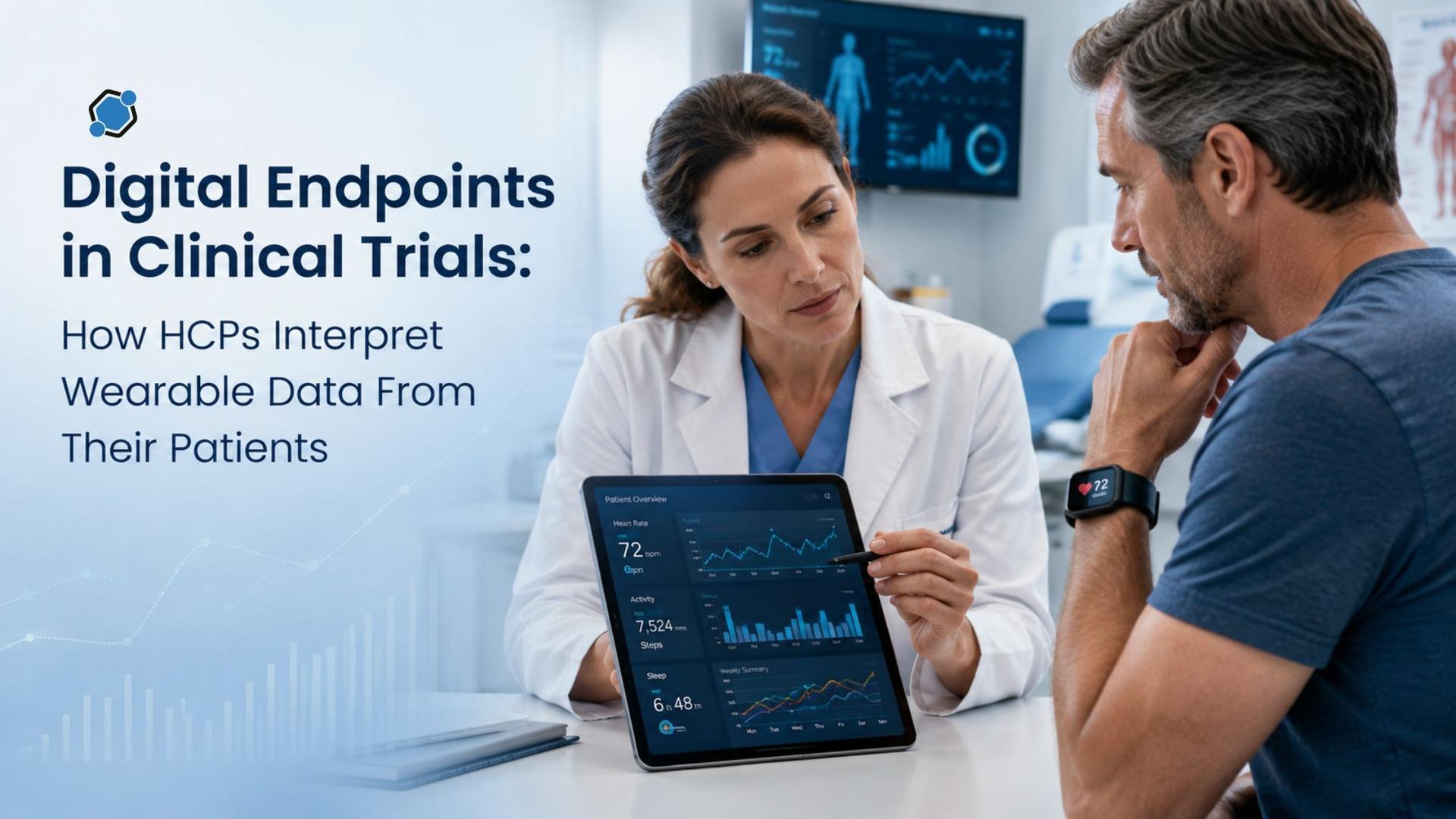
Digital Endpoints in Clinical Trials: How HCPs Interpret Wearable Data From Their Patients
Wearable devices now generate a substantial share of the data collected during modern clin...
Deeksha Gitta
Point-of-care clinical trials: how research fits inside routine practice
Clinical research and clinical care have long operated as parallel systems. Patients recei...
 Anish Teepireddy
Stay Informed. Stay Connected.
Get updates on verified clinical trials, emerging treatments, and research breakthroughs directly in your inbox. No spam, just science that matters.
