 HIPAA Compliant
 ISO 27001 Certified
What is a Data Safety Monitoring Board (DSMB)? Who watches over clinical trial participants and how
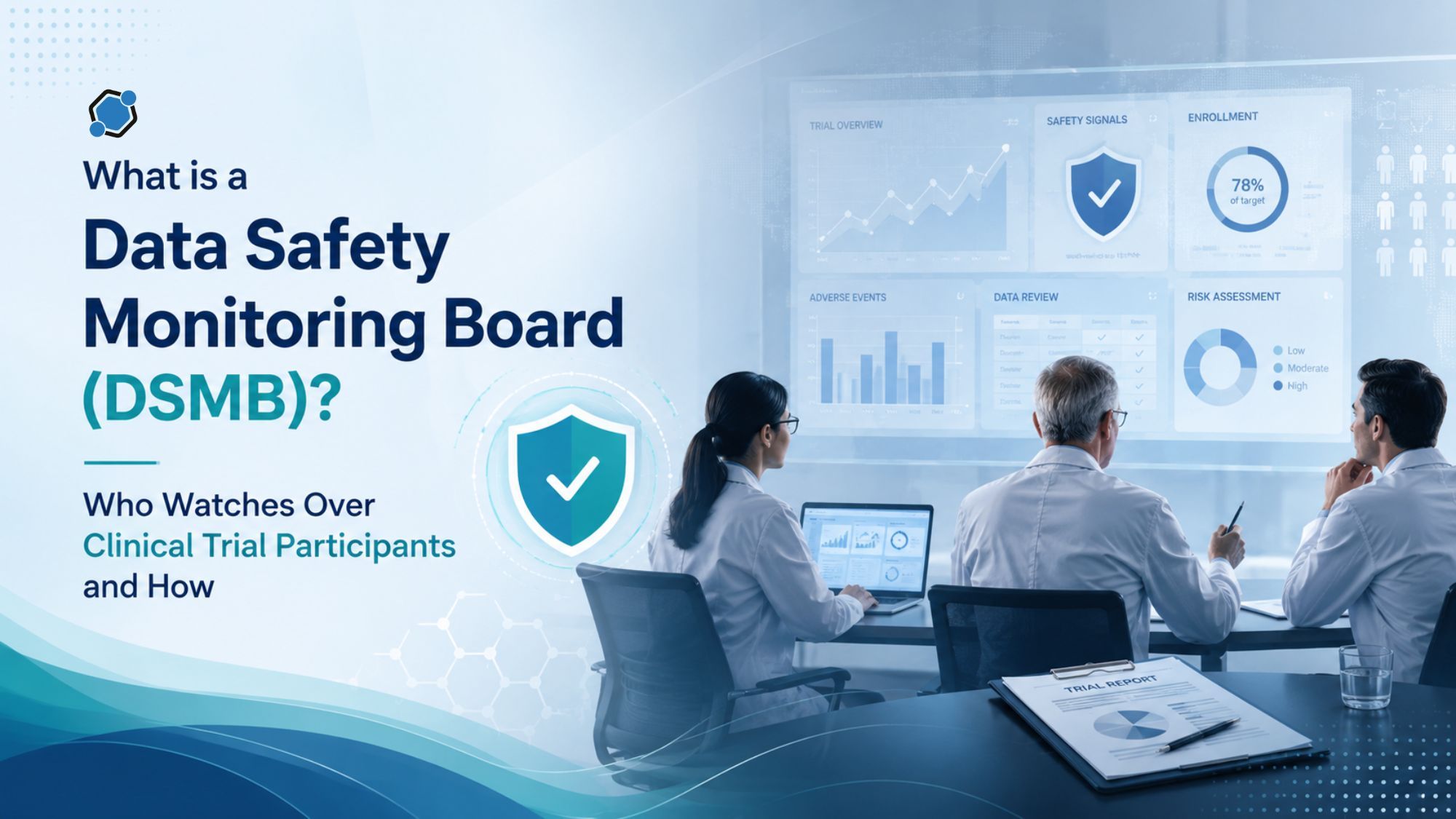
Most people who join a clinical trial assume that the doctors running the study are the only ones watching for problems. They are not. While the study is still happening, a separate group of experts is also looking at the data. This group works independently of the sponsor, the research site, and the study team. Their job is to spot trouble early and decide whether the trial should keep going as planned, change, or stop.
This group is called the Data Safety Monitoring Board, often shortened to DSMB. You may also see it called a Data Monitoring Committee (DMC) or a Data and Safety Monitoring Committee (DSMC). The names are different but the role is the same. For participants, the DSMB is one of the most important safety layers in modern clinical research, even though most people never hear about it. Knowing how it works can change how you read your How to Read Your Informed Consent Form Before Joining a Clinical Trial and what questions you bring to your first visit.
What a DSMB Actually Does During a Trial
A DSMB is an independent group of experts that reviews information from a clinical trial while the trial is still running. The members do not work for the sponsor. They do not treat the participants. They do not sit at the research site. They review data, ask questions, and give the sponsor a recommendation about what to do next.
The group reviews two main kinds of information. The first is safety data. This includes side effects, hospitalizations, and any other health event that participants experienced during the study. The second is study-conduct data. This covers how enrollment is going, whether the participant group reflects the people the treatment is meant to help, and whether the data being collected is accurate and complete. In some studies, the DSMB also reviews early outcome data to see whether the treatment is working.
These reviews happen at planned points during the trial. The first DSMB meeting usually takes place before the trial begins or very soon after. After that, the group meets at least once a year and more often if the trial is large, fast-moving, or carries higher risk. The group can also call an extra meeting at any time if a safety concern comes up.
Who Sits on a DSMB and Why Independence Matters
A DSMB usually has between three and seven members. The exact size depends on the phase of the trial, the kind of treatment being studied, and the level of risk involved.
The group is built so that the right kinds of expertise are at the table. It almost always includes:
- One or more doctors who specialize in the disease being studied
- A biostatistician, who is a scientist trained to read clinical trial data and check whether the results are meaningful
- One or more clinical trial methodologists, who understand how trials are designed and run
Some DSMBs also include a bioethicist, a patient advocate, or a community representative. These members help the group think about questions that go beyond pure science, such as participant burden, fairness, and informed consent quality. The make-up of the team can look similar in spirit to the broader study team you might already be familiar with, including roles like the What Is a Clinical Research Coordinator? The Role of the CRC in Your Clinical Trial, though the DSMB sits outside the day-to-day operations of the trial.
Independence is the rule that holds the whole system together. DSMB members cannot work for the company sponsoring the trial. They cannot be investigators on the study. They cannot have a financial stake in the treatment being tested. Before joining, each member signs a conflict-of-interest agreement, and at the start of every meeting the chair reconfirms that no conflicts exist. If a conflict appears later, the member must disclose it, and the rest of the group decides how to handle it.
This independence is what gives the DSMB its authority. Because the members have nothing to gain from the trial succeeding or failing, their recommendations carry real weight with sponsors, regulators, and the Institutional Review Board (IRB) that approved the study.
What the DSMB Looks At Behind Closed Doors
DSMB meetings are usually divided into two parts.
The open session reviews general study information. Enrollment numbers, how well the trial is matching its participant goals, how complete the data is, and any safety information that does not need to be linked to a specific treatment group. Study investigators and sometimes the sponsor can attend this part.
The closed session is where the sensitive review happens. Only the voting DSMB members are present. Here, the group sees the safety and outcome data broken down by treatment group. In a study that is masked, sometimes called blinded, the participants and the study doctors do not know who received the experimental treatment and who received a placebo or the existing standard of care. The DSMB can see this information. That is part of what makes their review possible. They can compare the groups directly and spot a safety signal long before anyone else.
What the group typically reviews includes:
- Side effects and other adverse events, including how often they occurred and how serious they were
- Hospitalizations, emergency visits, and any deaths that happened during the study
- Whether the participant group reflects the broader population the treatment is meant to help, including women and people from underrepresented communities
- How closely sites are following the study protocol
- The quality and timeliness of the data being submitted
If a safety pattern emerges, the DSMB can act. In some cases their concerns are addressed inside the trial. In more serious cases, the same kind of safety signal can lead a regulator to step in, which is what happens when What Happens When the FDA Places a Clinical Trial on Hold? becomes the next chapter of the study's story.
The Three Things a DSMB Can Recommend
At the end of each review, the DSMB votes on a recommendation. The sponsor then decides what to do with that recommendation, though it almost always carries serious weight.
There are three main paths the group can recommend.
The first is to continue the trial as planned. This is the most common outcome. The data looks safe enough, enrollment is on track, and there is no reason to change anything. The trial keeps moving toward its planned end point.
The second is to modify the trial. The DSMB may ask the sponsor to change the protocol. This can mean adjusting the dose, adding new safety checks, changing which patients are eligible, slowing enrollment, or extending the study to recruit more participants. The point is to fix a problem without ending the research.
The third is to stop the trial. This is the recommendation people hear about most often, and it can happen for two very different reasons.
A trial can be stopped for harm. This happens when the experimental treatment is causing serious side effects, when more participants in one group are getting worse than expected, or when the safety risk has become too high to continue. Stopping the trial protects the people still in it and prevents future participants from being exposed.
A trial can also be stopped for benefit. This happens when the treatment is working so well, so early, that the DSMB believes it would be unethical to keep some participants on the older treatment or placebo. In these cases, the study ends earlier than planned because the result is already clear. This is a separate question from whether the new treatment is the right long-term choice for every patient, which connects to the broader question of Efficacy vs. Effectiveness in Clinical Trials: Why One Drug Can Have Two Different Numbers.
A trial can also be stopped for futility. This means the data shows the treatment is unlikely to work even if the study runs to completion. Ending it early avoids exposing more participants to a treatment that will not help them.
What This Means for You as a Participant
For a person in a clinical trial, the DSMB is mostly invisible. You will not meet its members. You will not see its reports. The group reviews the data without ever interacting with individual participants. That can sound strange at first. In practice, it is part of the design.
A few things are worth knowing.
First, the DSMB is not the only safety body watching the study. The IRB also reviews the trial at regular intervals and receives summary reports from the DSMB after each meeting. The sponsor monitors the trial directly through its own teams. The research site has its own safety procedures. The DSMB is a layer of independent oversight on top of all of that.
Second, if the DSMB recommends a change to the protocol or an early stop, the research team is required to tell participants about anything that could affect their decision to stay in the study. This is part of the ongoing consent process. If new safety information emerges, you may be asked to sign an updated consent form before continuing. In some cases, the trial may pause briefly while the protocol is updated.
Third, the DSMB's existence is one reason participants can decide to stop a trial at any time without losing the safety oversight they signed up for. Reasons participants leave studies vary, as the topic of Why Do Patients Drop Out of Clinical Trials Before the Study Ends? explores in more detail. Whatever the reason, the independent safety review of the larger trial continues regardless of any one person's choice.
Not every clinical trial has a DSMB. Smaller, lower-risk studies, or studies that test something already well understood, may use a single safety monitor or a smaller committee instead. DSMBs are most often used in Phase 3 trials, in studies that involve serious illness, in studies that enroll people at higher risk of harm, and in studies that run across many research sites. If you are joining a trial and want to know how it is being monitored, you can ask the study team directly. The answer should be in the protocol summary or the informed consent document.
Clinical trials carry real risks, and the people who join them deserve real protection. Independent data review by experts who have no stake in the outcome is one of the strongest forms of protection clinical research has built. It is quiet, careful, and slow, but it is what allows new treatments to be tested honestly.
DecenTrialz helps connect people who want to join a clinical trial with research teams running studies that may be a fit. The platform uses AI-powered matching, nurse-led pre-screening, and structured referrals to make it easier to find studies you may qualify for. The studies themselves are run by research sites and sponsors, with their own safety oversight, including a DSMB where appropriate.
Was this article helpful?

Similar Blogs
Blood Pressure Numbers: What Do Systolic and Diastolic Actually Mean?
A blood pressure result contains two numbers, and most people are never told what either o...
 Paramraj
National HIV/AIDS and Aging Awareness Day 2026: What Aging With HIV Looks Like Today
The population of people living with HIV in the United States has aged in a way few would ...
Mahesh Upadrista
Prediabetes symptoms: what the early signs are and how prediabetes is reversed
Prediabetes means blood sugar is higher than normal, but not yet high enough to be called ...
Deeksha GittaStay Informed. Stay Connected.
Get updates on verified clinical trials, emerging treatments, and research breakthroughs directly in your inbox. No spam, just science that matters.
