 HIPAA Compliant
 ISO 27001 Certified
Understanding eSource in Clinical Trials: What It Is and Why It Matters
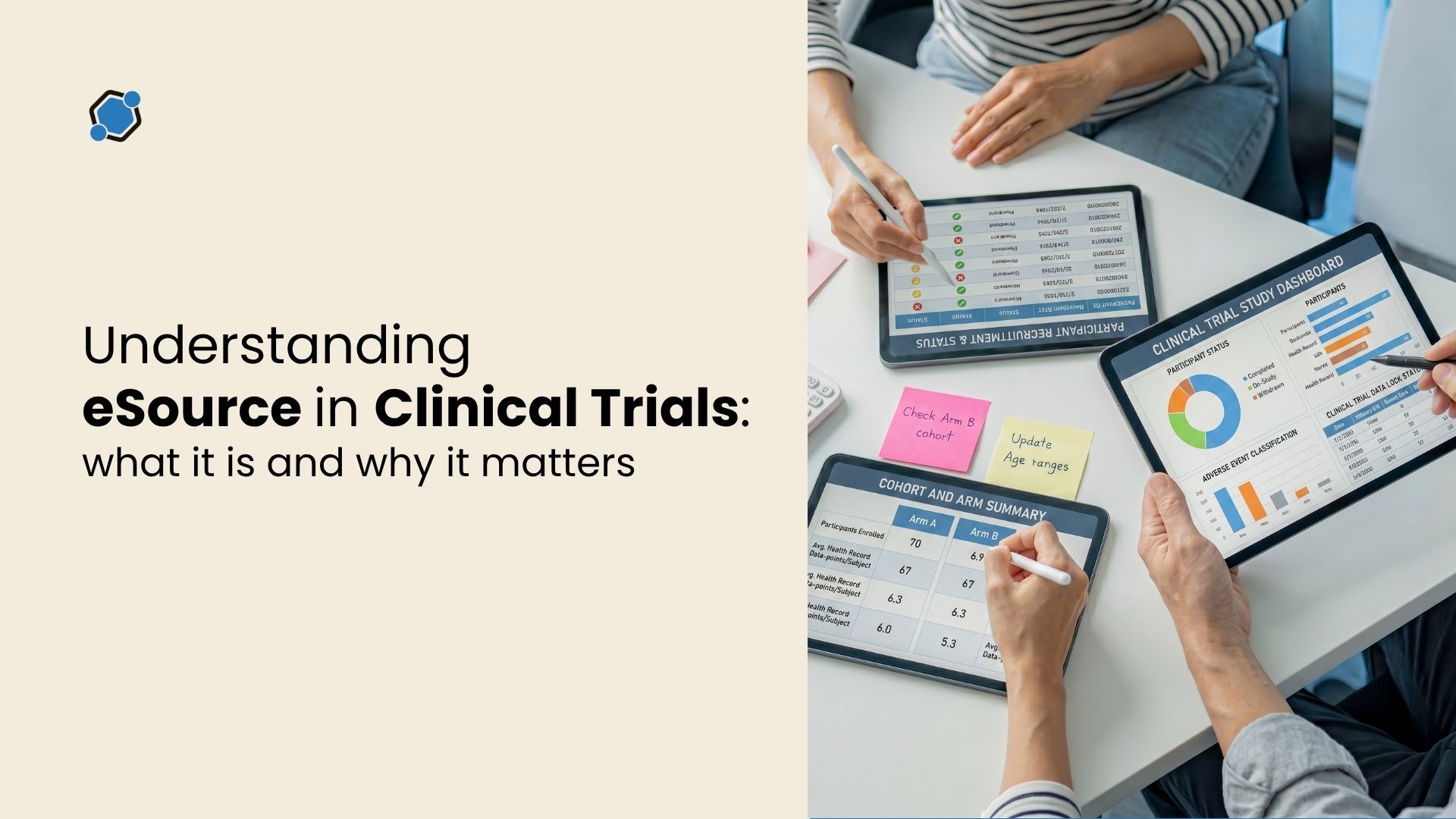
Understanding eSource in Clinical Trials: What It Is and Why It Matters
Clinical trials depend on accurate information. Every observation, test result, symptom report, and vital sign recorded during a study becomes part of the evidence used to decide whether a treatment is safe and works as intended. How that information is captured, and how reliably it travels from the clinic to the research team, has a direct effect on how quickly new therapies reach the people who need them.
eSource, short for electronic source data, is the term used when this information is captured electronically from the start, rather than being written on paper and later typed into a computer. It may sound like a small technical detail, but the move from paper to electronic records is one of the most important changes happening in clinical research today.
What is eSource in Clinical Trials?
In any clinical trial, there are original records of what happened at each study visit. These might include a participant’s blood pressure, a doctor’s notes, a lab result, or a questionnaire about how someone is feeling. Together, this information is called source data. It is the primary evidence researchers and regulators rely on when evaluating a study.
Traditionally, source data was recorded by hand. A nurse or study coordinator would write notes on a paper chart during a visit, and someone would later type those notes into a computer system for review. eSource skips that manual step by capturing the information electronically the first time it is recorded.
The U.S. Food and Drug Administration addressed this approach in a 2013 guidance document titled “Electronic Source Data in Clinical Investigations.” It set expectations for how electronic source data should be captured, reviewed, and stored so that it can be trusted as reliable evidence.
International quality standards require that source data follow a principle known as ALCOA+. In plain terms, every piece of data should be traceable to the person who recorded it, readable, dated at the time it was observed, preserved in its original form, and accurate. eSource systems are designed to meet these standards automatically, with built-in timestamps, user IDs, and audit trails that track every entry and edit. For a broader introduction to how clinical trials are designed and run, see Clinical Trials Explained: Simple Guide for Beginners.
eSource vs. Electronic Data Capture (EDC): Understanding the Difference
Two terms often appear together in this conversation: eSource and Electronic Data Capture, usually shortened to EDC. They are related but not the same.
EDC is the system that collects trial data for the company running the study, typically in a structured format called a case report form. In the older model, site staff wrote information on paper first, then later typed it into the EDC. That approach meant the same information was recorded twice, which created room for errors and delays.
eSource refers to where the data first exists in electronic form. When a clinician enters a blood pressure reading directly into an electronic system, or when a participant records their symptoms in a trial app, that electronic record is the source itself. It can feed into the EDC automatically, without anyone retyping it.
In short: eSource is the starting point, and EDC is the destination. For a closer look at how electronic data capture works within a study, see Electronic Data Capture (EDC): Accelerating Data Flow and Quality.
Common Types of eSource Data
eSource is not one specific tool. It is a broad category that covers any electronic method of capturing original trial information. The most common types include:
- Direct entry by site staff into an electronic system during a study visit
- Electronic patient-reported outcomes (ePRO), where participants log symptoms, side effects, or quality-of-life ratings on a tablet, smartphone, or web portal
- Readings from wearables and medical devices that transmit data automatically
- Information pulled from a patient’s electronic health record through secure connections
- Lab results and imaging are sent directly from the testing facility into the trial database
Each type has its own technical and regulatory requirements, but they all share the same idea: the electronic record is the original, not a copy of something written on paper first. The use of wearables and home-monitoring tools has especially expanded what eSource can include, making it easier for participants to contribute data from home. For more on these devices, see Wearables, Sensors and ePROs: Technology in Clinical Trials.
Why eSource Matters
The shift to eSource brings real benefits, not only for the researchers and companies running trials but also for the people who take part in them.
Data quality improves because there are fewer opportunities for mistakes. When a number is entered once, directly into the source system, it cannot be miscopied later. Built-in audit trails show exactly who entered each piece of information and when, which makes the data more reliable when it is reviewed by regulators.
Trials can also move faster. Research teams can see data almost as soon as it is recorded, which helps them spot issues early, check on participant safety, and make adjustments without waiting weeks for paper records to be processed. This kind of visibility became especially important during and after the COVID-19 pandemic, when in-person monitoring visits were often not possible.
Participants benefit as well. Tools like ePRO apps let people record information from home instead of making extra trips to a study site. That can make it easier to take part in research, particularly for people who live far from major medical centers or who have conditions that make travel difficult. The same technologies support hybrid and decentralized trial designs, which bring parts of a study to the participant rather than the other way around.
How eSource Data Is Protected
When personal health information moves through electronic systems, protecting it becomes essential. eSource platforms operate under strict rules.
In the United States, electronic records used in clinical research are governed by a regulation known as 21 CFR Part 11. It requires that systems be tested and approved before they are used in a trial, that records be stored securely for inspection, and that every electronic signature be tied to a specific, identifiable person. International research standards called ICH-GCP place similar responsibilities on the sponsors and investigators running a study.
Participants are also protected by privacy laws such as HIPAA, which control how personal health information can be collected, stored, and shared. Research teams are required to secure the systems they use, limit who can view identifying information, and report any breaches that occur. For more on how personal information is handled in modern research, see Patient Privacy in the Digital Age: Safeguarding Data in Research.
Challenges That Still Slow Adoption
Even with clear advantages, eSource has not replaced paper in every trial. A few practical barriers continue to slow it down.
One is interoperability, which is the ability of different systems to talk to each other. Electronic health records, trial databases, wearable devices, and patient apps are often built by different companies using different formats. Getting them to share information accurately takes careful planning and, in many cases, custom software work. International data standards are helping, but progress is uneven across the industry.
Training is another factor. Moving from paper to electronic workflows requires time and support, especially for research staff who have spent years working one way. Security is a constant concern as well, since more data traveling through more systems means more opportunities for problems if protections are not strong enough.
None of these challenges is permanent, but they explain why some studies still rely on traditional methods even as the rest of the industry moves ahead.
What eSource Means for People Considering a Clinical Trial
For someone thinking about joining a study, eSource is part of what makes modern research feel different from the clinical trials of a generation ago. There are fewer clipboards, fewer duplicate forms to sign, and more tools that allow participants to engage from home. Data moves faster, errors are caught sooner, and the overall experience is often more flexible than it used to be.
It also reflects a broader effort to make clinical research more accessible. When taking part in a trial no longer requires frequent long trips to a research center, more people can participate, and studies can include a wider range of communities. That matters because research results are more useful when they reflect the actual population that will eventually use a treatment.
Platforms like DecenTrialz work alongside this shift by helping people learn about clinical studies that may be relevant to them. Through AI-powered matching and nurse-led pre-screening, the process of exploring whether a trial might be a fit is designed to be clear and informed, without guarantees about enrollment or medical outcomes. For more on how digital tools are shaping this part of the experience, see Digital Tools Improving Patient Access to Clinical Trials.
Understanding eSource will not be essential for every participant. But knowing that the information collected during a trial is captured carefully, stored securely, and reviewed with built-in safeguards can offer some reassurance about what goes on behind the scenes of modern medical research.
Was this article helpful?

Similar Blogs
Health Unit Coordinator Day: the behind-the-scenes team that helps clinical trials run
Every August 23, the United States recognizes Health Unit Coordinator Day. The date honors...
 Paramraj
Home nursing visits in clinical trials: what participants can expect
Clinical trial visits are starting to look different. In a growing number of studies today...
Vamshi Kantoju
World Mosquito Day 2026: How clinical trials are advancing mosquito-borne disease prevention
Mosquitoes are often described as the deadliest animal on the planet, and the reason is no...
Mahesh UpadristaStay Informed. Stay Connected.
Get updates on verified clinical trials, emerging treatments, and research breakthroughs directly in your inbox. No spam, just science that matters.
