 HIPAA Compliant
 ISO 27001 Certified

World Diabetes Day 2026: what is it, and how is research changing diabetes care?
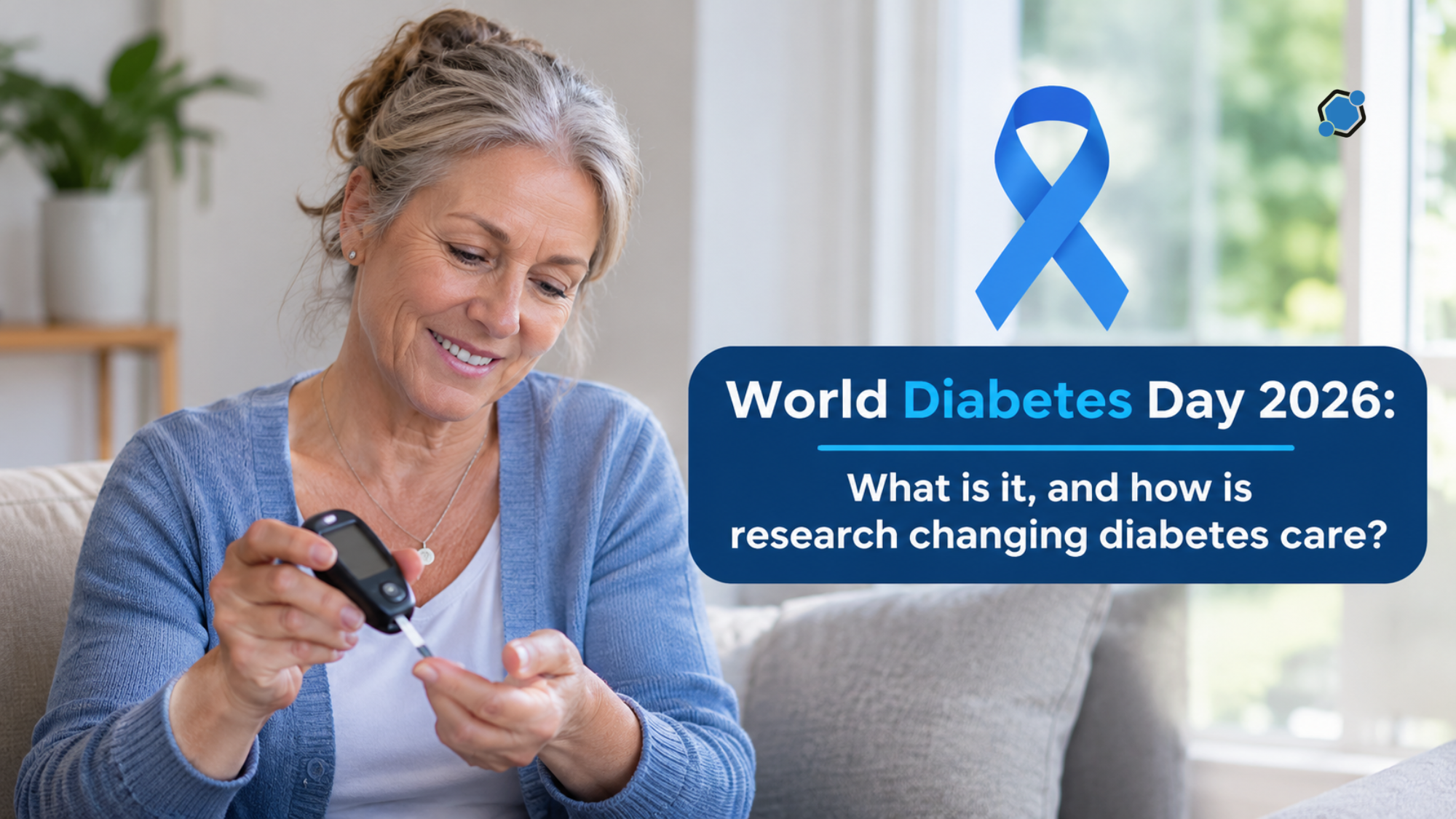
World Diabetes Day 2026 falls on Saturday, November 14. The global observance draws attention to a condition that affects more than half a billion adults worldwide, many of whom do not yet know they have it. The date itself is tied to clinical research: it marks the birthday of Frederick Banting, one of the scientists whose work on insulin in the early 1920s turned type 1 diabetes from a condition that was usually fatal into one people could live with.
This article covers the day’s history, the 2026 theme, how diabetes affects the body, why early detection matters, and how clinical research continues to change care.
What is World Diabetes Day, and why is it held on November 14?
World Diabetes Day was created in 1991 by the World Health Organization and an international federation of diabetes associations, in response to the rising number of people living with diabetes around the world. In 2006, the United Nations General Assembly passed a resolution recognizing it as an official United Nations day, and it was first observed with that status in 2007.
November 14 is the birthday of Frederick Banting. Working with Charles Best at the University of Toronto in 1921, Banting led the research that resulted in the first insulin treatment of a patient in early 1922. Before insulin, a diagnosis of type 1 diabetes was usually fatal.
The campaign’s symbol is a blue circle. The circle stands for life, health, and unity, and the blue reflects the sky that unites all nations and the color of the United Nations flag. The symbol represents all types of diabetes, and landmarks around the world are often lit in blue on November 14.
In the United States, World Diabetes Day falls during National Diabetes Month, which runs through November. A companion article explains how National Diabetes Month 2026 approaches early action, including diagnosis, prevention, and the latest U.S. figures.
What is the World Diabetes Day 2026 theme?
The theme for 2026 and 2027 is “Early Action on Diabetes.” It opens a new two-year campaign with two goals: diagnosing diabetes earlier and reducing the risk of type 2 diabetes. The campaign uses the hashtag #ActEarlyOnDiabetes; it follows a recent campaign focus on diabetes and well-being.
The scale of the problem explains the emphasis. According to the most recent global diabetes atlas, about 1 in 9 adults aged 20 to 79 were living with diabetes in 2024, a share projected to reach about 1 in 8 by 2050. Roughly 4 in 10 adults with diabetes worldwide have not been diagnosed, and about 4 in 5 people with diabetes live in low- and middle-income countries, where testing and treatment can be harder to reach.
The picture in the United States follows the same pattern. Federal health data show that about 1 in 8 people have diabetes and that more than 1 in 4 adults with diabetes do not know it. More than 2 in 5 U.S. adults have prediabetes, and about 8 in 10 of them are unaware of it.
Early diagnosis matters because diabetes often causes damage before it causes symptoms. When high blood sugar goes unnoticed for years, it can harm blood vessels and organs before a person has a reason to see a doctor. The campaign highlights complications that earlier detection can help prevent or delay, including heart disease, vision loss, nerve damage, and kidney failure. Kidney disease is a useful example, because routine urine and blood tests can show how diabetes-related kidney damage is caught early. In type 1 diabetes, earlier diagnosis can also help prevent diabetic ketoacidosis (DKA), a dangerous buildup of acids in the blood that occurs when the body has too little insulin.
How does diabetes affect the body?
The body runs largely on glucose, a sugar that comes from food and travels through the bloodstream. Insulin, a hormone made by the pancreas, works like a key that lets glucose move from the blood into cells, where it is used for energy. Diabetes develops when the body does not make enough insulin, cannot use it properly, or both. Glucose then builds up in the blood.
Type 1 diabetes is an autoimmune condition, meaning the immune system attacks the insulin-producing cells of the pancreas. People with type 1 diabetes need insulin to survive. It can begin at any age, accounts for a smaller share of cases, and currently has no known way to be prevented.
Type 2 diabetes accounts for roughly 9 in 10 cases. In type 2 diabetes, the body’s cells stop responding well to insulin, and over time the pancreas cannot produce enough to keep blood sugar in range. This underlying problem, explained in more detail in an article on how insulin resistance affects blood sugar, often develops slowly and without obvious symptoms.
Two related conditions are also part of the picture. Gestational diabetes is high blood sugar that first appears during pregnancy; it usually resolves after delivery but raises the risk of type 2 diabetes later in life. Prediabetes describes blood sugar that is higher than normal but not yet in the diabetes range, and it raises the risk of type 2 diabetes, heart disease, and stroke.
When symptoms of diabetes do appear, they commonly include:
- Excessive thirst
- Frequent urination
- Unusual tiredness
- Blurred vision
- Unexplained weight loss
Because type 2 diabetes is often silent in its early years, feeling well is not a reliable sign that blood sugar is in a healthy range.
How is diabetes found early, and can type 2 be prevented?
Diabetes is diagnosed with blood tests. The most widely used is the A1C test (also called HbA1c), which reflects average blood sugar over roughly the past three months and does not require fasting. A separate article explains what the A1C test actually measures and where it has limits. Under current U.S. clinical standards, an A1C below 5.7 percent is considered normal, 5.7 to 6.4 percent indicates prediabetes, and 6.5 percent or higher indicates diabetes.
Other tests include a fasting blood glucose test and an oral glucose tolerance test, in which a person drinks a sugar solution and has blood sugar measured two hours later. Unless symptoms are clear, a diagnosis is usually confirmed with a repeat test.
Risk factors for type 2 diabetes include having overweight, a family history of diabetes, physical inactivity, and being 45 or older. Rates are also higher among American Indian and Alaska Native, Black, and Hispanic adults in the United States, reflecting a mix of genetic, social, and access-to-care factors. People with one or more risk factors can ask a healthcare provider whether testing is appropriate.
Evidence for preventing or delaying type 2 diabetes is strong at the population level. In a large, federally funded U.S. study of adults at high risk, a structured lifestyle program that aimed for 5 to 7 percent weight loss and at least 150 minutes of physical activity per week reduced the risk of developing type 2 diabetes by more than half, on average, compared with placebo. Long-term follow-up found that the lower risk persisted for many years. These findings describe averages across study participants; individual results vary.
Early action also includes attention to emotional health. Managing diabetes involves daily decisions about food, medicine, activity, and blood sugar readings. Many people experience diabetes distress, the frustration or exhaustion that comes from that ongoing workload. Diabetes distress is common and is different from depression, and raising it with a care team is part of managing the condition well.
How has clinical research changed diabetes care?
Every major advance in diabetes care has come through clinical research, beginning with insulin itself. The first insulin extracts were tested on patients in Toronto in 1922, and insulin was soon being produced for wider use. Since then, clinical trials have shaped nearly every part of modern care, from home blood sugar monitoring to medicines that help protect the heart and kidneys.
Recent research milestones in the United States include:
- An immune-modulating medicine, approved in 2022, that can delay the onset of clinical type 1 diabetes in some people who are at an early, symptom-free stage of the disease.
- A cell therapy made from donor pancreatic islet cells, approved in 2023 for certain adults with type 1 diabetes who experience repeated severe low blood sugar episodes. It requires immune-suppressing medicines.
- The first once-weekly basal (long-acting) insulins, approved in 2026 for adults with type 2 diabetes. They are not approved for type 1 diabetes.
- Investigational approaches still in clinical trials, including insulin-producing cells grown from stem cells for type 1 diabetes and once-weekly medicines that act on several gut hormones at once for type 2 diabetes and obesity.
None of these therapies is right for everyone. Investigational treatments have not been approved, and their safety and effectiveness are still being studied.
Research also depends on who takes part. A review of diabetes trials published between 2000 and 2020 found that non-white participants were under-enrolled in more than 6 in 10 U.S. trials, relative to the populations affected. Because diabetes rates are highest in several of these communities, broader participation helps researchers understand how treatments work for the people most affected by the condition.
Taking part in a clinical trial is voluntary. Every study is reviewed by an ethics committee, and participants go through informed consent, a process that explains a study’s purpose, procedures, possible risks, and possible benefits before anyone agrees to join. Knowing what to look for in a consent form can make that conversation easier. Participants can leave a study at any time, and joining a trial does not guarantee a particular result.
Frequently asked questions about World Diabetes Day
When is World Diabetes Day 2026?
World Diabetes Day 2026 is on Saturday, November 14. The observance is held on November 14 every year.
What does the blue circle mean?
The blue circle is the global symbol for diabetes. The circle represents life, health, and unity, and the blue reflects the sky and the color of the United Nations flag. It covers all types of diabetes.
Is there a cure for diabetes?
There is currently no cure for type 1 or type 2 diabetes. Both can be managed with treatment, and some people with type 2 diabetes are able to bring blood sugar back into a normal range without diabetes medicines, a state doctors call remission. Remission is not considered a cure, because blood sugar can rise again. Cell-based therapies for type 1 diabetes are being studied, but they are not a cure and most remain investigational.
Who can join a diabetes clinical trial?
Each study sets its own eligibility criteria. Common factors include the type of diabetes, a specific A1C range, age, kidney function, and current medicines. The research team at each study site makes the final decision about eligibility.
Acting early on diabetes, on November 14 and beyond
World Diabetes Day is a reminder that diabetes is common, often silent, and increasingly well understood. Knowing personal risk factors, asking about testing, and acting on results early can help reduce the risk of complications over time.
For people interested in contributing to diabetes research, DecenTrialz is a clinical trial recruitment and pre-screening platform that helps connect people with studies that may be relevant to them. You share some information about your health, you are matched with studies that may fit, and a registered nurse reviews your information before a referral is made to a research site.
DecenTrialz does not provide medical care or make eligibility decisions. The research site team determines final eligibility, conducts informed consent, and handles enrollment.
To explore diabetes studies that may be a fit, visit decentrialz.com and talk with a healthcare provider about whether research participation is right for you. #ActEarlyOnDiabetes
Was this article helpful?

Similar Blogs
COPD Awareness Month 2026: what is COPD, and why does early diagnosis matter?
Shortness of breath on a flight of stairs is easy to blame on age, extra weight, or a lack...
 Deeksha Gitta
Cancer Biomarker Awareness Day 2026: what is cancer biomarker testing, and why does it matter?
Cancer Biomarker Awareness Day falls on Thursday, November 12, 2026. The observance center...
Mahesh Upadrista
World Pneumonia Day 2026: what is pneumonia, and how can it be prevented?
World Pneumonia Day is observed every year on November 12, and in 2026 it falls on a Thurs...
Vamshi KantojuStay Informed. Stay Connected.
Get updates on verified clinical trials, emerging treatments, and research breakthroughs directly in your inbox. No spam, just science that matters.
