 HIPAA Compliant
 ISO 27001 Certified

National Diabetes Month 2026: What is diabetes, and why does early action matter?
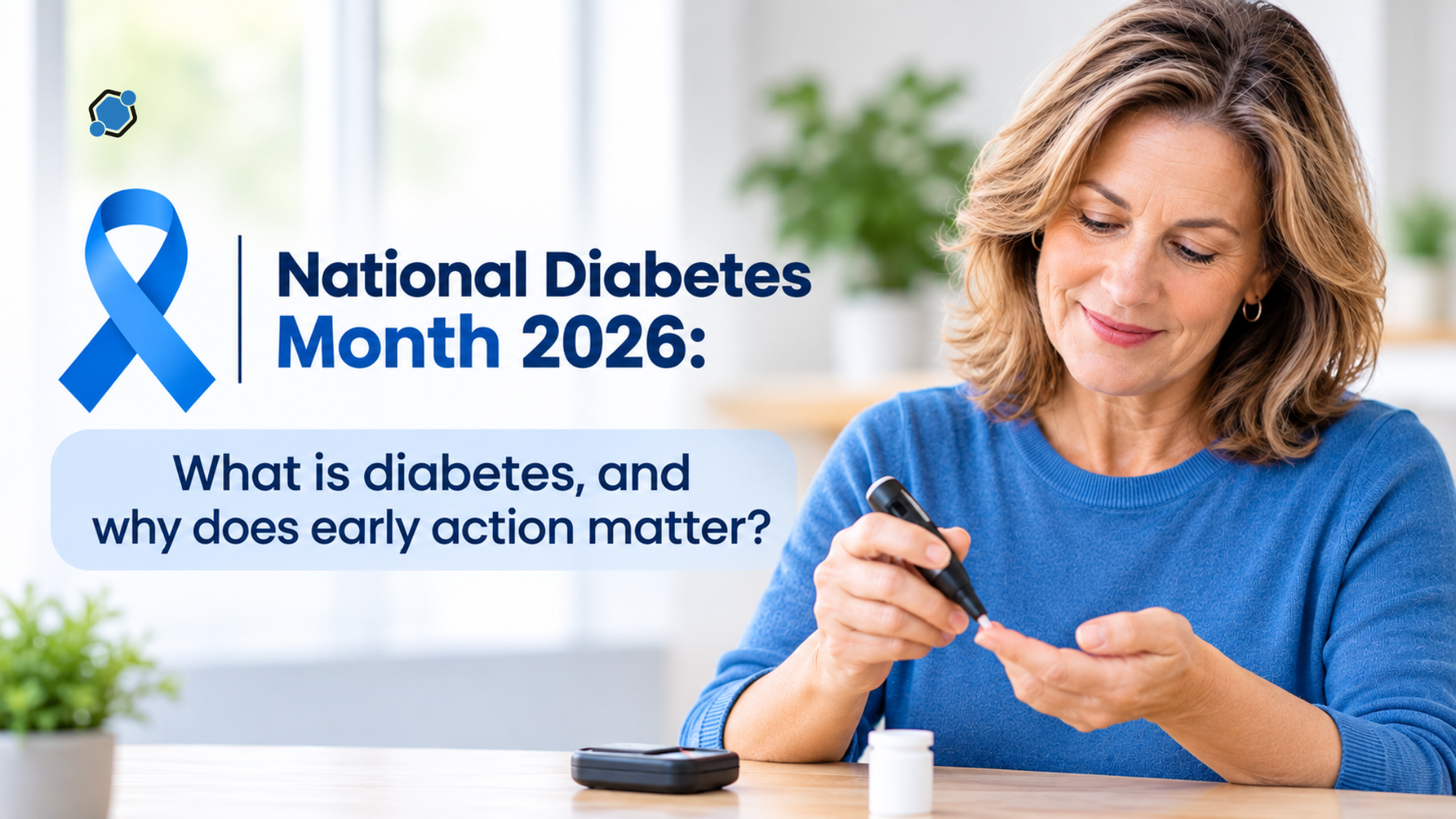
National Diabetes Month runs from Sunday, November 1, to Monday, November 30, 2026, and focuses attention on one of the most common long-term health conditions in the United States. About one in every eight people in the country has diabetes, and more than one in four adults with diabetes has not been diagnosed. The month includes World Diabetes Day on Saturday, November 14, which carries the 2026 global theme “Early action on diabetes.” This article covers the main types of diabetes, warning signs, diagnosis, and how research is shaping care.
Why National Diabetes Month matters in 2026
National Diabetes Month has been observed in the United States for decades. A federal diabetes research institute promotes it under that name, and a national diabetes association runs its own campaign as American Diabetes Month. Both aim to help people understand their risk and recognize diabetes earlier.
The most recent national estimates, based on 2023 data, show how widespread the condition has become. About one in eight people in the United States has diabetes, and about 1.5 million adults are newly diagnosed each year. More than one in four adults with diabetes does not know it. Undiagnosed diabetes matters because high blood sugar can quietly damage blood vessels and nerves for years before symptoms appear.
Prediabetes is even more common. More than two in five American adults have prediabetes, a stage in which blood sugar is higher than normal but not yet high enough to be called diabetes. About eight in ten of them do not know they have it. Knowing the early signs of prediabetes matters because this stage is often a window in which lifestyle changes may help delay or prevent type 2 diabetes.
World Diabetes Day falls in the middle of the month. It was created in 1991, and its date marks the birthday of Sir Frederick Banting, one of the scientists who discovered insulin. An international federation of diabetes associations leads the observance, and its symbol is a blue circle. The 2026 to 2027 theme, “Early action on diabetes,” focuses on earlier diagnosis and on reducing the risk of type 2 diabetes.
What is diabetes, and how do the main types differ?
Diabetes is a condition in which blood glucose, a type of sugar, stays too high. To move glucose from the blood into cells, the body relies on insulin, a hormone made by the pancreas. When the body does not make enough insulin or cannot use it well, glucose builds up in the blood instead of fueling cells.
Type 1 diabetes
Type 1 diabetes is an autoimmune condition. The immune system, which normally fights infections, mistakenly attacks the insulin-producing cells in the pancreas. People with type 1 diabetes need insulin every day to survive. It can appear at any age, although it is often diagnosed in children and young adults. It accounts for roughly one in ten or fewer diagnosed cases in adults, and there is currently no known way to prevent it.
Type 2 diabetes
Type 2 diabetes is by far the most common form, making up roughly nine in ten diagnosed cases among adults. In type 2 diabetes, the body’s cells respond poorly to insulin, a problem called insulin resistance. Over time, the pancreas may not keep up with the extra demand. It usually develops over years and is linked to genetics, age, body weight, and activity level. The differences between type 1 and type 2 diabetes shape how each one is diagnosed and treated.
Gestational diabetes and prediabetes
Gestational diabetes is high blood sugar that first appears during pregnancy. It often goes away after delivery, but it raises the later risk of type 2 diabetes for both parent and child. Prediabetes is not a separate type of diabetes. It is an earlier stage on the path toward type 2 diabetes, and it does not always progress.
Which warning signs and risk factors should not be ignored?
Type 2 diabetes often develops slowly, and many people have few or no symptoms for years. When symptoms appear, they are easy to dismiss as stress or aging. Recognizing the early signs of type 2 diabetes can prompt a timely conversation with a healthcare professional. Common warning signs include:
- Increased thirst and frequent urination, especially at night
- Feeling unusually tired or low on energy
- Blurry vision
- Cuts or sores that heal slowly, or frequent infections
- Tingling, numbness, or pain in the hands or feet
- Unexplained weight loss, which is more typical of type 1 diabetes
Type 1 diabetes symptoms tend to develop more quickly, sometimes over a few weeks. Without treatment, very high blood sugar can lead to diabetic ketoacidosis (DKA). In DKA, the body breaks down fat for fuel, and acids called ketones build up in the blood. Nausea, vomiting, stomach pain, fruity-smelling breath, fast or deep breathing, and confusion in someone with high blood sugar require emergency medical care.
Risk factors for type 2 diabetes include being age 35 or older, having overweight or obesity, having a parent or sibling with diabetes, being physically inactive, having had gestational diabetes, and having prediabetes. Rates are also higher among American Indian, Alaska Native, Black, and Hispanic or Latino adults, reflecting a combination of genetic, social, environmental, and access-to-care factors.
Some gaps are easy to miss. Nearly half of Asian American adults with diabetes have not been diagnosed, partly because type 2 diabetes can develop at a lower body weight in many Asian American adults, so weight-based screening cues can overlook it. Having a risk factor does not mean diabetes will develop, but it does mean screening is worth discussing with a healthcare professional.
How is diabetes diagnosed?
Diabetes is diagnosed with blood tests, not by symptoms alone, and an abnormal result is usually confirmed with a second test. Three tests are used most often:
- The hemoglobin A1C (HbA1c) test reflects average blood sugar over roughly the past two to three months. A result of 6.5 percent or higher indicates diabetes, and 5.7 to 6.4 percent indicates prediabetes.
- The fasting plasma glucose test measures blood sugar after at least eight hours without food. A result of 126 milligrams per deciliter (mg/dL) or higher indicates diabetes, and 100 to 125 mg/dL indicates prediabetes.
- The oral glucose tolerance test measures blood sugar two hours after drinking a measured sweet liquid. A result of 200 mg/dL or higher indicates diabetes, and 140 to 199 mg/dL indicates prediabetes.
The HbA1c test does not require fasting, which makes it the most familiar of the three. Understanding what an HbA1c result really measures helps people read their numbers accurately. The test is not right for everyone. Anemia, pregnancy, kidney dialysis, and some inherited hemoglobin traits, such as sickle cell trait, can make results misleading, so a clinician may rely on glucose tests instead.
Guidance on when to start testing differs slightly. National diabetes care guidelines recommend testing all adults starting at age 35, and earlier for adults with overweight or obesity plus another risk factor, repeating at least every three years when results are normal. A federal preventive services panel recommends screening adults aged 35 to 70 who have overweight or obesity.
Type 1 diabetes can now be detected before symptoms begin. For people with a family history of type 1 diabetes or another known genetic risk, the same diabetes guidelines support blood tests for islet autoantibodies. These are immune markers showing that the attack on insulin-producing cells has started, and finding them early may lower the chance of a first diagnosis during an emergency.
How is diabetes research changing care?
Many of today’s diabetes treatments exist because people volunteered for clinical research, and 2026 brought several notable developments.
For type 2 diabetes, United States regulators approved the first two once-weekly long-acting insulins for adults in 2026, and in October one of them was extended to children 10 and older. One weekly dose may reduce the day-to-day burden of treatment. GLP-1 receptor agonists, medicines that help the body release insulin after meals and reduce appetite, are available as injections and daily pills. A newer once-daily GLP-1 pill with no food or water timing rules was approved in April 2026 for weight management, and its use for type 2 diabetes was still under review in early November 2026.
Research in type 1 diabetes focuses on finding the disease earlier and slowing it down. Since 2022, an immune-modulating medicine has been available that may delay symptomatic type 1 diabetes in certain people with early-stage disease found through autoantibody testing. In 2026, its approved use was extended to younger children with early-stage disease and to some recently diagnosed children and teens, to help slow the loss of their own insulin production. Researchers are also studying insulin-producing islet cells grown from stem cells. In an early study, most participants no longer needed daily insulin after one year, but the approach requires medicines that suppress the immune system and remains investigational.
Continuous glucose monitors (CGMs) are small wearable sensors that track glucose levels day and night, and since 2024 some versions have been available without a prescription for adults who do not use insulin. Automated insulin delivery systems link a sensor with an insulin pump to adjust insulin doses automatically.
Clinical trials still do not fully reflect the people most affected by diabetes. In one federal review of new drug approvals, Black participants made up only about one in twenty diabetes trial participants, even though about one in five Black adults has diabetes. Broader participation helps results apply to everyone.
DecenTrialz is a clinical trial recruitment and pre-screening platform that helps connect people with research studies that may fit their health profile. A person shares some basic health information, and AI matching identifies studies that may be relevant. A registered nurse then reviews the information before a referral is sent to the research site. The research site team makes the final eligibility decision, guides informed consent, and handles enrollment. For anyone considering a study, knowing what happens at a first screening visit can make the process clearer.
Frequently asked questions about National Diabetes Month
When is National Diabetes Month 2026?
National Diabetes Month runs from November 1 to November 30, 2026. World Diabetes Day falls within the month on Saturday, November 14.
Can type 2 diabetes be prevented?
In many cases, type 2 diabetes can be prevented or delayed. In a landmark United States prevention study, adults with prediabetes who joined a structured lifestyle program lowered their risk of developing type 2 diabetes by more than half. The program combined healthy eating, regular physical activity, and losing about 5 to 7 percent of body weight. Results vary from person to person.
Can type 2 diabetes go into remission?
Some people with type 2 diabetes reach remission, defined as an HbA1c below 6.5 percent for at least three months after stopping diabetes medicine. Remission most often follows significant weight loss. It is not a cure, blood sugar can rise again, and regular checkups remain important. Type 1 diabetes cannot currently be reversed.
What health problems can diabetes cause?
Over time, high blood sugar can damage the heart, blood vessels, kidneys, eyes, nerves, and feet. Diabetes raises the risk of heart attack, stroke, kidney failure, vision loss, and amputation. Early treatment may help prevent or delay many of these problems.
Turning November awareness into early action
National Diabetes Month is a reminder that diabetes is common, often silent early on, and detectable with simple blood tests. Knowing personal risk factors, recognizing warning signs, and asking about screening are practical steps toward earlier diagnosis.
For people living with diabetes or prediabetes, clinical research is one more way to learn about emerging approaches to care. Joining a study is a personal decision best made with a healthcare professional. Those who want to explore whether a diabetes study may be a fit can visit decentrialz.com to share their information and see which studies may be relevant. Every eligibility and enrollment decision is made by the research site team.
Was this article helpful?

Similar Blogs

Lung Cancer Awareness Month 2026: what are the risks, and who should get screened?
Lung cancer causes more deaths in the United States than any other cancer, yet the one scr...
 Vamshi Kantoju

How do digital endpoints in clinical trials use data from wearable devices?
Digital endpoints in clinical trials are measurements of health that are collected by a de...
Deeksha Gitta
CT vs MRI for stroke: how do doctors choose the right brain scan?
When a stroke is suspected, doctors need a clear picture of the brain before they can safe...
Mahesh UpadristaStay Informed. Stay Connected.
Get updates on verified clinical trials, emerging treatments, and research breakthroughs directly in your inbox. No spam, just science that matters.
