 HIPAA Compliant
 ISO 27001 Certified
World Mental Health Day 2026 and the push for lived experience
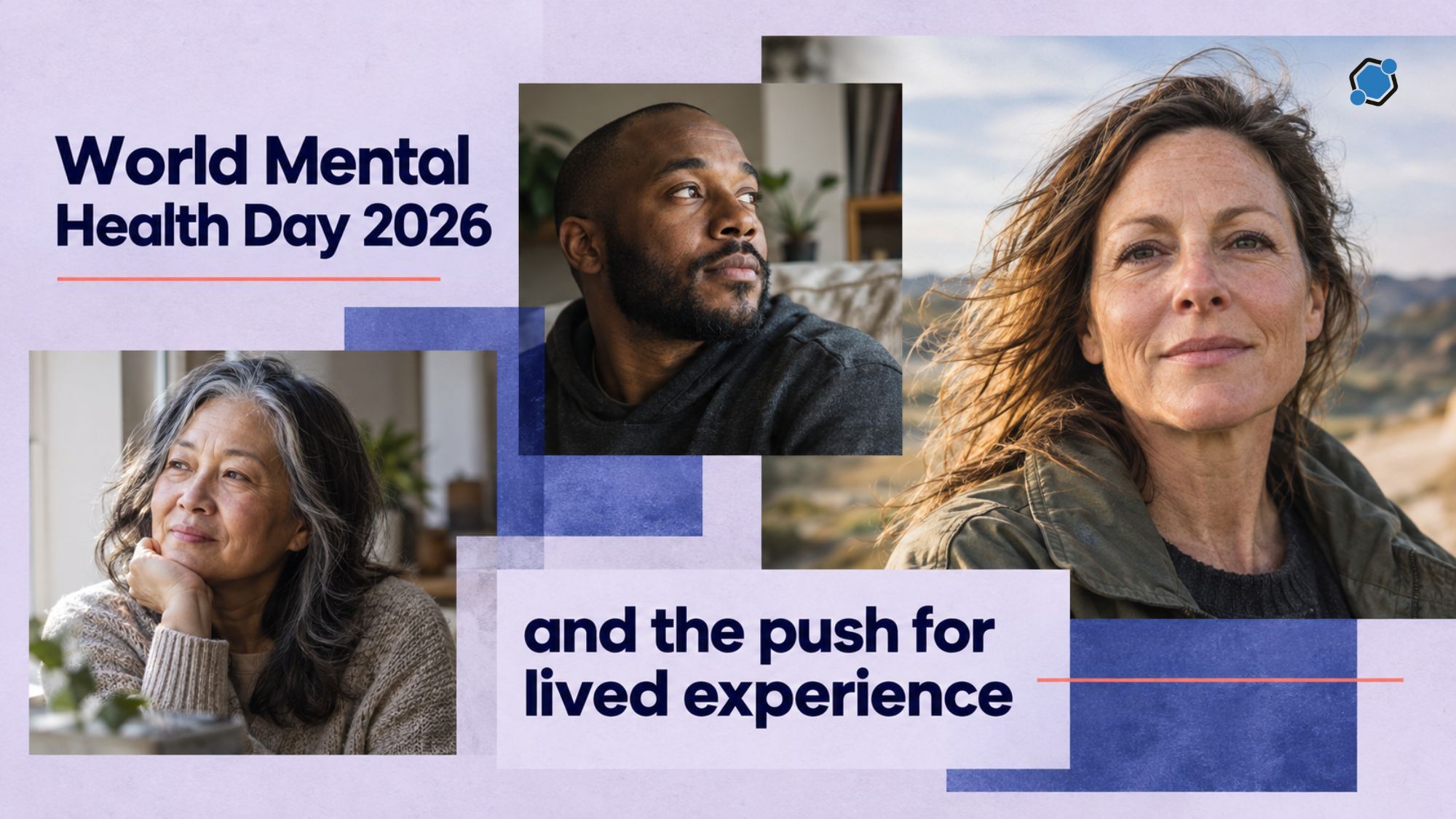
World Mental Health Day falls on Saturday, October 10, 2026, and this year’s theme marks a quiet shift in how mental health care is supposed to be designed. The World Federation for Mental Health, which created the day in 1992, has set the 2026 theme as “Lived Experiences Heard: Real Voices, Real Change.” The World Health Organization is using the same wording for its global campaign. The idea is simple. People who have personally experienced a mental health condition, treatment, or recovery should be helping shape the policies, services, and research that affect them, not just answering questions after decisions are made.
For a general audience, that principle shows up in a question many people have never been asked. If something has been hard for you, or for someone you love, whose voice is helping decide what comes next?
What World Mental Health Day is and when it falls
World Mental Health Day is observed every year on October 10. The World Federation for Mental Health, an international nonprofit founded in 1948, launched the day in 1992 as a global effort to raise awareness, reduce stigma, and press governments to invest in mental health care. The first observance was a two-hour live telecast with contributions from several countries and continents. By the mid-1990s, the day had been joined by the World Health Organization and had become a regular anchor for public campaigns, policy announcements, and community events.
Each year the day carries a theme chosen by the World Federation for Mental Health. Themes have evolved from general awareness to specific issues such as mental health in the workplace, in schools, during humanitarian crises, and now the role of lived experience in shaping care. The World Health Organization runs a parallel global campaign on the same date, publishing fact sheets, hosting webinars, and often tying new policy guidance to the moment. For 2026, WHO is holding a World Mental Health Day webinar on October 9.
The 2026 theme and what lived experience means
Lived experience is a plain-English way of saying what someone has learned by actually going through something, rather than by only reading or hearing about it. In mental health, that includes people who have been diagnosed with a condition, people in treatment or recovery, family caregivers, and people whose circumstances have put their mental health under strain. The World Health Organization defines it as the understanding that comes from going through an experience firsthand.
The 2026 theme calls for this expertise to be built into the system itself. WHO’s campaign materials put it bluntly: too often, people with lived experience are asked to share their stories but excluded from decisions. The theme asks governments, health systems, researchers, employers, and schools to treat lived experience as expertise, and to design services and policies with those people, not only for them. The phrase sometimes used in the field is “nothing about us without us.”
The data behind the push is sobering. Looking at countries that reported to WHO’s Mental Health Atlas 2024, only 37 percent said they included people with lived experience in mental health training for primary care workers. Only 9 percent had fully moved from institution-based care to community-based care. About 49 percent of reported psychiatric hospital admissions globally were involuntary, and 23 percent of those admissions lasted longer than a year.
The theme also connects to other observances in October. In the United States, Mental Illness Awareness Week runs in early October, and the whole month is recognized as National Depression and Mental Health Screening Month. World Mental Health Day sits inside that larger window, and the broader conversation around stigma around mental illness is where the lived-experience theme lands hardest.
The scale of mental health today
Mental health conditions are common, and the gap between how many people are affected and how many get help is wide. Globally, the World Health Organization estimates that more than 1 billion people live with a mental disorder, which is close to one in seven people. Anxiety and depressive conditions are the most common. Mental disorders are among the leading causes of long-term disability worldwide, and fewer than one in ten people with major depressive disorder are estimated to receive what the field calls minimally adequate treatment.
In the United States, data from the Substance Abuse and Mental Health Services Administration’s 2024 National Survey on Drug Use and Health show that 23.4 percent of adults, about 61.5 million people, had any mental illness in 2024. Just over half of them, 52.1 percent, received any mental health treatment that year. The treatment rate is higher for serious mental illness, at 70.8 percent, but even there, nearly three in ten adults were not reached. In 2024, 48,824 Americans died by suicide, a slight decline from the year before, though researchers caution it is too early to call it a lasting trend.
Younger adults carry more of the burden than older ones. Pooled 2022 to 2024 data show that about one in three adults aged 18 to 25 had a mental illness in a typical year. Rates among adolescents also remain high, though a 2025 CDC survey showed the first measurable decline in persistent sadness among high schoolers in over a decade. The depression screening observance this October was built around exactly this gap between how many people are affected and how many are identified early enough to be helped.
Workforce and funding gaps compound the picture. In the United States, federal data estimate that around 40 percent of the population lives in a designated mental health professional shortage area, with rural communities most affected. Globally, median government spending on mental health has stayed at about 2 percent of total health budgets since 2017.
How clinical research turns lived experience into evidence
Clinical trials are one of the most direct ways lived experience becomes evidence that can change care for everyone else. New treatments, new combinations of therapy and medication, and new ways of delivering care all have to be tested in real people before they can be approved or recommended. In mental health, that pipeline is unusually active right now. Recent years have brought the first schizophrenia drug with a genuinely new mechanism of action in roughly 70 years, the first prescription digital therapeutic cleared by the FDA for symptoms of major depressive disorder, and finalized FDA guidance in July 2026 on how trials of psychedelic compounds should be designed. Neuromodulation treatments, which use electrical or magnetic stimulation to change brain activity, continue to be studied for depression, obsessive-compulsive disorder, and other conditions.
Participation in research is voluntary and highly regulated. In the United States, every study involving human participants must be reviewed and approved by an institutional review board before it can begin. Informed consent is an ongoing process rather than a one-time signature, and participants can leave a study at any time. Independent safety monitoring boards oversee higher-risk trials, and federal rules include specific protections for adults who may need help understanding what they are being asked to join.
The weak spot in mental health clinical trials has long been representation. A review of more than 300 depression trials across 36 years found that most did not even report the race or ethnicity of their participants, and a newer analysis of U.S. psychotherapy-for-depression studies found Hispanic, Latino, Asian, and multiracial participants persistently underrepresented. When studies leave groups out, the resulting evidence may not apply equally well to everyone, which deepens the inequities the 2026 theme is targeting.
DecenTrialz is a United States-based platform that uses AI-assisted matching and registered-nurse-led pre-screening to connect people who may want to take part in research with the teams running studies. People share some basic information, the matching layer compares it with current trial criteria, a nurse reviews the fit, and a referral goes to a research site team. The research site team, not the platform, makes the final decision about eligibility, walks through informed consent, and manages enrollment and care.
How anyone can take part on October 10 and after
Marking the day does not require an organized event. A short, honest conversation with someone whose mental health has been on your mind counts. So does setting aside time to look at your own patterns of sleep, stress, and support, and to ask whether anything should change.
If a crisis is happening now, help is available. In the United States, calling or texting 988 reaches the Suicide and Crisis Lifeline. In an immediate emergency, 911 is still the right call.
For broader information, the National Institute of Mental Health, the Substance Abuse and Mental Health Services Administration, and the Centers for Disease Control and Prevention all maintain plain-language resources on common conditions, screening tools, and finding care. If you are curious about taking part in research, it helps to understand what the first step actually involves. For many people, the first step into clinical trials is simply learning what joining a study means, what questions to ask, and how to decide whether it is right for them.
Supporting someone else usually matters more than the words used. Reaching out privately, listening without jumping to fix things, asking directly about safety when you are worried, offering to help them connect with a professional, and following up afterward are all simple and effective. Asking someone about suicidal thoughts does not plant the idea.
Frequently asked questions
When is World Mental Health Day 2026?
World Mental Health Day 2026 falls on Saturday, October 10, 2026. It is observed on the same calendar date every year.
What is the 2026 theme of World Mental Health Day?
The World Federation for Mental Health has set the 2026 theme as “Lived Experiences Heard: Real Voices, Real Change.” The World Health Organization uses the same wording for its global campaign.
Who started World Mental Health Day and why?
The World Federation for Mental Health, an international nonprofit founded in 1948, launched the day in 1992 to raise awareness about mental health worldwide, reduce stigma, and press governments to invest in mental health care.
What does lived experience mean in mental health?
Lived experience means the understanding that comes from personally going through something, in this case a mental health condition, treatment, caregiving role, or related life challenge. The 2026 theme calls for people with lived experience to help design the systems and services that affect them.
How many people are affected by mental illness in the United States?
According to the Substance Abuse and Mental Health Services Administration’s 2024 National Survey on Drug Use and Health, about 23.4 percent of U.S. adults, or 61.5 million people, had any mental illness in 2024. About half of them received treatment that year.
Are mental health clinical trials safe to join?
All studies involving human participants in the United States must be approved by an institutional review board and follow federal rules on informed consent, participant protections, and safety monitoring. People who join can leave at any time. If you are considering a trial, it is helpful to read an informed consent form carefully and to ask questions until the answers are clear.
What should I do if I am in crisis right now?
In the United States, call or text 988 to reach the Suicide and Crisis Lifeline. In an immediate emergency, call 911.
Why the day matters beyond October 10
A single day of awareness does not close a treatment gap, change a policy, or reduce stigma. What a day can do is give the slower work a focal point. When WHO publishes new guidance, when a workplace changes a leave policy, when a research site re-examines who it is reaching, those are the pieces that compound over time. The 2026 theme adds a question to each moment. Whose voice is helping decide what comes next? For people considering clinical research, that question is especially direct. Participating is not a treatment promise, but it is a way to turn lived experience into evidence for someone else.
Was this article helpful?

Similar Blogs
Ischemic vs hemorrhagic stroke: what causes each and how they differ
A stroke happens when blood flow to part of the brain is disrupted. There are two main kin...
 Deeksha Gitta
Eczema Awareness Month 2026: Signs, triggers, and why research matters
October is Eczema Awareness Month in the United States, led by the National Eczema Associa...
Paramraj
Liver Awareness Month 2026: Liver Disease, Liver Cancer, and the Research Changing Outcomes
Every October, two overlapping observances turn attention to an organ most people rarely t...
Vamshi KantojuStay Informed. Stay Connected.
Get updates on verified clinical trials, emerging treatments, and research breakthroughs directly in your inbox. No spam, just science that matters.
