 HIPAA Compliant
 ISO 27001 Certified

Caring for a patient in a clinical trial: who handles what?

Caring for a patient in a clinical trial means sharing that patient with a second care team. Once a patient enrolls, the research site takes responsibility for everything the study touches, while the patient’s usual physician continues to manage everything else. The arrangement works well when both sides know where the line sits and how to reach each other. It works poorly when a new prescription, an emergency room visit, or a hospital stay happens without the research site knowing.
This shared arrangement is often called co-management. The sections below explain how responsibility is divided, what to request from the research site, and how to handle the moments that most often cause problems.
What does co-management mean for a patient in a clinical trial?
Co-management is the shared, coordinated care of a trial participant by two groups. The first is the research site team: the principal investigator (the physician who leads the study at that site and is accountable for participant safety), sub-investigators, and study coordinators. The second is the patient’s usual care team, including the primary care physician, community specialists, and clinic staff.
The site follows the protocol, which is the study’s detailed rulebook covering visits, tests, permitted medications, and safety reporting. The usual physician keeps providing the ongoing care the patient needed before the study began and will need after it ends.
The international standard for how clinical trials are conducted, known as ICH E6(R3) Good Clinical Practice, addresses this relationship directly. It states that the investigator should inform the participant’s primary physician about trial participation when the participant has a primary physician and agrees to that contact. The previous version of the standard only recommended this step. The FDA published E6(R3) as final guidance in September 2025, making it the agency’s current recommendation for U.S. trials, although FDA guidance is not binding law.
Physicians who referred the patient in the first place will recognize the starting point from the physician’s role after referral. Co-management picks up where referral ends: the patient is now enrolled, and both care teams are active at once.
Who is responsible for what during the trial?
Federal regulations place trial-related care with the investigator. Under 21 CFR 312.60, the investigator must conduct the study according to the investigational plan, protect the rights, safety, and welfare of participants, and control the investigational product (the drug or therapy being studied). Under 21 CFR 312.64, the investigator must report any serious adverse event to the sponsor immediately, whether or not it appears related to the study drug.
ICH E6(R3) also makes room for outside clinicians. It states that other qualified healthcare professionals may be involved in a participant’s medical care in line with their normal activities. In practice, the research site typically handles the following:
- Protocol-required visits, tests, and assessments
- Dispensing, dosing, pausing, and stopping the study drug
- Assessing adverse events (any unwanted health change during the study, whether or not the study drug caused it) and reporting them to the sponsor
- Maintaining the list of prohibited and restricted medications and recording every medication the participant takes
The usual physician typically continues to handle these areas:
- Ongoing management of conditions unrelated to the study
- Acute care for everyday illnesses and injuries
- Preventive care, routine screenings, and referrals to other specialists
- Notifying the site about new diagnoses, medication changes, and hospital visits
Research sites preparing for the updated standard are revisiting how they document these responsibilities, as covered in what ICH E6(R3) changes for research sites. For the treating physician, the working rule is direct: decisions about the study drug and the protocol belong to the site, and nearly all other care stays with the usual care team.
How should a clinic coordinate with the research site?
Coordination tends to break down in three places: missing contact information, unannounced medication changes, and delayed reporting of side effects or hospital stays.
Information to request from the site
Study protocols do not always specify how the primary physician will be contacted, so the clinic does not need to wait. Asking the site for a short summary letter is reasonable, and most sites welcome the request. A useful letter covers these points:
- The study name, its phase, and whether it is blinded (meaning the participant, and often the study team, do not know whether the participant receives the study drug or a comparison such as a placebo)
- The principal investigator’s name and a 24-hour contact number
- The study coordinator’s name and direct contact details
- The general class of the study drug and its key known risks
- The prohibited and restricted medication list
- What the site wants reported, and how quickly
The coordinator is usually the fastest contact for scheduling and logistics, as outlined in the role of the clinical research coordinator. Medical questions should go to the investigator. Flagging the patient’s chart with the study name and the site’s phone number makes this information visible to every clinician in the practice.
Medication changes
Concomitant medications (any other medicine, supplement, or remedy a participant takes during the study) are a frequent source of problems. Protocols restrict certain drugs because they can interact with the study drug, change how it is absorbed or cleared from the body, or interfere with what the study is measuring. Research in national cancer trial networks has found that a meaningful share of enrolled participants were taking medications that interacted with their study drug in ways the protocol prohibited. Over-the-counter products and herbal supplements are a common blind spot.
The safest working rule is to check with the site before starting, stopping, or changing a medication whenever the situation is not urgent. When it is urgent, treat the patient first and inform the site the same day. Some changes may require the participant to pause or stop the study drug, and some protocols include a washout period (a set time off a particular medicine so it clears the body) that affects timing.
Side effects and hospital stays
A serious adverse event is one that is life-threatening, results in death, requires or extends a hospital stay, causes lasting disability, or causes a birth defect. Any hospitalization of a trial participant should therefore reach the site promptly. FDA guidance on investigator safety reporting expects the first report to the sponsor generally within one calendar day of the investigator recognizing the event, and that clock cannot start until the site is aware of it.
The treating physician does not file the sponsor report; that duty belongs to the investigator. The physician’s role is to treat the patient, notify the site, and share relevant records such as discharge summaries and lab results so the investigator can assess the event accurately.
What happens if the patient needs emergency care?
Emergency departments often have no way of knowing a patient is in a trial unless someone tells them. Many studies give participants a wallet card that identifies the study and lists the investigator’s emergency contact number. Clinic staff can remind participants to carry the card at all times and to show it at any emergency department or urgent care center.
Priorities in an emergency are clear: stabilize the patient first, then contact the site. Treatment should follow symptoms and clinical findings, not assumptions about which study group the patient is in.
In blinded trials, the question of unblinding (revealing which treatment the participant has been receiving) sometimes arises. ICH E6(R3) expects investigators to be able to unblind without undue delay when participant safety requires it. The process varies by protocol, so it should go through the contact on the wallet card rather than being improvised, and it is often not needed to begin emergency care. Patients with questions about their own study may find it helpful to read about how blinded trials work.
What happens when the trial ends?
When participation ends, whether at the planned close of the study or early, full responsibility returns to the usual care team. ICH E6(R3) expects the investigator to ensure appropriate follow-up if a trial ends early and, where relevant, to inform participants about results and the treatment they received once that information is available.
A good transition includes a written summary sent to the treating physician with the participant’s permission. That summary should cover these points:
- The date of the last dose of study drug
- Any adverse events that are still being monitored
- Required follow-up visits, tests, or safety checks
- Whether continued access to the study drug is available
- When study results or the treatment assignment are expected
Some studies continue to follow participants for months or years after their last dose, and newer data methods are changing how physicians are involved in tracking patients after a trial ends.
Common questions from treating physicians
Does the treating physician need to be listed on Form FDA 1572?
Form FDA 1572 is the statement in which the investigator commits to following FDA requirements and lists the study team. A physician providing routine care, or treating a possible side effect on one occasion, generally does not need to be listed. FDA indicates that anyone who performs protocol-required procedures or collects study data should be listed. FDA’s 2024 guidance on decentralized trial elements also allows local clinicians to perform routine tasks they would perform in normal practice without becoming investigators.
Is it acceptable to be paid for referring a patient?
Payment solely for referring a patient to a study is considered unethical under the AMA Code of Medical Ethics, and many institutions prohibit it. Compensation for actual research work under a formal written agreement is different and should reflect fair market value.
Is sharing records with the research site a HIPAA concern?
HIPAA permits a provider to share protected health information with another provider for that provider’s treatment activities without a separate patient authorization. Organizational policies and some state laws can add requirements.
Who pays for routine care during the trial?
Medicare covers routine costs in qualifying clinical trials, as well as care for complications that arise from participation. The study drug itself is generally provided by the sponsor. Sites usually prepare a billing plan that separates sponsor-paid items from routine care, so confirming which category an order falls into before billing helps avoid errors.
Will the treating physician receive the study results?
Results are shared with participants, where relevant, once the sponsor makes them available. Participants can authorize the site to share results with their treating physician, and requesting this at the start of participation makes it more likely to happen.
Keeping both care teams connected
Co-management succeeds when responsibility is clear and communication is routine. The research site owns the protocol, the study drug, and safety reporting to the sponsor. The treating physician owns continuity of care and is often the first to notice a new problem. A summary letter, a flagged chart, a call before a medication change, and a written hand-back at the end are usually enough to keep both teams aligned.
DecenTrialz supports the earlier part of this relationship. It is a clinical trial recruitment and pre-screening platform that uses AI-assisted matching, nurse-led pre-screening, and structured referral workflows to connect patients with studies that may fit their health profile. Final eligibility determination, informed consent, and enrollment remain with the research site team. Physicians looking for a simpler way to connect patients with research opportunities can learn more at decentrialz.com.
Was this article helpful?

Similar Blogs

How to identify clinical trial candidates during a routine patient visit
The ability to identify clinical trial candidates during a routine patient visit is one of...
 Mahesh Upadrista
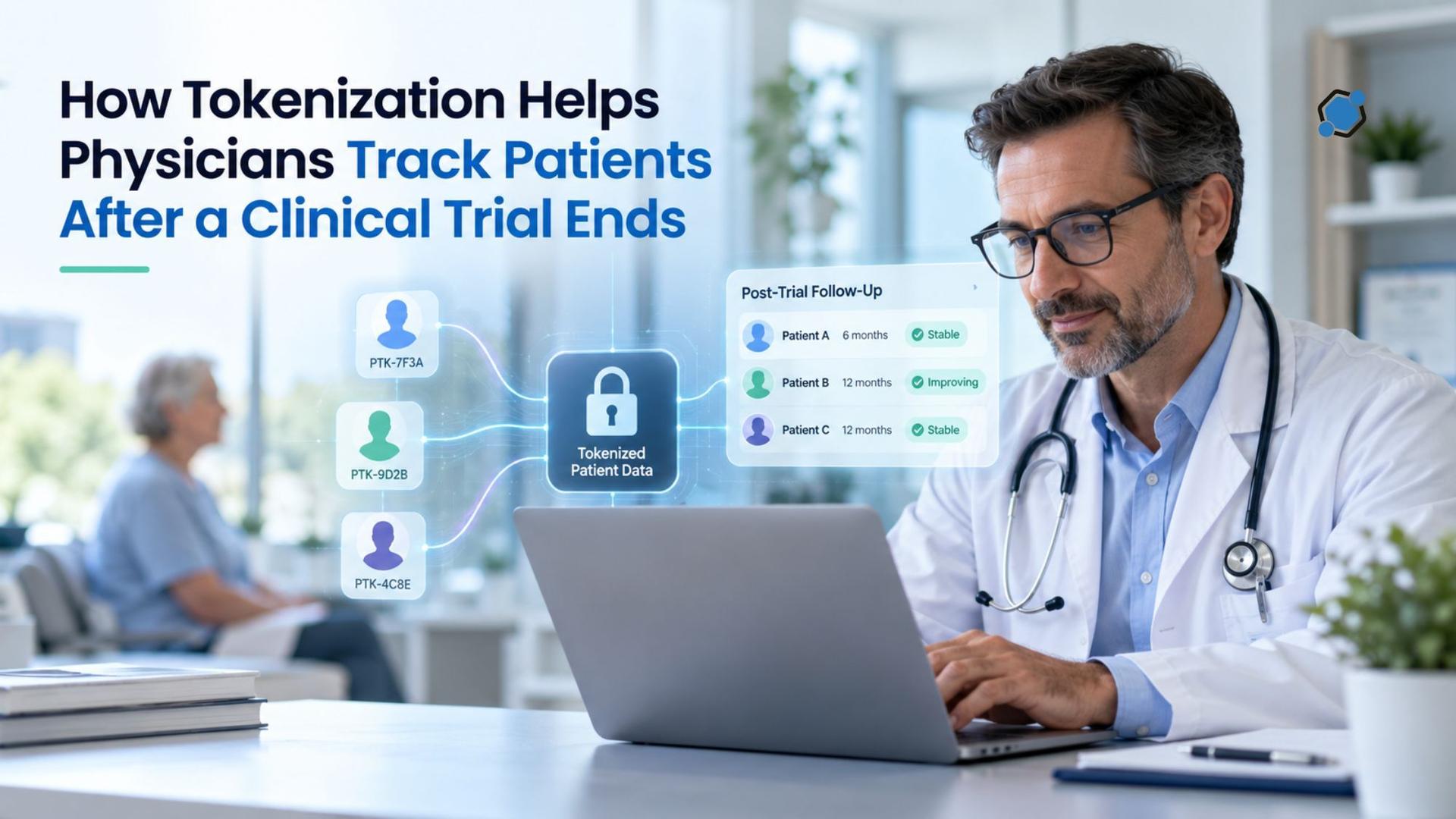
How Tokenization Helps Physicians Track Patients After a Clinical Trial Ends
Tokenization is changing how sponsors keep track of clinical trial participants long after...
Swaroop ESD
Digital Endpoints in Clinical Trials: What Wearable Data Measures and What It Does Not
Digital endpoints in clinical trials have changed both what a study measures and where the...
Mahesh UpadristaStay Informed. Stay Connected.
Get updates on verified clinical trials, emerging treatments, and research breakthroughs directly in your inbox. No spam, just science that matters.
