 HIPAA Compliant
 ISO 27001 Certified

How to identify clinical trial candidates during a routine patient visit
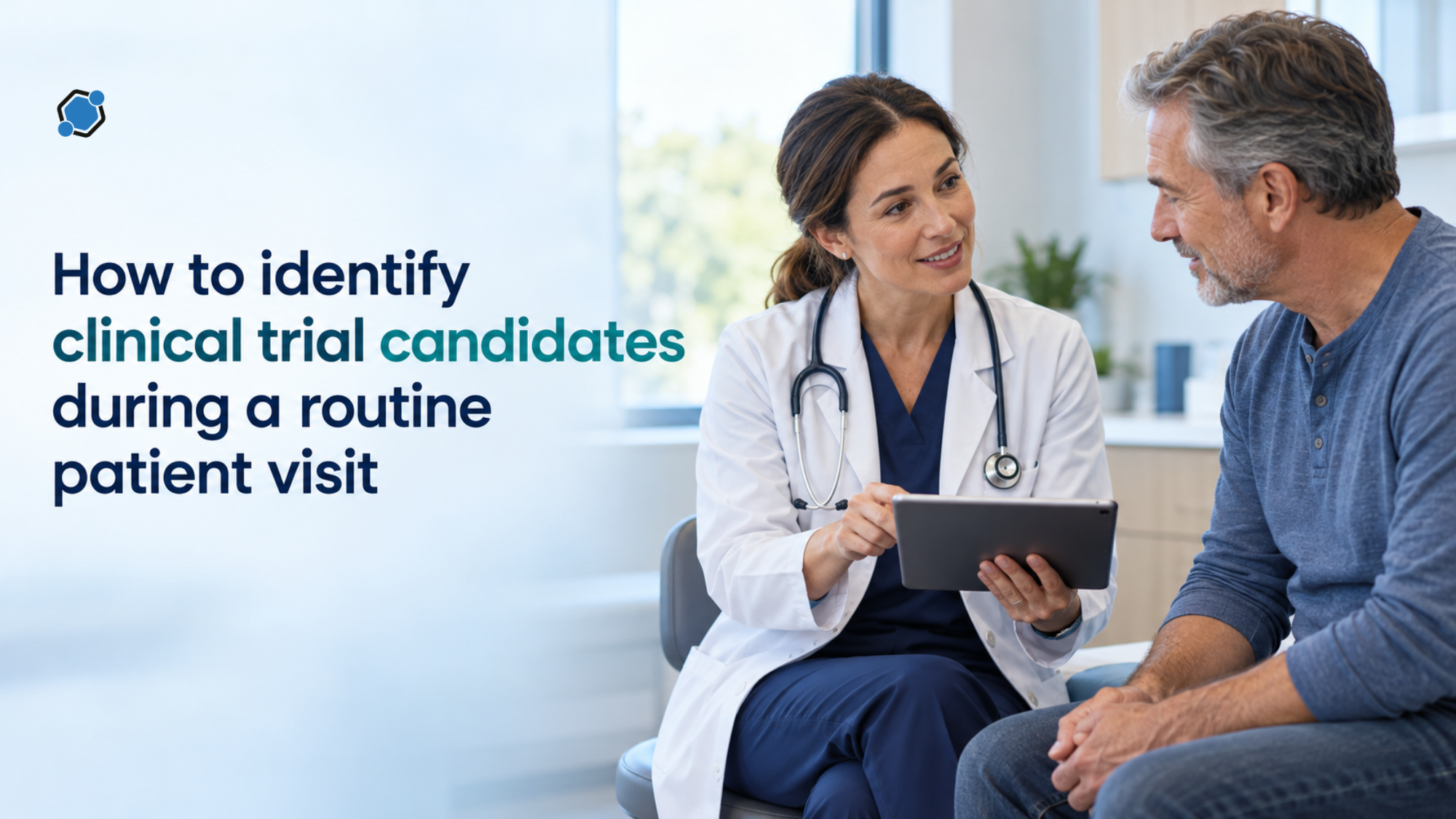
The ability to identify clinical trial candidates during a routine patient visit is one of the most practical ways clinicians can widen access to research. Most patients never hear about clinical trials from their own clinicians, yet many say they would consider taking part if asked. The clinician’s task in that moment is narrow: notice a small number of signals, mention research as one option, and refer. Final eligibility, informed consent, and enrollment remain with the research site team.
Why does the routine visit matter for clinical trial access?
Patient willingness is rarely the main barrier. In oncology, where this question has been studied most closely, a 2021 analysis of 35 studies published in the Journal of the National Cancer Institute found that more than half of patients who were offered a trial agreed to take part. Comparable data outside cancer care is more limited, but the pattern points in the same direction.
The gap sits earlier, at the point of being asked. In a 2023 national survey by the nonprofit Research!America, only about one in three U.S. adults said a doctor or other health professional had ever talked with them about medical research. A 2025 survey by the Center for Information and Study on Clinical Research Participation (CISCRP) found that about half of respondents prefer to learn about studies from their own doctor, while fewer than one in five actually did.
This gap is not a measure of physician interest. The friction sits in the system around the visit: short appointment times, no reliable view of which studies are recruiting, and no simple place to send a patient once interest is raised. These are the structural reasons trial referrals stay rare, and each one can be reduced.
Timing adds another reason the routine visit matters. Many studies enroll patients at specific points in a disease course, such as before the first treatment begins. Once a treatment decision is made, some of those windows close.
Which signals help identify clinical trial candidates?
Every study uses eligibility criteria, the rules that decide who can join. Inclusion criteria describe what a participant must have, such as a confirmed diagnosis or a certain age range. Exclusion criteria describe what rules a person out, often for safety reasons, such as certain other conditions or medications.
Clinicians do not need to apply these rules during a visit. Recognizing a likely fit is enough to start a conversation. Several signals appear repeatedly across clinical research and can be noticed without extra testing:
- A new diagnosis, particularly before first-line treatment (the first standard treatment offered) begins.
- Disease progression or treatment failure, since many studies recruit people whose condition has worsened after a defined prior therapy.
- An inadequate response to standard of care (the treatment experts generally accept as appropriate), such as blood sugar or blood pressure that stays uncontrolled despite treatment.
- A rare or hard-to-treat condition, where approved options are limited and research may be a main route to new therapies.
- A patient who asks about other options or brings up research found online.
- Approved therapies that have already been tried and exhausted.
- A condition with studies known to be recruiting in the area.
Brief documentation makes the next step faster. Prior treatments, dates of progression, and current medications are the details research teams usually review first. A referral does not require completing that review, and the practice can leave the eligibility work to the research team.
One caution applies to every signal. Assumptions about age, other health conditions, language, or perceived interest can quietly narrow who is asked. Offering research consistently to every patient who shows a signal is more equitable than deciding in advance who might say yes.
What makes recognition difficult in a short visit, and what helps?
The friction has rarely been a single barrier. It has been a stack of small ones built into the system around the clinician.
Time is the first. A 2022 study in the Journal of General Internal Medicine estimated that a primary care physician would need more hours than a day contains to deliver all guideline-recommended care to a typical patient panel, and considerably fewer with team-based support. A trial conversation competes with everything else on the visit agenda.
Visibility is the second. Most practices have no current view of which studies are recruiting nearby. Each study also follows a protocol, the detailed written plan that defines who can join and what happens at each visit, and protocols often list dozens of criteria. Without a referral pathway, interest raised in the exam room has nowhere to go.
Several approaches address these gaps, and each has limits:
- Electronic health record (EHR) alerts. An early study at an academic health system found that an EHR prompt flagging possibly eligible patients sharply increased physician referrals. A follow-up study found that responses to such prompts declined over time, a pattern known as alert fatigue.
- AI-assisted screening. Researchers at the National Institutes of Health have shown that large language models can compare patient records against trial criteria with accuracy approaching expert review. Most of these tools remain research systems, and none replace clinical or site judgment.
- Team-based pre-screening. Pre-screening is an early, informal check of whether someone might fit a study, done before formal screening. When a nurse or coordinator handles this step, the clinician’s role narrows to noticing and asking.
Together, these approaches move most of the matching work out of the exam room. That shift is the central idea behind AI trial matching built around physician workflows, where software proposes possible matches and people review them.
How can clinicians raise clinical trials in a few minutes?
A short, neutral opening works better than a detailed explanation. One approach: “Some people with your condition look into research studies as one option. Would you like me to connect you with a team that can check whether any might fit?”
The next step should be named clearly, along with who owns it. A nurse or research coordinator reviews some details first. The study team then decides whether the patient qualifies and explains the study fully before the patient agrees to anything.
Patients commonly ask about safety, cost and insurance coverage, travel and time, whether a placebo (an inactive comparison treatment) is involved, whether they keep their regular doctor, and whether they can leave. Clear answers to the design questions build trust, and it helps to know how to explain placebos and modern trial designs in plain terms.
Three guardrails protect the conversation:
- Avoid therapeutic misconception, the mistaken belief that a study is designed mainly to benefit the individual participant. Research tests whether an approach works, and benefit is never guaranteed.
- Avoid undue influence. FDA guidance cautions against describing studies as “new treatment” or “free treatment.” Research should be presented as one option, never as a favor to the clinician or a condition of care. Professional ethics guidance also treats payments for referring patients to studies, known as finder’s fees, as unethical.
- Respect privacy. Under the Health Insurance Portability and Accountability Act (HIPAA), clinicians and patients can discuss trial enrollment without a special authorization. Sharing a patient’s information with an outside research team generally requires the patient’s authorization or a waiver approved by an institutional review board (the independent committee that protects research participants). The simplest practice is to obtain the patient’s permission before any details leave the practice.
What stays with the physician after a referral?
Identifying and referring is the clinician’s role. Determining eligibility is not. Formal screening, which takes place after the patient gives informed consent, confirms through tests and record review whether the person qualifies.
Informed consent is an ongoing process. The study team explains the purpose, risks, possible benefits, and alternatives, and the person agrees voluntarily, with the right to withdraw at any time. A patient who does not qualify at screening has not failed at anything; screen failures are a routine part of research.
Continuity of care is preserved throughout. The patient keeps their regular clinician and can decline or leave a study without any effect on usual care. The updated international Good Clinical Practice guideline, ICH E6(R3), expects the investigator (the physician running the trial at the research site) to inform a participant’s primary physician about participation when the participant has one and agrees.
Status updates complete the loop. Referring clinicians generally want to know whether a patient was contacted, screened, and enrolled, and a lack of follow-up has long been one of the most common frustrations in trial referral. Understanding the referring physician’s role once a patient enrolls helps practices set clear expectations with research partners.
Where DecenTrialz fits in the referral pathway
DecenTrialz is a clinical trial recruitment, pre-screening, and participant management platform designed to take matching and pre-screening work out of the clinic visit. It uses AI-assisted matching to identify studies that may fit a patient’s profile. A registered nurse (RN) then pre-screens the patient against key study criteria before a structured referral goes to the research site.
The research site team makes the final eligibility determination, obtains informed consent, walks the patient through the study, and manages enrollment. DecenTrialz is a platform, not a medical authority, and does not guarantee enrollment, trial access, or any treatment outcome.
For clinicians, this keeps the in-visit role where it belongs: noticing a signal, asking one short question, and obtaining the patient’s permission to refer.
Clinicians and practices that want a simpler path from the exam room to research can learn how DecenTrialz referral workflows operate at decentrialz.com.
Was this article helpful?

Similar Blogs
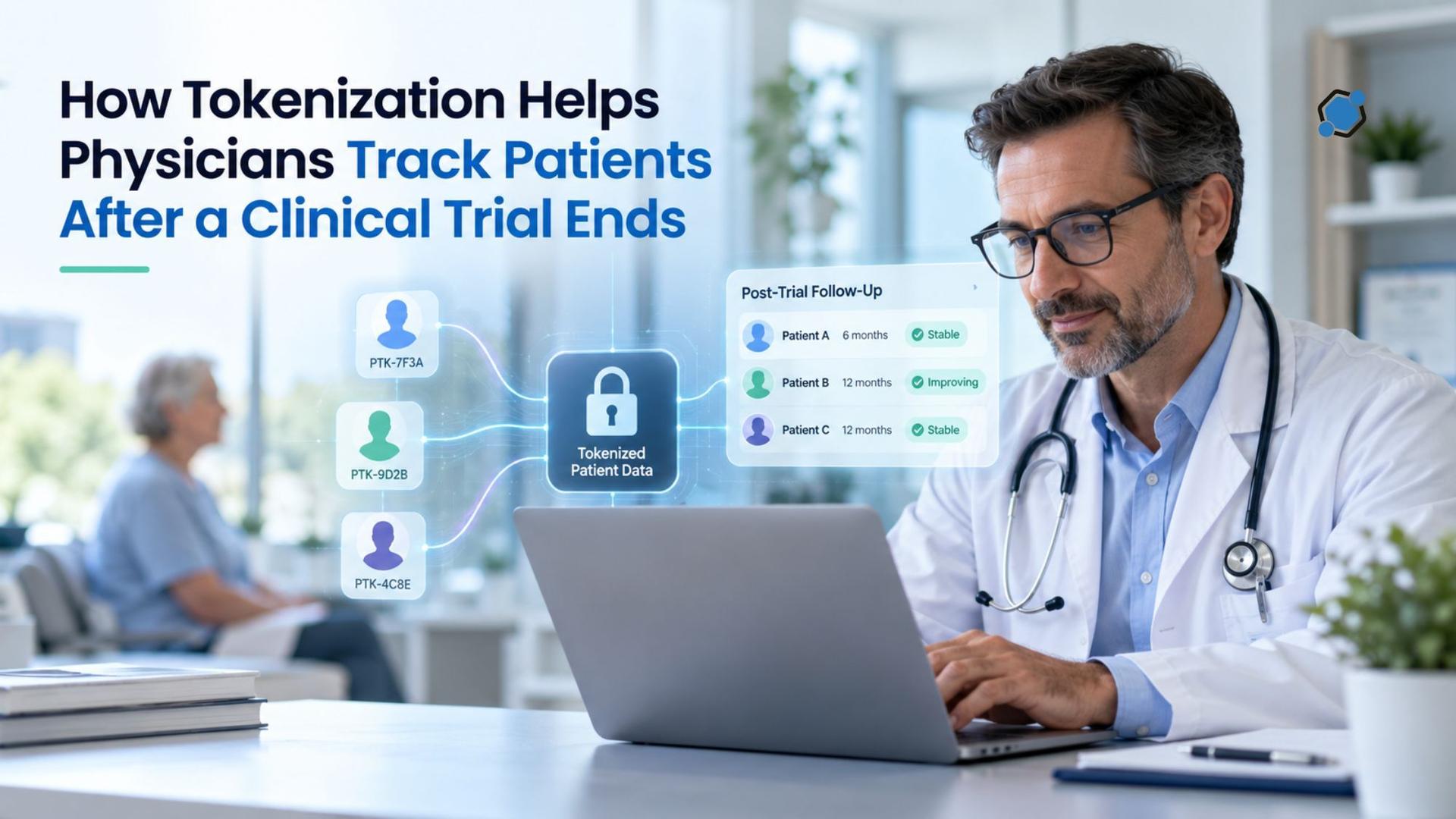
How Tokenization Helps Physicians Track Patients After a Clinical Trial Ends
Tokenization is changing how sponsors keep track of clinical trial participants long after...
 Swaroop ESD

Digital Endpoints in Clinical Trials: What Wearable Data Measures and What It Does Not
Digital endpoints in clinical trials have changed both what a study measures and where the...
Mahesh Upadrista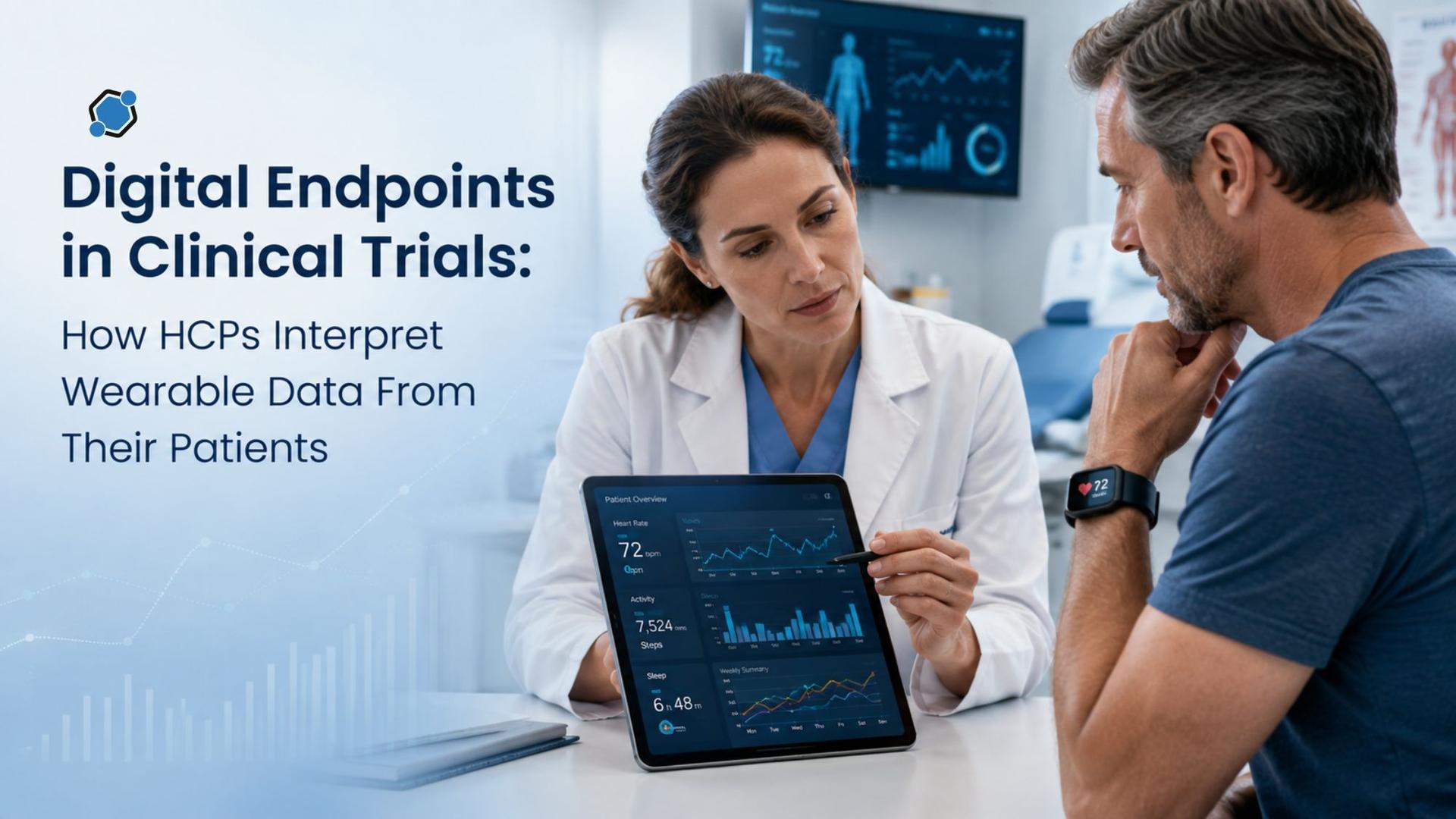
Digital Endpoints in Clinical Trials: How HCPs Interpret Wearable Data From Their Patients
Wearable devices now generate a substantial share of the data collected during modern clin...
Deeksha GittaStay Informed. Stay Connected.
Get updates on verified clinical trials, emerging treatments, and research breakthroughs directly in your inbox. No spam, just science that matters.
