 HIPAA Compliant
 ISO 27001 Certified

What do community health workers do in clinical trials?
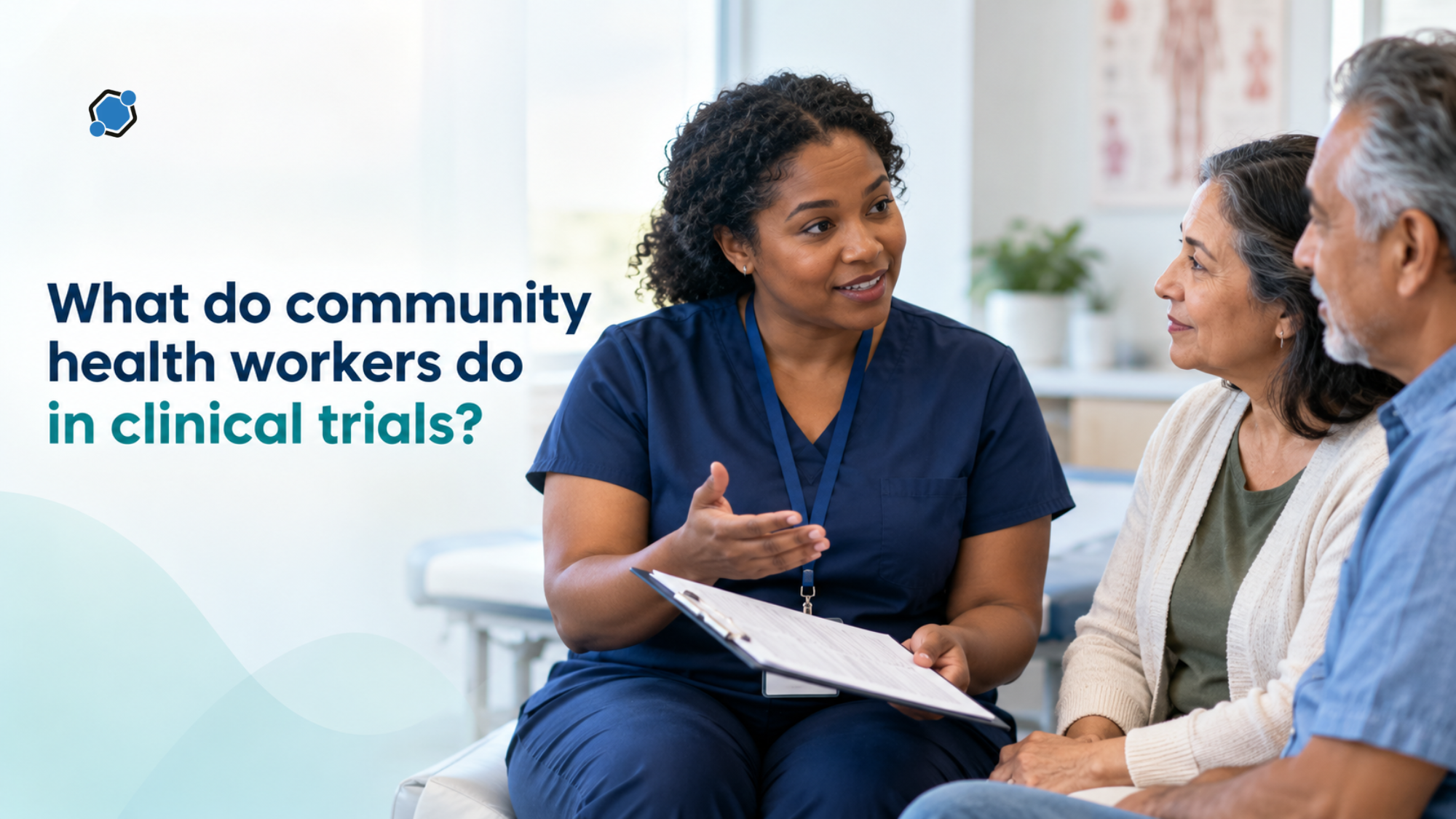
Community health workers in clinical trials serve as trusted guides between a community and the research teams running a study. They explain what a trial is in plain language, help people prepare questions, and solve practical problems such as transportation and scheduling. For advocacy groups working to widen access to research, community health workers can be among the most effective partners available, provided the role is funded fairly and its boundaries are clear.
This article explains who community health workers are, what they do as trial navigators, where their role stops, what the evidence shows, and how advocacy groups can build a partnership model that protects community trust.
Why clinical trials need trusted community navigators
Clinical trials test whether a new drug, device, or approach is safe and effective. Results are most useful when the people in a study reflect the people who will later rely on the findings. Analyses of the pivotal trials behind recent U.S. drug approvals (the main studies regulators rely on to approve a product) show that participants still often fail to match the country's racial and ethnic makeup, with Black and Hispanic participants among the most underrepresented.
The causes are rarely a lack of interest. Distance to study sites, time away from work, childcare, language, and limited information all play a part. So does mistrust rooted in a documented history of research abuses, which many communities still carry.
A community health worker (CHW) is a frontline public health worker who is a trusted member of the community served, or who understands that community unusually well. That definition, developed by the American Public Health Association, places trust at the center of the role. CHWs go by many names, including promotores de salud in Latino communities, community health representatives in tribal nations, peer navigators, and lay health workers.
Navigation itself began as a health equity effort. In 1990, Dr. Harold P. Freeman, a surgeon in Harlem, New York, launched the first patient navigation program to help low-income Black women move from an abnormal breast cancer finding to timely diagnosis and care. Clinical trial navigation applies the same idea to research: removing the barriers that stand between a person and an informed decision about joining a study.
Federal policy on trial diversity remains unsettled. The FDA's draft guidance on Diversity Action Plans, issued in June 2024 to carry out a 2022 law, had still not been finalized as of October 2026, and advocacy leaders can follow the Diversity Action Plan debate as it develops. Community navigation can move forward regardless of how that question is resolved.
What does a community health worker do as a trial navigator?
A clinical trial navigator helps a person learn about research, connect with a study team, and stay supported while taking part. When a community health worker fills this role, the work typically spans the full participant journey:
- Awareness and education: explaining what clinical trials are, how participants are protected, and why community representation matters.
- Addressing mistrust: acknowledging past research abuses honestly and answering questions without pressure.
- Explaining key concepts: clarifying terms such as randomization (assignment to a study group by chance) and placebo (an inactive comparison substance) before a person meets the study team.
- Preparing for conversations: helping people write down the questions they want to ask the research team.
- Practical logistics: arranging transportation, childcare, and reminders, and pointing people to travel reimbursement where a study offers it.
- Language and cultural brokering: interpreting cultural context, not only words, and carrying community concerns back to researchers.
- Retention support: checking in during a study so practical barriers do not lead someone to drop out.
Retention deserves particular attention. Some participants leave studies for practical reasons, such as a missed ride or a scheduling conflict, rather than medical ones. Steady support from someone the participant already trusts can help a person stay connected to a study they chose to join.
Some advocacy organizations take on a broader role still, and it is worth understanding how community pre-screening works when it is designed with clear safeguards.
Where the navigator role ends and the study team takes over
Clear boundaries protect participants, the integrity of the research, and the community health worker's own credibility. A CHW navigator supports understanding and access. Medical judgment and regulated research steps stay with licensed professionals and the study team.
Community health workers acting as trial navigators should avoid:
- Deciding or suggesting whether a person qualifies, since eligibility (the study's rules about who can take part) is determined by the research team.
- Giving medical advice, or recommending that someone join, stay in, or leave a study for medical reasons.
- Obtaining informed consent, the process in which the study team explains a study's purpose, risks, possible benefits, and the right to withdraw at any time before a person agrees in writing.
- Accepting bonuses tied to the number of people who enroll.
- Collecting or sharing personal health information without permission and appropriate privacy safeguards.
Informed consent makes a useful dividing line. Before consent, a community health worker can educate, answer general questions, and, with a person's permission, pass along a referral. After consent, the study team carries out screening, medical evaluation, and study procedures under the oversight of an institutional review board (IRB), an independent committee that reviews research to protect participants.
The same principle applies to clinicians, who can refer patients without doing the eligibility work themselves. In both cases, a trusted messenger opens the door, and the research team confirms whether a study is the right fit.
What the evidence shows about community health workers in clinical trials
The evidence for navigation is encouraging, particularly for keeping participants in studies, though it is still developing. One of the strongest program reports comes from an academic cancer center in the Southeast. Over seven years, Black participants who accepted navigation support completed their trials at roughly twice the rate of those who did not, and Black participation in the center's cancer studies rose substantially over the same period.
Programs built around promotores have shown similar promise in other areas. In one Alzheimer's research program serving Hispanic and Latino adults, people referred by trained promotores enrolled at rates comparable to those referred by clinics. Community outreach widened who was reached without lowering the quality of referrals.
The broader picture calls for candor. A 2026 review of 23 studies on navigation for clinical trials found mixed results for enrollment and described the evidence as largely observational, meaning most studies did not randomly assign who received navigation. Most research to date has focused on cancer. The clearest benefits appear in understanding, trust, and retention, while the effect on enrollment varies from program to program.
For sponsors, the implication is practical. Community navigation works best when it is planned and funded from the start of a study rather than added after enrollment stalls, and sponsors can build a diverse enrollment pipeline that treats paid community partners as part of the design.
How advocacy groups can build a community health worker partnership
Advocacy groups are well placed to anchor this model. They hold community relationships, understand local barriers, and can hold research partners accountable. A durable partnership usually brings together the organization that hosts the CHWs, the CHWs themselves, the research site, the study sponsor, and the clinicians patients already trust.
Practical steps that strengthen a partnership include:
- Map the existing workforce by identifying the CHWs, promotores, community health representatives, and peer navigators already serving the community.
- Invest in research training, because core CHW training often leaves out clinical research. Useful additions include research ethics, informed consent concepts, privacy, and the history of research abuses. Several academic programs now offer curricula built specifically for CHWs.
- Pay fairly and transparently through salaries or hourly rates in the study budget, never through per-enrollment bonuses.
- Put roles in writing with a scope-of-work agreement that states what CHWs do and do not do, and route CHW-facing materials through IRB review where required.
- Protect community voice by giving the community a say in which studies its CHWs share, and by preserving a CHW's ability to decline a study or raise concerns.
- Close the loop by reporting back on what happened to referrals and returning study results to the community in plain language.
Funding is the most common weak point. Since 2024, Medicare has paid for certain navigation and community health integration services delivered by trained staff such as CHWs, and a growing number of state Medicaid programs cover CHW services. Those payments support a patient's own care, however, and are not a funding source for trial recruitment. Dedicated trial navigation belongs in study budgets, research grants, or institutional funds.
The handoff between a community conversation and a research site is where many partnerships lose momentum. DecenTrialz is a clinical trial recruitment and pre-screening platform that supports that handoff through AI-assisted matching against study eligibility criteria, registered nurse pre-screening, and structured referral workflows with status visibility. The research site team handles final eligibility, informed consent, and enrollment.
In practice, a CHW conversation leads to a permission-based referral, a nurse review, and then a site handoff, which reflects how pre-screening delivers better-prepared participants to research teams. The platform's role is to honor the trust an advocacy group has built, never to replace the people who earned it.
Frequently asked questions about community health workers in clinical trials
Is a community health worker the same as a nurse navigator?
The two roles differ in training and scope. Nurse navigators are licensed registered nurses who can address clinical questions. Community health workers bring a trusted connection to a community and focus on education, logistics, and ongoing support.
Can a community health worker tell someone whether they qualify for a trial?
That decision belongs to the research team. A CHW can share general information about a study and, with permission, pass along a referral, but the study team confirms eligibility.
Does it cost anything to work with a navigator or a trial matching service?
Participants should expect to pay nothing to learn about trials, work with a navigator, or use a trial matching service. Any request for payment to access a study is a warning sign.
Is personal information shared when someone talks with a CHW?
Information should be shared only with the person's permission and only with the parties involved in a referral. Advocacy groups should confirm that partner organizations have clear privacy and data-handling practices before any referral pathway goes live.
Will the community see the results of the research?
Returning results to participants and communities is a widely recommended practice, though it does not happen automatically. Advocacy groups can make plain-language results sharing a written condition of any partnership.
Keeping community trust at the center of trial navigation
Community health workers bring something no recruitment campaign can manufacture: trust earned before any study arrived. Used well, that trust helps people make informed choices about research, whether the choice is to join a study or to decline.
The partnership model works when each party keeps to its role. Advocacy groups and CHWs own the community relationship, platforms such as DecenTrialz support matching, nurse pre-screening, and referral tracking, and research sites own eligibility, consent, and enrollment.
Advocacy organizations interested in connecting their community navigators to a structured referral pathway can start a conversation with the DecenTrialz team at decentrialz.com.
Was this article helpful?

Similar Blogs
Decentralized Clinical Trials: an advocacy checklist for digital inclusion
Decentralized clinical trials are being promoted as a way to bring research to the partici...
 Vamshi Kantoju
Clinical Trial Data Governance: What Advocacy Groups Should Verify Before Endorsing a Study
Patient information now travels further than most study participants expect. A study that ...
Swaroop ESD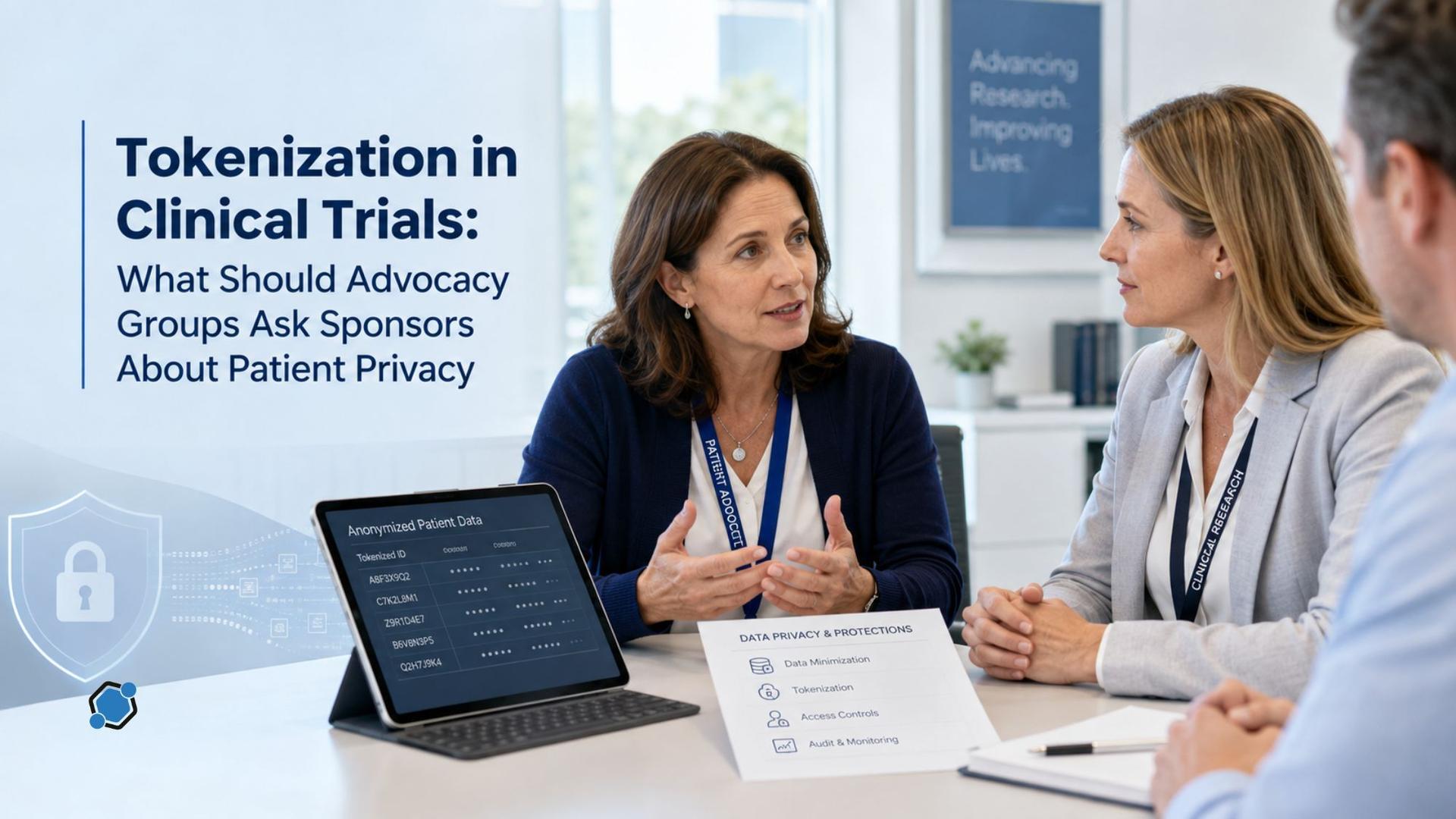
Tokenization in Clinical Trials: What Should Advocacy Groups Ask Sponsors About Patient Privacy
Tokenization has become one of the most widely adopted data techniques in modern clinical ...
Mahesh UpadristaStay Informed. Stay Connected.
Get updates on verified clinical trials, emerging treatments, and research breakthroughs directly in your inbox. No spam, just science that matters.
