 HIPAA Compliant
 ISO 27001 Certified

Diabetic retinopathy symptoms: what are the early signs, and when should eyes be checked?
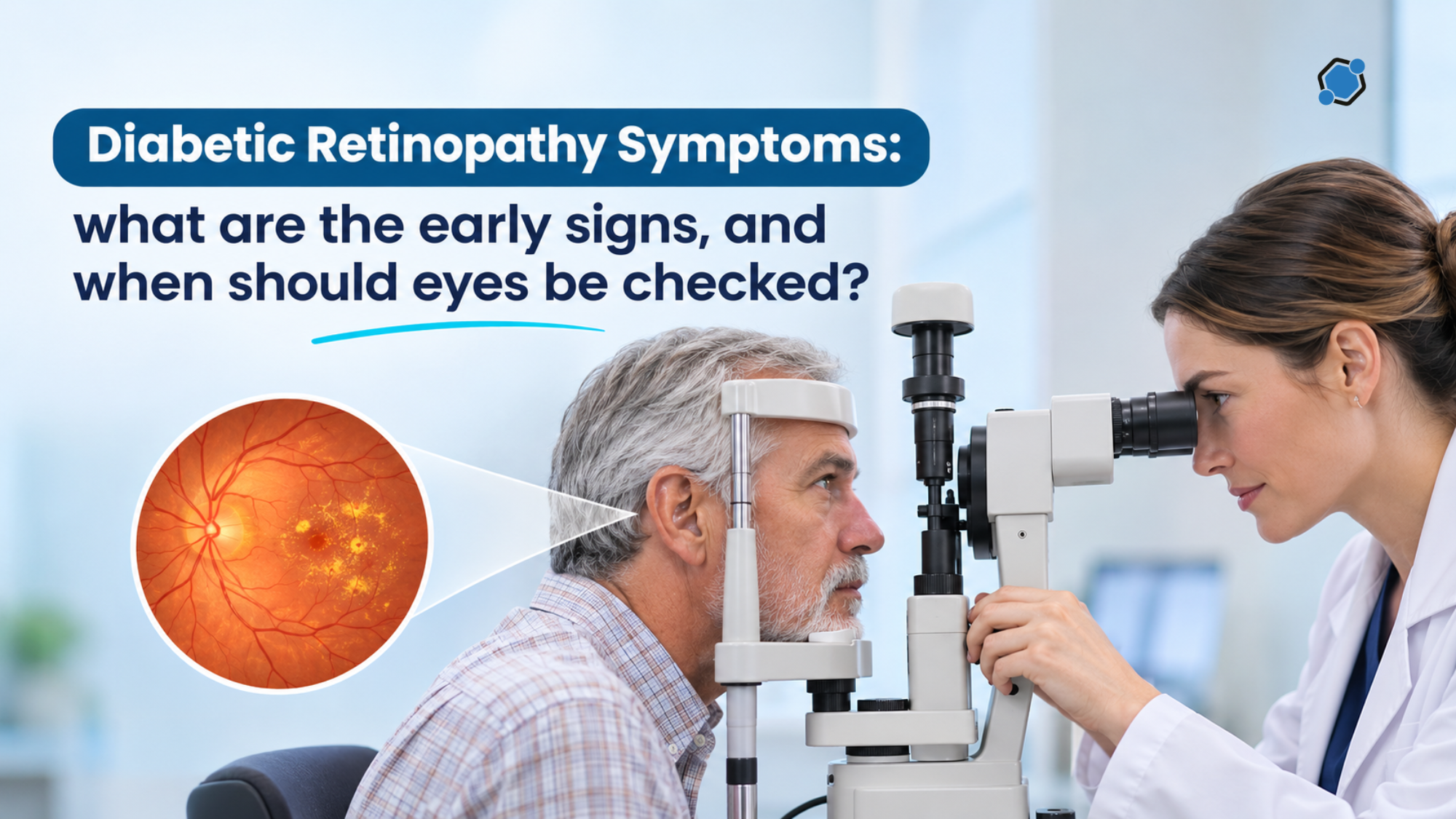
Diabetic retinopathy symptoms usually appear only after the eye damage is well underway. Early on, the condition causes no pain and no blurring, even as high blood sugar harms tiny blood vessels at the back of the eye. It is the most common diabetic eye disease and a leading cause of new blindness in working-age adults in the United States. Most of that vision loss can be prevented when the disease is found early and treated on time.
What is diabetic retinopathy, and how does diabetes damage the eyes?
The retina is a thin layer of light-sensitive tissue that lines the back of the eye. It works like the sensor in a camera, turning light into signals that the optic nerve carries to the brain. At its center sits the macula, a small area that provides the sharp central vision used for reading, driving, and recognizing faces.
The retina is fed by very small blood vessels called capillaries. When blood sugar stays high for years, their walls weaken, much like garden hoses wearing thin: some bulge, some leak, and some clog shut. The HbA1c blood test tracks this long-term average, which is why it is closely tied to eye risk.
As vessels close off, parts of the retina stop getting enough oxygen. The starved tissue releases a signal called vascular endothelial growth factor (VEGF), which tells the eye to grow new vessels. These new vessels are fragile. They can bleed, form scar tissue, and make leaks worse, which is why many eye treatments are designed to block VEGF.
Non-proliferative diabetic retinopathy
The earlier stages are called non-proliferative diabetic retinopathy (NPDR), which means new vessels have not yet started to grow. In mild NPDR, tiny balloon-like bulges called microaneurysms appear in vessel walls. In moderate NPDR, small bleeds and other signs of vessel stress spread. In severe NPDR, large areas of the retina are short on blood flow, and the risk of reaching the advanced stage rises sharply.
Proliferative diabetic retinopathy
Proliferative diabetic retinopathy (PDR) is the advanced stage, when abnormal new vessels grow on the retina or the optic nerve. They can bleed into the vitreous, the clear gel that fills the eye. Scar tissue that forms with them can pull the retina away from the back of the eye, which is called tractional retinal detachment. New vessels can also block the eye’s drainage and raise eye pressure, causing a form of glaucoma.
Diabetic macular edema
Diabetic macular edema (DME) is swelling of the macula caused by fluid leaking from damaged vessels. It can develop at any stage and is a common cause of blurry central vision in people with diabetes.
What are the symptoms of diabetic retinopathy?
In its early stages, diabetic retinopathy usually has no symptoms at all. Damage often begins away from the center of vision, and the brain fills in small gaps, so sight can stay clear even as serious changes build. Diabetes itself can stay hidden in the same way, since many early signs of type 2 diabetes are easy to dismiss. Some people already have eye changes when they are first diagnosed.
As the disease progresses, symptoms may include:
- Blurry or wavy central vision, often linked to swelling of the macula
- Vision that changes or fluctuates from day to day
- Floaters, which look like dark spots, strings, or cobwebs drifting across the field of vision
- Dark, blank, or empty areas in vision
- Trouble reading or seeing distant objects
- Colors that look faded or washed out
- Sudden loss of vision
Blurry vision in someone with diabetes is not always retinopathy. Large swings in blood sugar can briefly change the shape of the eye’s lens, and that kind of blurring often settles once glucose levels stabilize. Only an eye exam can tell the two apart.
When symptoms call for urgent care
Some changes need same-day care from an eye doctor or an emergency department. These include a sudden shower of new floaters, a shadow or curtain over part of the vision, sudden vision loss, and eye pain with redness and vision changes. These signs can point to bleeding in the eye, retinal detachment, or a sharp rise in eye pressure. Spots that clear on their own still need a prompt check.
Who is most at risk for diabetic eye damage?
Anyone with diabetes can develop diabetic retinopathy. Over time, more than half of people with diabetes develop some degree of it, and roughly one in four Americans with diabetes have it at any given point. Risk depends on several factors:
- Length of time with diabetes, which is the strongest single predictor
- Long-term blood sugar levels, with no safe point above the normal range at which the risk disappears
- High blood pressure, which adds strain to vessels that are already damaged
- High cholesterol and other blood fat problems, which are linked to more leakage
- Kidney disease, since eye and kidney damage often occur together
- Pregnancy and puberty, both of which can speed up existing retinopathy
Because high blood pressure often causes no symptoms, regular checks protect the eyes as well as the heart.
Diabetic retinopathy, including its sight-threatening forms, is more common among Black and Hispanic adults in the United States. Differences in access to eye care, diabetes rates, and blood pressure control all play a part, and lower screening rates mean the disease is more often found late.
How is diabetic retinopathy diagnosed and treated?
Screening is the main defense, because the disease is easiest to treat before vision changes begin. Current U.S. diabetes care guidelines recommend:
- For type 1 diabetes, a first dilated eye exam within five years after diabetes begins
- For type 2 diabetes, a first dilated eye exam at the time of diagnosis
- After that, an exam every year, or every one to two years if past exams were normal and blood sugar is at goal, with more frequent exams if retinopathy is present
- For people with type 1 or type 2 diabetes who become pregnant, an exam before pregnancy or early in the first trimester, with closer follow-up
The different starting points reflect how type 1 and type 2 diabetes differ. Eye damage usually takes years to appear after type 1 begins. Type 2 diabetes can be present for years before diagnosis, so eye changes may already exist on day one. Even so, about one in three adults with diabetes skip their yearly eye exam.
Tests used to check the retina
A dilated eye exam uses drops to widen the pupil so the eye doctor can see the retina. It is painless, though vision stays blurry and light-sensitive for a few hours. Some primary care clinics take retinal photos, sometimes read within minutes by AI software authorized by U.S. regulators. These tools flag who needs a specialist but do not replace a full exam.
Two more tests are common when retinopathy is suspected. Optical coherence tomography (OCT) is a quick, no-contact light scan that shows the retina in cross-section and measures macular swelling. Fluorescein angiography tracks a dye injected into an arm vein as it flows through the retina, showing leaks and blocked areas.
Treatment options
Early on, treatment usually means close monitoring plus steady care for blood sugar, blood pressure, and cholesterol. When vision is threatened, the main options are:
- Anti-VEGF injections, which block the signal behind leaking and abnormal vessel growth. A very fine needle places the medicine in the numbed eye, often every few weeks at first.
- Steroid implants, which slowly release anti-inflammatory medicine when swelling persists. They can raise eye pressure and speed up cataracts.
- Laser treatment, which seals leaks or calms abnormal vessel growth. Laser to the outer retina can reduce side and night vision.
- Vitrectomy, a surgery that removes blood and scar tissue from inside the eye.
In 2025, a refillable implant that releases anti-VEGF medicine over several months was also approved for some people who already respond to injections. These treatments can slow or stop vision loss, and many people regain some sight. Results vary, and long-standing damage may be permanent. Missed treatment visits are linked to worse outcomes, so keeping the schedule matters.
Protecting the eyes over time
Large long-term studies show that better blood sugar control lowers the chance of retinopathy and slows it once it starts, with lasting benefits. Blood pressure control has also slowed progression in type 2 diabetes. A recent trial found that a cholesterol medicine from the fibrate class may slow early retinopathy.
When blood sugar falls very fast, retinopathy can briefly worsen before the long-term benefit appears. This has been studied with newer medicines such as GLP-1 receptor agonists. Large reviews have not found a clear overall rise in risk, but guidelines advise an eye check when treatment is stepped up, especially for people who already have retinopathy. No medicine should be stopped without talking to the prescribing clinician.
Where diabetic retinopathy research is heading
Most treatment today starts only once vision is threatened, and many people need injections for years. Trials are testing longer-lasting injections, implants that release medicine steadily, and gene therapies meant to help the eye make its own anti-VEGF protein. Other studies are testing pills and eye drops, including options for earlier stages.
Many investigational treatments do not succeed, and early promise is not a guarantee. Participation has also been uneven. Black, Hispanic, and Asian patients have been underrepresented in U.S. trials for diabetic macular edema, which limits how well results apply to everyone.
Joining a study is voluntary, and trials carry unknown risks as well as possible benefits. For people weighing the decision, knowing what happens at a first screening visit can make the process more predictable.
DecenTrialz helps adults with diabetes find clinical studies that may fit their health history. A person shares some information about their health, AI matching identifies studies that may be relevant, and a registered nurse reviews the information before any referral goes to a research site team. Nurse review adds a human check that software alone can miss.
Final eligibility determination, informed consent, the study walk-through, and enrollment remain with the authorized research site and study team.
DecenTrialz is not an eye care provider and does not diagnose or treat diabetic retinopathy.
Frequently asked questions about diabetic retinopathy
Can diabetic retinopathy be reversed?
Established damage generally cannot be undone. Some early changes and macular swelling can improve with treatment, and many people regain some vision after anti-VEGF injections. Results vary, so the main goal is to find the disease before vision is affected.
Can retinopathy develop when blood sugar is well controlled?
Yes. Good control lowers the risk a great deal but does not remove it. Years with diabetes, blood pressure, and cholesterol also matter, so yearly exams are still needed.
Does diabetic retinopathy affect both eyes?
It usually affects both eyes, because diabetes affects blood vessels throughout the body. Severity can differ between the two eyes, which is one reason both are examined.
How is it different from cataracts and glaucoma?
Diabetic retinopathy damages blood vessels in the retina at the back of the eye. A cataract is clouding of the lens at the front of the eye, and glaucoma is damage to the optic nerve, often linked to pressure inside the eye. Diabetes raises the risk of all three, and a person can have more than one.
Why a yearly eye exam protects vision
Diabetic retinopathy develops quietly, and by the time symptoms appear, the damage is often advanced. A dilated eye exam can find changes years before they affect sight, when treatment tends to work best. For adults with diabetes, a yearly eye exam is the most useful single step.
Sudden floaters, a shadow over vision, or sudden vision loss call for same-day eye care. Those curious about research can explore diabetic eye disease studies through DecenTrialz, where a nurse reviews each match before any referral is made.
Was this article helpful?

Similar Blogs
World Pancreatic Cancer Day 2026: why is pancreatic cancer so hard to detect early?
Pancreatic cancer organizations from several countries first came together to mark World P...
 Deeksha Gitta

World COPD Day 2026: what is it, and how is research changing COPD care?
World COPD Day 2026 falls on Wednesday, November 18. This year’s theme, “Early Diagnosis a...
Mahesh Upadrista
Movember 2026: what should men know about prostate cancer, testicular cancer, and mental health?
Movember is an annual men's health campaign that runs every November, and in 2026 it conti...
ParamrajStay Informed. Stay Connected.
Get updates on verified clinical trials, emerging treatments, and research breakthroughs directly in your inbox. No spam, just science that matters.
