 HIPAA Compliant
 ISO 27001 Certified
National HIV/AIDS and Aging Awareness Day 2026: What Aging With HIV Looks Like Today
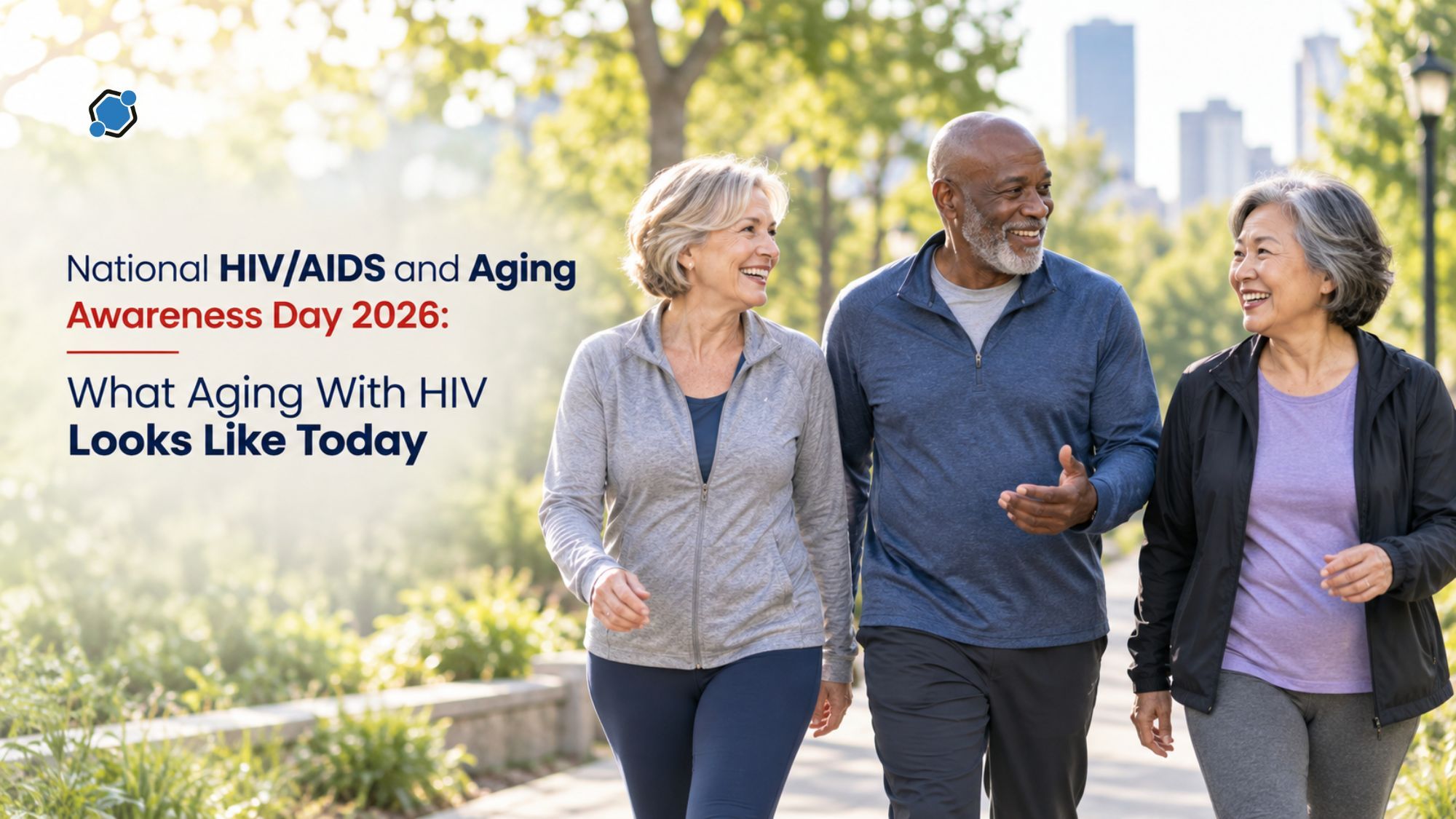
The population of people living with HIV in the United States has aged in a way few would have predicted a generation ago. More than half are now aged 50 or older, and a growing share are 65 and older. Longer life expectancy on modern medication has turned HIV into a condition people grow old with, and that shift is reshaping how the healthcare system, researchers, and communities respond.
National HIV/AIDS and Aging Awareness Day, observed on September 18, exists to keep that shift in view. It calls attention to prevention, testing, treatment, care, and research needs of adults who are aging with HIV or newly diagnosed later in life.
What is National HIV/AIDS and Aging Awareness Day?
National HIV/AIDS and Aging Awareness Day, often shortened to NHAAAD, was launched in 2008 by The AIDS Institute, a nonprofit advocacy and policy organization. Federal health agencies and community groups amplify the day each year through public education campaigns, testing events, and briefings on the intersection of HIV and aging.
The observance is deliberately broad. It covers long-term survivors, meaning people diagnosed decades ago who have lived with HIV through the introduction of modern treatment. It also covers people newly diagnosed after age 50, and HIV-negative older adults who may still benefit from prevention services. Local health departments, clinics, and community organizations use the day to schedule events, and many advocacy groups guide their community toward research participation opportunities that welcome older adults.
How HIV became a condition people grow old with
Antiretroviral therapy, usually abbreviated as ART, is a combination of daily medications that suppress HIV inside the body. When taken consistently, ART can bring the amount of virus in the blood to levels standard tests cannot detect. This state is called viral suppression, and reaching an undetectable viral load carries a well-established public health benefit: a person who maintains an undetectable level cannot sexually transmit HIV to a partner. This principle is often written as U=U, or Undetectable equals Untransmittable.
Effective treatment has changed the arc of the illness. A person diagnosed early and engaged in consistent care can now expect a life expectancy that approaches that of the general population, placing HIV alongside many other manageable chronic conditions. That is a profound change from the early years of the epidemic, when a diagnosis carried a life expectancy measured in a small number of years.
Longer life brings a new clinical picture. People with HIV appear to develop several age-related conditions earlier and more often than peers of the same age without HIV. Cardiovascular disease, reduced bone density, kidney and liver conditions, certain cancers, and cognitive changes all appear on this list. Researchers describe this pattern as accelerated or accentuated aging.
Two overlapping biological processes are commonly cited. Immunosenescence refers to the gradual decline in immune function that occurs with age. Inflammaging refers to the chronic, low-grade inflammation that also rises with age. HIV appears to push both processes along, even when the virus itself is well controlled. That does not diminish the value of consistent treatment. It does explain why aging with HIV involves more than viral suppression alone, and why coordinated care matters.
Where the care system falls short for older adults
The healthcare system has been slow to adapt to the aging of the HIV-positive population, and that lag creates several documented gaps.
Late diagnosis is one of the clearest. Older adults are disproportionately likely to be diagnosed after HIV has already progressed to an advanced stage, which complicates treatment and prolongs the window in which the virus can be transmitted. Several factors contribute. Early HIV symptoms can resemble common signs of aging or other conditions. Sexual health services are often oriented toward younger populations. The long-standing Centers for Disease Control and Prevention recommendation for routine, opt-out HIV screening in healthcare settings applies to ages 13 through 64, with no routine recommendation above that age. Many clinicians and health advocates argue that this cutoff leaves older adults behind, and older adults above 64 may need to specifically request regular HIV testing from a provider.
Prevention services show a similar pattern. Pre-exposure prophylaxis, known as PrEP, is medication taken by HIV-negative people to lower the risk of infection. It is appropriate for adults of any age who could benefit. Program data indicate that older adults who test negative and would meet the criteria are less often referred to PrEP than younger adults. Longer-acting injectable options may reduce the burden of daily pills for those who prefer that approach.
Stigma layered with ageism is another gap. Older adults living with HIV often report social isolation, mental health challenges, and difficulty finding providers who are comfortable with both HIV care and geriatric care. Long-term survivors also carry the weight of having lost peers and support networks during earlier decades of the epidemic.
What HIV and aging means for clinical research
Older adults have long been underrepresented in HIV-related clinical trials. Some exclusions are explicit, such as upper age limits. Others are indirect: eligibility criteria for kidney function, liver function, cognitive status, or specific comorbid conditions can disproportionately screen out older applicants.
Inclusion matters for practical reasons. Age changes how the body absorbs, distributes, and clears medications. Older adults tend to take more medications for other conditions, which raises the possibility of drug interactions, a challenge often described as polypharmacy. When trial evidence is drawn mostly from younger participants, the results are less informative for the population that increasingly reflects who is actually living with HIV in the United States.
Current research directions include long-acting injectable treatment and prevention, cardiovascular and bone health in people with HIV, cognitive function, frailty, immune reconstitution, and continued cure research aimed at long-term control without daily medication. Encouragingly, some newer aging-focused studies deliberately set no upper age limit and design visits, materials, and endpoints with older adults in mind.
Where DecenTrialz fits in
DecenTrialz is a platform that helps people find clinical trials that may be a fit for their health situation. A person can share information about themselves, get matched to potentially relevant studies through AI-assisted matching, and speak with a registered nurse who reviews the information and, when appropriate, sends a qualified referral to the research site team.
DecenTrialz does not run clinical trials, provide medical care, or determine final eligibility. Final eligibility determination, informed consent, study walk-through, and enrollment always belong to the authorized research site and study team.
For adults exploring what HIV and aging research looks like, the platform is one entry point among several. Community clinics, advocacy organizations, treating providers, and public trial registries also connect people to research. Readers who want to search for open studies can do so through the DecenTrialz platform and speak with a nurse about what a specific study involves.
Frequently asked questions
When is National HIV/AIDS and Aging Awareness Day observed?
It is observed each year on September 18.
Who founded National HIV/AIDS and Aging Awareness Day?
The AIDS Institute, a nonprofit advocacy and policy organization, launched the observance in 2008. Federal health agencies and community groups amplify it each year.
Does HIV affect older adults differently?
Yes. Even with well-controlled HIV, older adults tend to develop several age-related conditions earlier and more often than peers without HIV. Coordinated care that addresses both HIV and other chronic conditions is generally recommended.
Should older adults still get tested for HIV?
Testing remains appropriate at any age. Because the routine screening recommendation currently applies through age 64, adults above that age may need to ask a provider directly about testing and about prevention options such as PrEP.
Was this article helpful?

Similar Blogs

Prediabetes symptoms: what the early signs are and how prediabetes is reversed
Prediabetes means blood sugar is higher than normal, but not yet high enough to be called ...
 Deeksha Gitta
World Alzheimer's Month 2026: What Clinical Research Means for the Future of Alzheimer's Care
Every September, Alzheimer's Disease International leads World Alzheimer's Month, a global...
 Anish Teepireddy
World Sepsis Day: What Are the Warning Signs of Sepsis, and How Is Research Changing Care?
Sepsis is not the infection itself. It is the body's overwhelming and self-damaging respon...
Swaroop ESDStay Informed. Stay Connected.
Get updates on verified clinical trials, emerging treatments, and research breakthroughs directly in your inbox. No spam, just science that matters.
