 HIPAA Compliant
 ISO 27001 Certified

Thanksgiving health facts: what does science say about the holiday meal?
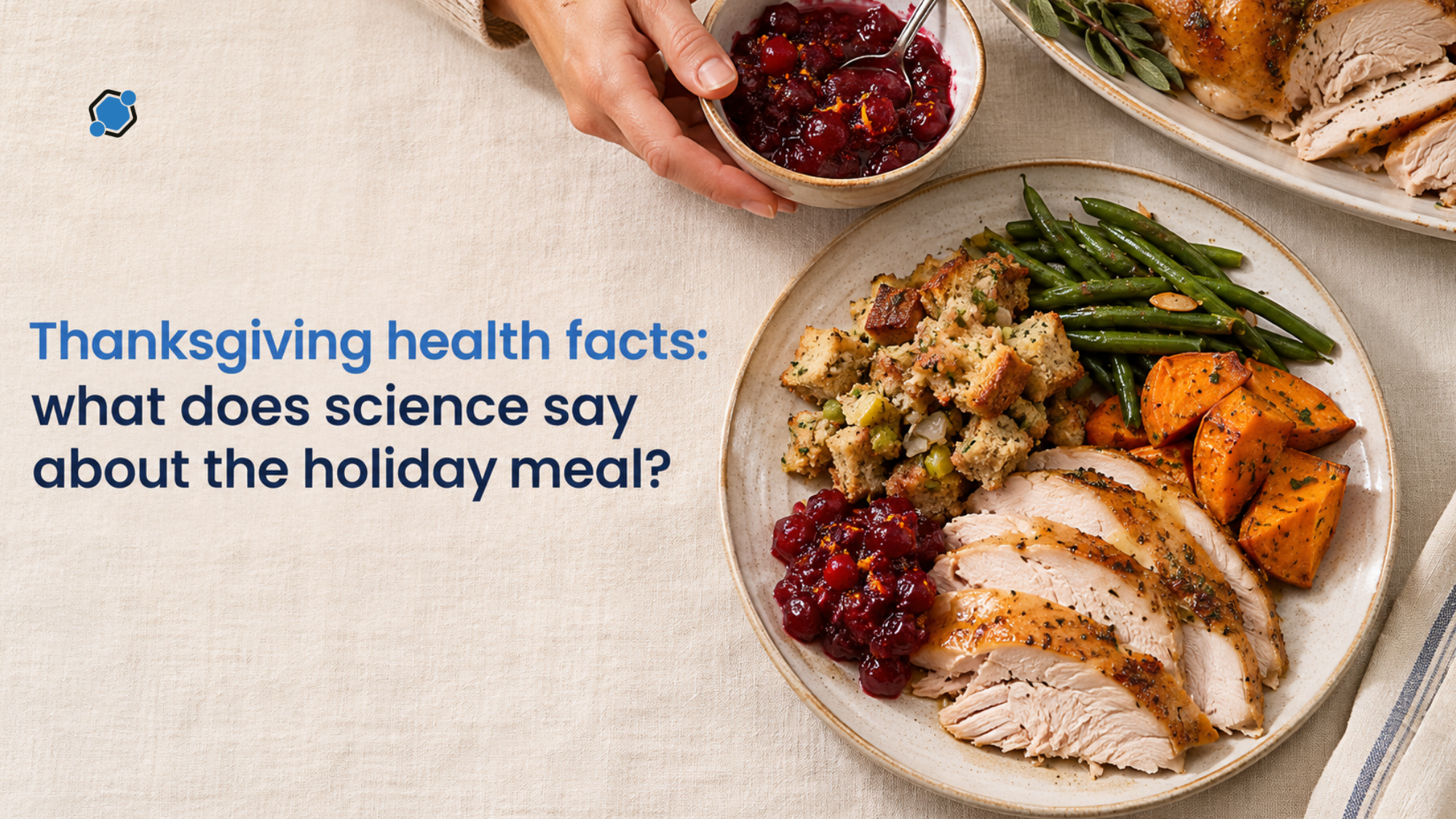
Thanksgiving comes with its own set of health beliefs. Turkey makes people sleepy, one big meal adds several pounds, and washing the turkey makes it safer. Some of these ideas are true, some are partly true, and some are simply myths.
Thanksgiving 2026 falls on Thursday, November 26. This article looks at common Thanksgiving health facts and myths and explains what research actually shows. It covers the meal, salt and heart health, food and kitchen safety, traditional foods, and gratitude and family.
Does the Thanksgiving meal really make you sleepy and gain weight?
Myth: turkey makes people sleepy
Turkey contains tryptophan, an amino acid. The body uses it to make serotonin and melatonin, two chemicals involved in mood and sleep. That is where the belief comes from. However, chicken and many other protein foods contain similar amounts of tryptophan, and no one blames a chicken dinner for an afternoon nap.
Other amino acids in the meal compete with tryptophan to reach the brain, so very little of it gets there. The more likely causes of drowsiness are the size of the meal, heavy side dishes and desserts, alcohol, and short sleep in the busy days before the holiday.
Fact: average holiday weight gain is smaller than most people think
Many people believe the holiday season adds 5 to 10 pounds. A study led by the National Institutes of Health followed nearly 200 adults from fall to spring. It found an average gain of about one pound. The catch is that most participants had not lost that pound by the following fall. Small gains that repeat every year may add up over time.
Fact: a short walk after the meal can help blood sugar
Research supports the tradition of a walk after dinner. A 2022 analysis of seven studies found that even two to five minutes of light walking helped blood sugar rise and fall more gently than sitting. A later review found that activity soon after eating had a greater effect than activity before the meal. This matters most for people managing diabetes or early signs of prediabetes, but a post-meal walk is a healthy habit for nearly everyone.
How do salty dishes and holiday drinking affect the heart?
Fact: many Thanksgiving dishes are high in salt
Gravy, stuffing, brined turkey, ham, and many packaged side dishes contain a large amount of sodium. Salt causes the body to hold on to extra fluid, which can raise blood pressure. For most healthy adults, one salty meal causes only a short-term change. For people with high blood pressure, heart failure, or kidney disease, a very salty meal can be different. It can cause swelling, shortness of breath, or other symptoms that need attention.
Understanding what blood pressure numbers mean makes it easier to follow a care plan through the holiday. Taking regular medications on schedule, even while traveling, is one of the simplest ways to stay on track.
Fact: heavy drinking can trigger an irregular heartbeat
Doctors first described "holiday heart syndrome" in 1978. It refers to an irregular heart rhythm, most often atrial fibrillation, that can follow a bout of heavy drinking. In atrial fibrillation, the upper chambers of the heart beat irregularly. This can cause a racing or fluttering heartbeat, dizziness, or shortness of breath.
The name is a little misleading, because the risk exists any time of year. It simply becomes more common during the holidays, when alcohol use rises. Chest pain, a racing heartbeat that does not settle, or fainting calls for immediate medical care.
What are the most important Thanksgiving food and kitchen safety facts?
Thanksgiving involves more home cooking than almost any other day of the year, so food and kitchen safety deserve attention. Federal food safety guidance addresses several common beliefs.
Myth: washing the turkey makes it cleaner
Rinsing raw poultry does not remove bacteria. Instead, it can splash bacteria onto sinks, counters, and nearby food. In a federal food safety study, about one in four participants who washed raw poultry spread bacteria to salad lettuce prepared afterward. Cooking the turkey to a safe temperature is what kills harmful bacteria.
Fact: temperature and timing matter more than appearance
- Thaw a frozen turkey in the refrigerator, allowing about one day for every 4 to 5 pounds.
- Cook turkey to 165°F, checked with a food thermometer in the thickest part of the breast, the innermost part of the wing, and the innermost part of the thigh.
- Cook stuffing in a separate dish for the safest result. Stuffing cooked inside the bird must also reach 165°F.
- Refrigerate leftovers within two hours of serving, and eat or freeze them within about four days.
Food poisoning can be more serious for young children, pregnant people, people with weakened immune systems, and older adults. Their bodies may have a harder time fighting infection. Hosts cooking for grandparents may want to consider the health needs of older adults when planning the meal.
Fact: Thanksgiving is the peak day for home cooking fires
Fire safety data show that Thanksgiving is the leading day of the year for home cooking fires, with more than three times the usual daily number. Unattended cooking is the most common cause. Staying in the kitchen while frying, boiling, or broiling and keeping a lid nearby to smother a small pan fire are simple precautions.
What does research say about traditional Thanksgiving foods?
Fact: cranberries have been tested in clinical trials
Cranberries have long been linked to urinary tract health, and this belief has actually been tested. A 2023 review by an independent international research network combined 50 randomized clinical trials involving nearly 9,000 people. It found that cranberry juice or capsules probably lower the risk of repeat urinary tract infections in some groups. These include women who get them often, children, and people who have had certain bladder procedures.
The same review found little or no benefit for older adults living in care facilities or for pregnant women. That difference shows why trials need many kinds of participants. Results from one group cannot always be applied to another. Most of the evidence for the benefit came from women, a group whose participation in clinical trials has long been a research priority.
Cranberry products are studied for prevention, not as a treatment for an active infection. Anyone with symptoms of a urinary tract infection should see a doctor.
Myth: cranberry sauce is a health food
Cranberries themselves are tart and low in sugar, but most cranberry sauces contain a lot of added sugar to balance that tartness. The sauce can still be part of the meal. It is simply closer to a dessert than a serving of fruit.
Fact: many classic sides are naturally nutritious
Pumpkin and sweet potatoes are rich in beta-carotene, which the body uses to make vitamin A, along with fiber and potassium. Green beans and other vegetables add fiber. Much depends on how a dish is made. The same sweet potatoes can be a simple roasted side or a casserole topped with butter, sugar, and marshmallows.
Can gratitude and family time affect health?
Fact: gratitude has been studied in controlled experiments
Gratitude is the center of Thanksgiving, and researchers have tested it. In a well-known set of 2003 experiments, people were randomly assigned to write down either things they were grateful for or daily hassles. The gratitude groups reported more positive mood and optimism, and in some experiments, more exercise and better sleep.
Later research added important context. Repeat studies found only some of the original effects, and a large 2025 review of gratitude studies from many countries found a real but modest benefit to well-being. Gratitude is not a treatment for any condition, but it appears to be a healthy habit worth keeping.
Fact: Thanksgiving is also National Family Health History Day
Since 2004, the U.S. Surgeon General has recognized Thanksgiving as National Family Health History Day. Heart disease, type 2 diabetes, some cancers, and other chronic conditions that affect many families can run in families. A few questions at the table about which conditions relatives have had, and at what age, can give each family member useful information to share with a doctor.
Frequently asked questions about Thanksgiving health facts
Why do people feel so tired after Thanksgiving dinner?
The most likely reasons are a very large meal, carbohydrate-heavy dishes, alcohol, and short sleep before the holiday. Turkey itself plays only a small role.
Is it safe to eat Thanksgiving leftovers after a week?
Federal food safety guidance recommends eating refrigerated leftovers within about four days. Leftovers can be frozen for longer storage.
Does cranberry juice cure a urinary tract infection?
No. Clinical trials have studied cranberry products for preventing repeat infections in certain groups, not for treating an active infection. Symptoms of an infection call for a visit to a doctor.
How can people with diabetes or high blood pressure enjoy Thanksgiving?
Practical steps include keeping medications on schedule, watching portions of salty and sugary dishes, drinking water, and taking a short walk after the meal. Questions about a specific care plan are best directed to a doctor or dietitian.
Is holiday heart syndrome dangerous?
It can be. An irregular heartbeat after heavy drinking may pass on its own, but it can also raise the risk of complications such as stroke. Chest pain, a racing heartbeat that does not settle, or fainting requires immediate medical care.
Separating holiday facts from holiday folklore
Many Thanksgiving health beliefs have been tested, and the results are often more useful than the myths. A walk after dinner, a food thermometer, attention to salt, and a few questions about family health can all make the holiday a little healthier.
Much of what is known about health, from cranberries to blood sugar, comes from studies that relied on volunteers. People curious about how clinical research works, or whether a study may be a fit for them, can learn more at decentrialz.com. DecenTrialz helps people find studies that may match their health profile, with a registered nurse reviewing information before any referral. The research site team makes all final decisions about eligibility, informed consent, and enrollment.
Was this article helpful?

Similar Blogs
Blood pressure and stroke risk: how much does lowering it help?
Blood pressure and stroke risk rise together, and the link starts well below the readings ...
 Vamshi Kantoju

Patient-reported outcomes in clinical trials: how are your answers used?
Patient-reported outcomes in clinical trials are measurements that come directly from part...
 Anish Teepireddy
Normal blood sugar levels: what is normal when fasting and after eating?
Most people think about blood sugar only when a lab report flags a number in bold. For adu...
Deeksha GittaStay Informed. Stay Connected.
Get updates on verified clinical trials, emerging treatments, and research breakthroughs directly in your inbox. No spam, just science that matters.
