 HIPAA Compliant
 ISO 27001 Certified

Who pays for clinical trial costs, from travel to medical care?
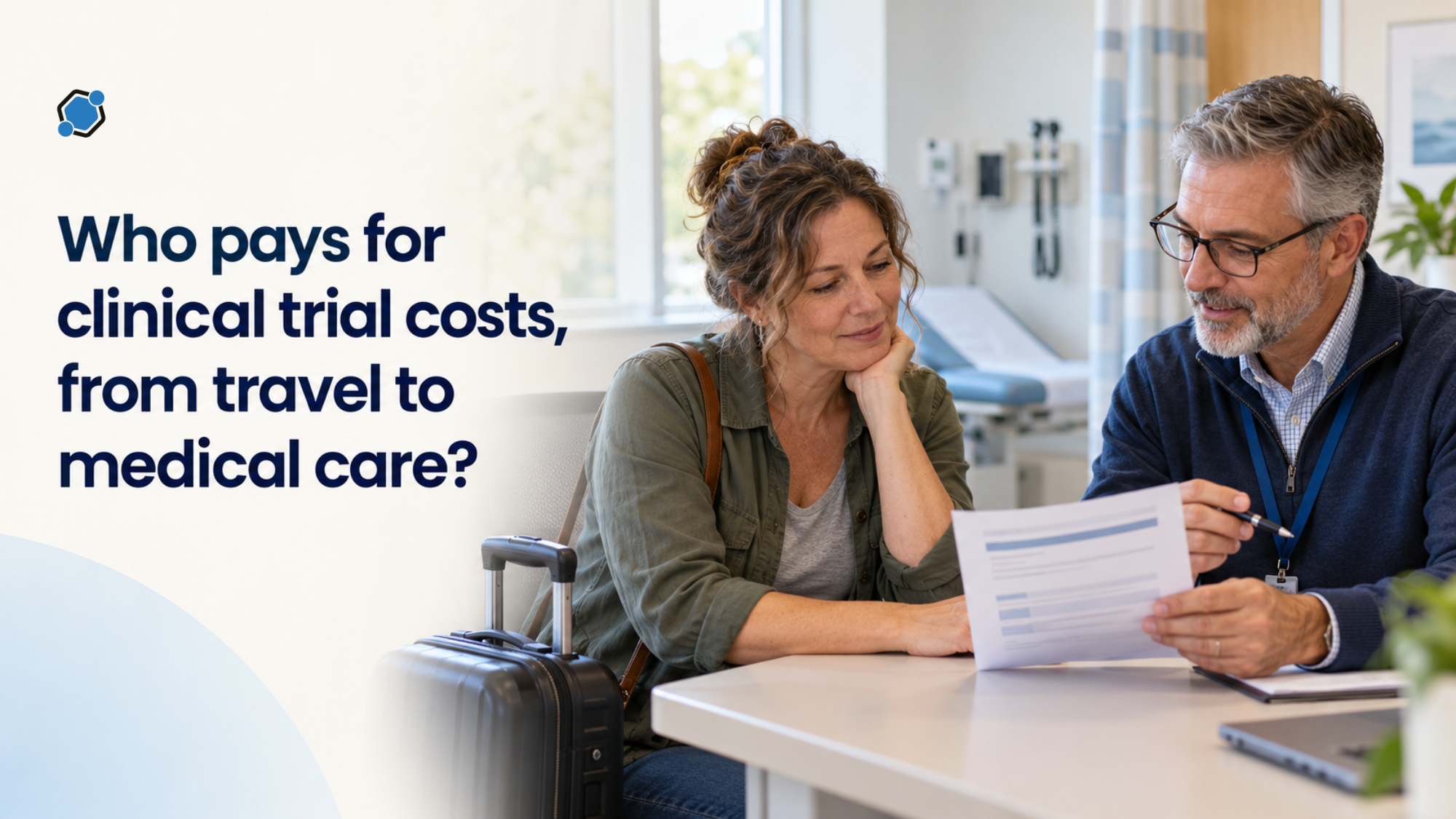
Clinical trial costs fall into more than one category, and each category is handled differently. The study sponsor usually pays for the study drug and for tests done only for research. Health insurance usually pays for routine care a person would receive anyway. Travel, hotel stays, meals, and parking sit in a third category: many studies reimburse them, but no federal law requires it.
For anyone considering research, this distinction matters before the first appointment. A participant who lives an hour from the study site, or who needs a family member to come along, may face real expenses over months of visits. Knowing who pays for what, and where that information appears in writing, makes the decision clearer.
Reimbursement, compensation, and medical costs are three different things
Clinical research uses specific terms for money, and they are easy to confuse.
- Reimbursement pays a participant back for real out-of-pocket expenses caused by the study, such as mileage, parking, bus fare, airfare, hotel stays, or meals.
- Compensation is payment for time, effort, and inconvenience, often a set amount per visit. It is sometimes called a stipend.
- Medical and research costs cover the care itself. The sponsor (the company, government agency, or academic institution that funds the study) typically pays for the study drug and research-only procedures, while insurance is billed for routine care.
The difference has practical effects. Reimbursement returns a participant to where they started financially. Compensation is a payment, so it can count as income. The two are also reviewed differently by the institutional review board (IRB), the independent committee that approves and oversees research to protect participants.
The U.S. Food and Drug Administration (FDA) has stated that reimbursing travel and associated costs such as airfare, parking, and lodging does not raise concerns about undue influence, meaning pressure that could cloud someone’s judgment about the risks of a study. Compensation receives closer review. The IRB checks that the amount and schedule are fair and not so large that they push someone into participating.
Cost questions often begin before enrollment. Many studies start with one or more appointments to confirm whether a person qualifies, so it is worth knowing what happens at a screening visit and asking whether travel to those visits is reimbursed as well.
Which travel and lodging costs do clinical trials usually reimburse?
Travel support varies by study, sponsor, and setting. Trials with only a few locations, including many rare disease, pediatric, cancer, and early-phase studies, are more likely to cover lodging and long-distance travel because participants often come from far away. Depending on the study, covered items may include:
- Mileage, gas, tolls, and parking for people who drive
- Public transit, taxi, or rideshare fares
- Airfare or train tickets, often booked and paid for directly by the study team
- Hotel stays for overnight or multi-day visits
- Meals, through submitted receipts or a set daily allowance
- Travel and lodging for a caregiver or companion, especially when the participant is a child or is seriously ill
- Childcare or elder care during study visits, in some studies
Lost wages are rarely reimbursed directly. When a study recognizes time away from work, it usually does so through compensation instead.
Payment methods differ as well. Some studies book flights and hotels in advance, so the participant pays nothing upfront. Others load a prepaid debit card after each visit, issue checks, or reimburse submitted receipts and mileage logs. No national standard sets how quickly reimbursement must arrive, so the expected timeline is worth getting in writing.
Some studies reduce the need for travel altogether. FDA guidance finalized in 2024 supports trial designs that replace some trips to the main site with telehealth appointments, visits with local health care providers, and home nursing visits. Research on participant experience consistently identifies travel as one of the most common burdens of joining a study, and programs that cover travel and lodging have been linked to higher enrollment among people who live farther away or have lower incomes. Most of that evidence comes from cancer studies.
Which clinical trial costs does health insurance cover?
Federal law protects coverage of routine care in many trials. Routine care, also called standard of care, means the doctor visits, tests, and care a person would receive even outside the study, along with care for complications.
- Private insurance: Under the Affordable Care Act, most private health plans must cover routine costs for people in approved clinical trials for cancer or other life-threatening conditions. Plans also may not deny coverage or discriminate against someone for taking part. Older “grandfathered” plans that existed before March 2010 and have not changed significantly are exempt.
- Medicare: Medicare has covered routine costs in qualifying trials since 2000, including care for complications.
- Medicaid: Since January 1, 2022, federal law has required every state Medicaid program to cover routine costs for enrollees in qualifying trials for serious or life-threatening conditions, including trials located in other states.
Medicare coverage matters for older adults considering clinical research, since many conditions under study become more common with age.
These protections have limits. They generally do not require insurers to pay for the investigational product itself (the drug or device being studied) or for tests done only to collect research data. Normal copays, deductibles, and network rules may still apply.
Insurance also generally does not pay for travel or hotel stays to reach a study. Coverage rules focus on medical care, which is why travel support depends on the individual study budget. The line between routine and research costs is not always clear, and participants sometimes receive bills for tests they expected the sponsor to pay. Reviewing a written billing plan with the study team or the site’s financial counselor before enrollment helps prevent surprises.
How trial payments can affect taxes and public benefits
Money from a study can have effects beyond the study itself. This section provides general information, not tax, legal, or benefits advice.
Reimbursement for documented expenses is generally not treated as taxable income. Compensation for time and effort generally is, which is why some study teams ask for a Social Security number before paying it. For payments made in 2026, the amount at which a payer must issue an IRS Form 1099 rose from $600 to $2,000 under federal legislation passed in 2025. That threshold controls paperwork only. Taxable compensation below $2,000 is still taxable.
Payments can also affect means-tested benefits, which are programs such as Supplemental Security Income (SSI) and Medicaid that have income limits. Federal law excludes the first $2,000 per year of compensation from trials studying rare diseases when calculating SSI and Medicaid eligibility, and this exclusion was made permanent in 2015. Compensation from other trials, and other benefit programs, follow their own rules. For people living with uncommon conditions, finding trials for rare diseases may bring this exclusion into play.
Several bills introduced in Congress would make it easier for sponsors to cover travel and meals, or would exclude more trial payments from income. As of October 2026, none had become law. Federal health officials also requested public input in 2026 on rules that affect how sponsors can support Medicare and Medicaid enrollees. Anyone receiving benefits should speak with a benefits counselor before accepting compensation.
Questions to ask about costs before joining a study
The informed consent document is the main written source for cost information. FDA expects payment amounts and schedules to appear there, and consent forms for studies with more than minimal risk must explain whether medical care or compensation is available if a study-related injury occurs. A basic understanding of reading an informed consent form makes these sections easier to find. Useful questions for the study coordinator include:
- Which travel costs are covered, and is mileage paid at a set rate?
- Is lodging covered, and for how many nights?
- Are meals, childcare, or a caregiver’s travel covered?
- Will the study book travel in advance, or must costs be paid first and reimbursed later?
- How is reimbursement paid, and how long does it usually take?
- What receipts or records are required?
- Is compensation offered for time, and on what schedule?
- If a participant leaves the study early, are payments already earned kept?
- Which tests and visits are billed to insurance, and which are paid by the sponsor?
- Can any visits happen by telehealth, at home, or at a local clinic?
FDA guidance says payment should build up as a study progresses rather than depending entirely on finishing it. A small completion bonus is acceptable, but a participant who withdraws should not lose everything already earned. Leaving a study remains the participant’s right at any time.
Frequently asked questions about clinical trial costs
Are clinical trials free to join?
The sponsor usually pays for the study drug and research-only tests, so participants are typically not charged for those. Routine care may still be billed to insurance with normal copays and deductibles, and travel may or may not be reimbursed. The consent form describes the arrangements for each specific study.
Does insurance pay for travel to a clinical trial?
Generally, insurance pays for medical care rather than travel. When travel and lodging support is offered, it comes from the study budget.
Is clinical trial reimbursement taxable?
Reimbursement for documented expenses is generally not taxable, while compensation for time and effort generally is. A tax professional can advise on individual situations.
Can a caregiver’s travel be covered?
Some studies cover travel and lodging for a parent, caregiver, or companion, particularly pediatric studies and studies involving serious illness. Coverage is not automatic, so it is worth asking directly before enrolling.
Will joining a trial affect SSI or Medicaid?
It can. Up to $2,000 per year of compensation from rare disease trials is excluded from SSI and Medicaid income counts. Other payments may count as income, so a benefits counselor should review the details first.
Getting clear answers on costs before the first visit
Cost arrangements are set study by study, and the details belong in writing before enrollment. Reviewing reimbursement, compensation, and insurance billing early helps a participant plan for months of visits and avoid unexpected expenses.
DecenTrialz is a platform that helps people find clinical studies that may be a fit. A person shares some basic information about their health, AI-assisted matching looks for relevant studies, and a registered nurse reviews the information and explains what comes next. If a study looks like a possible match, a referral goes to the research site team, which can answer specific questions about travel, reimbursement, and billing for that study.
Final eligibility determination, informed consent, the study walk-through, and enrollment remain with the authorized research site and study team.
DecenTrialz does not set, pay, or guarantee reimbursement or compensation. Those terms come from each study’s sponsor and site. People interested in exploring research opportunities can start at decentrialz.com.
Was this article helpful?

Similar Blogs

High blood pressure and stroke: how does hypertension harm the brain?
High blood pressure is the leading stroke risk factor that people can change. Over years, ...
 Vamshi Kantoju
Mammogram vs ultrasound vs MRI: which breast test is best, and when?
...
Swaroop ESD
Obesity and joint pain: why knees, hips, and even hands feel the strain
Knee pain on the stairs, a stiff hip after a long drive, and aching finger joints in the m...
Deeksha GittaStay Informed. Stay Connected.
Get updates on verified clinical trials, emerging treatments, and research breakthroughs directly in your inbox. No spam, just science that matters.
