 HIPAA Compliant
 ISO 27001 Certified

International Men's Day 2026: what is it, and how can research improve men's health?
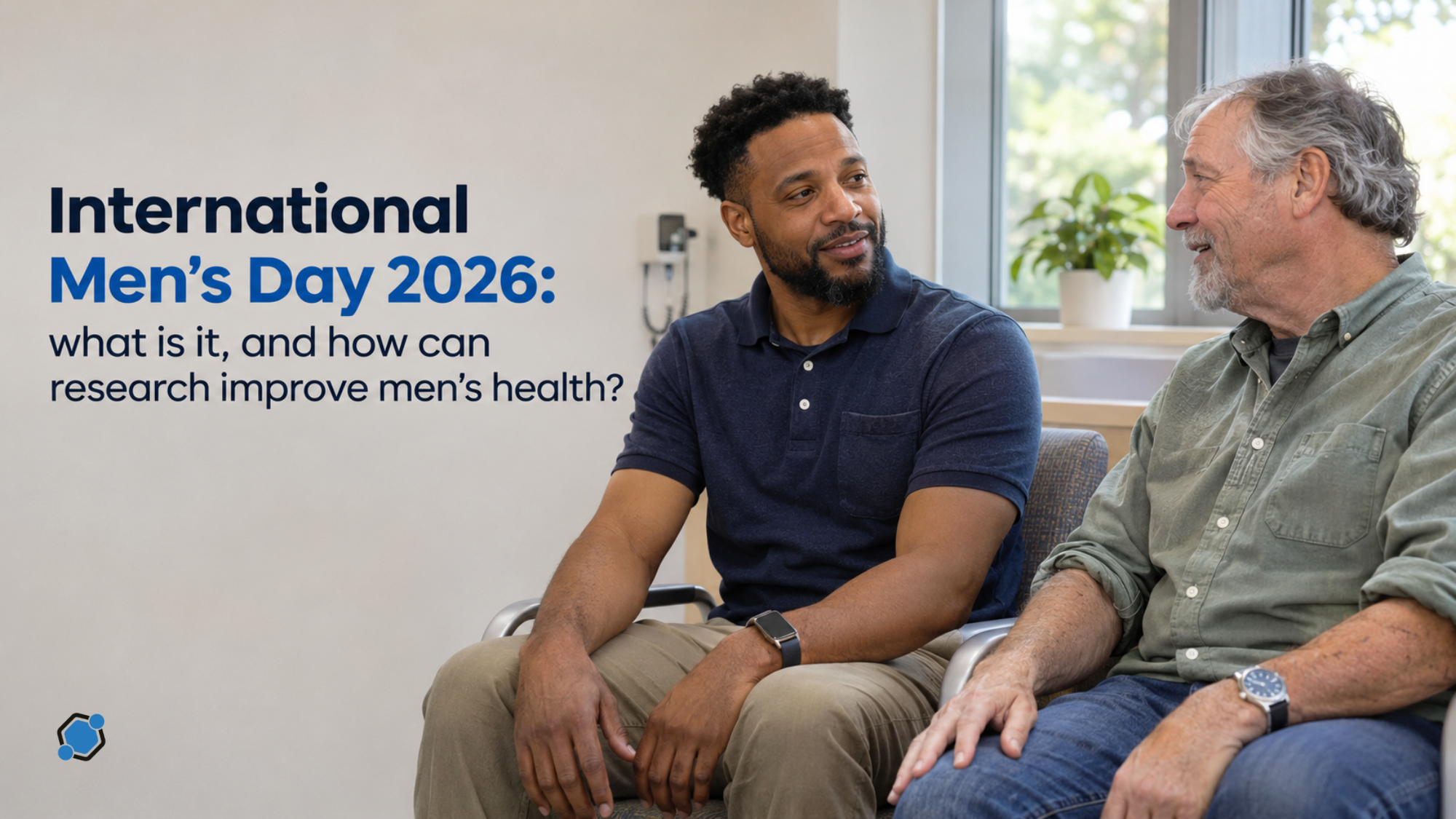
International Men's Day 2026 falls on Thursday, November 19. The observance recognizes the contributions of men and boys and draws attention to their health and wellbeing, a focus with strong support in the data. Men in the United States live nearly five years less than women on average, a gap that reflects patterns in heart disease, injury, mental health, and how consistently men connect with routine care.
This article explains what International Men's Day is, what current health data show, and where clinical research fits in efforts to close that gap.
What is International Men's Day?
International Men's Day is an annual observance held every November 19 and marked in many countries. The modern observance began in 1999 in Trinidad and Tobago. It was started by a university history lecturer who chose the date to honor his father's birthday. An earlier version launched in the United States in the early 1990s did not continue past the middle of that decade.
Organizers describe six objectives, often called pillars:
- Promoting positive male role models
- Celebrating men's contributions to family, community, and society
- Focusing on men's health and wellbeing, including social, emotional, and physical health
- Highlighting discrimination against men and boys
- Improving gender relations and promoting gender equality
- Helping create a safer, better world
The 2026 theme, announced by the global organizing team in March, is “The Future Is Everyone.” It emphasizes cooperation between men and women in building healthier families and communities. International Men's Day is not formally recognized by the United Nations. In 2026, its organizers began supporting a campaign to add it to the UN calendar.
Several men's health observances share the calendar, and each has a different scope. November also brings Movember, a month-long fundraising campaign focused on prostate cancer, testicular cancer, and men's mental health. In June, Men's Health Week leads into June's Men's Health Month, which centers on prevention and checkups. International Men's Day is a single day with a broader scope that covers physical health, emotional wellbeing, family, and community.
How does men's health compare in the United States?
Federal health statistics for 2024 put life expectancy at birth nearly five years lower for men than for women. The gap is not limited to the United States. Global estimates show women outliving men by about five years worldwide.
The three leading causes of death among U.S. men are heart disease, cancer, and unintentional injuries. Heart disease alone accounts for about one in four deaths among men. Many heart and blood vessel conditions develop gradually and cause no symptoms in their early stages, which is why routine checks of blood pressure, cholesterol, and blood sugar matter. Research continues to refine prevention and treatment, as this overview of how clinical trials help protect the heart explains.
Cancer is the second leading cause of death among men. Lung cancer causes more cancer deaths in men than any other type, and about 1 in 8 men will be diagnosed with prostate cancer during their lifetime.
Connection with routine care is part of the picture. In 2024 national survey data, roughly 1 in 8 men reported having no usual place to go for health care, about twice the share among women. A regular source of care makes it easier to keep up with screenings and to catch changes early.
Screening is one place where that connection matters. The federal preventive services panel recommends colorectal cancer screening for average-risk adults starting at age 45. For prostate cancer, it advises men aged 55 to 69 to make an individual decision about screening after discussing the benefits and harms with a clinician. Guidance differs among expert groups, so age, personal history, and family history should shape each man's screening plan.
Why do mental health and social connection matter for men?
Men die by suicide at far higher rates than women. Federal data for 2024 show that about four in five suicide deaths in the United States were among males, and the male suicide rate was nearly four times the female rate. Men aged 75 and older had the highest rate of any age group.
Treatment gaps are also clear. Among adults with a mental illness in 2024, fewer than half of men received mental health treatment, compared with roughly six in ten women. Depression in men may show up as irritability, anger, fatigue, sleep problems, or heavier alcohol use rather than sadness, which can make it easier to overlook. Regular mental health screening can help identify these symptoms earlier.
Social connection is closely tied to physical health. A 2023 federal public health advisory identified loneliness and social isolation as a serious public health concern and linked them to higher risks of heart disease, stroke, depression, and early death. In international polling from 2023 and 2024, about one in four U.S. men aged 15 to 34 reported feeling lonely for much of the previous day, compared with about one in six other U.S. adults. Patterns vary by age and survey, but the finding aligns closely with the observance's focus on wellbeing and the 2026 theme's emphasis on connection.
Where to get help now
Anyone in emotional distress or thinking about suicide can call or text 988, or chat online, to reach the 988 Suicide and Crisis Lifeline in the United States. Veterans can dial 988 and then press 1. If there is immediate danger, call 911.
Where are men missing from medical research?
Clinical trials are research studies that test whether a new medicine, device, procedure, or prevention approach is safe and effective in people. Their results shape the care doctors offer, so groups that are underrepresented in trials may later receive treatments that were less thoroughly studied in people like them.
Men have been well represented in many areas of research, but that broad picture hides specific gaps:
- Prostate cancer: Black men in the United States have higher prostate cancer incidence and death rates than other groups, yet reviews of prostate cancer trials have found that they make up only a small share of participants.
- Depression: a 2023 review of psychotherapy and behavioral depression trials found that men made up only about a quarter of participants.
- Eating disorders: a 2025 analysis of U.S. psychiatric drug trials found that men were underrepresented in eating disorder studies relative to how many men are affected.
- Osteoporosis: research on bone loss has focused largely on women, even though men also develop the condition and experience fractures.
- Breast cancer in men: fewer than 1 in 100 breast cancers occur in men, which makes the research gap in male breast cancer difficult to close.
Research on recruitment points to system-level reasons for these gaps. In one survey of Black men with prostate cancer, the most common reason for not taking part in a trial was simply never being asked. Studies have also identified limited time, travel distance, and distrust rooted in past research abuses, including the U.S. Public Health Service syphilis study at Tuskegee, which ran from 1932 to 1972.
Research protections have changed substantially since then. U.S. clinical trials are reviewed by an institutional review board (IRB), an independent committee that checks that a study's risks are reasonable and that participants' rights and safety are protected.
How can men explore clinical research?
A conversation with a primary care doctor or specialist is a practical first step. A doctor can discuss whether research fits a person's health history and help interpret study details. Useful questions for a research team include:
- What is the purpose of the study, and what will it require?
- How many visits are involved, and can any take place remotely?
- What are the possible risks and benefits?
- Are study costs covered, and is travel or time reimbursed?
- How will the study work alongside care from my own doctor?
Every study has eligibility criteria, the rules that define who can join, such as age, diagnosis, health history, and current medications. Not qualifying for a specific study is common and says nothing about a person's effort or interest. Before enrolling, each participant goes through informed consent, a process in which the research team explains the study, its risks, and its procedures, and answers questions. Participants can leave a study at any time, for any reason.
Knowing what happens at a first screening visit can make the process more predictable. For men who want help finding studies, DecenTrialz is a clinical trial recruitment and pre-screening platform. A person shares some health information, AI matching identifies studies that may be relevant, and a registered nurse reviews the information and follows up before any referral goes to a research site.
The research site team makes all decisions about eligibility, informed consent, and enrollment. DecenTrialz is not a medical provider, and placement in any specific study is never guaranteed.
Frequently asked questions about International Men's Day
When is International Men's Day 2026?
International Men's Day 2026 is on Thursday, November 19. The observance is held on November 19 every year.
Is International Men's Day the same as Movember?
No. Movember is a month-long November campaign focused on prostate cancer, testicular cancer, and mental health. International Men's Day is a single day with a broader focus on men's and boys' wellbeing, positive role models, and gender relations.
Is International Men's Day recognized by the United Nations?
No. International Men's Day is not on the official UN calendar. Its organizers are supporting a campaign for formal recognition, but that recognition has not been granted.
Does International Men's Day include boys?
Yes. The observance recognizes both men and boys, and its objectives cover wellbeing and positive role models across every stage of life.
Do men need a health condition to join a clinical trial?
Not always. Some studies, particularly prevention studies and early safety studies, enroll healthy volunteers. Others require a specific diagnosis. Each study's eligibility criteria define who can take part.
Making November 19 a starting point
International Men's Day 2026 is a reminder that men's health is shaped by everyday decisions as much as by medical advances. Scheduling an overdue checkup, asking which screenings are recommended, and checking in on a friend, brother, or father are concrete actions tied directly to the issues the day highlights.
Clinical research is part of that picture. When more men take part in studies, researchers gain evidence that better reflects the people who will use new treatments. Men interested in exploring research options can learn more at decentrialz.com and discuss any study with their doctor before deciding.
Was this article helpful?

Similar Blogs
World Pancreatic Cancer Day 2026: why is pancreatic cancer so hard to detect early?
Pancreatic cancer organizations from several countries first came together to mark World P...
 Deeksha Gitta
World COPD Day 2026: what is it, and how is research changing COPD care?
World COPD Day 2026 falls on Wednesday, November 18. This year’s theme, “Early Diagnosis a...
Mahesh Upadrista
Diabetic retinopathy symptoms: what are the early signs, and when should eyes be checked?
Diabetic retinopathy symptoms usually appear only after the eye damage is well underway. E...
Vamshi KantojuStay Informed. Stay Connected.
Get updates on verified clinical trials, emerging treatments, and research breakthroughs directly in your inbox. No spam, just science that matters.
