 HIPAA Compliant
 ISO 27001 Certified
Silent Stroke Symptoms and Long-Term Effects: Signs Adults Miss and Why They Matter
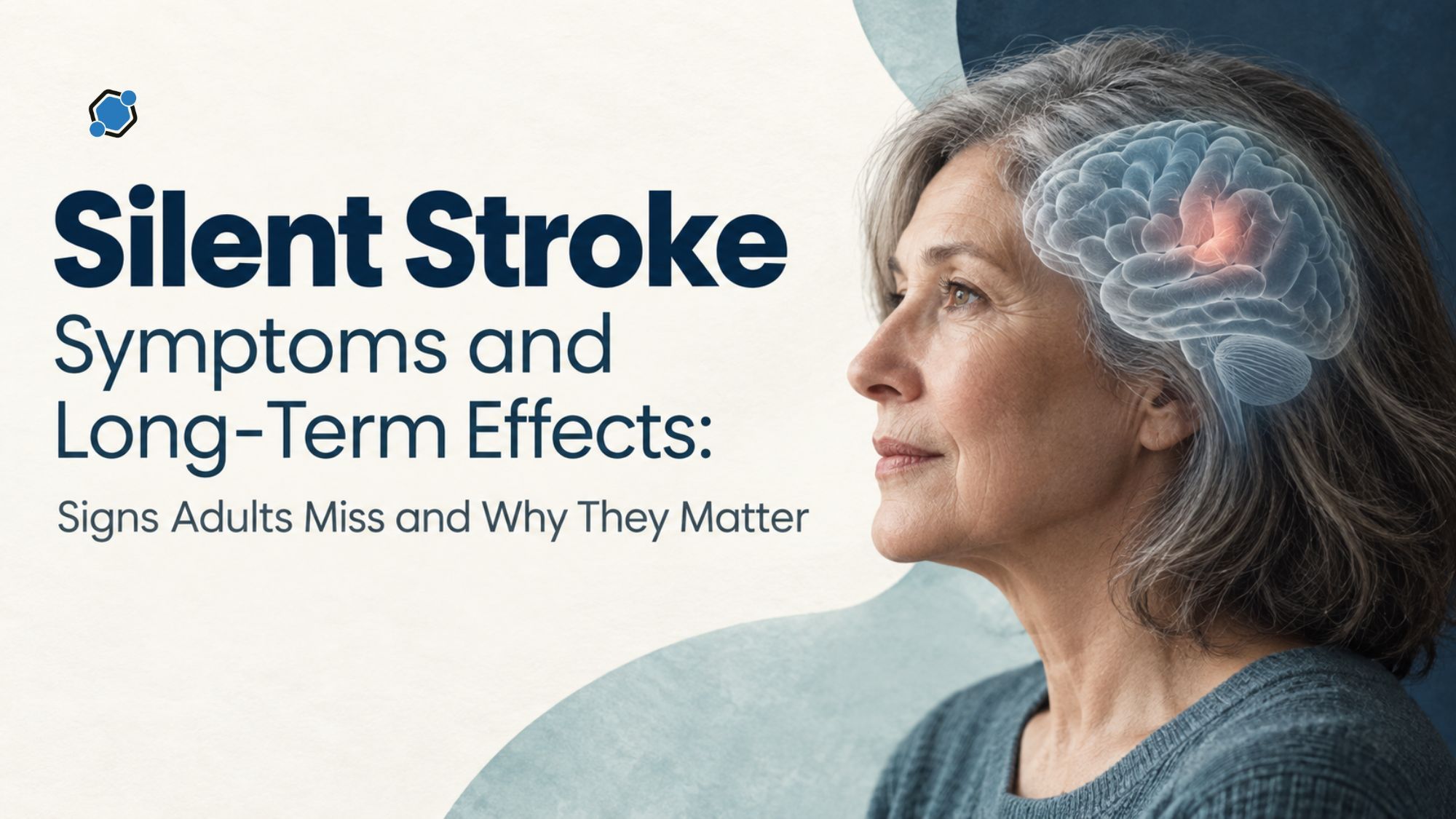
A silent stroke is a real injury to the brain caused by an interrupted blood supply, yet it produces no obvious stroke symptoms at the time it happens. With no sudden weakness, slurred speech, or facial droop to signal what has occurred, most silent strokes are discovered by accident on a brain scan ordered for another reason. Research suggests they are far more common than symptomatic strokes, and their frequency rises sharply with age.
The word "silent" is misleading. These injuries are not harmless. Over time, they can quietly contribute to memory problems, mood shifts, unsteady walking, and a substantially higher risk of both future strokes and dementia.
What a silent stroke is, in plain language
The medical term for a silent stroke is a silent cerebral infarct, sometimes called a silent brain infarct or, more recently, a covert brain infarction. The word "infarct" means an area of tissue that died because its blood supply was cut off. In a silent stroke, that loss of blood flow damages a small region of the brain, but the damaged area does not control a function that would produce noticeable symptoms right away.
Silent strokes fall under a broader category called covert cerebrovascular disease. This includes small silent infarcts, tiny areas of bleeding known as cerebral microbleeds, and patchy damage to the brain’s white matter from disease of the small blood vessels. Most silent strokes are ischemic, meaning caused by a blockage rather than a bleed.
How a silent stroke differs from an overt stroke and a TIA
An overt stroke, also called a symptomatic stroke, produces sudden, obvious signs such as face drooping, one-sided arm or leg weakness, slurred speech, or vision loss. An overt stroke is a medical emergency, and recognizing the sudden warning signs can make an enormous difference in the outcome. A silent stroke, by contrast, damages a part of the brain where the injury does not produce these classic symptoms, so it slips past unnoticed.
A transient ischemic attack, often called a mini-stroke or TIA, is different from both. In a TIA, blood flow to part of the brain is briefly interrupted and stroke-like symptoms appear and then resolve, usually within minutes. By the current definition, a TIA leaves no permanent injury visible on advanced brain imaging. The clean contrast: a TIA has symptoms but no lasting infarct, while a silent stroke has a lasting infarct but no obvious symptoms. Both are warning signs, and both matter for long-term brain health.
How common silent strokes actually are
Silent strokes are strikingly common in older adults, and they outnumber recognized strokes by a wide margin. Large population studies have consistently found them in a meaningful share of middle-aged and older adults with no history of stroke, and prevalence climbs steeply with age.
Because they cause no symptoms at the time they happen, silent strokes are usually discovered incidentally when a brain scan is ordered for another reason, such as headaches, dizziness, memory concerns, or head injury. Some groups, including children with sickle cell disease, carry a higher burden of silent cerebrovascular disease and may be screened as a result.
Subtle signs that may follow a silent stroke
By definition, a silent stroke causes no dramatic symptoms at the moment it occurs. Over months and years, however, especially when several silent strokes accumulate, subtle changes may appear that families or clinicians notice. These are easy to attribute to normal aging, which is one reason silent strokes are so often missed. The problem is a gap in awareness and detection, not a personal failing.
Commonly reported changes include memory lapses, slower thinking, and trouble with attention or planning. Mood shifts can appear as new depression, apathy, or irritability. Balance and gait can quietly deteriorate, showing up as unsteadiness, a shuffling walk, or unexplained falls. Some adults experience urinary urgency or loss of bladder control, mild coordination problems, or subtle word-finding trouble. Research on subtle symptoms in women has emphasized how easily nonclassical presentations can be dismissed, and the same principle applies here.
One rule matters above all else. Sudden symptoms are never silent. Sudden face drooping, one-sided weakness, slurred speech, vision loss, or loss of balance require calling 911 immediately. Time saves brain tissue.
The risk factors driving silent strokes
The risk factors for silent strokes overlap heavily with those for symptomatic strokes. High blood pressure, medically called hypertension, is by far the most important modifiable driver. Because hypertension often produces no obvious symptoms, many adults do not realize it is quietly damaging small blood vessels in the brain, which is why hidden blood pressure warning signs deserve attention.
Other important contributors include atrial fibrillation, an irregular heart rhythm that can send small clots to the brain, along with diabetes, high cholesterol, smoking, heavy alcohol use, chronic kidney disease, and obstructive sleep apnea. Older age, family history, and a prior overt stroke or TIA also raise the risk. Most of these factors can be measured, monitored, and to varying degrees, modified.
The long-term impact of silent strokes
Once a silent stroke has occurred, the injured tissue cannot be restored. What the finding represents, however, is a signal about vascular health and a marker of future risk that clinicians and patients can act on.
Higher risk of future overt stroke
Adults with silent brain infarcts carry a substantially higher risk of experiencing a symptomatic stroke in the years that follow. Having more than one silent infarct raises the risk further. In addition, a meaningful share of adults arriving at hospitals with a first recognized stroke are found on imaging to already have older silent infarcts. In many cases, a silent stroke is not an isolated event but part of a longer trajectory of small vessel injury that eventually produces a more dramatic one.
Cognitive decline and dementia
Silent strokes are among the leading causes of vascular cognitive impairment and vascular dementia. Population research links their presence to a steeper decline in memory and thinking, especially in adults who develop additional silent strokes over time. When vascular damage combines with the changes of Alzheimer’s disease, the result is often called mixed dementia, and the two together tend to worsen cognition more than either alone. Attention to vascular contributions to memory loss has grown in recent years for exactly this reason.
Mobility, mood, and independence
Silent strokes and the white matter damage that often accompanies them are associated with slower walking, poorer balance, greater gait variability, and a higher risk of falls. These changes can chip away at independence in older adults long before any formal diagnosis. Mood is affected too. Silent strokes in deep brain regions are linked to a form of later-life depression that shows up more as apathy and loss of interest than as sadness.
How silent strokes are diagnosed
MRI, or magnetic resonance imaging, is the primary tool for detecting silent strokes. Different MRI sequences reveal different things: recent infarcts, older lacunar infarcts, white matter damage, and tiny bleeds called microbleeds. CT scans, while useful in emergency stroke care, often miss small silent infarcts because they are less sensitive for these subtle lesions.
When silent infarcts are found, a neurologist typically reviews vascular risk factors, checks for sources such as atrial fibrillation or narrowed neck arteries, and considers the number, size, and location of the lesions to estimate future risk. Routine population screening is not currently recommended, but incidental findings should be used as an opportunity to strengthen prevention.
Prevention and management once silent stroke is on the radar
Damage from a silent stroke that has already happened cannot be reversed. The goal of management is to protect the brain from further injury and to reduce the risk of a future recognized stroke and cognitive decline. All decisions belong to the person and their clinical team, but the highest-yield levers are well established.
Blood pressure control is the single most important step. Better control may slow the accumulation of white matter damage and may reduce the risk of mild cognitive impairment. Managing atrial fibrillation, keeping diabetes and cholesterol in check, treating obstructive sleep apnea, not smoking, moderating alcohol, and staying active round out the picture. A dietary pattern rich in vegetables, fruits, whole grains, legumes, fish, and olive oil, sometimes called a Mediterranean-style diet, has also been linked to less white matter injury. Building brain-healthy habits at every age helps make these levers stick.
Outcome language matters here. These steps may help reduce the risk of future events, but they are not guarantees. Regular follow-up with a qualified clinician is central to any long-term plan.
Where clinical research fits in
Silent stroke and covert cerebrovascular disease are areas of active clinical research interest. They are common, measurable on brain imaging, and represent a possible window to prevent both stroke and dementia before they become disabling. Research categories being explored include studies of different blood pressure targets, studies of anti-clotting drug classes, lifestyle and multidomain interventions, and studies of new imaging and blood biomarkers.
For adults who meet study criteria and are interested, taking part in a relevant research study can be one option to explore with a clinician. DecenTrialz is a United States patient recruitment platform that uses AI-assisted matching and registered nurse-led pre-screening to help adults explore whether they may be a fit for studies in areas such as stroke, cognitive health, and vascular disease. DecenTrialz pre-screens only; the research site team owns final eligibility determination, informed consent, the study walk-through, and enrollment.
Frequently asked questions about silent stroke
Can a person have a stroke without knowing it?
Yes. Silent strokes cause real brain damage but produce no obvious symptoms. Most are found by chance on an MRI ordered for another reason.
If a silent stroke shows up on an MRI, does that guarantee another stroke will happen?
No. It does raise future risk on average, and having more than one silent infarct raises the risk further. The finding is best used as a reason to strengthen prevention with a clinical team.
Can silent strokes be reversed?
The existing damage cannot be reversed. The focus of care is on preventing further injury by controlling risk factors, especially blood pressure, and by supporting brain health through lifestyle and, where appropriate, medication decided with a clinician.
Should adults be screened for silent stroke?
Routine screening of the general population is not currently recommended. If new, persistent changes in memory, mood, or balance appear, or if significant vascular risk factors are present, discussing the possibility with a clinician is reasonable.
Does a silent stroke cause dementia?
Silent strokes increase the risk of vascular cognitive impairment and dementia and can combine with the changes of Alzheimer’s disease. They do not guarantee dementia, and controlling vascular risk factors may help reduce that risk.
How is a silent stroke different from a mini-stroke or TIA?
A TIA involves temporary stroke-like symptoms that resolve without lasting damage on imaging. A silent stroke leaves lasting damage but no obvious symptoms. Both signal higher long-term risk.
Which lifestyle changes matter most after a silent stroke is found?
Blood pressure control is the most important. Other high-value steps include regular physical activity, a Mediterranean-style eating pattern, not smoking, moderating alcohol, and treating obstructive sleep apnea.
Are silent strokes hereditary?
Family history contributes to overall stroke risk. Some rare genetic conditions cause small vessel disease directly, and sickle cell disease strongly increases silent stroke risk in children. For most adults, however, the main drivers are modifiable factors such as high blood pressure and diabetes.
Making sense of a quiet warning
A silent stroke rarely arrives with fanfare, which is exactly why it deserves attention. Each one is evidence that the small blood vessels of the brain have taken damage, and each one is a signal that what happens next still matters. Blood pressure control, attention to other vascular risk factors, and everyday choices about movement, food, sleep, and smoking are the tools with the strongest evidence behind them. Subtle changes from a person’s own baseline in memory, mood, or balance deserve a conversation with a clinician rather than a shrug. For those who are interested and eligible, clinical research offers another way to contribute to what is still being learned about protecting the brain over a lifetime.
Was this article helpful?

Similar Blogs

What is HbA1c and What Does It Really Tell You About Your Blood Sugar?
The HbA1c test is one of the most common blood tests ordered in the United States, yet it ...
 Vamshi Kantoju
Finding a Clinical Trial: What ClinicalTrials.gov Shows and What DecenTrialz Adds
Clinical trial participation begins with a search. For adults in the United States who wan...
Deeksha Gitta
How do clinical trial matching services work, and what should you look for in 2026?
Clinical trial matching services have moved from a small corner of the research world into...
 Anish Teepireddy
Stay Informed. Stay Connected.
Get updates on verified clinical trials, emerging treatments, and research breakthroughs directly in your inbox. No spam, just science that matters.
