 HIPAA Compliant
 ISO 27001 Certified

How does hypertension damage the heart? Signs of hypertensive heart disease
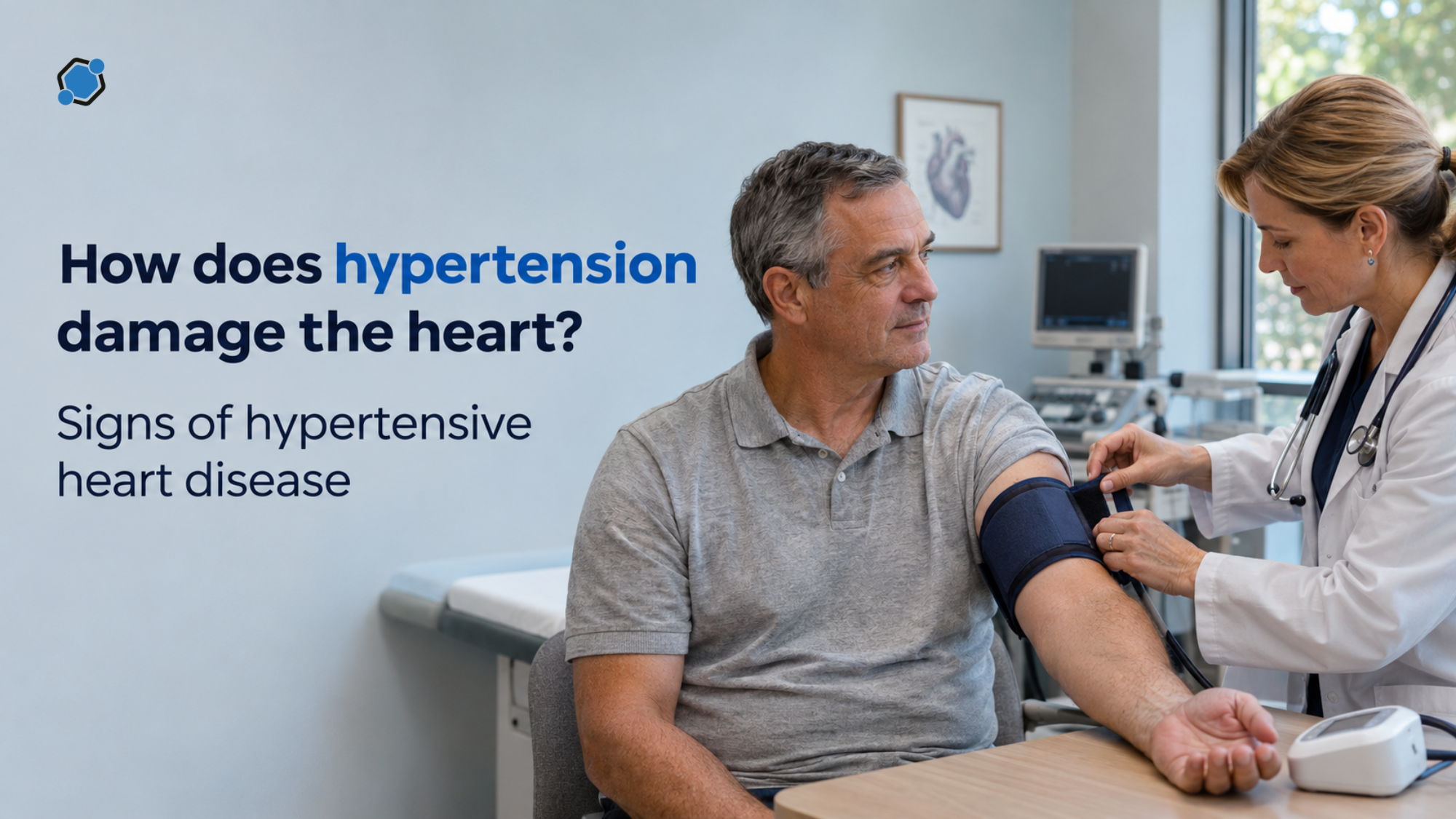
High blood pressure rarely causes symptoms, but over the years it can change the size, shape, and strength of the heart. Knowing how hypertension damages the heart explains why doctors take a high reading seriously, even when a person feels well. The changes usually build slowly. They start with a thicker heart wall and, in some people, lead to heart failure, chest pain, or an irregular heartbeat. Many of these changes can be found early with simple tests, and keeping blood pressure under control may help slow them.
What is hypertensive heart disease?
Hypertensive heart disease is the name for heart problems caused by long-term high blood pressure. It includes a thickened heart wall, a stiff heart muscle, an enlarged upper heart chamber, and, in later stages, heart failure. It is one of the most common and serious effects of high blood pressure that is not well controlled.
Blood pressure is the force of blood pushing against the walls of the arteries. It is written as two numbers: the top number, called systolic pressure, is the pressure when the heart beats, and the bottom number, called diastolic pressure, is the pressure when the heart rests between beats. Current U.S. guidelines group adult readings into four categories:
- Normal: below 120 systolic and below 80 diastolic
- Elevated: 120 to 129 systolic and below 80 diastolic
- Stage 1 hypertension: 130 to 139 systolic or 80 to 89 diastolic
- Stage 2 hypertension: 140 or higher systolic or 90 or higher diastolic
Risk to the heart rises step by step across these categories. A closer look at what the top and bottom numbers mean can help readers place their own readings.
How does high blood pressure change the heart over time?
The main pumping chamber of the heart, the left ventricle, pushes blood out to the body with every beat. When blood pressure stays high, this chamber has to push against more resistance, much like a pump forcing water through a hose that is too tight. The damage then builds in stages, often over many years.
The heart wall thickens
A muscle that works harder grows larger, and the heart is no exception. Over time, the wall of the left ventricle becomes thicker. Doctors call this left ventricular hypertrophy, often shortened to LVH. It is common in people who have had high blood pressure for years, and it usually causes no symptoms. A thicker wall is not a stronger pump, because it needs more oxygen and works less smoothly than healthy muscle.
The muscle stiffens and scars
As the wall thickens, scar-like tissue can build up between the heart muscle cells, a process called fibrosis. A stiff, scarred ventricle can still squeeze, but it does not relax well between beats, so it fills with less blood. Doctors call this diastolic dysfunction. Pressure then backs up into the upper chamber of the heart and into the lungs.
Heart failure can develop
Heart failure means the heart cannot pump or fill well enough to meet the body's needs. It does not mean the heart has stopped. Doctors often describe heart failure using the ejection fraction, which is the share of blood the main chamber pumps out with each beat. A healthy heart pumps out about half to two-thirds of that blood.
Long-term high blood pressure is closely tied to a type of heart failure in which the ejection fraction stays normal, but the stiff heart fills poorly. In some people, the overworked muscle later weakens and stretches. The ejection fraction then falls, and the heart becomes larger and less able to squeeze. High blood pressure is one of the leading causes of heart failure.
The heart's own arteries narrow
The heart muscle gets its own blood supply from the coronary arteries. High pressure can injure the inner lining of these vessels, which makes it easier for fatty deposits called plaque to build up. The narrowing is known as coronary artery disease. When narrowed arteries cannot deliver enough blood, chest pain called angina can occur. If a plaque breaks open and a clot forms, the result can be a heart attack.
The upper chamber stretches and the rhythm changes
When the stiff ventricle fills poorly, pressure rises in the left atrium, the upper chamber that feeds it. Over time, the atrium stretches, and a stretched atrium is more likely to develop atrial fibrillation, or AFib, which is an irregular and often fast heartbeat. In AFib, blood can pool in the heart and form clots. If a clot travels to the brain, it can cause a stroke. Readers who want to know more can learn how a blocked-artery stroke differs from a bleeding stroke.
High pressure also strains the aorta, the largest artery in the body. Over many years, this raises the risk of rare but serious problems, such as a bulge or a tear in the aortic wall.
What are the warning signs of heart damage from high blood pressure?
Early heart damage from high blood pressure usually causes no warning signs. Symptoms tend to appear only after a complication, such as heart failure, narrowed arteries, or AFib, has developed.
Signs that call for prompt medical attention include:
- Shortness of breath during activity, at rest, or when lying flat
- Unusual tiredness or a drop in the ability to exercise
- Swelling in the feet, ankles, legs, or belly, or sudden weight gain from fluid
- Chest pain, pressure, or tightness
- A fluttering, pounding, or irregular heartbeat
- Dizziness or fainting
Some situations are emergencies. Chest pain, severe shortness of breath, or fainting calls for 911 right away. A reading of 180/120 or higher with symptoms such as chest pain, back pain, numbness, weakness, vision changes, or trouble speaking also calls for 911. A reading that high without symptoms should be checked again after a few minutes of rest. If it stays high, a clinician should be contacted the same day.
People with emergency symptoms should not drive themselves to the hospital or wait to see whether the symptoms pass. More detail on when a high reading becomes an emergency can help families prepare in advance.
How do doctors check the heart for damage?
Because early changes are silent, finding them depends on testing. Many people learn they have hypertension only during a routine visit, which is one reason to understand why high blood pressure often goes unnoticed. Checks usually start with blood pressure itself and then move to tests that look at the heart.
- Blood pressure checks: Office readings, often confirmed with home readings or a monitor worn for 24 hours. Home readings work best with a validated upper-arm cuff rather than a smartwatch or other cuffless device.
- Electrocardiogram (ECG or EKG): A quick, painless recording of the heart's electrical activity. It can suggest a thickened wall and can detect AFib.
- Echocardiogram: An ultrasound of the heart. It measures wall thickness, chamber size, filling, and ejection fraction, and it is the main test for these changes.
- Cardiac MRI: A detailed scan that measures the size of the heart precisely and can show areas of scarring.
- BNP or NT-proBNP blood test: A test for a substance the heart releases when it is stretched and under strain. Higher levels can point to heart failure, although kidney disease and some other conditions can also raise them.
A clinician decides which tests are needed based on a person's readings, symptoms, and other health conditions.
Can heart damage from high blood pressure be slowed or reversed?
Evidence from large clinical trials shows that lowering blood pressure can slow heart damage and may partly reverse early changes. In long-term studies, thickened heart walls shrank in many people whose blood pressure was brought down. Studies of tighter blood pressure control also found clearly fewer cases of heart failure and other heart events. Tighter control did bring more side effects, such as dizziness, fainting, and changes in kidney function.
Results vary from person to person. Early thickening is more likely to improve than established scarring, and a heart that has already weakened may not fully recover. The benefit also depends on keeping blood pressure controlled over the long term.
Clinicians usually combine daily habits with medicine. Habits that can help lower blood pressure include eating less sodium, following an eating pattern rich in vegetables, fruit, and whole grains, staying active, limiting alcohol, not smoking, and keeping a healthy weight. Common medicine classes include ACE inhibitors, angiotensin receptor blockers, calcium channel blockers, and diuretics. Some classes may help a thickened heart wall shrink more than others, so the choice rests with a clinician.
For some people, blood pressure stays high even on several medicines. Readers in that situation can learn more about blood pressure that stays high despite medication. Research continues to add options. Newer medicines that lower the hormone aldosterone, long-acting injections that reduce a protein involved in raising blood pressure, and a procedure that calms overactive nerves near the kidneys have all been studied. Some are already available for certain patients, while others remain in clinical trials.
Frequently asked questions about hypertension and the heart
Can high blood pressure cause an enlarged heart?
Yes. Years of high pressure can thicken the wall of the main pumping chamber, which is called left ventricular hypertrophy. In later stages, a weakened heart can also stretch and grow larger. An echocardiogram is the usual way to check.
How long does it take for high blood pressure to damage the heart?
There is no fixed timeline. Changes usually develop over years. The pace depends on how high blood pressure is, how long it stays high, and other factors such as diabetes, kidney disease, and smoking.
Is heart damage from hypertension permanent?
It depends on the stage. Early thickening may partly improve when blood pressure is controlled over time. Scarring and a heart that has already weakened are less likely to recover fully, and outcomes vary between individuals.
Can a smartwatch detect heart damage from high blood pressure?
Smartwatches and other cuffless devices are not a reliable way to diagnose high blood pressure or heart damage. Some can flag an irregular rhythm that may suggest AFib, but any alert needs to be checked by a clinician. A validated upper-arm cuff remains the recommended tool for home readings.
Protecting the heart while changes are still early
Hypertension damages the heart slowly and quietly, so regular checks matter more than waiting for symptoms. Many early changes can be found with simple tests long before heart failure develops, and keeping blood pressure in a healthy range may help slow them. A clinician can set the right target for each person.
Clinical research continues to shape how high blood pressure and its effects on the heart are managed. DecenTrialz is a clinical trial recruitment platform that helps people find studies that may fit their health profile, including studies in high blood pressure and heart disease. People share some health information, get matched with relevant studies, and a registered nurse reviews their information before a referral goes to the research site team.
The research site team makes the final eligibility decision, explains informed consent, and handles enrollment. Joining a study does not guarantee any particular result, and decisions about care or study participation are best made together with a healthcare provider.
Was this article helpful?

Similar Blogs

International Men's Day 2026: what is it, and how can research improve men's health?
International Men's Day 2026 falls on Thursday, November 19. The observance recognizes the...
 Anish Teepireddy
World Pancreatic Cancer Day 2026: why is pancreatic cancer so hard to detect early?
Pancreatic cancer organizations from several countries first came together to mark World P...
 Deeksha Gitta
World COPD Day 2026: what is it, and how is research changing COPD care?
World COPD Day 2026 falls on Wednesday, November 18. This year’s theme, “Early Diagnosis a...
Mahesh UpadristaStay Informed. Stay Connected.
Get updates on verified clinical trials, emerging treatments, and research breakthroughs directly in your inbox. No spam, just science that matters.
